

14 min 58 sec
Available in: English
Captivology: The Science of Capturing People’s Attention
By Ben Parr
Shows how attention works in the brain and how to earn it on purpose, moving people from a split-second glance to lasting interest with contrast, framing, rewards, reputation and recognition.
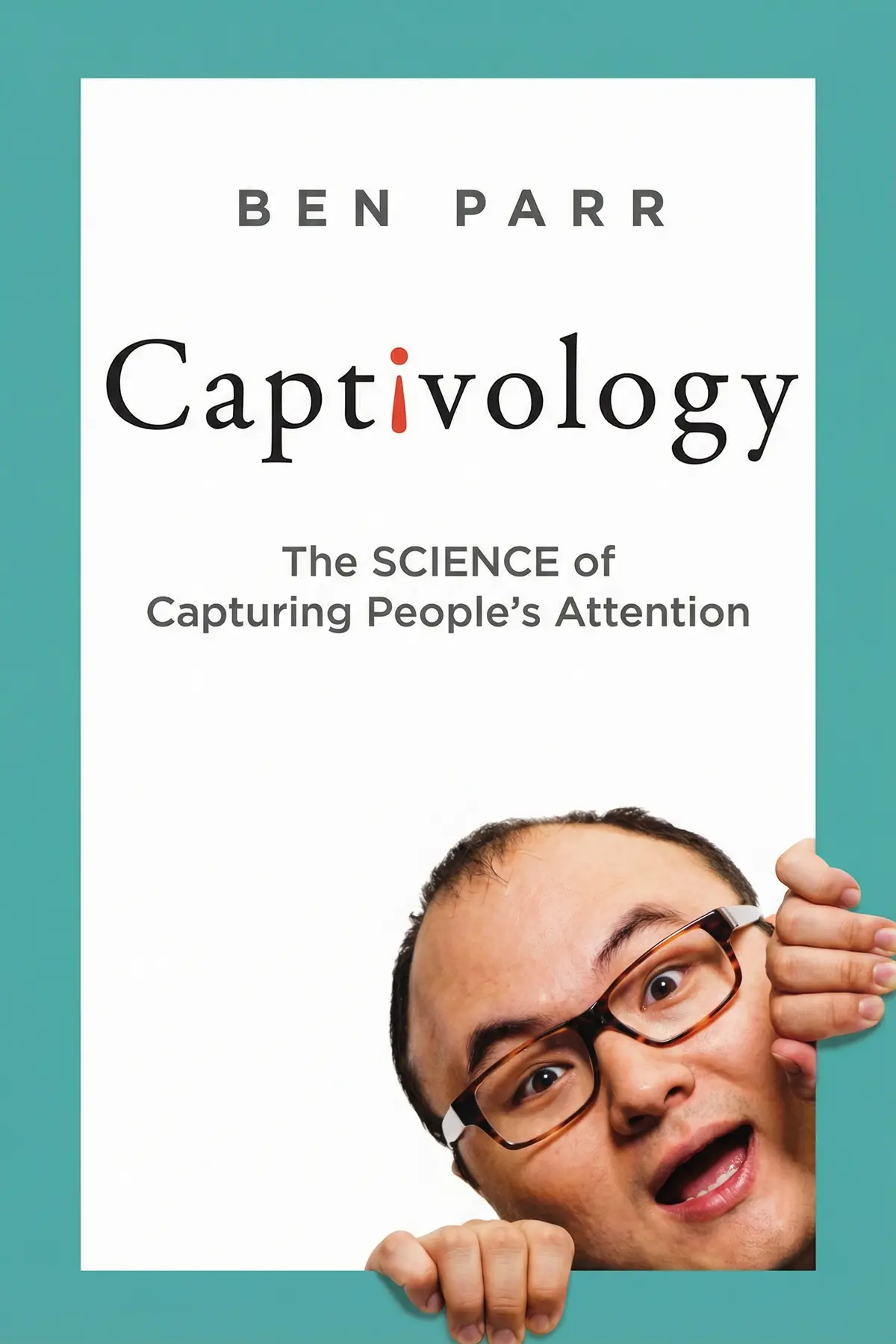
Table of Content
1. Introduction
1 min 04 sec
If your work is good but nobody notices it, Ben Parr says the problem is rarely the work. In Captivology, the journalist and investor argues that attention follows predictable rules in the brain, and that people who learn those rules can earn it on purpose. The first rule is that attention grows in stages, from a reflex lasting a second to a loyalty lasting years.
That is the thread through everything that follows: each stage answers to its own trigger. Contrast catches the eye. A familiar frame keeps a message relevant. Rewards, reputation and the feeling of being seen turn a passing glance into steady interest.
The evidence ranges from a bleeding red heart that made a software bug famous to a drink flavor picked by 40,000 strangers and a perfume sunk by a single flower. The result is a sequence you can use on any pitch, post or launch, telling you what to do in the first second, the first minute and the first year.
2. Good work alone goes unnoticed, so learn to stand out
1 min 43 sec
The amount of information reaching each of us has more than tripled in two decades. A famous painter’s sales record shows what that flood does to talent that simply waits to be discovered.
3. Build attention in three stages, like a fire
1 min 48 sec
A pop star released an album with a single post and sold huge numbers. The reason has nothing to do with that day, and everything to do with how the brain decides what deserves focus.
4. Catch the eye in the first second with contrast
1 min 56 sec
A simple color change on a website button lifted sign-ups by up to a third, and a vivid name and logo raised public awareness of a software bug. Both rely on reflexes nobody chooses to have.
5. Speak inside your audience's frame of reference
1 min 46 sec
A major cosmetics brand launched a new perfume abroad and watched it fail completely. The scent itself was fine. What sank it was a meaning the company never thought to check.
6. Hold attention for good with rewards that last
1 min 49 sec
Money, prizes and discounts get people moving, yet a review of dozens of studies suggests they do surprisingly little for lasting satisfaction. Another kind of reward keeps people engaged far longer.
7. Borrow trust from experts and crowds
2 min 07 sec
One extra star on a review site can raise a restaurant’s revenue noticeably. The same force that drives that number can give an unknown start-up instant credibility, if it opens its pitch the right way.
8. Win loyalty by making people feel seen
1 min 40 sec
Parr ranks one trigger above all the others for winning and keeping attention. It works on a small, personal scale as well as for a big brand, and the book calls it the most effective trigger of all.
9. Conclusion
1 min 05 sec
Parr’s book turns attention from a matter of luck into a sequence. A reflex catches the eye for a second, novelty and a familiar frame hold it for a minute, and rewards, reputation and recognition keep it for years. Van Gogh’s paintings did not need to be better. They needed a path from first glance to lasting regard.
What the book adds up to is a shift in where effort goes. Most people pour everything into the product and leave attention to chance. Parr would have you design both with equal care.
Start with your next pitch or post. Give it one element that stands out to someone not looking for it, the way a dripping red heart made a software flaw famous. Check its words against your audience’s own frame, so nothing reads like a funeral flower. If you are new and unknown, lead with someone else’s credibility. And when anyone pays attention to you, pay it back with thanks.
Attention, in the end, is reciprocal. The people who notice others are the ones who get noticed.
About this book
What is this book about?
Every day people are exposed to more information than they can keep up with, so they split their focus, multitask constantly and are easily distracted. For anyone with a product, a pitch or an idea, being good is no longer enough to be noticed. Ben Parr, a journalist, entrepreneur and investor, argues that attention follows rules the brain applies whether we like it or not. He describes three stages, immediate, short and long, and compares them to building a fire from kindling up. He then sets out the triggers that move people through them: sensory contrast and association, framing that fits the audience, rewards that appeal to inner motivation, reputation borrowed from experts and crowds, and the deep human need to feel recognized. The cases are concrete and varied: a software bug made famous by a bleeding heart logo, a perfume that failed in Brazil because of one flower, a drink designed by more than 40,000 members of the public. Readers get a sequence they can apply to any pitch, launch or post, from the first second to the first year.
Book Information
Who it's for
Founders and marketers
Founders and marketers whose good product keeps getting lost in the noise.
Preparing pitches and launches
Professionals preparing pitches, launches or posts who want people to stop and listen.
Managers wanting loyal teams
Managers who want to keep a team's focus and loyalty without relying on bonuses alone.
About the Author
Ben Parr
Ben Parr is an American journalist, author, entrepreneur and investor. He served as co-editor and editor-at-large at Mashable and wrote a column for CNET, and Forbes named him to its 30 Under 30 list. He co-founded Octane AI, a marketing company serving e-commerce businesses, and the venture capital firm DominateFund, so he has seen the fight for attention from the newsroom, the marketing desk and the investor's chair.
Ratings & Reviews
Ratings at a glance
What people think
Listeners find the work thoroughly researched and stimulating, while one listener points out that the material transitions seamlessly from one chapter to the next.
Top reviews
Dao
Captivology is essentially a masterclass for anyone trying to navigate our noisy modern economy. Ben Parr does a fantastic job blending well-known behavioral research with very recent examples that actually feel relatable to today’s digital landscape. I found the transition from chapter to chapter incredibly smooth, which is rare for books that lean this heavily on data and science. To be fair, if you’re a deep-dive psychology nerd, you might recognize some of the studies mentioned. However, the way he frames them as practical investments of time and creative effort makes the content feel fresh and actionable. It’s a thought-provoking guide that helps you understand the 'why' behind what we notice. I’ve already started rethinking how I pitch my own projects based on the attention triggers he outlines. Truly an excellent resource for anyone in marketing or creative fields.
Show morePisit
Finally got around to reading this, and I’m genuinely impressed by the depth Parr goes into regarding why we sustain attention. As an entrepreneur, I found the insights regarding team building and fundraising to be particularly valuable. It’s a thought-provoking dive that doesn't just stick to social media trends; it looks at history and deep-seated psychological research. I realized my own tendency for long, detail-heavy posts might not be the most effective way to spark a response. To be fair, he doesn't offer a magic wand or an easy fix, but rather shows the hard work required to stay relevant. The writing is engaging and keeps you hooked through some pretty dense scientific concepts. If you are trying to sell an idea or a product, you need to read this book. It's a game-changer for how I plan to communicate my vision moving forward.
Show moreAkira
After hearing so much buzz about this one, I had high expectations, and it actually delivered. To get a five-star review from me, a book needs intelligent ideas and relevant, modern case studies. Parr provides both in spades, using research that feels current and immediately applicable. The writing is incredibly engaging, which is a relief because some of these behavioral science books can be a total slog. It’s a thought-provoking look at the investment of our most precious resource: our time and focus. I particularly enjoyed the sections on how we are hard-wired to respond to specific triggers like mystery and disruption. This is a must-read for anyone who wants to understand the hidden forces that shape our decisions. Truly one of the better books on influence I’ve read in recent years. It’s practical, smart, and very well-organized.
Show moreKrisada
Ever wonder why some ideas stick while others vanish instantly? Ben Parr digs deep into the mechanics of the human brain to explain the triggers that capture our focus. This book is remarkably well-researched, and I was impressed by how the content flows smoothly from one chapter to the next. Not gonna lie, I expected another generic marketing book, but this feels more like a serious study on how we interact with the world. He uses a mix of historical anecdotes and modern-day case studies that keep things moving at a good clip. My only minor gripe is that some chapters feel a bit more robust than others. Still, it’s a thought-provoking read that offers practical takeaways for anyone trying to influence outcomes. It’s definitely earned a spot on my reference shelf for future projects because the insights are actually applicable.
Show morePranee
As someone who identifies as an introvert, I usually find the 'look at me' culture of the modern world completely exhausting. This book actually offered a refreshing perspective by focusing on the science of attention rather than just telling you to be louder. Captivology helped me understand how to stay true to myself while still ensuring my message gets across effectively. Frankly, the writing style is very accessible, making it an easy-to-follow guide for those of us who aren't natural-born salesmen. The breakdown of how the brain is hard-wired for certain stimuli was especially helpful for my own communication style. While a few of the examples felt a little dated, the core principles are timeless and useful. I feel much more equipped to handle the attention economy now. It's a solid read for anyone feeling overwhelmed by extroverted noise.
Show moreSkylar
Picked this up because I wanted to understand how to better engage my audience at work. Captivology is incredibly well-researched, and you can tell Parr spent a lot of time vetting his sources. I love how the chapters transition seamlessly; it really helps the complex ideas settle in without feeling overwhelming. In my experience, most business books are 200 pages of fluff around one good idea, but this one is packed with substance. It’s a practical guide that focuses on how to capture and, more importantly, sustain interest over time. My only criticism is that the writing can be a little dry in the middle sections. However, the modern case studies at the end really bring the whole thing home. Definitely worth the read for the "hard-wired" insights alone. It's a useful tool for anyone in a leadership position.
Show moreNiramai
The truth is, while the examples are solid and well-researched, I didn’t find much here that felt revolutionary. If you have spent any time reading books about cognitive psychology or behavioral economics, you’ve likely encountered most of this research elsewhere. It’s an interesting read, but I found that not much stayed with me after I closed the back cover. Personally, I think this serves as the perfect introduction for someone totally new to the topic of attention triggers. Parr writes in an easy-to-follow style that avoids getting bogged down in overly academic jargon. It’s a decent primer, but it lacks the 'wow' factor of something truly groundbreaking. It’s worth a look if you need a refresher on the basics of human behavior. Just don’t expect a complete paradigm shift if you're already well-versed in the field.
Show moreHom
This book provides a solid introduction to attention triggers, even if much of the material has been covered in other bestsellers. One thing I really appreciated was the author's tone; he speaks about how the brain is hard-wired without getting bogged down in the usual evolutionary debates. It makes the content very accessible and less likely to make certain readers uncomfortable. Gotta say, while I’ve read most of these studies before, hearing them again through the specific lens of the attention economy was helpful. The book flows well, but it did feel a bit repetitive towards the end. It's a good investment of time if you're new to the genre of behavioral science. For seasoned readers, it might just be a nice refresher. It’s a decent, well-crafted book that stays on message throughout, even if it doesn't reinvent the wheel.
Show moreTod
Not what I expected when I first grabbed it from the bookstore. We all crave attention in some way, and this book tries to explain that drive through a scientific lens. It was an interesting read while I was in the middle of it, but honestly, not much has stayed with me in the weeks since. The truth is, it feels a bit like a collection of anecdotes and studies that don't always form a cohesive story. It’s more of a sociological breakdown than a practical "how-to" manual. While the research is definitely thorough, the emotional connection to the material just wasn't there for me. It’s a fine book for a weekend read, but it didn't leave a lasting impact on how I view the world. Three stars for the effort and the smooth writing style, but it lacks that final punch.
Show morePruet
I found this book way too technocratic for my personal taste. Instead of an engaging narrative that pulls you in, it felt more like a dry treatise on sociology and attention spans. While I appreciate the amount of work that went into the research, the delivery was just too clinical to keep me interested. Look, the science is clearly there, but it lacks the storytelling element that makes other books in this genre so memorable. I found myself skimming through sections because the pacing just wasn't right for me. It might appeal to you if you want a purely analytical breakdown of how our brains are hard-wired. However, if you are looking for a compelling story alongside your facts, you might be disappointed. It just didn't click for me, and I wouldn't recommend it over more narrative-driven psychology books.
Show moreQuestions about this book
What is the main idea of Captivology by Ben Parr?
Parr argues that attention follows predictable rules in the brain and grows in three stages: an automatic reflex, a short burst of interest in something new, and long attention built on familiarity. Each stage responds to specific triggers, including contrast, framing, rewards, reputation and acknowledgment. Learning those triggers lets you move people from a split-second glance to lasting interest.
What are the attention triggers in Captivology?
The book describes five. The automaticity trigger uses contrast and association to catch the eye. The framing trigger fits a message to the audience’s frame of reference and the fear of missing out. The reward trigger favors inner motivations over money or prizes. The reputation trigger borrows trust from experts and crowds. The acknowledgment trigger, which Parr ranks highest, makes people feel recognized, validated and understood.
How can a start-up get attention with no reputation?
Parr’s credibility rule says to open a pitch with an endorsement from someone who already has a reputation. A line such as former Microsoft executives founded the company, or GoogleVentures invested in it, tells a journalist or investor that someone trusted has already checked the idea. Letting a crowd take part, as Vitaminwater did with a public contest that drew more than 40,000 entrants, also builds standing.
Why does Parr say money is a weak way to hold attention?
Extrinsic rewards such as money, food and prizes push people to act for a short time, then attention fades as they look for the next reward. Parr cites a review of 92 independent studies that found only a fairly weak link between high pay and high satisfaction. Intrinsic rewards, such as Google giving employees one day a week for their own projects, keep people engaged longer.
Who should read Captivology?
It suits founders, marketers and anyone who needs others to notice their work, from people writing pitches and product pages to managers trying to keep a team engaged. Its examples, like a red sign-up button that raised subscriptions by up to 33 percent and a perfume that failed in Brazil, translate into checks you can apply to your own messages right away.
Readers also enjoyed

Age of Propaganda: The Everyday Use and Abuse of Persuasion
Anthony Pratkanis



59 Seconds: Change Your Life in Under a Minute
Richard Wiseman





A Liberated Mind: How to Pivot Toward What Matters
Steven C. Hayes
AUDIO SUMMARY AVAILABLE
Listen to Captivology in 15 minutes
Get the key ideas from Captivology by Ben Parr, plus 5,000+ more nonfiction titles.
- 5,000+ titles
- Listen as much as you want
- 7-day free trial
- Cancel anytime









