
13 min 13 sec
Available in: English
 ไทย
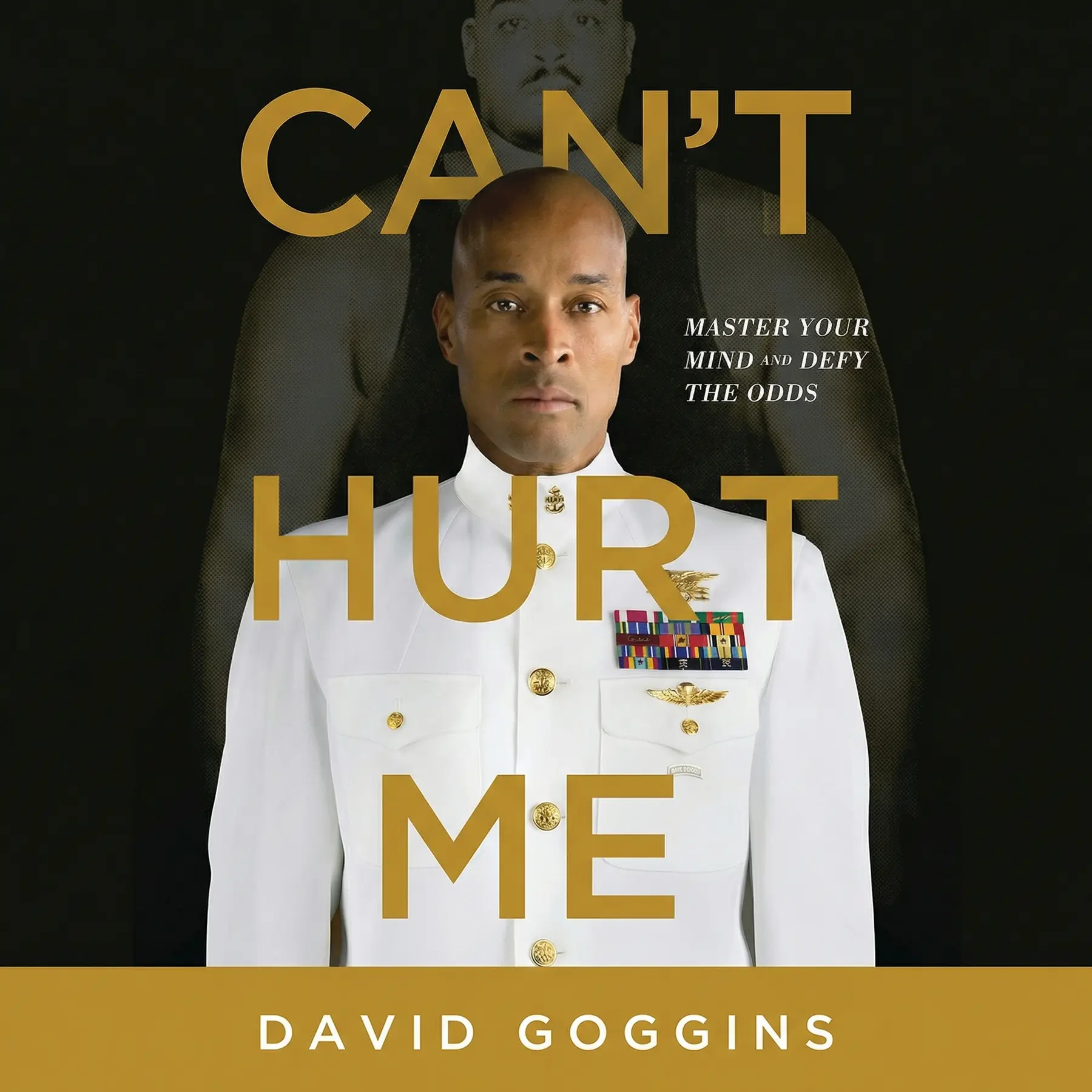
EnglishไทยCan’t Hurt Me: Master Your Mind and Defy the Odds
David Goggins's memoir follows his rise from an abusive, poor childhood to the Navy SEALs and extreme ultramarathons. It shows how pushing past the point where your mind says stop reveals effort you did not know you had.
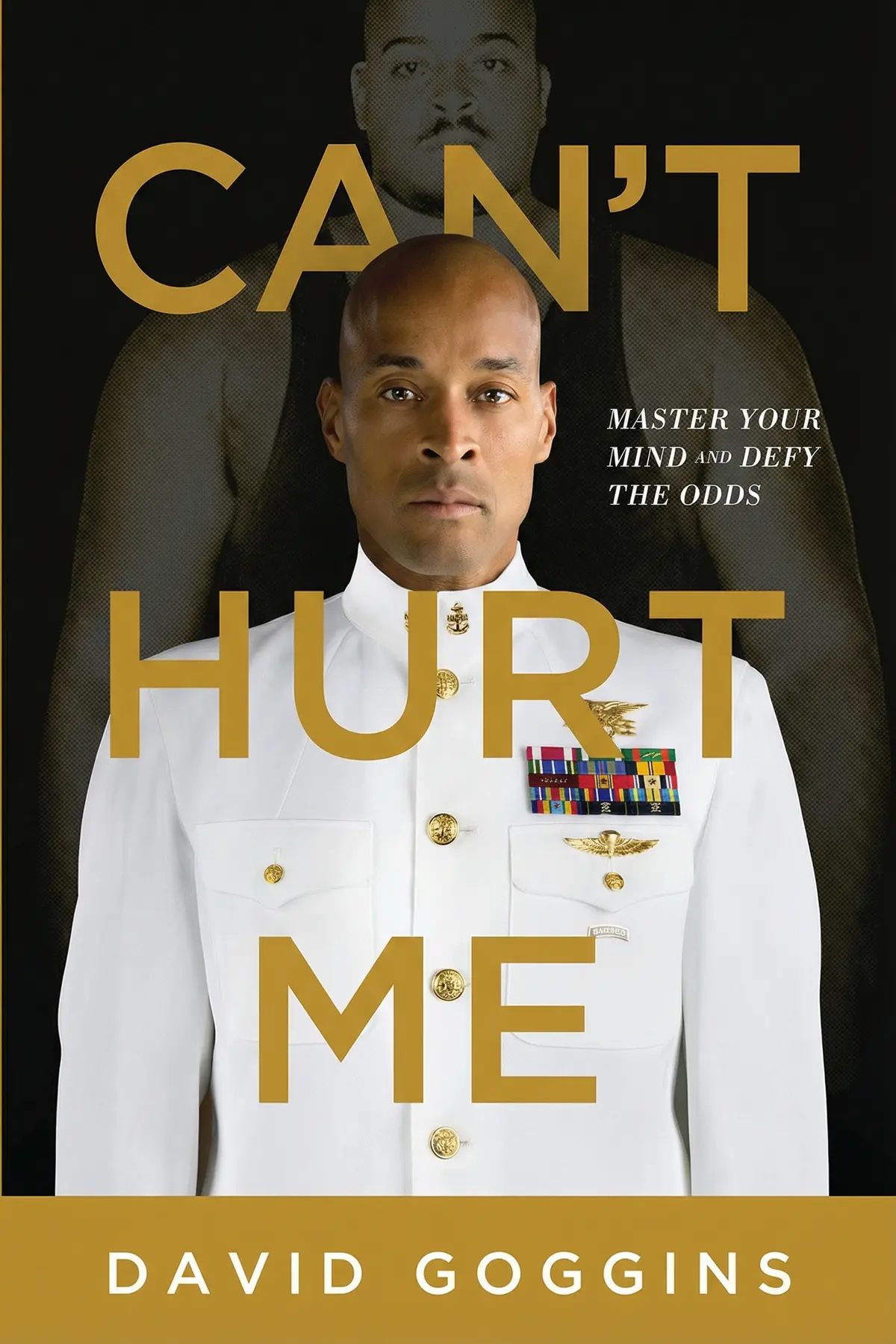
Table of Content
1. Introduction
1 min 01 sec
If you tend to stop the moment a workout, a project or a hard week starts to hurt, David Goggins believes you have barely started. In Can’t Hurt Me, the retired Navy SEAL and ultramarathon runner argues that most people quit after using about 40 percent of their real capacity, because the mind calls an early halt to spare them pain.
His own life is the evidence he offers. Goggins grew up beaten by his father, then poor, stuttering and barely able to read. At 24 he weighed almost 300 pounds and worked nights killing pests. A few years later he was a SEAL, and later still he finished a 135-mile race through Death Valley. The story makes one case: limits that feel final usually mark only a fraction of what a person can do, and relentless work, started early in the day, is how Goggins reached the rest. Listen for a way to tell real exhaustion from a mind that simply wants to stop.
2. Measure your excuses against a brutal starting line
1 min 46 sec
A six-year-old working until midnight, sleeping in an office beside a pounding dance floor, and that was not the worst of it. The home Goggins grew up in sets a hard benchmark for every excuse we make.
3. Face hidden weaknesses before ignoring them lets them grow
1 min 46 sec
A bright boy started losing his hair, his voice and his memory, and his teachers decided he was stupid. The way he survived their verdict kept him in school and set a trap that took years to escape.
4. Catch the excuse that looks like a reason
1 min 57 sec
Goggins had a medical finding in hand and a door marked exit. Every word of it was true, and that is exactly what made it dangerous. His departure from the Air Force shows how fear borrows a respectable face.
5. Turn one fierce goal into an hourly plan
1 min 58 sec
He weighed 297 pounds, the limit was 191, and the program would close in three months. What Goggins did with those numbers shows how a single deadline can rebuild a whole day around one aim.
6. Find the effort your mind keeps in reserve
1 min 54 sec
With almost no training, Goggins entered a 100-mile race and his body began shutting down in public. What he did at the finish line explains the rule he built his life around.
7. Win the morning before your day begins
1 min 43 sec
No time, people tell him: the family, the desk job, the commute. Goggins answers with a single weekday in which he rides 50 miles, runs ten more and still sits at his desk by 7:30.
8. Conclusion
1 min 08 sec
Goggins’s life reads like a string of verdicts that turned out to be wrong. A boy his teachers called stupid learned to read in his late teens. A recruit who walked away from the water came back and passed the hardest military training he could find. A 297-pound exterminator lost more than 100 pounds in under three months. Each time, the limit felt like the truth, and each time it marked only part of what he could do.
The book offers no shortcut for finding the rest. It offers hard work and an early alarm, and you can test that claim in small ways. When your mind announces that you are finished, recall the 40 Percent Rule and give a little more than feels possible. When a sensible reason to quit appears, ask whether it is the real one, or whether fear went looking for it. And put the effort that matters most into the first hour of your day, before anything else can take it.
At the end of a 100-mile race, with his body failing, Goggins ran one extra mile just to be sure. That mile is the habit worth keeping.
About this book
What is this book about?
Most people know the moment when a run, a job or a goal starts to hurt, and most of them stop there. David Goggins argues that this moment is exactly where the real work begins. His memoir tells how he got from a childhood of beatings, poverty and toxic stress to the Navy SEALs and some of the hardest endurance races in the world. He does not hide the low points. He cheated his way through school and could barely read as a teenager. He quit Air Force training out of fear of the water, then ate his way to nearly 300 pounds. A television documentary about SEAL training finally gave him a goal, and he lost more than 100 pounds in under three months to qualify. From that record, Goggins draws two lessons readers can use. The first is the 40 Percent Rule: when your mind says you are finished, you usually have most of your effort left. The second is that there is no quick fix, only hard work, and that the time for it can be found by winning the early morning.
Book Information
Who it's for
Stopping when it hurts
People who stop the moment a workout, a course or a project starts to hurt and want to know how much they are holding back.
Starting careers from behind
Young professionals and career switchers starting from behind who need proof that a bad start is not a verdict.
Saying there's no time
Busy workers who say they have no time to train or study.
About the Author
David Goggins
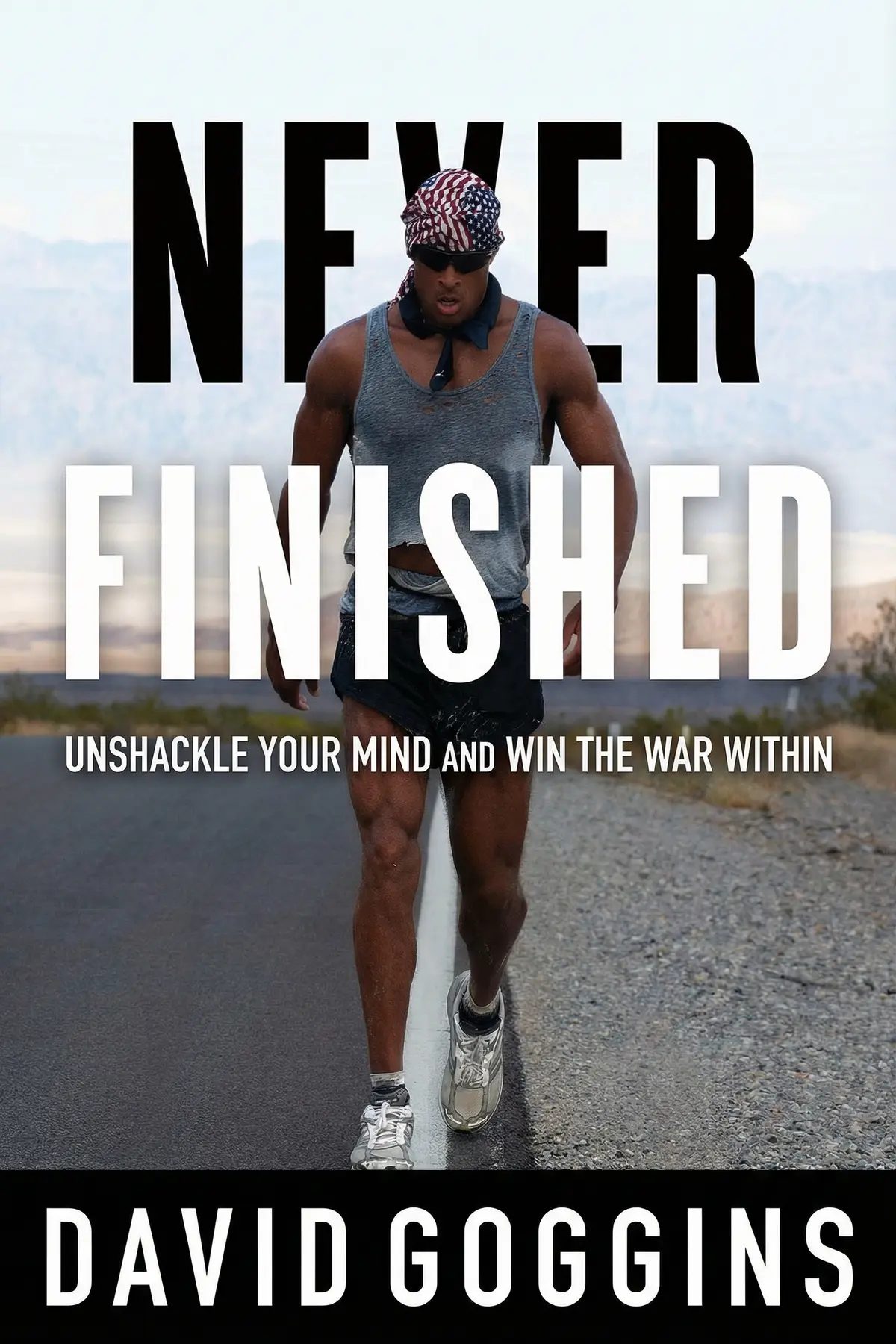
David Goggins is an athlete, speaker and author from the United States. A retired Navy SEAL, he served in the wars in Iraq and Afghanistan, and before that in the US Air Force. He competes in ultramarathons, ultra-distance cycling and triathlons, and once held the world record for pull-ups. In 2019 he was inducted into the International Sports Hall of Fame for his athletic and military record. Can’t Hurt Me became a New York Times Best Seller, and his books also include Never Finished.
Ratings & Reviews
Ratings at a glance
What people think
Listeners find this motivational guide accessible and engrossing from beginning to end, featuring a gritty and uplifting narrative about conquering adversity. The material is commended for its actionable guidance, aiding listeners in gaining self-awareness, and one listener mentions that it prompted deep personal reflection. Listeners characterize it as a painfully sincere chronicle that expands perspectives and builds mental resilience, resulting in a transformative experience.
Top reviews
Tee
This book is essentially a psychological sledgehammer designed to shatter your excuses. Goggins provides a gut-wrenchingly honest account of his transformation from a 300-pound exterminator to a world-class endurance athlete. You won't find any 'soft' self-care tips here; it is all about the 40% rule and the reality that most of us are coasting through life on autopilot. The 'Accountability Mirror' concept is something I started using immediately because it forces a level of self-reflection that is uncomfortable yet necessary for actual growth. Personally, I think the writing style is refreshingly blunt, even if the constant swearing isn't for everyone. It’s a life-changing read if you are actually ready to work.
Show moreSupatra
As someone who has struggled with consistency for years, the concept of the Accountability Mirror changed everything for me. Goggins doesn’t just tell you to be better; he shows you the raw, ugly process of how he forced himself to evolve. The writing is incredibly easy to read, almost like he's in the room yelling at you to get off the couch. I especially appreciated the 'Taking Souls' chapter, which flipped my perspective on how to handle competitive environments and difficult bosses. This isn't just a book about running; it's a manual for mental warfare. If you feel like you're stuck in your comfort zone, this will definitely drag you out of it.
Show morePornthip
Finally got around to the audiobook version and the unique podcast-style interludes between chapters really added a lot of depth. Hearing Goggins elaborate on the stories in the text made the whole experience feel much more personal and authentic. His journey through the Air Force and then multiple SEAL training sessions is mind-blowing. People complain about his obsession with pain, but I think they're missing the point. It’s about finding out who you are when you have nothing left. Frankly, it’s one of the most motivating things I’ve ever listened to. It makes you realize that your perceived limits are usually just mental barriers you've built to stay safe.
Show moreYindee
The chapter on his childhood is gut-wrenching and provides the necessary context for his later obsession with physical suffering. It’s clear that Goggins was running away from a lot of demons, and he found a way to use that trauma as fuel. Not gonna lie, some of the descriptions of his injuries made me cringed—running on broken feet is insane—but his dedication to 'callousing the mind' is something we can all learn from. This book helped me understand myself better and realize how much I’ve been holding back in my own career. It’s a raw, powerful story that doesn’t make excuses for the author’s flaws, which I found deeply refreshing.
Show moreJan
Goggins doesn't sugarcoat anything, and that's exactly why this works so well compared to other self-help fluff. He isn't selling a dream; he's selling a nightmare that leads to a better version of yourself. The raw emotion in his story of overcoming a learning disability and physical abuse is incredibly moving. I’ve read a lot of leadership books, but none of them hit as hard as this one. It’s gut-wrenching, honest, and completely unapologetic. If you are tired of making excuses for why you haven't reached your potential, you need to read this immediately. It’s a total game-changer for your mindset.
Show moreCholada
Frankly, I found his 40% rule to be the most practical takeaway from this entire memoir. It’s a concept I’ve started applying to my workouts and my work day, and it really does help you push through that initial wall of fatigue. The book is very easy to read and I finished it in two sittings because I just couldn't put it down. Even the parts where he's being 'unbelievably stupid' with his health are fascinating because they show the extreme end of human will. It made me reflect on my own life and realize how many times I’ve taken the path of least resistance. Highly recommended for anyone seeking a harder edge.
Show moreValentina
Picked this up after seeing Goggins all over my social media feed, and truth be told, it’s a hell of a ride. The story is captivating from start to finish, particularly the segments about his childhood and the sheer brutality of Hell Week. While I found his physical feats inspiring, I have to admit that his 'lone wolf' approach to life seems a bit extreme for the average person with a family. He mentions how he views some of his SEAL brothers as 'mainstream,' which felt a bit disrespectful to the team aspect of the military. Still, the practical advice regarding the 'Cookie Jar' for mental resilience is pure gold. It’s a solid 4-star read for anyone needing a kick in the pants.
Show moreJun
Ever wonder what happens when a human being decides to completely ignore their biological limits? This book is the answer. While the narrative gets a bit repetitive in the middle—another race, another injury, another miraculous finish—the core message is undeniable. We are all capable of more. I didn't love the disparaging comments about his fellow soldiers, as it felt a bit one-sided, but I suppose that's part of his 'savage' brand. The practical challenges at the end of each chapter are a great touch for those who want to implement his 'kaizen' approach to small wins. It’s a strong motivational tool if you can look past the machismo.
Show moreAria
Not what I expected, specifically regarding how the author views his relationships and colleagues. There is no denying that David Goggins has achieved things that would break 99% of the population, but the tone of this book often reeks of toxic masculinity. He repeatedly uses derogatory terms for women to describe weakness, which felt incredibly dated and unnecessary for a book published recently. To be fair, his 40% rule is a fascinating concept, but the narrative often feels like a repetitive cycle of him being underprepared and then suffering for the sake of suffering. It’s an interesting memoir, but as a 'system' for self-improvement, it feels unbalanced and potentially dangerous for people who don't know when to stop.
Show morePhichai
Look, I respect the grit, but the constant glorification of pushing through serious physical injury felt irresponsible and ultimately self-defeating. There are multiple times in the book where he admits to being completely underprepared and then acts like it’s a badge of honor to end up in the hospital with kidney failure. That’s not 'uncommon among uncommon'; it’s just bad planning. The way he talks down about other SEALs who want a 'mainstream' life also felt very immature. Life is a team sport, yet Goggins seems to treat it like a solo mission where everyone else is just an obstacle or a 'soul' to be eaten. I found the mentality to be more sad than inspiring.
Show moreQuestions about this book
What is the main idea of Can’t Hurt Me?
David Goggins argues that the limits people feel are usually far below their real capacity. He tells how he went from an abusive, poor childhood, failing school and nearly 300 pounds to becoming a Navy SEAL and finishing the Badwater 135 ultramarathon. His conclusion is that there is no quick fix: relentless hard work, often done early in the morning, is what moved him past each limit.
What is the 40 Percent Rule by David Goggins?
Goggins says most people give up when they have used only about 40 percent of their real effort. Part of the mind wants to protect us from pain, so it signals that we are finished while roughly 60 percent remains. His advice is to treat that signal with suspicion, push through the discomfort and keep going, as he did when he ran an extra mile after a 100-mile race.
How did David Goggins lose 100 pounds to join the Navy SEALs?
He weighed 297 pounds, the Navy limit was 191, and he had under three months. He rose at 4:30 each morning for two hours on an exercise bike, then swam two hours, trained in the gym with circuits and at least five sets of 200 repetitions per muscle group, and rode the bike again in the afternoon and evening. He lost 25 pounds in two weeks and made the deadline.
How can I apply Can’t Hurt Me in my own life?
Start by questioning the moment you want to quit: by Goggins’s 40 Percent Rule, you likely have more left. Check whether the reason you give for stopping is the true one, since he once used a real medical finding to hide his fear of swimming. Then protect time for your most important effort by doing it early, before work and family claim your day.
Who should read Can’t Hurt Me?
It suits anyone who tends to give up when things get hard, whether in fitness, study or work. Readers who started life at a disadvantage will find a detailed story of someone who overcame abuse, poverty and poor schooling. Busy professionals who believe they lack time will find a concrete daily routine built around winning the early morning.

Readers also enjoyed


A Promised Land
Barack Obama


A River in Darkness: One Man’s Escape from North Korea
Masaji Ishikawa

A Spy Among Friends: Philby and the Great Betrayal
Ben Macintyre


A Year in the Life of William Shakespeare: 1599
James Shapiro


AUDIO SUMMARY AVAILABLE
Listen to Can’t Hurt Me in 15 minutes
Get the key ideas from Can’t Hurt Me by David Goggins, plus 5,000+ more nonfiction titles.
- 5,000+ titles
- Listen as much as you want
- 7-day free trial
- Cancel anytime









