

14 min 18 sec
Available in: English
Business for Bohemians: Live Well, Make Money
Shows creative, freedom-loving people how to earn a living from a business of their own, and why proper hiring, honest accounts, higher prices and careful funding are what keep that freedom from slipping away.
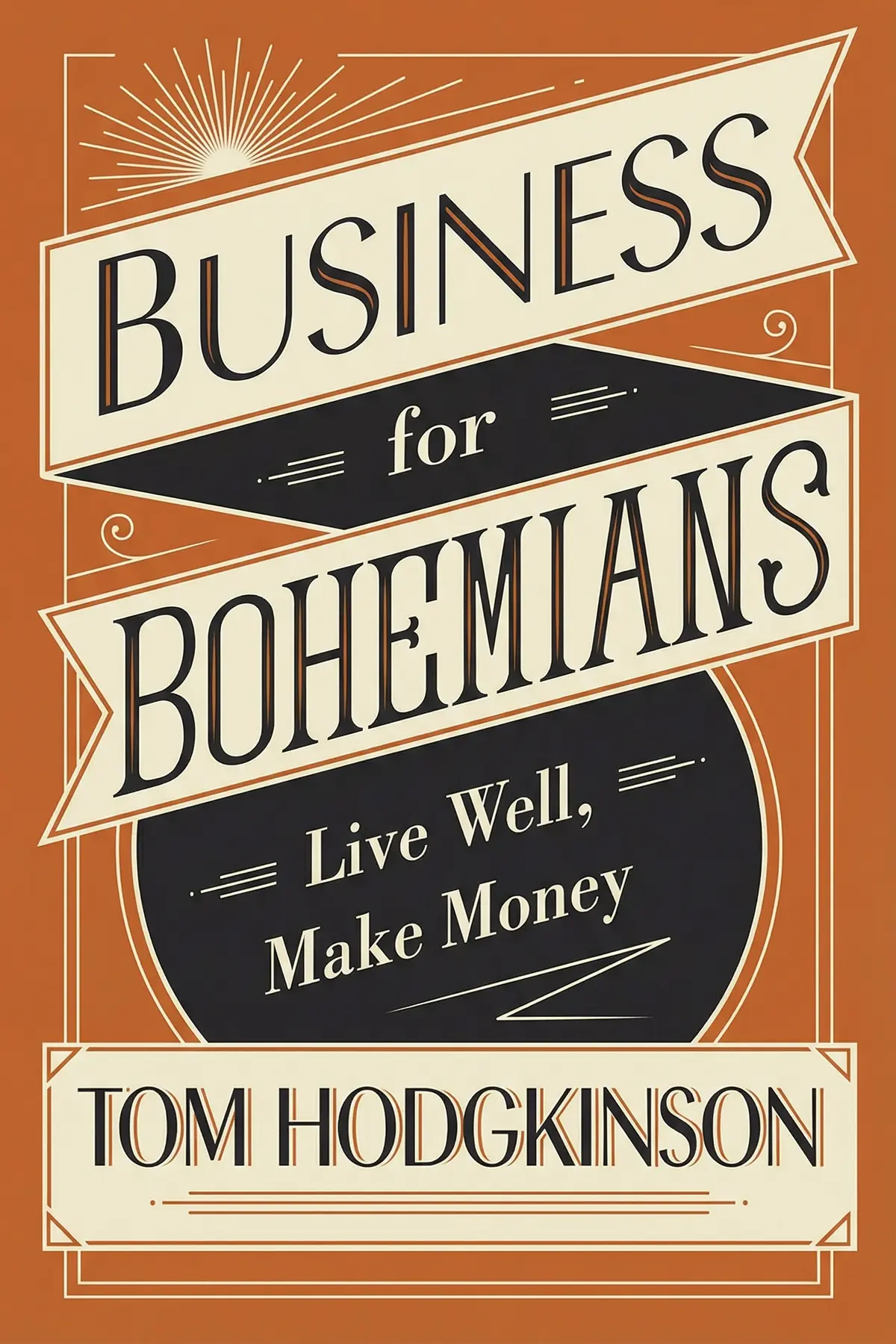
Table of Content
1. Introduction
58 sec
If you want a life of art, long walks and good conversation, the usual way to pay for it is a job, and Tom Hodgkinson thinks that is the worse bargain. In Business for Bohemians, the founder of the Idler argues that even a well-paid job is comfortable servitude, while a business of your own lets you decide what you make, when you work and with whom. The catch is that this kind of freedom is fragile. Hodgkinson learned it in a London shop where his staff drank his wine and he cleaned the toilets himself.
His case is that a bohemian business stays free only when it is run with the plain discipline bohemians tend to avoid. That means careful hiring, a plan, clear accounts, braver prices, funding chosen with open eyes and the nerve to quit what fails. Any freelancer or small owner can put each of these in place this month.
2. Trade comfortable servitude for work you own
1 min 29 sec
Bankers and lawyers earn fortunes and still look miserable. Hodgkinson thinks he knows why, and his diagnosis applies to anyone whose calendar is set by someone else, whatever the size of the paycheck.
3. Pick the size of business that suits you
1 min 40 sec
The classic startup story ends with a garage company swallowing an industry. For someone who left a job to escape giants, that ending is a problem, and Hodgkinson offers a different set of shapes.
4. Settle the small decisions before they drain you
1 min 43 sec
A cozy coffeehouse full of books and lectures sounds like a dream job. For Hodgkinson it often felt like the other kind of dream, and a carton of soy milk explains why.
5. Borrow boring rules to protect your freedom
1 min 33 sec
Hodgkinson hired whoever seemed nice and managed by being nice back. What happened next at a business with idleness in its name is funny, and it ended with the founder holding a toilet brush.
6. A plan and accounts that calm the nerves
1 min 22 sec
Most creative founders would rather do almost anything than write a business plan or open a spreadsheet. Hodgkinson did not want a business plan when he started the Idler, but he later came to see its value for clarifying his ideas.
7. Charge double and expect a few complaints
1 min 23 sec
Kind, fair-minded owners often believe a low price is the generous choice. A series of lectures at the Idler Academy showed Hodgkinson how much that kindness was really costing him, and the lesson led to two rules of thumb for pricing.
8. Know what each kind of money will cost you
1 min 23 sec
A bank, a generous relative and a professional investor can all hand you the same sum. What each one expects afterward is very different, and for someone who values control, that difference matters most.
9. Push through hard times and drop what fails
1 min 32 sec
Sooner or later every independent owner starts envying friends with steady salaries. Hodgkinson gave this moment a name, and his advice for it breaks with the usual never-give-up line.
10. Conclusion
1 min 15 sec
Hodgkinson’s picture of freedom is something you keep up with regular, unglamorous work. A job hands your hours to someone else. A business returns them, then starts asking for them back through soy milk decisions, uncleaned bathrooms, cheap tickets and anxious backers. The bohemian who lasts is the one who accepts enough structure that the art still gets made.
His own record argues the case better than any rule. He improvised in Notting Hill and ended up scrubbing toilets through 14-hour days. Then he hired properly, raised his prices, closed what failed and arrived at an online Academy that is now sustainable and joyful.
If you run something of your own, or hope to, a few moves follow directly. Settle the recurring small questions once, so they stop eating your days. Take the price in your head and double it, then listen for a little grumbling. Before accepting anyone’s money, name what they will want in return. And when the wobble comes, keep what is yours and working, and let the rest go.
For a bohemian, discipline is simply the price of an idle afternoon that nobody else owns.
About this book
What is this book about?
Many creative people want time for art, music, conversation and long walks, and they dread the idea of spreadsheets and profit margins. Yet the bills still come. Tom Hodgkinson, who co-founded the Idler, argues that the freest way to pay them is to run your own business, because even a well-paid job means handing your days to someone else. His angle is honest about the cost. Drawing on his own years running a coffeehouse, bookshop and education center in London, he shows how a business can swallow the very freedom it was meant to create. Slow coffee, idle staff, cheap tickets and fourteen-hour days taught him that old-fashioned practices are what protect a bohemian life. Readers get a practical path: choose the size of business that suits them, hire and manage properly, write a plan and keep accounts, double their prices, weigh what each source of money will demand, and know when to push on or walk away.
Book Information
Who it's for
Freelancers and creatives
Freelancers and creative people who left a job for freedom and now feel buried in admin.
Would-be founders
Would-be founders weighing a small lifestyle business against something bigger with investors.
Hospitality and retail owners
Café, shop and event owners whose prices, staff or finances keep slipping out of control.
About the Author
Tom Hodgkinson
Tom Hodgkinson, born in 1968, is a British writer who started The Idler in 1993 with his friend Gavin Pretor-Pinney and still edits it. His journalism has appeared in The Sunday Telegraph, The Guardian and The Sunday Times, and his books include How to Be Idle, How to Be Free, Brave Old World and The Idle Parent. Together with his partner he started a school called the Idler Academy, devoted to philosophy, husbandry and merriment, which offers courses both online and face to face, and so he draws on firsthand experience when he writes about running a creative business.
Ratings & Reviews
Ratings at a glance
What people think
Listeners find that perspectives are mixed concerning the author's narrative approach and the fundamental nature of the guidance, with some listeners suggesting the material provides few original insights. Still, most enjoy the work's pragmatic view of business, emphasizing how it helps non-conformist owners seeking to merge monetary gains with a bohemian way of living. Additionally, they prize the author’s transparent "war stories" and comedic tone, with one listener remarking that it feels "like having a successful, down-to-earth, cool friend share their experience." Furthermore, listeners observe that the attention given to essential tools like spreadsheets is quite advantageous, with another listener characterizing the text as a "great guide" for the day-to-day realities of micro-startups.
Top reviews
Bond
Ever wonder if you can actually pay your bills without selling your soul to a cubicle farm? This book is a manifesto for the artistic person who realizes they need to understand math to keep their freedom. I loved how honest Hodgkinson was about his own failings and his struggles; it made the advice feel attainable rather than ivory-tower lecturing. The focus on foundational tools like bookkeeping might seem dull to some, but for a non-traditional business owner, it’s presented as a vital survival skill. It's funny, insightful, and surprisingly practical for such a 'vibe-heavy' book. Not gonna lie, I wish I had read this a decade ago before I made my first three big mistakes. This is the perfect gift for any creative soul looking to go pro.
Show moreAria
Picked this up on a whim and it ended up being the most encouraging thing I’ve read all year. As a musician trying to navigate the commercial side of my career, I often feel like a fish out of water in the business world. This book changed that by showing that being a 'bohemian' and being a savvy business owner are not mutually exclusive. The way Hodgkinson frames the 'petite bourgeoisie' as the true revolutionaries of our time was incredibly empowering. I actually enjoyed the technical parts because they were explained with such humor and lack of pretension. Look, if you want to be a billionaire, this isn't for you, but if you want a meaningful life and a sustainable career, buy this immediately.
Show moreAlice
Wow, I finally feel seen by a business author. For years I’ve struggled to reconcile my creative impulses with the need to make a profit, and Hodgkinson provides the perfect bridge between those two worlds. He writes with a witty, conversational tone that makes the medicine of business administration go down easy. The stories of his own struggles are what make this book shine; they are honest, raw, and often very funny. I specifically liked the advice about not trying too hard and avoiding the distractions of the 'shiny stuff' that usually derails small startups. It’s a practical, soul-affirming guide for anyone who wants to work for themselves on their own terms. I’ve already recommended it to three of my self-employed friends.
Show moreYanin
Finally got around to reading this after hearing about it on a podcast, and I have to say, it’s exactly what I needed as a freelance designer. Hodgkinson manages to make the normally dry world of accounting and spreadsheets feel like a radical act of rebellion against the corporate machine. The book feels like sitting down for a long lunch with a slightly eccentric, successful friend who isn't afraid to admit where they messed up. While some of the advice is basic, the real value lies in the 'war stories' from his time running The Idler business. It’s a refreshing change from those 'hustle culture' manuals that make you feel like a failure if you aren't a billionaire by thirty. The writing style is charming, even if he wanders off on tangents about history a bit too often for my liking.
Show moreWatcharin
What a relief to find a business book that doesn't use the word 'synergy' or talk about 'disrupting' markets. Personally, I appreciated the focus on the reality of the very small startup where the owner wears every single hat. The author’s 'war stories' are both hilarious and cautionary, providing a grounded look at the highs and lows of entrepreneurship. While I’m far from a bohemian myself, I found the practical tips on avoiding the 'shiny stuff' and staying focused on what matters very helpful. The truth is, most of us just want to make a living doing what we love, and this book provides a roadmap for that humble but worthy goal. It’s like having a down-to-earth friend guide you through the scary parts of finance.
Show moreWatcharaporn
After hearing so much about the Idler, I decided to see what the founder had to say about the 'real world' of commerce. I found a book that is part memoir and part practical handbook, blended together with a distinctively British sense of humor. The advice isn't necessarily revolutionary, but the way it's framed for the non-traditional entrepreneur is genuinely helpful. He doesn't sugarcoat how difficult it is to run a business, but he also makes it clear that the freedom is worth the occasional headache. I knocked off one star because the later chapters felt a bit repetitive, yet the overall message remains strong. It’s a great companion for anyone currently in the trenches of a small-scale startup or planning to launch one soon.
Show moreSudarat
As someone who has been running a small shop for years, I found this to be a bit of a mixed bag. The writing itself is lovely and the 'Physics for Poets' vibe is definitely present, making complex ideas much more approachable for the artistically inclined. However, I didn’t find much here that felt truly original or groundbreaking for an established business owner. If you’re already comfortable with your cash flow statements and tax obligations, you might find the anecdotes a bit long-winded. Still, there is a lot of heart in these pages and the author's voice is genuinely engaging. It's a solid collection of sound advice for the absolute beginner, even if it feels a little repetitive toward the final chapters.
Show moreSomboon
This book was okay for a weekend read, but your mileage will definitely vary depending on your background. If you already have a basic grasp of business principles, you might find the chapters on spreadsheets and accounting a bit too elementary. The author has a very specific style that can be quite charming, though his frequent complaints about the hardships of his own business began to grate on me after a while. I did enjoy the anecdotes about the Idler Academy, as they provided a unique look into a very specific type of niche business. It’s a decent collection of thoughts, but it feels like it could have been half as long without losing much of the core message.
Show moreTalia
The chapter on customer complaints was where I completely lost interest in this author’s perspective. Initially, I enjoyed the bohemian philosophy, but the tone eventually shifts into a weirdly self-indulgent series of anecdotes where he just sounds like a difficult person to work with. He spends so much time complaining about the burdens of business ownership that you wonder why he bothered in the first place. I was hoping for more actionable strategies for my own startup, but instead, I got a memoir about his personal frustrations. To be fair, the section on the importance of spreadsheets was okay, but it wasn't enough to save the book for me. It felt more like an outlet for his own mid-life business crisis than a helpful guide for others.
Show moreHana
Not what I expected given the glowing reviews I had seen on social media. I came looking for a guide on how to scale my small craft business, but I felt like I was mostly reading a series of grievances. The author admits to a lot of his own mistakes, which is fine, but it eventually starts to feel like he’s just asking for sympathy rather than teaching a lesson. There is a fine line between being honest about failure and just being a jerk to your customers, and I think he crosses it more than once. The advice about spreadsheets is something you could find in a ten-minute YouTube video. Frankly, the whole thing felt a bit disorganized and self-centered for a book that claims to be a business guide.
Show moreQuestions about this book
What is the main idea of Business for Bohemians?
Tom Hodgkinson argues that running your own business gives creative, freedom-loving people more control over their lives than any job, even a well-paid one. That freedom only lasts, though, if the business is run with discipline. Drawing on his years running the Idler Academy in London, he recommends proper hiring, a business plan, clear accounts, higher prices, careful choices about funding and the willingness to drop ideas that fail.
What pricing advice does Tom Hodgkinson give?
He says small, kind-hearted owners usually charge too little. His lectures once cost ten pounds a ticket, and with about 30 guests and 250 pounds in costs, each evening made only 50 pounds. He now charges 20 to 30 pounds. His rules of thumb are to double the price you first imagined and to treat some complaints as a sign the price is probably right.
What is the Bohemian Wobble?
It is Hodgkinson’s name for the moment an independent owner starts doubting the whole venture and envying people with steady jobs and salaries. His advice is to remember that you went into business for freedom and that a hard business is at least your own. He also says freedom includes quitting what clearly fails, as he did when he closed his physical shop after five years.
Should a creative business take money from investors?
Hodgkinson does not rule it out. Investors can provide sums you could never raise alone, which helps if you want to grow beyond a small lifestyle business. The cost is control: they want a return, can intervene in decisions and might even replace your partners. Banks tend to leave you alone once they lend, while friends and family may offer unwanted advice. Choose knowing the trade.
Who should read Business for Bohemians?
It suits freelancers, artists, writers and small owners who want to earn a living without surrendering their time to an employer, and anyone tempted to run a café, shop, events business or online courses. It is especially useful for people who distrust conventional business methods, because Hodgkinson shows from his own mistakes why hiring checks, plans and accounts protect a creative life.
Featured in
Readers also enjoyed

Alibaba: The House That Jack Ma Built
Duncan Clark



7 Powers: The Foundations of Business Strategy
Hamilton Helmer


Bad Blood: Secrets and Lies in a Silicon Valley Startup
John Carreyrou
AUDIO SUMMARY AVAILABLE
Listen to Business for Bohemians in 15 minutes
Get the key ideas from Business for Bohemians by Tom Hodgkinson, plus 5,000+ more nonfiction titles.
- 5,000+ titles
- Listen as much as you want
- 7-day free trial
- Cancel anytime









