
15 min 06 sec
Available in: English
 ไทย
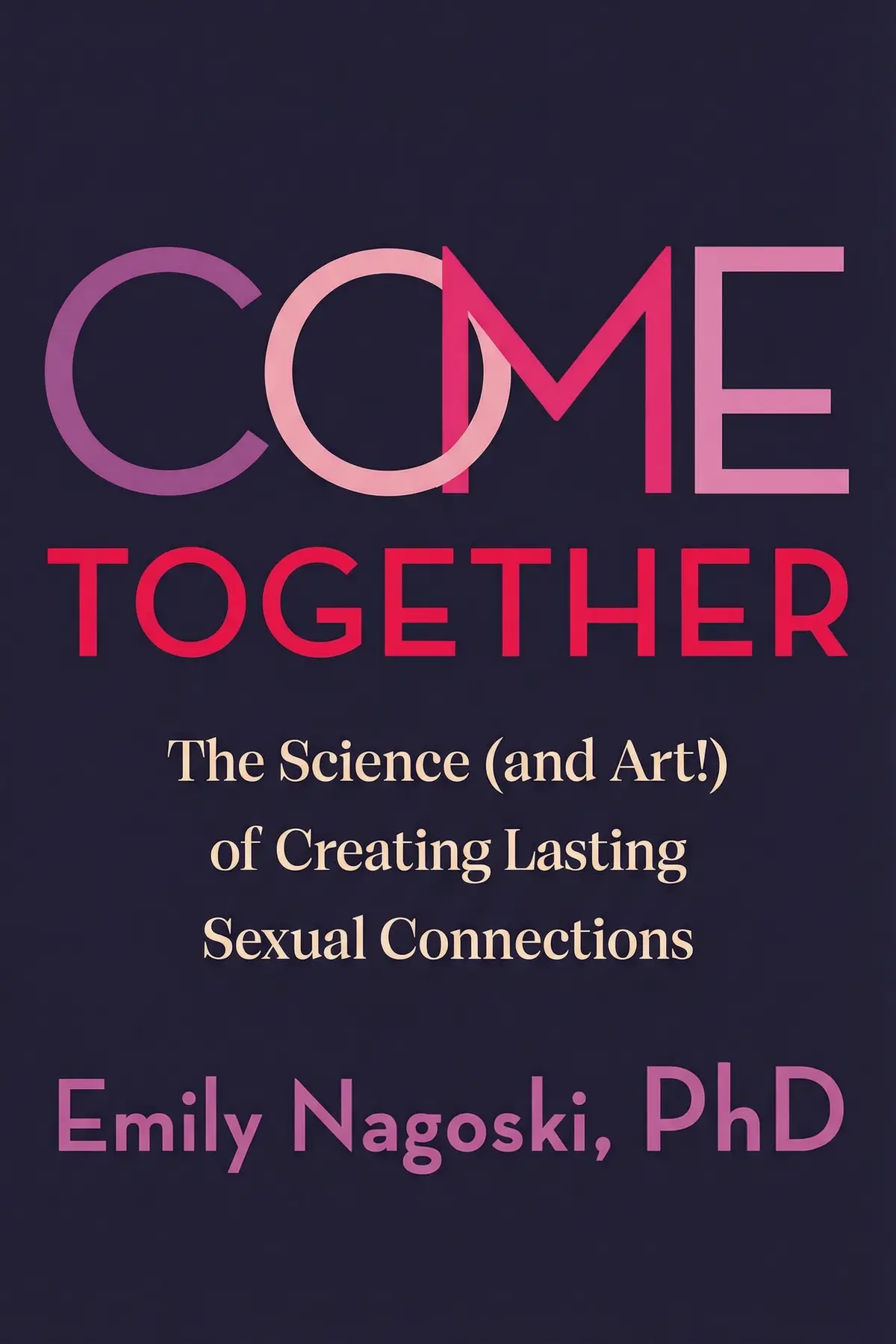
EnglishไทยBurnout: The Secret to Unlocking the Stress Cycle
A science-based guide to why so many women feel exhausted and how to recover by completing the body's stress cycle, challenging rigged standards, and making room for meaning, connection, rest and self-compassion.
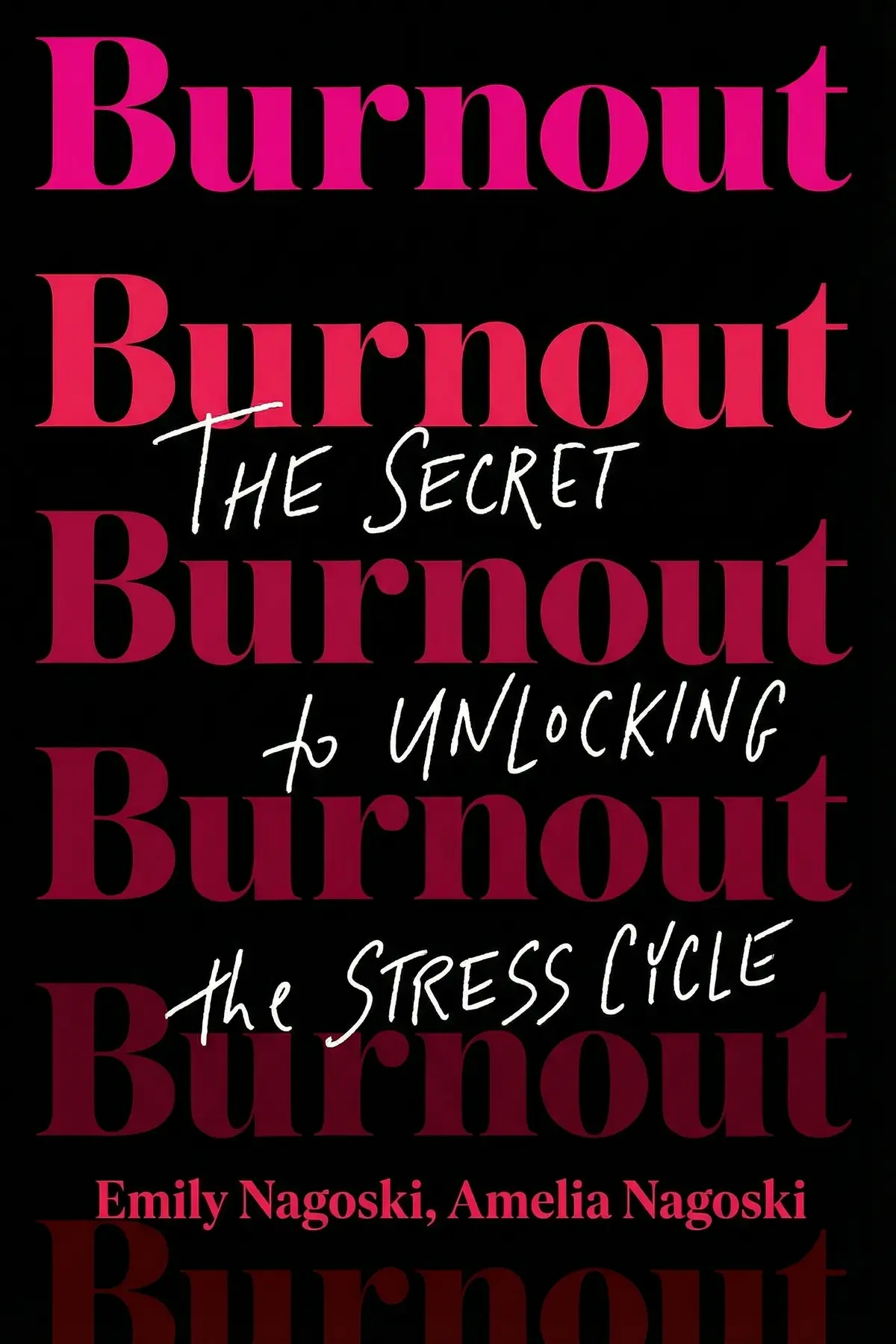
Table of Content
1. Introduction
57 sec
If you end most days drained and still sure you haven’t done enough, Emily and Amelia Nagoski offer a plain explanation: the stress you felt never got to finish. In Burnout, the twin sisters, a health educator and a music professor, treat stress as a cycle in the body with a beginning, a middle and an end. When the end never arrives, exhaustion piles up.
Bath bombs and coloring books will not fix that, they argue. What helps is finishing the stress cycle in your body, measuring your struggles against the facts of a rigged game, and refusing to live as someone whose only purpose is to give. They also explain why the body mass index deserves suspicion, why rest produces better work, and why a harsh inner critic shrinks once she has a name. What you get is a set of small daily practices for winning your energy back.
2. Spot the three signs that you are burning out
1 min 29 sec
Exhaustion that sleep does not cure often hides a pattern a psychologist described back in 1975. Learning its three parts, and why caring professions suffer most, changes how you read your own tiredness.
3. Finish the stress your body has already started
1 min 45 sec
Your body still answers stress as if a rhino were chasing you. Unless that response reaches its natural ending, it keeps wearing you down, and the ways to finish it are more varied than you might expect.
4. Stop daily frustrations from wearing you down
1 min 37 sec
Some daily irritations can be fixed and others never will be. A brain mechanism the authors call the Monitor explains why both drain you, and why the hardest stretch of a task may give the most back.
5. Stop blaming yourself for a game that is rigged
1 min 44 sec
Two climbers face the same mountain and only one feels like a failure. An experiment with an impossible task, and the surprising history of a famous health chart, show where much of women’s frustration comes from.
6. Reclaim your own wants from the giver role
1 min 42 sec
Disney heroines always get a song about what they want. Many real women were raised never to ask, and a philosopher’s idea explains what that training costs them on the hardest days.
7. Needing people makes you stronger, not weaker
1 min 38 sec
A popular idea says healthy adults should feel complete on their own. A study of 70,000 marriages and one unlikely love story suggest the truth about strength and other people looks very different.
8. Rest more and your work gets better
1 min 36 sec
Pushing straight from one task to the next feels productive. Research on breaks, a wandering brain network and what happens to your body overnight tells another story, and one author tested it while writing two books at once.
9. Name your inner critic and make room for joy
1 min 31 sec
Actress Amy Poehler knows the voice that calls her unworthy. The authors have a surprisingly simple trick for shrinking that critic, and an argument for aiming at something steadier than happiness.
10. Conclusion
1 min 07 sec
Burnout reads like permission to stop blaming yourself. The exhaustion so many women carry, in the Nagoskis’ telling, comes from stress with nowhere to go, standards built to be missed and a culture that casts women as givers. Their remedy starts in the body and ends in what you believe about yourself.
Begin with the cycle. After a hard day, move for twenty minutes or more, laugh with someone, hold a hug a little longer than politeness asks, or sit and breathe in for five seconds, hold for five and exhale for ten. When a standard makes you feel small, whether a clothing size or a body mass index chart, ask who built it and who profits. Then guard what a giver culture labels optional: rest between tasks, real sleep, the people who see you kindly, and a name for the voice that says you have fallen short.
Think back to the rhino. The body was built to run from danger and then come home, breathless and safe. Let yours come home every day.
About this book
What is this book about?
Spa days, coloring books and bath bombs are sold to women as cures for stress, yet the exhaustion keeps returning. Emily and Amelia Nagoski argue that it comes back because the real causes go untouched: stress that never completes its natural cycle, expectations designed to be missed, and a culture that trains women to give without end. The authors explain stress as a biological response that prepares the body to run, and they show how to bring it to a close through movement, creative work, laughter, affection or simple breathing. They separate stressors you can change from those you cannot, introduce a brain mechanism they call the Monitor, and question standards such as the body mass index. They also take on Human Giver Syndrome, an idea drawn from philosopher Kate Manne, and argue that needing people, resting and sleeping are strengths. Readers get practical tools: positive reappraisal, planful problem-solving, a breathing pattern for days when exercise is impossible, a way to name and tame the inner critic, and a route from passing happiness to lasting joy.
Book Information
Who it's for
Women in caring professions
Women in caring jobs such as teaching or medicine who feel drained and less compassionate than they used to.
Exhausted mothers and professionals
Mothers and professionals who finish each day exhausted yet sure they haven't done enough.
Stressed by self-judgment
Readers whose inner critic or worries about body size keep their stress switched on.
About the Author
Emily Nagoski
Emily Nagoski holds a PhD in Health Behavior and a master's in Counseling from Indiana University, and completed a clinical placement at the Kinsey Institute's sexual health clinic during her studies. She has taught courses on stress management, human sexuality, sex education, relationships and communication, and directed wellness education at Smith College. Her identical twin, Dr. Amelia Nagoski, is a conductor and music professor who helps singers connect with their inner experience and explores the link between art and being alive.
Ratings & Reviews
Ratings at a glance
What people think
Listeners find this book to be an essential guide providing actionable techniques and plans for managing burnout and stress. They value the research-driven data and the way it shifts their perspective on mental and physical well-being, with one listener noting how it makes difficult scientific concepts easier to understand. The material is accessible and relatable, with one listener highlighting its unique focus on women's unique stressors. Feedback regarding the prose is divided; some listeners find it practical, while others describe it as horrid.
Top reviews
Kan
Finally got around to reading this after seeing it everywhere on Instagram, and it absolutely lived up to the hype. The distinction between the "stressor" and the physical "stress cycle" was a total lightbulb moment for me. I realized I was trying to solve my life problems without ever letting my body know it was actually safe. The Nagoskis use real science to explain why we feel so fried, making the biology of burnout surprisingly accessible. I appreciate that they didn't just provide a list of chores; they gave a framework for living. While the tone is a bit "ra-ra" at times, the core message about completing the cycle through movement or breathing is life-altering. It’s not just about self-care; it’s about survival.
Show moreDek
As someone who has lived in a state of constant "on" for years, this book felt like a permission slip to finally stop. I always thought that if I just worked harder or organized my calendar better, the stress would disappear. The Nagoskis taught me that the stress is a physical reality in my body that needs to be processed, regardless of the situation at work. Their explanation of how "givers" are expected to sacrifice everything was eye-opening. I’ve started implementing the 20-second hug and the deep breathing exercises, and I can actually feel a difference in my heart rate. It’s a rare self-help book that is both deeply compassionate and backed by rigorous research. Truly a must-read for every woman I know.
Show moreMaja
Everything about this resonated. I was at my wit's end, feeling like I was failing at everything, and this book gave me the science to understand why. It isn't just "relax and have a bubble bath" advice; it’s a deep dive into how our brains function under pressure. The Nagoskis are brilliant at making complex biology feel intuitive. I especially loved the focus on "joy" versus "happiness" and how to find meaning even when things are tough. It’s a refreshing change from the typical "hustle culture" self-help books. If you’re feeling fried and don’t know why, please read this. It might just save your sanity.
Show moreAudrey
The chapter on the "Bikini Industrial Complex" was worth the price of the book alone. Seeing the history of the BMI and how it was essentially manufactured for profit was incredibly validating. For years, I’ve felt like my stress was a personal failure, but this book shifts the perspective toward systemic issues and body acceptance. The sisters have a great dynamic, and their advice on "Human Giver Syndrome" hit home. I did find the "tl;dr" sections a bit redundant since the chapters aren't that long anyway, but they are handy for quick reference later. It's a solid 4 stars, only losing a point because the middle sections tend to drag on with repetitive examples that feel a bit like filler.
Show moreRoongsak
Picked this up after hearing the Nagoski sisters on a podcast and decided to go with the audiobook version. It was a great choice! They narrate it themselves, and their chemistry makes the scientific concepts easy to swallow. I loved the practical tips, like how movement is the most efficient way to signal to your brain that the "lion" is gone. It’s not about losing weight; it’s about nervous system regulation. My only gripe is that some of the "Human Giver" sections felt a little repetitive by the end of the book. Still, the advice on finding "something larger" and the importance of rest is something I’ll be thinking about for a long time.
Show moreKiattisak
Truth is, I didn't expect a science book to make me cry. The way they describe the "Human Giver Syndrome"—the idea that women are expected to be pretty, happy, and selfless at all times—described my entire life perfectly. It’s incredibly validating to hear that my exhaustion isn’t because I’m "weak," but because I’m living in a system designed to drain me. The authors provide real tools for navigating these challenges, though some of the scenarios felt a bit staged. It’s a very accessible read, though people looking for a dry, academic textbook will be disappointed. It’s more of a warm, science-backed pep talk for the modern woman.
Show moreOscar
Why didn't anyone tell me about the 20-second hug before now? This book is full of small, actionable strategies that actually make sense for a busy life. I’ve read so many productivity books, but this is the first one that focused on the physiological side of burnout. The Nagoskis explain how our bodies get stuck in "fight or flight" and how to nudge ourselves back into a state of rest. I found the section on the "Bikini Industrial Complex" fascinating, even if it made me a little angry at the diet industry. It’s a very inclusive, modern take on mental health. I’m recommending it to my whole friend group, even if the "patriarchy" talk is a bit heavy-handed at times.
Show moreWararat
Is it helpful? Yes, but you have to wade through a lot of fluff to get to the gold. The central premise—that we need to physically "complete" our stress cycles—is brilliant and scientifically sound. However, the authors' tone is very "Tumblr-lite," using phrases like "feels" and quoting YA novels, which might not sit well with everyone. I also felt that the focus was so exclusively on "female-identifying" people that it ignored the universal nature of burnout. There are some great gems here about the importance of sleep and social connection, but the "bubble of love" stuff felt a bit too "woo-woo" for my taste. It's a decent read, just be prepared for a very specific, agenda-driven narrative style.
Show moreSaranya
Great concepts, questionable delivery. I really appreciated the core message about the "stress cycle" vs the "stressor," which is a distinction I hadn't considered before. That said, the writing style is very informal—almost like reading a long series of blog posts or tweets. The constant use of "ugh" and "tl;dr" was a bit distracting for me. I also found the fictional narratives of "Sophie" and "Julie" to be a bit over-the-top and hard to relate to. While the advice on completing the cycle through physical activity is excellent, it’s buried under quite a bit of social commentary. It’s a 3-star read for me; the science is 5 stars, but the presentation is a 2.
Show moreLook
Look, I really wanted to like this given the glowing recommendations, but the execution left me cold. The book spends far too much time blaming the "patriarchy" for every single ounce of female exhaustion. While I agree that societal expectations are a factor, I was looking for a biological toolkit for my nervous system, not a political manifesto. The writing style is also incredibly grating—lots of "ughs" and cutesy "fandom" language that feels out of place for a PhD-authored work. I found the fictionalized case studies to be thin and somewhat patronizing. If you want a deep dive into science, you might be disappointed. Frankly, you can get the gist of the advice—exercise, sleep, and connect—from a five-minute summary online without the 200 pages of venting.
Show moreQuestions about this book
What is the main idea of Burnout by Emily and Amelia Nagoski?
The authors argue that women burn out because stress gets stuck. The body’s stress response is built to end, like a tunnel you pass through, but constant demands and rigged expectations keep women inside it. Recovery means completing the stress cycle in the body, judging struggles against the facts of a patriarchal system, and rejecting Human Giver Syndrome through meaning, connection, rest, sleep and self-compassion.
What does it mean to complete the stress cycle?
Stress prepares the body to run: epinephrine sends blood to the muscles while digestion, growth and immunity slow down. The natural ending is reaching safety. The Nagoskis say you can recreate that ending with 20 to 60 minutes of exercise, creative work such as painting or music, genuine laughter, a long hug, or time with a pet. Crying afterward can be a sign the cycle has closed.
What is Human Giver Syndrome?
The authors build on philosopher Kate Manne’s idea of two classes of people. Human beings get to express themselves, while human givers are expected to hand over their time, attention and bodies. Many women are raised in the giver role, taught to be calm, pretty, happy and devoted to others. The Nagoskis call this belief powerful but false, and urge women not to punish themselves for failing it.
How can I relieve stress if I can't exercise?
The book offers two stationary options. In the breathing exercise, breathe in slowly for five seconds, hold for five, breathe out for ten while contracting your stomach at the end, pause for five, and repeat three times. In the second, tense each muscle in your body for a slow count of ten, then release it. Both work sitting, lying down or almost anywhere.
Who should read Burnout?
It suits women who feel exhausted yet never done, especially those in caring work such as teaching and medicine, where burnout rates run high, and parents facing growing pressure. It also helps anyone fighting a harsh inner critic or body-image pressure, since it gives concrete tools: naming the inner madwoman, questioning the body mass index, and protecting rest and sleep.
Readers also enjoyed





Alcoholics Anonymous
Alcoholics Anonymous World Services

A Liberated Mind: How to Pivot Toward What Matters
Steven C. Hayes



AUDIO SUMMARY AVAILABLE
Listen to Burnout in 15 minutes
Get the key ideas from Burnout by Emily Nagoski, plus 5,000+ more nonfiction titles.
- 5,000+ titles
- Listen as much as you want
- 7-day free trial
- Cancel anytime









