

14 min 44 sec
Available in: English
Built, Not Born: A Self-Made Billionaire's No-Nonsense Guide for Entrepreneurs
By Tom Golisano
A plain-spoken playbook for turning a business idea into a company that lasts: testing it on one page, funding it, building repeat revenue, hiring for attitude, striking fair deals and selling at the right moment.
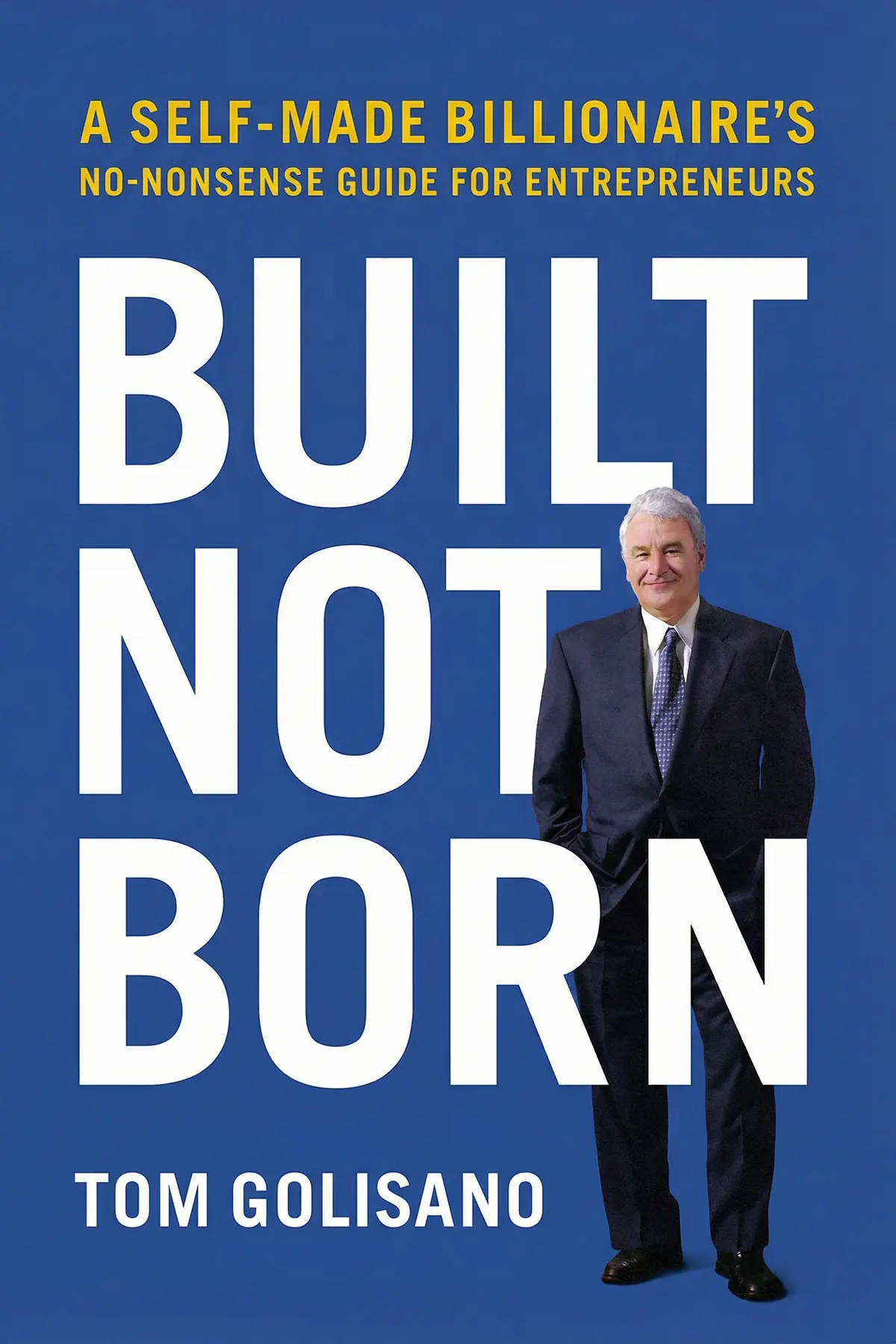
Table of Content
1. Introduction
1 min 02 sec
Most people with a business idea either never start or start on hope alone. In Built, Not Born, Tom Golisano, who founded the payroll company Paychex with $3,000 and a credit card, argues that a lasting company grows from a chain of sober decisions made one after another. Paychex is now worth over $40 billion, and the habits behind it are plain: count before you commit, sell to customers who come back, hire for attitude and make deals the other side is glad to sign.
That is the thread through the whole book. Every stage of a business, from the first page of figures to the day you sell, rewards honesty about numbers and respect for people. Founders, and employees who think like founders, get a working set of decisions here: when to kill an idea, how much weight one client should carry, what to watch for in an interview, and when to step away from what you built.
2. Weigh your appetite for risk before you quit
1 min 27 sec
Golisano had already watched several of his ventures fail before Paychex. He jumped anyway, and his reason had less to do with courage than with a hard look at how safe a salaried job really is.
3. Fit your whole business case on one page
1 min 31 sec
A popcorn seller and a software founder face the same opening question. Answered honestly, it can save years of effort, even when the answer is the one nobody wants to hear.
4. Raise money without giving away your long-term vision
1 min 47 sec
Some of Golisano’s early partners sold their own homes to back the business. His advice on capital asks for that kind of commitment, and it includes one conversation most founders would rather avoid.
5. Build revenue that keeps coming back
1 min 43 sec
A big client can feel like the moment a young company finally makes it. Paychex set a strict rule about large customers, and the number behind it surprises most people who hear it.
6. Spot the right hire with silence and coffee
1 min 28 sec
A candidate can rehearse every answer, but two small tests from Paychex reveal what rehearsal hides. Neither requires a single extra interview question, and both take less than a minute.
7. Strike deals the other side wants to keep
1 min 34 sec
Golisano found a model for negotiation in an unlikely place: settling terms with his first wife. What made that talk go quickly applies to suppliers, buyers, lawyers and rivals alike.
8. Earn a name that draws customers and talent
1 min 34 sec
Every famous brand triggers a feeling, good or bad, within a second of hearing it. Your company does the same, and Golisano traces much of that feeling to people founders rarely think about.
9. Sell your company while it is still strong
1 min 27 sec
Even the man who built Paychex eventually stepped back from running it. When and how a founder leaves can decide what years of work are worth, and the payment choice carries its own trade-off.
10. Conclusion
1 min 11 sec
Golisano’s story begins small on purpose: $3,000, a credit card and a payroll service. What turned it into a company worth over $40 billion, in his telling, was a long series of plain decisions made honestly. He counted before he committed, kept any single client from carrying too much weight, chose people for character and wrote deals both sides could live with. Even leaving was something he prepared for.
That makes the book most useful to people who suspect they lack some special gift for business. The skills he describes can be learned and practiced, which is what the title promises.
The first test is the popcorn question for your own idea, answered on one page with real figures, and accepted even if the answer is to stop. After that, look at how your revenue is spread, holding it up against the Paychex rule of one thousandth. And in your next interview or negotiation, let a silence run a little longer than feels comfortable.
On Golisano’s account, a company ends up shaped like the habits of the person who built it, one honest choice at a time.
About this book
What is this book about?
Plenty of people carry a business idea for years without acting on it, and plenty of others leap on hope alone. Tom Golisano started the payroll company Paychex with $3,000 and a credit card, and it is now worth over $40 billion. His argument is that the company was built through a long series of practical, honest choices that anyone willing to do the work can learn. The book follows a business from first doubt to final handover. Golisano shows how to judge your own appetite for risk, reduce the business case to a single page of real numbers, raise capital without losing control, and favor customers who return over one-time buyers. He explains how Paychex hires for attitude and trains for the rest, why every deal should work for both sides, how small habits build a reputation, and why the exit should be planned while the company is strong. Readers get concrete tests and rules: the popcorn question, a limit on how much revenue one client may supply, the silent pause in interviews and negotiations, and a clear view of how to sell for cash or stock.
Book Information
Who it's for
Employees with business ideas
Employees with a business idea who are weighing whether to leave a steady job.
Founders of young companies
New founders unsure how to fund, price, sell and hire in their first years.
Owners thinking about deals
Owners thinking about buying a company or planning how and when to sell their own.
About the Author
Tom Golisano
Tom Golisano, born in 1941, is an American businessman and philanthropist who founded Paychex, a provider of payroll and human resources support for businesses, and served as its CEO. He started it with three thousand dollars and grew it into a multibillion-dollar firm. He later owned the Buffalo Sabres hockey team and the Buffalo Bandits lacrosse team, and the fiber internet provider Greenlight Networks. He ran for governor of New York three times as a third-party candidate. He is an investor and an advocate for entrepreneurship.
Ratings & Reviews
Ratings at a glance
What people think
Listeners feel this book is a valuable investment of their time, with one listener labeling it essential for entrepreneurs everywhere. It earns positive remarks for its depth, as one listener notes the thorough research and another draws attention to the impressive case studies. Opinions on the advice portion are divided, with some listeners enjoying the no-nonsense suggestions and others finding the tips slightly too basic.
Top reviews
Ott
As someone who has launched several startups, I can say that this is easily an essential book for any serious entrepreneur. The advice isn't just theory; it is hard-won experience from five decades in the trenches of the payroll industry. I specifically loved the breakdown of how to build a corporate culture that fits your values without stifling individual creativity. It feels like a veteran mentor is holding your hand through the complexities of funding and scaling. Every chapter offers a new nugget of practical wisdom that you can implement in your business tomorrow morning.
Show moreSomsri
Direct, informative, and surprisingly fun, this ranks among the best business books I have ever picked up. There are no gimmicks here—just a mountain of no-nonsense advice from a man who started with a credit card loan and built a legacy. The chapter on selling your business was particularly eye-opening for me as I look toward my own exit strategy. Golisano emphasizes that success depends on knowing your business intimately, and his passion for the details is evident on every page. This is a must-read for entrepreneurs everywhere who want to build something that actually lasts.
Show moreSakura
Look, if you want a billionaire's brain in a book, this is about as close as you are going to get. The first half is a goldmine for understanding income streams and wealth management, though I'll admit page 110 gets a bit confusing with the shift in topics. Despite that one odd transition, the book is overflowing with practical concepts that most MBA programs completely fail to teach. It changed my perspective on risk—helping me realize that overconfidence in a product is far more dangerous than the market itself. This isn't just a book you read once; it’s a manual you keep on your desk for reference.
Show moreMethinee
After hearing Golisano's name mentioned in a business podcast, I felt compelled to see how he turned $3,000 into a $28 billion empire. The book is packed with practical wisdom and tested strategies that actually feel applicable to a small business owner today. It covers everything from negotiation to staffing with a veteran’s touch. While some chapters felt a bit like a lecture, the advice on recurring revenue models was worth the price of admission alone. Truth is, picking the brain of a self-made billionaire for under twenty dollars is a bargain you shouldn't pass up.
Show moreSombat
This book cuts through the usual fluffy motivational garbage that plagues the entrepreneurship genre today. Golisano’s no-nonsense approach is refreshing, especially when he discusses the harsh reality that most cash flow problems are actually just sales problems. I found the section on the one-page profit and loss projection to be incredibly helpful for keeping things focused. My only gripe is that the tone can be a bit dismissive of modern digital marketing strategies. Regardless, the core principles of integrity and fiscal responsibility are timeless and well worth your attention.
Show moreKanokwan
Finally got around to reading this after seeing it on several must-read lists for aspiring founders and business leaders. The book is very well researched and the case studies provide excellent context for the author's specific management philosophies. I was particularly struck by his argument that being employed by someone else is actually riskier than starting your own company. While some of the financial advice is a bit dated, the sections on negotiation and staffing are incredibly insightful. It’s a solid addition to any business library, even if it doesn't reinvent the wheel.
Show moreLeila
Tom Golisano doesn't sugarcoat the realities of building a multi-billion dollar company, which I found deeply refreshing and helpful. The book provides a practical how-to guide for everything from business planning to the nuances of effective leadership. I especially appreciated his take on wielding power with integrity and fairness once you finally reach the top. There were a few moments where the transition between topics felt a little clunky, particularly near the middle of the text. However, the overarching message about being built, not born is a powerful motivator for anyone feeling stuck in their career.
Show moreKaen
Ever wonder why some entrepreneurs thrive while others crash after their first year of operation? This book attempts to answer that by providing a series of case studies and straightforward guidance on managing growth. I appreciated the well-researched examples, but some sections felt way too simplistic for anyone who has already survived a business launch. It is a decent primer for a total novice, yet seasoned pros might find themselves skimming the more basic chapters. The insights are there, but you have to dig through some very dry prose to find the real gems.
Show moreHana
To be fair, the guy is a legend for building Paychex into a conglomerate, but this book was a struggle to get through. The advice comes off more like someone trying to sound smart rather than offering actionable, modern help for today's market. Many of the strategies are just basic business school concepts that have been repeated a thousand times in better books. I found the writing style to be quite repetitive and a bit dull after the first fifty pages. There are much more engaging ways to learn about wealth management than reading this particular collection of anecdotes.
Show moreOrm
Disappointment is an understatement for how I felt trying to finish this particular business memoir. It started off with a bit of momentum, but I quickly realized there is absolutely nothing "new" to learn here. Most of the advice is just recycled common sense packaged as elite wisdom to make the author sound smarter than he is. I ended up dropping it halfway through because the writing was just too boring to justify the time. Frankly, it felt more like a vanity project than a genuine attempt to help new entrepreneurs grow.
Show moreQuestions about this book
What is the main idea of Built, Not Born?
Tom Golisano argues that a lasting business comes from a chain of practical, honest decisions. Using his experience founding Paychex with $3,000 and a credit card, he covers judging your appetite for risk, reducing the business case to one page of real numbers, raising capital, building repeat revenue, hiring for attitude, making deals that work for both sides, earning a good reputation and planning an exit while the company is strong.
What is the popcorn question in Built, Not Born?
Golisano asks founders to imagine selling popcorn and to work out how many buyers they would need to cover costs and then make a profit. He wants the same answer for your real business written on a single page, using accurate data and a profit and loss statement. If the honest result says the idea will not work, dropping it early saves time and money.
How does Paychex hire employees?
Paychex prioritizes attitude and then invests in training, because Golisano believes nice people are easier to train and integrate. In interviews he uses a pregnant pause, letting silence reveal how a candidate reacts, and watches how they treat people they may see as less powerful, for example the staff member asked to bring them coffee. Pay combines a good base with performance incentives.
How can I apply Built, Not Born to my own business?
Start by writing your break-even logic on one page and accepting what it shows. Favor services or subscriptions that bring clients back, and check that no single client supplies too large a share of revenue; Paychex capped each at one thousandth of sales. Use silence in interviews and negotiations, pay suppliers promptly, and decide what a good exit would look like long before you need one.
Readers also enjoyed

Alibaba: The House That Jack Ma Built
Duncan Clark



7 Powers: The Foundations of Business Strategy
Hamilton Helmer


Bad Blood: Secrets and Lies in a Silicon Valley Startup
John Carreyrou
AUDIO SUMMARY AVAILABLE
Listen to Built, Not Born in 15 minutes
Get the key ideas from Built, Not Born by Tom Golisano, plus 5,000+ more nonfiction titles.
- 5,000+ titles
- Listen as much as you want
- 7-day free trial
- Cancel anytime









