
10 min 50 sec
Available in: English
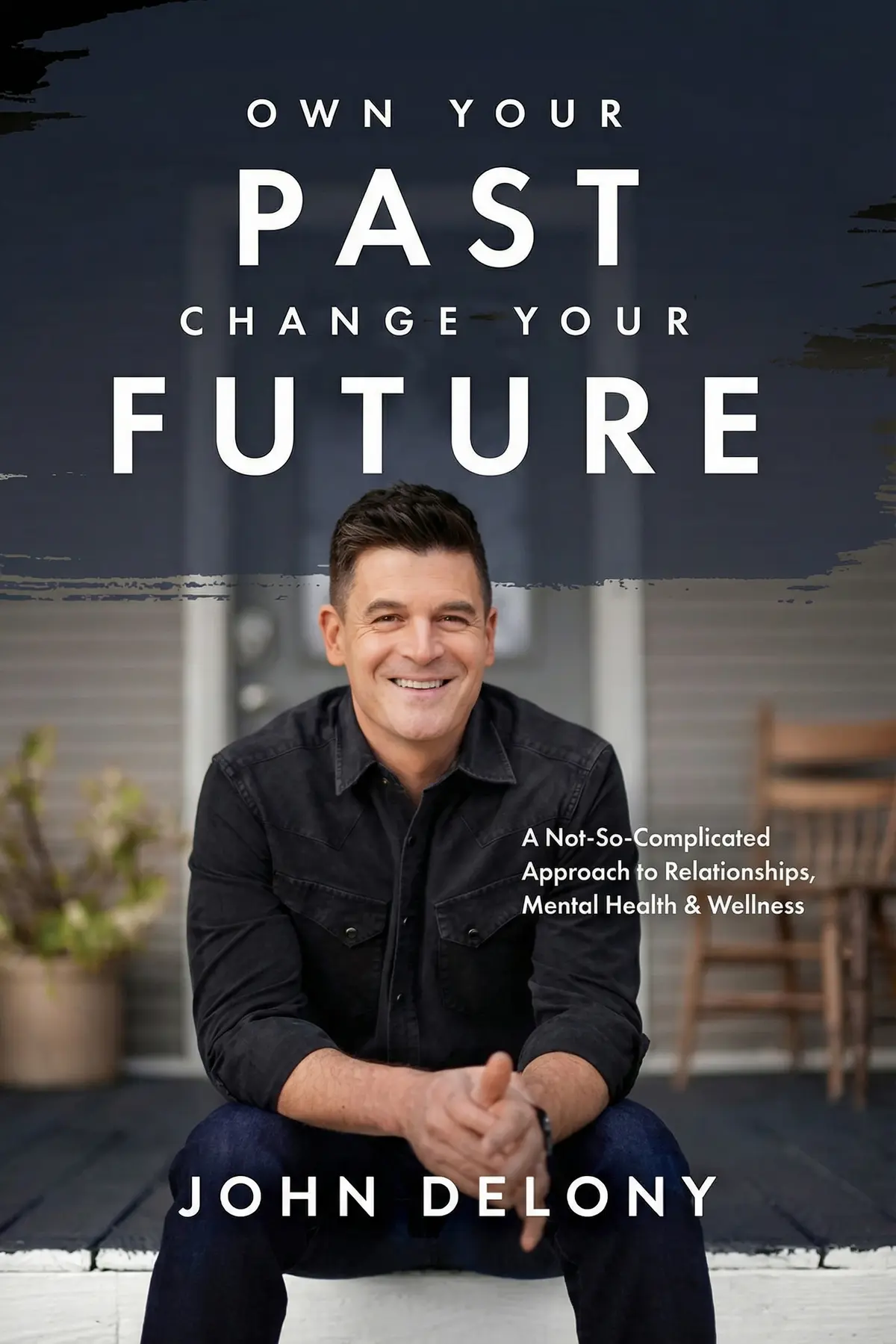
Building a Non-Anxious Life
By John Delony
Shows how to treat anxiety as an alarm worth hearing and calm it through four daily choices: facing reality, deepening connection, winning back freedom from money, clutter and time, and letting go of control.
Table of Content
1. Introduction
1 min 05 sec
If worry hums under your days even when nothing is obviously wrong, John Delony offers a surprising first move: stop treating anxiety as the enemy. In Building a Non-Anxious Life, the counselor and former crisis responder compares anxiety to a fire alarm. The siren is not the problem; the fire is.
We live in some of the safest and wealthiest times in history, he notes, yet depending on the data, between a quarter and half of people in the United States report anxiety and burnout. Delony’s answer is four choices made every day: reality, connection, freedom and belief. Make them daily, he argues, and stress stops steering your life, even though it never fully leaves.
What follows is a way to find where your own fire is burning, and a small practice for each choice. Most of them need nothing more than a sheet of paper, a phone call or ten minutes of your day.
2. Read your anxiety as a warning worth hearing
1 min 34 sec
Most people spend their energy trying to switch off the feeling of dread. Delony suggests that silencing it may be the most dangerous option, and that the feeling is trying to tell you something specific.
3. See your whole life clearly, good parts included
1 min 41 sec
Being honest about your life sounds like a recipe for feeling worse. Delony argues the opposite risk is bigger: most people are far more honest about the bad than about what is actually working.
4. Build friendships that would answer at midnight
1 min 46 sec
Many of us have hundreds of contacts and still feel alone. A single survey question about emergencies exposes how thin most support networks have become, and what small daily acts can rebuild them.
5. Win back freedom ten minutes a day
1 min 48 sec
Debt, clutter, a packed calendar and other people’s demands look like four separate problems. Delony sees one pattern behind them, and a surprisingly modest daily habit for breaking it.
6. Loosen your grip on what you cannot control
1 min 46 sec
After all the effort of facing reality and fixing what you can, the final step asks you to let go. Delony explains why that apparent contradiction is what holds a calm life together.
7. Conclusion
1 min 10 sec
Delony closes with an internet meme called choose your hard. Its point is plain: life will be difficult whichever road you take. Running from reality is hard, and so is looking straight at it. Carrying debt is hard, and so is learning how money works. Trying to manage every detail of the future is hard, and so is surrendering to something bigger.
Seen this way, the four choices are a decision about which difficulty to carry, because one road leads to more anxiety and the other toward peace and joy. Stress and trauma will still come. They weigh less when you can see your life clearly, lean on people who know you, hold less of what owns you and stop pretending everything rests on your shoulders.
Begin this week with a sheet of paper, and write down what is going well before what is not. Count the people you could call at night, then reach out to one of them. Give ten minutes a day to the debt, the clutter or the calendar that weighs on you most.
The alarm will keep sounding whenever something is burning. Your work is to go and find the fire.
About this book
What is this book about?
We live in some of the safest and wealthiest times in history, yet huge numbers of people report anxiety and burnout. John Delony starts from that paradox and reframes the problem. Anxiety, he argues, works like a fire alarm. The noise is unpleasant, but it is telling you that something in your life is actually burning. His answer is four choices, made again every day. Choosing reality is about doing a truthful review of your life, and that includes the parts that are going well. Choosing connection means building friendships deep enough to call on in an emergency. Choosing freedom means cutting back on debt, clutter, an overfilled calendar and boundaries others keep crossing. Choosing belief means giving up the illusion that you control everything. Each choice comes with a small, concrete practice: a written self-inventory, a friendship count, ten minutes a day on your heaviest burden, a page of honest writing about what you believe. Delony does not promise that stress disappears. He promises perspective, and a way to choose the kind of hard that leads to peace.
Book Information
Who it's for
Worried or near-burnout professionals
Professionals living with a constant background hum of worry or edging toward burnout.
Lonely or overloaded
People who feel lonely despite full contact lists, or weighed down by debt, clutter and an overloaded calendar.
Open to faith-friendly guidance
Readers open to a faith-friendly approach that asks them to stop trying to control everything.
About the Author
John Delony
John Delony holds two doctorates, one in counselor education and supervision and one in higher education administration. He worked in universities as a researcher and professor and spent years in crisis and emergency response. Since joining Ramsey Solutions in 2020 he has hosted The Dr. John Delony Show, writing and speaking about mental health, relationships and marriage. He is also the author of Own Your Past Change Your Future.
Ratings & Reviews
Ratings at a glance
What people think
Listeners find this work captivating and full of useful tips, addressing six core areas for lowering anxiety. The content is presented clearly, and listeners value the stimulating material, with one listener remarking that it serves as a grounded guide for comprehending anxiety. They appreciate the life wisdom shared, as one listener mentions it assists in reconstructing desired life elements, finding the text easy to grasp despite the difficult work involved. Listeners like the author's down-to-earth tone, with one noting its resonance with the typical American.
Top reviews
Anucha
After hearing Dr. Delony on his podcast, I was eager to see if his 'six daily choices' actually held water in a longer format. This book is a masterclass in shifting your perspective from seeing anxiety as a monster under the bed to understanding it as a smoke detector. Frankly, the way he breaks down the need for reality and connection over digital distraction is exactly what my generation needs to hear. It’s not just about 'thinking happy thoughts'—it's about the hard work of building a life you don't want to escape from every weekend. Some might find his conversational tone a bit too casual, but for me, it felt like sitting across from a friend who actually cares. It’s a realistic guide that doesn't promise an overnight fix but gives you the tools to start rebuilding your foundation from the ground up.
Show moreCaleb
Choosing reality is a terrifying concept, but Delony makes it feel possible in a world that thrives on curated fantasies and digital noise. I've spent years identifying as an 'anxious person,' and this book challenged me to stop making my diagnosis my entire personality. His approach to boundaries and mindfulness isn't just fluffy self-help; it’s grounded in the idea that our bodies are responding to the toxic environments we’ve built for ourselves. I loved the focus on transparency and sleep, things we often overlook when searching for a 'magic pill' to fix our brains. The writing is incredibly clear and resonates with the average person who is just tired of feeling like they’re constantly vibrating at a high frequency. It’s a profound call to action to reclaim your life from the cultural fire.
Show morePannipa
Not what I expected from a Ramsey personality, but I am so glad I picked this up. Instead of just yelling about budgets, Delony dives deep into the physiological roots of why we feel so unsafe in our own skin. He presents anxiety not as a disease you're stuck with, but as a signal that your environment or relationships are out of alignment. Personally, the section on grief and the necessity of community resonated the most because we live in such an isolated era. He doesn't shy away from the fact that changing your life is painful and slow, which makes the advice feel much more authentic than other 'manifesting' books. The audiobook is fantastic since he narrates it himself, and his passion for helping people find peace really shines through every single chapter.
Show moreAroon
Wow. This is the first book I’ve read that actually makes sense of why I feel so frantic all the time without making me feel 'broken.' Delony has this way of speaking that is incredibly relatable, like he’s lived through the same mess and figured out the exit strategy. I especially liked the focus on 'choosing reality' and how we often chase solutions to problems that aren't actually solvable. The emphasis on intentional community and physical health as foundations for mental stability is something our current 'toxic mental health culture' often ignores. It’s a challenging read that asks you to look in the mirror and make hard choices, but the payoff is a life that finally feels quiet. I’ll be recommending this to everyone I know who feels like they’re just treading water in their daily life.
Show moreSupaporn
Picked this up on a whim and the chapter on mindfulness and waiting between thoughts was a total game-changer for my rumination issues. Most books tell you to 'just stop worrying,' but Delony explains *why* your brain is spinning and how to gently redirect that focus. I loved the practical tips on decluttering and nutrition, showing that mental health isn't just 'in your head'—it's in your whole environment. It’s a punchy, insightful guide that doesn't waste time with overly academic jargon or nebulous philosophy. While some of the jokes in the footnotes missed the mark for me, the core content is gold. This is a must-read for anyone who feels like their life is one big emergency that never ends and wants a way out.
Show moreFang
Financial freedom isn't usually a topic I expect to find in a mental health book, but Delony makes a compelling case for it. While his affiliation with the Dave Ramsey world is obvious, his point that financial chaos feeds internal chaos is hard to argue with in today's economy. I appreciated the distinction between the 'fire' and the 'alarm,' though I think he occasionally oversimplifies the experience of those with severe chemical imbalances. To be fair, the 'six choices' framework is highly practical and easy to implement if you're willing to be honest with yourself about your habits. I did find the footnotes a bit distracting since they toggle between academic citations and snarky jokes, which breaks the flow of his deeper insights. Overall, it’s a solid, thought-provoking resource for anyone feeling overwhelmed by modern life’s constant pressures.
Show moreBond
Finally got around to finishing this, and I’m walking away with a lot to think about regarding my daily habits and environmental triggers. The structure of the 'six pillars' makes the overwhelming task of 'fixing your life' feel much more manageable and less like a mountain I can't climb. I appreciated that he didn't try to 'pray the anxiety away,' despite his religious background, making it accessible for people from all walks of life. My only gripe is the repetitive lists of worst-case scenarios; as an anxious person, reading through pages of 'what ifs' actually spiked my heart rate before he got to the point. Still, the core message about taking responsibility for your own peace is powerful and necessary. It’s a thought-provoking read that encourages you to stop being a victim to your own biology.
Show moreOm
As someone who has been through the ringer with various therapists, I found this perspective on the 'alarm system' quite refreshing. It shifts the power back to the individual, suggesting that we have more agency over our internal state than we’re often led to believe. To be fair, the author’s Ph.D. is in education rather than medicine, which shows in his focus on behavioral changes over neurological explanations. Some of the advice is a bit trite, but the way he packages it within the 'six choices' framework makes it feel fresh and actionable for the average reader. It’s a very conversational book—almost like a long-form podcast—which makes it an easy weekend read. If you’re looking for a realistic guide to simplify your life and quiet the noise, this is a great starting point.
Show moreNoppadol
This book was fine, but I struggled with some of the broader generalizations about how the human brain actually works. While I agree that lowering stress through better sleep and nutrition is vital, the metaphor that the alarm only goes off when there's a fire is a bit misleading for many. Some of us have broken alarms that go off in the middle of a perfectly calm ocean, and this book doesn't quite address the 'irrational' side of panic. Truth is, the advice is very 'Ramsey-adjacent,' focusing heavily on things like paying off debt to solve your mental health issues, which feels a bit small-minded. It’s a quick read with some decent coping methods, but it feels more like a guide for the 'worried well' than a deep dive into complex anxiety management for the clinically diagnosed.
Show moreSirichai
Look, I really wanted to like this, but I felt like the author was confusing chronic stress with actual, clinical anxiety disorders throughout the entire text. As someone who battles irrational triggers that have no 'fire' to alert me to, hearing that my alarm is just 'too loud' felt incredibly dismissive and oversimplified. The book spends a massive amount of time listing every single thing that could go wrong in your life before offering what felt like very vague, 'pull yourself up by your bootstraps' solutions. If you are struggling with a busy schedule and need to set better boundaries, you might find some nuggets of wisdom here. However, for those of us in the trenches of a diagnosed mental health crisis, this felt like another rebranded version of 'just let go.' It's essentially a collection of cute anecdotes that don't quite bridge the gap to clinical reality.
Show moreQuestions about this book
What is the main idea of Building a Non-Anxious Life?
John Delony compares anxiety to a fire alarm. The alarm sounding is a signal, and the real issue is the fire it warns you about. So he suggests listening to it rather than silencing it. His answer is four daily choices: reality, connection, freedom and belief. Stress and trauma will still show up from time to time, yet these choices let you keep perspective and act with intention when challenges arise.
What are the four choices in Building a Non-Anxious Life?
Choosing reality is about doing a truthful review of your life, the good along with the bad. Choosing connection means deepening relationships so you are known and supported. Choosing freedom means reducing debt, clutter, overloaded time and crossed boundaries. Choosing belief means surrendering the illusion of total control to something bigger, whether a deity, the universe or nature.
How do I start applying John Delony's ideas?
Start with pen and paper. Write where your life is going well and where you want it to improve. Tally up the people you would feel able to phone at 3 a.m., then look for one small way every day to be there for someone. Pick whichever of money, clutter, time or boundaries weighs most and give it ten minutes a day. Look for one small thing you can stop trying to control.
Is Building a Non-Anxious Life a religious book?
Belief is one of its four choices, and Delony suggests practices like prayer or attending a faith community for a month. But he defines belief broadly, as accepting that something such as a deity, the universe or nature moves beyond us. He says it does not reject science, and for some readers the first step is simply writing down what they personally believe.
Readers also enjoyed






Alcoholics Anonymous
Alcoholics Anonymous World Services

A Liberated Mind: How to Pivot Toward What Matters
Steven C. Hayes


AUDIO SUMMARY AVAILABLE
Listen to Building a Non-Anxious Life in 15 minutes
Get the key ideas from Building a Non-Anxious Life by John Delony, plus 5,000+ more nonfiction titles.
- 5,000+ titles
- Listen as much as you want
- 7-day free trial
- Cancel anytime









