
Building a Non-Anxious Life
John Delony
 English
A five-step method for moving past old hurts: name the stories that shaped you, grieve the gap between hope and reality, rebuild real friendships, and take charge of your thoughts and daily actions.
1 min 07 sec
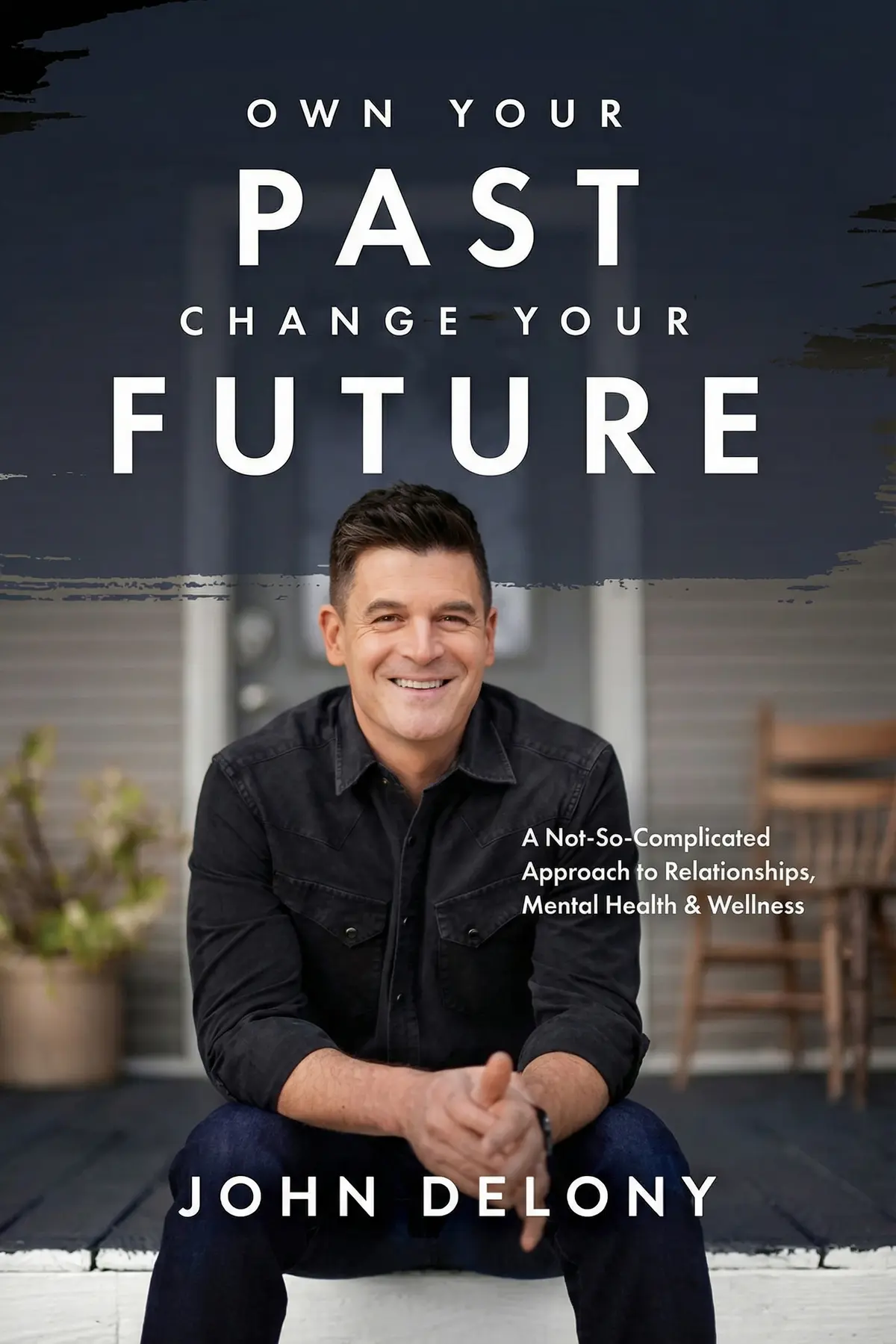
Many people carry old hurt and think they have two choices: bury it, or let it run their lives. In Own Your Past Change Your Future, counselor and crisis responder John Delony offers a third choice. Treat your past as a set of stories, own them, and start writing the next ones yourself.
He learned this the hard way. Delony once became sure his house was cracking apart. He kept calling friends and contractors, and they all told him it was fine. Soon he saw cracks in his friends’ homes, his workplace, his faith and his marriage. Then, at 3 a.m. on a stormy night, he understood that the house was sound. He was the one breaking.
His way back has five steps: own your stories, acknowledge your reality, connect with people, change your thoughts and change your actions. None of them is complicated. Each one ends in something you can do with a notebook, a phone call or an alarm clock.
2 min 19 sec
Why does a breakup from years ago still decide how you walk into a party? Delony traces most of our pain to one source, and he says the way out lies in exactly the same place.
1 min 40 sec
Comparing the life you have with the life you planned sounds like a recipe for misery. Delony asks you to do it anyway, because the pain it brings up has a job to do.
1 min 57 sec
Plenty of people want to hear your bad news, and that is the problem. Delony’s simple test sorts your contacts into friends and acquaintances, and he calls the final question, whether they will show up, the biggie.
1 min 48 sec
Making friends as an adult can feel nearly impossible, and waiting to be invited rarely works. Delony’s fixes include one that most people would find embarrassing to try, which may be why it works.
1 min 43 sec
The voice in your head never stops commenting, and you probably cannot silence it. A strange mental image involving an elephant shows how much more control you have than you think.
1 min 53 sec
Your brain treats your worst routines as safe, which is why the same patterns keep coming back. Delony’s answer starts with an honest inventory and ends with something as small as a wristwatch.
1 min 07 sec
Delony’s own crisis began with cracks he saw in walls that were perfectly sound. His five steps are a way to look for the real damage in the right place, in the stories you carry, and then to do repair work that is plain and repeatable. You own the stories, face where they have led, let people back in, sort your thoughts and change what you do. Then you go around again.
He admits the steps sound simple and the path is hard. Many people never start, and others give up early. His answer is simply to be strong and start now. Open a notebook tonight and write one story of each kind, along with one gap between the life you wanted and the life you have. Before the week ends, ask one person to share an experience with you, and ask yourself honestly whether they would come at 3 a.m. Then choose one little win, such as laying out tomorrow’s clothes, and do it.
The house was never the thing falling apart. Once you stop inspecting the walls, you can start rebuilding the person who lives inside.
Most people carry some kind of hurt, such as neglect, grief, betrayal or a lost job. Many try to ignore it or let it quietly run their lives. John Delony, a counselor and former crisis responder, argues for another approach. Treat your past as a set of stories. Own them, and then start writing new ones. He learned this in his own crisis. He was sure his house was cracking apart, but the cracks were in him. The book lays out a plain, five-step method: own your stories, acknowledge your reality, connect with people, change your thoughts and change your actions. Each step comes with something concrete to do: a notebook exercise sorting four kinds of stories, four questions that separate real friends from acquaintances, six ways to find new friends, a test for which thoughts deserve to stay, and an inventory of how you treat your body, relationships, work and faith. Readers get a simple frame for mental health and relationships that they can start on with a pen and paper tonight, plus Delony's honest warning that simple steps are still hard to walk.
People stuck on an old hurt, loss or betrayal who want a clear first step.
Professionals who feel lonely or burned out and want to rebuild real friendships.
Anyone whose good intentions keep sliding back into the same thoughts and routines.
John Delony holds two doctorates, one in counselor education and supervision and one in higher education administration. He worked in universities as a researcher and professor and spent years in crisis and emergency response. In 2020 he joined Ramsey Solutions, where he hosts The Dr. John Delony Show. He writes and speaks about mental health, relationships and marriage.
John Delony

Listeners find this to be a fast-paced and absorbing work that provides excellent actionable advice, with one listener noting it functions as an effective introductory guide for personal growth. The writing is approachable and easy to connect with, helping listeners manage modern challenges and move past life's traumas. They value the insightful material, with one listener describing it as a profound look at how to be well.
This book arrived at just the right time. Not gonna lie, I was feeling pretty overwhelmed by the chaos of my daily schedule and some old family drama that just wouldn’t quit. John Delony has a way of cutting through the noise with practical help that feels actually achievable. The way he describes 'owning your stories' really clicked for me. It isn’t about blaming people; it's about taking the wheel of your own life and deciding where to go next. Some parts felt a bit repetitive, especially when he starts listing out every possible demographic of person, but the core message is so profound. It’s a quick, engaging read that offers a way to finally put down those heavy bricks we all carry in our backpacks. Highly recommended for anyone feeling stuck.
Show moreAfter hearing Dr. Delony on his podcast for months, I finally dived into his writing. His voice definitely comes through on the page—it's intense, compassionate, and very direct. He breaks down personal transformation into five steps that, while simple on paper, are incredibly challenging to actually execute. I found the section on 'acknowledging your reality' to be the most gut-wrenching because it forces you to stop pretending everything is fine. The 'bricks in your backpack' metaphor is something I’ll be thinking about for a long time. Truth is, if you’re part of the Dave Ramsey tribe, you’ll recognize the tone, but this book stands on its own as a fantastic mental health resource. It’s relatable, helpful, and gives you the tools to actually change your future.
Show moreWow, I didn't expect to be so challenged by the section on friendship. Most self-help books focus entirely on the 'self,' but Delony argues that you can't heal in isolation. He’s right. His criteria for what makes a real friend were eye-opening and made me realize how much I’ve been neglecting my own support system. The writing is relatable and avoids the dry, clinical tone you find in a lot of psychology books. I did think the 'in this chapter we will' segments were a bit clunky and slowed the pace down a little bit. However, the overall journey toward wellness he describes is deeply moving and incredibly practical. It’s a solid five stars for anyone ready to do the heart-searching and heart-work required to be well.
Show moreAs someone who has struggled with anxiety for years, the concept of 'changing your thoughts' felt like a lifeline. Dr. Delony doesn't just tell you to 'think positive'; he gives you a roadmap for discernment and choosing which thoughts to actually keep in your head. This isn't just fluffy theory. It’s a profound look at how to be well in a world that is constantly trying to keep us stressed, tired, and disconnected. I appreciated the Christian principles woven throughout without it feeling like a sermon. The focus on 'little wins' kept me from feeling overwhelmed by the process of change. Frankly, it’s one of the most relatable books on trauma and healing I’ve read in a long time. It actually makes you feel like you can win.
Show morePicked this up on a whim and ended up finishing it in two sittings. It is such an engaging read! Delony has this way of talking about contemporary issues, like our addiction to technology and our lack of sleep, that makes you want to change your life immediately. The steps are easy to understand but require a lot of discipline to follow. I specifically liked the focus on 'owning your stories' from your childhood and past relationships. It helped me realize how much of my current behavior is just a script I was handed years ago by people who didn't know better. This is a must-read for anyone who feels stuck in their past and is ready for a healthier tomorrow.
Show moreThe chapter on grief alone is worth the price of the book. John Delony manages to be both incredibly tough and incredibly kind at the same time. He doesn't let you off the hook for your bad choices, but he also acknowledges that we’re all carrying bricks in our backpacks that we didn't ask for. The 'Connect' step reminded me that I’ve been trying to do life alone for way too long. It’s a transformative journey that doesn’t promise an overnight fix, which I appreciated. The emphasis on 'changing your actions' even when you don't feel like it is exactly the kick in the pants I needed. Truly a life-changing resource for those willing to do the work.
Show moreEver wonder why you keep making the same mistakes over and over? This book tackles that head-on. Delony walks you through how to grieve the life you thought you’d have so you can actually start living the one you’ve got. Not gonna lie, the chapter on 'acknowledging reality' was hard to get through because it was so convicting. He uses a lot of quotes from other authors and musicians, like Andrew Peterson, which I actually enjoyed. It added a layer of depth to his own personal stories. My only gripe is that it can feel a bit repetitive in the middle chapters, and the lists can be distracting. Still, it’s a very practical manual for anyone wanting to improve their relationships and overall mental well-being.
Show moreFrankly, I was worried this would just be another 'pull yourself up by your bootstraps' manual. Thankfully, it’s much more than that. While Dr. Delony is big on personal responsibility, he also spends a lot of time on the trauma and cultural stories that shape us before we even have a choice. The writing is very direct and relatable, though sometimes the formatting with long lists of examples felt unnecessary and a bit over the top. I found the discussion questions at the end of the chapters helpful for actually applying the concepts to my own life rather than just nodding along. It’s a great, practical guide for navigating the messiness of being human. Definitely worth the read for heart-searching adults who want something actionable.
Show moreI’ve been a listener of the podcast for a while, so I had high expectations. There are some really great points scattered throughout, particularly regarding 'changing your actions' and not just waiting for your feelings to move first. However, the writing style was a major hurdle for me. It felt like I was reading a transcript of a long-winded speech rather than a structured book. The constant, repetitive lists of 'rich people, poor people, single people, married people' got old very fast. It felt like filler. Look, the principles are solid and likely helpful for many readers, but I struggled to stay engaged with the rambly delivery. It’s a decent starter guide for self-improvement, but not quite the deep, nuanced dive I was hoping for after listening to his show.
Show moreTo be fair, I think I was looking for something with a bit more scientific weight. While I appreciate Delony’s personal stories and his obvious passion for helping people, the five-step process felt a bit oversimplified to me. It relies heavily on anecdotes rather than established psychological studies, which made it hard for me to fully buy in. The tone is very 'Dave Ramsey'—intense and high-energy—which might alienate readers looking for a quieter, more nuanced approach to mental health. I also found the structure to be a bit disjointed in places, with too much emphasis on the author's own life. It’s not a bad book by any means, but it felt more like an extended motivational speech than a transformative or credible psychological guide.
Show moreJohn Delony’s method has five steps. First, own your stories. Second, acknowledge your reality, which includes grieving the gap between the life you hoped for and the one you have. Third, connect with people who will show up for you. Fourth, change your thoughts by choosing which ones to keep. Fifth, change your actions through an honest inventory and small wins. He says to repeat the cycle again and again.
Delony names four kinds of stories that shape you. First come the stories you are born into, such as your culture, family and faith. Then come the stories others tell you about your worth and abilities. Third are the events that actually happen to you, like a death, a new house or a lost job. Last are the stories you tell yourself about who you are. He suggests writing about each one in a notebook.
He offers four questions. Can you tell this person your good news, and do they celebrate with you? Can you tell them your failures, and will they hold you accountable without gossiping? Can you share your darkest memories, and will they listen without clichés or unasked-for advice? And the biggest one: will they show up, even at 3 a.m. in an emergency? He adds that you should show up for them too.
Start with a notebook. Write one story from each of Delony’s four types, plus one gap between your hopes and your reality. Pick one of his six ways to make friends, such as inviting someone over or saying yes to an invitation. Test your thoughts by asking whether each one moves you closer to the person you want to be. Then choose one small action, like setting an alarm or laying out tomorrow’s clothes.
It suits readers dealing with grief, loneliness, betrayal or a feeling that life has drifted away from what they hoped for. They want a simple structure, not a long theory. Delony writes from his background in counseling and crisis response, and from his own breakdown, so the book fits people who want plain steps they can start on their own and repeat over time.



Leanne Maskell






Alcoholics Anonymous World Services

Steven C. Hayes
AUDIO SUMMARY AVAILABLE
Get the key ideas from Own Your Past Change Your Future by John Delony, plus 5,000+ more nonfiction titles.









