

12 min 42 sec
Available in: English
 ไทย
EnglishไทยBuddhism – Plain and Simple: The Practice of Being Aware, Right Now, Every Day
By Steve Hagen
A Zen teacher's plain guide to why expectations and fixed opinions leave us restless, and how core Buddhist practices, from right view to mindful attention to the body, bring us back to the present moment.
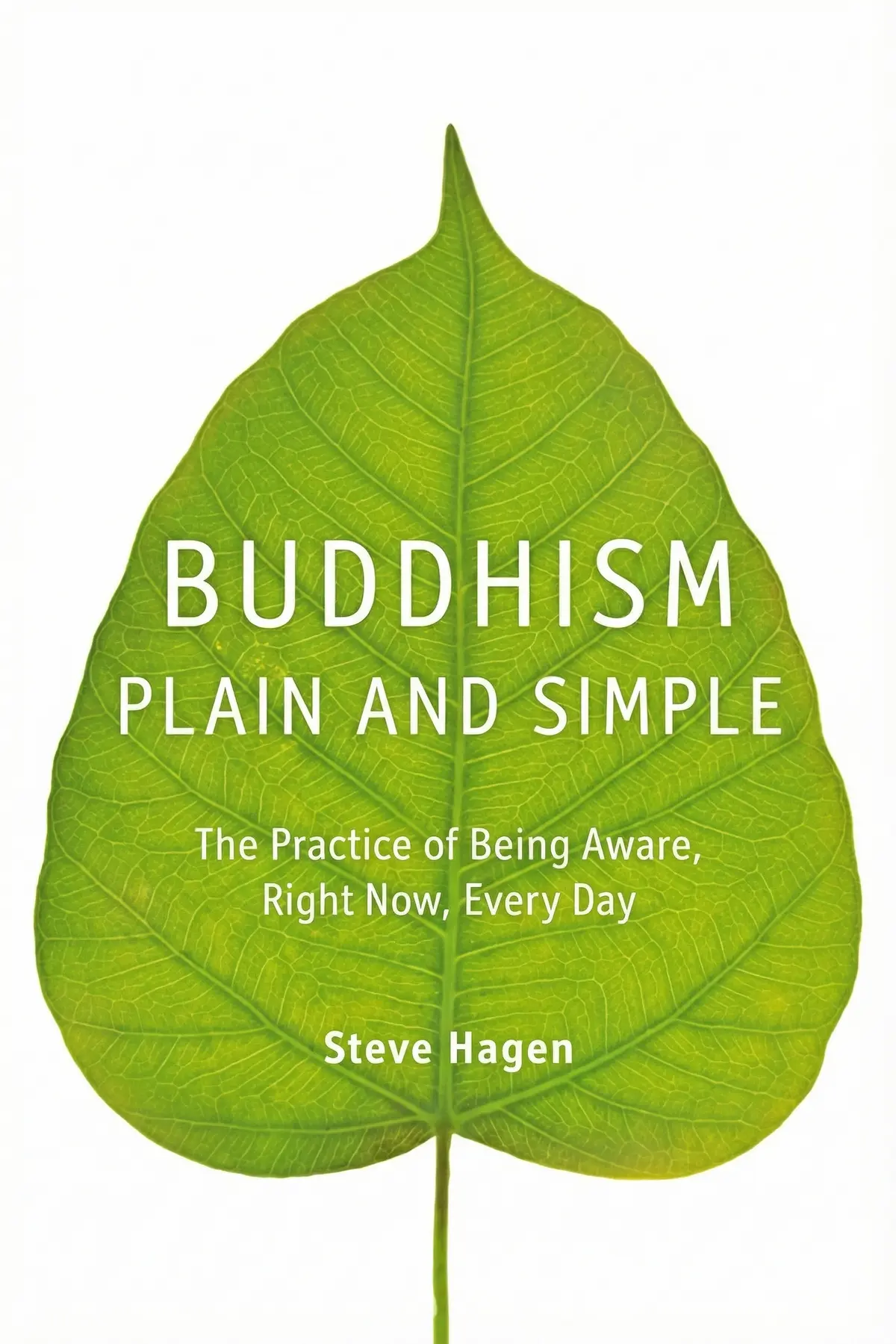
Table of Content
1. Introduction
1 min 05 sec
If you often feel restless or let down even on good days, Steve Hagen offers a plain diagnosis: the trouble usually lies less in what happens than in the expectations we lay over it. In Buddhism Plain and Simple, the Zen priest and longtime teacher argues that our desires, fears and opinions form a veil between us and the world as it actually is. A summer shower ruins the day only because we had already decided it should be sunny.
Hagen’s claim is that this veil can be lifted with practice, without adopting any new belief. A handful of the Buddha’s eight practices, applied to ordinary moments, help us stop fighting change, hold our opinions loosely and notice our own reactions before they run us. Along the way he takes apart the idea of a fixed self and shows how every opposite belongs to one whole. What remains is a way to meet an irritating noise, a worry or an empty evening with clear attention, plus a breathing exercise you can try today.
2. See the veil your expectations hang over life
1 min 33 sec
A pleasant afternoon of shopping, friends and ice cream can still end in a hollow evening. Hagen traces that flat feeling to a habit so constant that most of us never notice we are doing it.
3. Stop fighting the change you never controlled
1 min 24 sec
Many people hear Buddhism as advice to give up control and shrug at life. Hagen reads it differently, and his version speaks directly to anyone who lies awake rehearsing worst cases.
4. Hold your opinions loosely and end needless conflict
1 min 42 sec
A boy loves his pet rat, and his mother wants it gone. Hagen uses their standoff to show where most arguments really come from, and what it takes to stop feeding them.
5. Make an effort that never strains
1 min 31 sec
Pushing hard works for deadlines, so it seems natural to push hard for calm as well. Hagen explains why that instinct backfires, using a swamp, a horse and an old proverb.
6. Calm a flash of irritation by feeling it
1 min 25 sec
A dripping tap in the next room can wreck an evening. Hagen turns that small torment into a lesson about where irritation actually lives, and a simple way to let it settle.
7. Treat yourself as a stream of change
1 min 33 sec
Believers in an eternal soul and hard materialists seem to disagree about everything. Hagen argues they share one mistake, and fixing it changes how you carry a bad mood or a harsh label.
8. See how every opposite belongs to one whole
1 min 25 sec
Light and dark, good and evil, figure and background feel like facts about the world. Hagen suggests they say more about the mind doing the sorting, and what lies beneath the sorting.
9. Conclusion
1 min 04 sec
Hagen’s Buddhism asks for no new beliefs. It asks you to notice what you add to each moment: the forecast you expected, the rat you have already labeled, the self you imagine standing still while everything else moves. Strip those additions away and what is left is ordinary life, rain included, seen without the veil. In his telling, that is where the peace was all along.
The practice starts small. When a memory or a worry sets your nerves on edge, close your eyes and rest your attention on your breathing, letting the mind settle as it follows each breath. When something irritates you, look for the feeling in your body before you look for someone to blame. And when a disagreement hardens, ask which single pattern in the kaleidoscope you are guarding.
None of this needs effort that strains. It needs the steady intention to come back, again and again, to the moment in front of you. The tap will keep dripping. Whether it torments you is the part that was always yours.
About this book
What is this book about?
Plenty of people do everything they are supposed to enjoy and still come home feeling empty, or spend their days braced against small and large worries. Steve Hagen, a Zen priest and longtime teacher, traces both problems to one habit: we compare reality with what we wanted or expected, and that comparison stands like a veil between us and the world as it actually is. Hagen presents Buddhism as a set of practices for living in the present moment. He walks through the Buddha's eight practices and dwells on the ones that shape daily experience: right view, which loosens our grip on fixed opinions; right intention, the steady resolve to return to the present; right effort, which never strains; and right mindfulness, which turns attention from what annoys us to how the annoyance feels in the body. He also takes apart the idea of a fixed self and shows how every pair of opposites belongs to a single whole. Readers get a short, clear account of what Buddhism says about suffering and change, along with simple ways to apply it, from handling a dripping tap to calming a painful memory with the breath.
Book Information
Who it's for
Busy professionals
Busy professionals who feel empty or anxious even when life is going well.
New to Buddhism
Newcomers curious about Buddhism who want its core ideas without ritual or jargon.
Irritated by small things
Anyone easily irritated by small things who wants a simple, body-based way to calm down.
About the Author
Steve Hagen
Steve Hagen, born in 1945, is a Zen priest and a longtime teacher of Buddhism. He studied with Zen Master Dainin Katagiri for fifteen years and is one of his Dharma heirs. Hagen founded the Dharma Field Zen Center in Minneapolis, Minnesota, and served as its head teacher. He has written several books on Buddhism, and Buddhism Plain and Simple ranked among the five bestselling Buddhism books in the United States by 2003.
Ratings & Reviews
Ratings at a glance
What people think
Listeners find this guide to Buddhism to be a compelling read that functions as a superb primer on its core tenets. The material is composed in straightforward English and is very accessible, with one listener remarking that it is a book to revisit repeatedly. They value its genuine perspective on Buddhism absent of religious components, and one review emphasizes how it delivers concepts without sounding preachy. The author’s style is full of passion, and listeners appreciate the brief clarifications and the stimulating ideas provided throughout.
Top reviews
Somboon
Finally got around to this Zen classic after years of hearing about it. What struck me immediately was how Hagen strips away the incense, the rituals, and the 'funny clothes' to get to the core of what it means to be awake. This isn't a book about becoming a Buddhist; it's a book about seeing. He uses plain English to explain why our minds are constantly 'leaning' toward the future or the past instead of just being in the here and now. I loved the section on the afterlife where he basically says it doesn't matter because we haven't even figured out how to live in the present. To be fair, some might find the lack of specific 'methods' frustrating, but I found the conceptual clarity refreshing. It’s a passionate, quick read that I know I’ll return to whenever my mind starts to get cluttered with nonsense again.
Show moreJonathan
Buddhism is often presented as this mystical, exotic thing, but this book brings it right back to the ground. There are no rules here, just observations about how we create our own suffering by refusing to see things as they are. I felt a real sense of peace reading Hagen’s take on the 'stream' of existence. He doesn't want you to kill the Buddha; he wants you to stop looking for a Buddha outside of your own awareness. This is easily the most straightforward spiritual book on my shelf. It’s concise and gets straight to the point without any 'sciencey' filler or neuro-babble that seems to be popular in modern mindfulness books. If you want to understand the basic tenets of Buddhism without the baggage, start here. It’s plain, simple, and deeply thought-provoking.
Show moreSofia
Ever wonder why most spiritual books feel like they’re trying to sell you a costume? Hagen does the opposite. He tells you to take the costume off. This is a brilliant, stripped-down look at what the Buddha actually taught before 2,500 years of tradition got layered on top. I appreciated his 'secular' approach; you don't have to believe in anything to get value from this. He just asks you to look at your own experience. The way he describes how we 'lean' into our expectations instead of just seeing what is right in front of us changed how I view my daily commute. It’s not about being a 'better' person; it’s about being an awake person. It is a quick read, but it holds a lot of weight. Highly recommended for skeptics.
Show moreOoi
The chapter on the afterlife is worth the price of the book alone. Hagen essentially argues that obsessing over what happens after we die is just another way of avoiding the reality of right now. It’s a bold, no-nonsense take that I found incredibly refreshing. He presents Buddhism as a philosophy of 'seeing' rather than a system of belief. I've found myself re-reading certain passages just to sit with the simplicity of his words. It’s not a 'how-to' guide with 10 steps to enlightenment, which might annoy some people, but that’s the whole point. You can't follow a map to somewhere you already are. This book is a passionate plea to wake up and stop living in a dream of your own making. It’s authentic, direct, and remarkably clear.
Show moreBee
What sets Hagen apart from other spiritual teachers is his refusal to lean on dogmatic crutches. In my experience, most introductory texts get bogged down in history or cultural traditions, but this stays focused on the philosophy. He presents the idea of 'no-self' in a way that is actually digestible for a Western audience. I particularly enjoyed the distinction he makes between religion and a way of life. It’s not about believing in something; it’s about observing reality as it is. My only minor gripe is that the prose can be a bit repetitive at times. He repeats phrases about 'the whole' and 'seeing' quite often, which might be a Zen teaching tool, but it felt a little circular in the middle chapters. Still, it’s an excellent, non-preachy entry point for anyone curious about mindfulness.
Show morePalm
Wow, this was exactly the mental reset I needed for the new year. Hagen manages to explain the Four Noble Truths without making them sound like ancient commandments. He frames them as practical observations about the human condition. I’ve read a few books on Zen before, but his explanation of 'no-self'—specifically the idea that we aren't a noun but a process—really clicked for me this time. Truth is, we spend so much time worrying about the future that we miss the only moment we actually have. The book is very thin, but it’s dense with ideas that make you stop and look at the wall for twenty minutes. My only complaint is the repetitive nature of the second half. It felt like he was trying to fill a page count, but the first 80 pages are gold.
Show moreAroha
As someone who prefers a secular approach to meditation, I appreciated how Hagen avoids the sciencey traps of modern NüBü writers. He doesn't try to prove Buddhism with an fMRI scan. Instead, he focuses on the raw philosophy of perception. The book is written in very plain English, making it accessible even if you've never heard of dharma before. To be fair, he does get a little repetitive with the 'mind leaning' metaphors toward the end, and some of the logic regarding the lack of a permanent self felt a bit dismissive of human memory and trauma. But as an introduction to the core concepts of Zen, it’s top-tier. It isn't preachy, and it doesn't ask for your devotion. It just asks for your attention. Definitely worth a spot on the bookshelf.
Show moreSukit
After hearing so much about Hagen’s approach, I found it a bit of a mixed bag. On one hand, his writing is accessible and he avoids the usual esoteric jargon that makes these books a chore. I liked the anecdote about the soft-top car and the raccoon—it made the concepts feel lived-in. However, by the halfway mark, it felt like he had run out of things to say. He kept repeating the same few phrases about 'awakening' and 'the truth waiting to be seen' over and over again. It started to feel less like a philosophy and more like a collection of mantras. Is Buddhism really this simple? I felt like I was being told what I was doing wrong without being given any actual tools to fix it. It’s a good primer, but I think I need something with more meat on its bones.
Show morePete
I really wanted to like this, but I couldn't get past the condescending tone. Hagen uses this analogy of a scared little boy at an X-ray machine to explain our fear of consciousness, and it felt incredibly patronizing. He tells the reader 'it won't hurt,' as if he’s some enlightened parent and we’re all just confused children. The logic felt full of holes, too. He argues there is no separate self and that we aren't the same person we were at age six because our atoms changed, but that’s just a leap in logic that ignores how experiences carry forward. To suggest there is zero connection between our past and present is just silly. Plus, the formatting was distracting—italics and capital letters seemed to be thrown in at random. For a book that claims to be simple, it felt unnecessarily smug.
Show moreElla
The writing style in this book drove me absolutely up the wall. Every other sentence has an italicized word for emphasis, which makes the whole thing feel like being yelled at by a very calm person. It felt incredibly repetitive; I think he said 'you must experience the here and now' at least fifty times. There’s almost no actual content here—it’s just a handful of abstract ideas stretched out over 150 pages. One minute he says distinct objects don't exist, and the next he's giving advice on how to live your life. How can I live a life if I don't exist? The contradictions and leaps in logic were too much for me to handle. I was looking for a clear guide, but instead, I got a mediocre collection of 'deep' thoughts that don't actually offer any solutions.
Show moreQuestions about this book
What is the main idea of Buddhism Plain and Simple?
Steve Hagen argues that most suffering comes from comparing reality with our wishes and expectations. Desires, fears and opinions form a veil between us and the world as it is, and resisting change keeps us confused and dissatisfied. Buddhist practices such as right view, right intention, right effort and right mindfulness help us drop that veil and experience the present moment directly.
What does Steve Hagen say about the self?
Hagen explains that Buddhism rejects both the idea of an immortal soul, called atman in Hinduism, and the materialist view that we are only a body and mind that end together. Both freeze something fluid into a fixed concept. Because our thoughts, moods and attitudes are always changing, the Buddha described individuals as streams. We are not corks floating in time; we are the flow itself.
How do you practice right mindfulness according to Hagen?
When something irritates you, such as a dripping tap, shift your attention from the situation to your own reaction, without judging it. Notice where the annoyance shows up in your body: clenched teeth, a pounding head. Stay with those sensations. Hagen says breathing tends to deepen and the jaw relaxes, and you begin to see that your reactions, often set off by your own thoughts, are the real source of distress.
Who should read Buddhism Plain and Simple?
It suits people who feel discontented or worried despite a comfortable life, and readers who want a clear, practical introduction to Buddhist thought. Hagen, a Zen priest who studied with Dainin Katagiri for fifteen years, presents Buddhism as a set of daily practices for seeing clearly, so it works for skeptics as well as for those already drawn to meditation.
Readers also enjoyed

A Force for Good: The Dalai Lama's Vision for Our World
Daniel Goleman

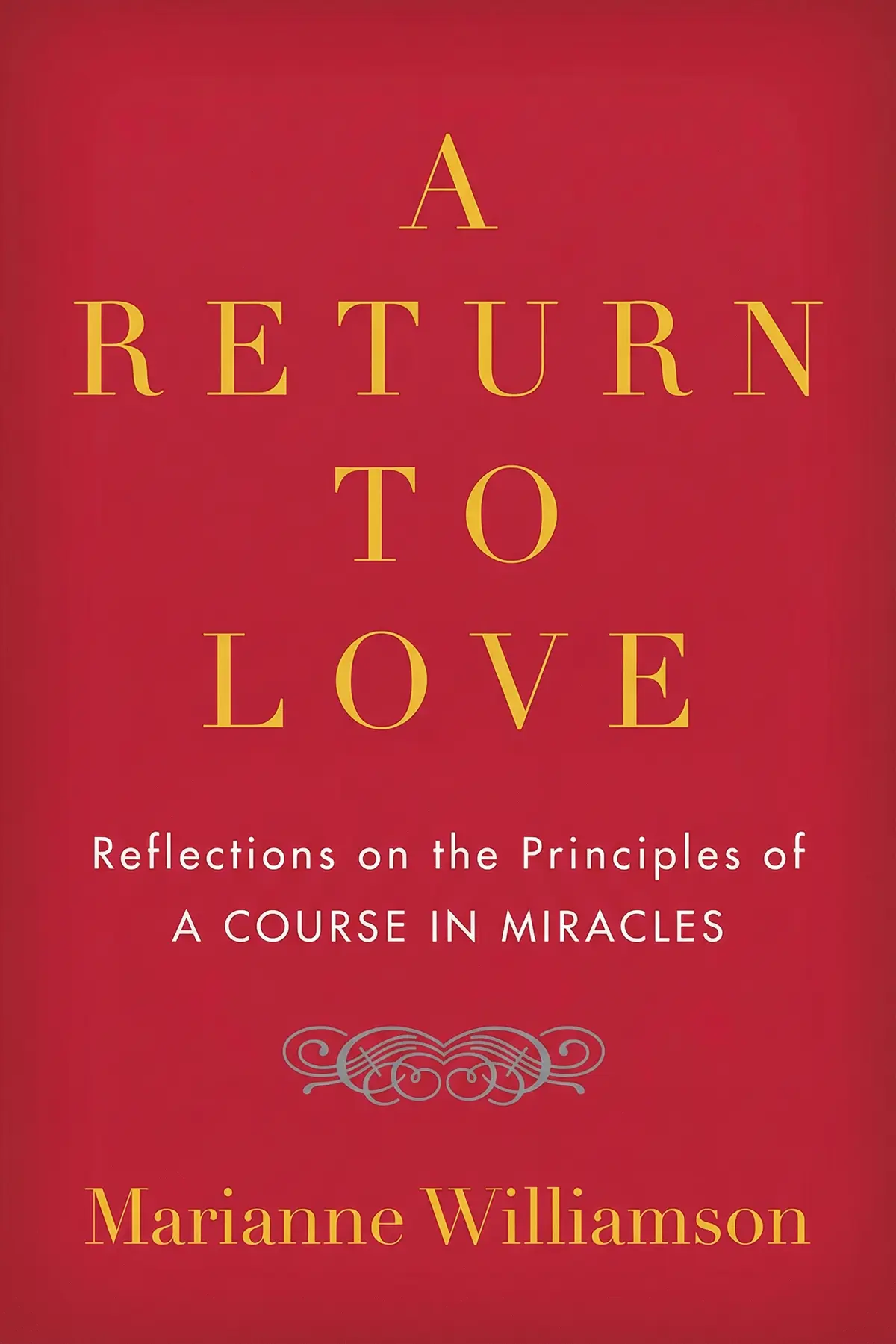
A Return to Love: Reflections on the Principles of a Course in Miracles
Marianne Williamson

Abundance: The Inner Path to Wealth
Deepak Chopra

Alcoholics Anonymous
Alcoholics Anonymous World Services
A New Earth: Awakening to Your Life’s Purpose
Eckhart Tolle

Aflame: Learning from Silence
Pico Iyer
AUDIO SUMMARY AVAILABLE
Listen to Buddhism – Plain and Simple in 15 minutes
Get the key ideas from Buddhism – Plain and Simple by Steve Hagen, plus 5,000+ more nonfiction titles.
- 5,000+ titles
- Listen as much as you want
- 7-day free trial
- Cancel anytime









