

A Life Decoded: My Genome: My Life
J. Craig Venter
 English
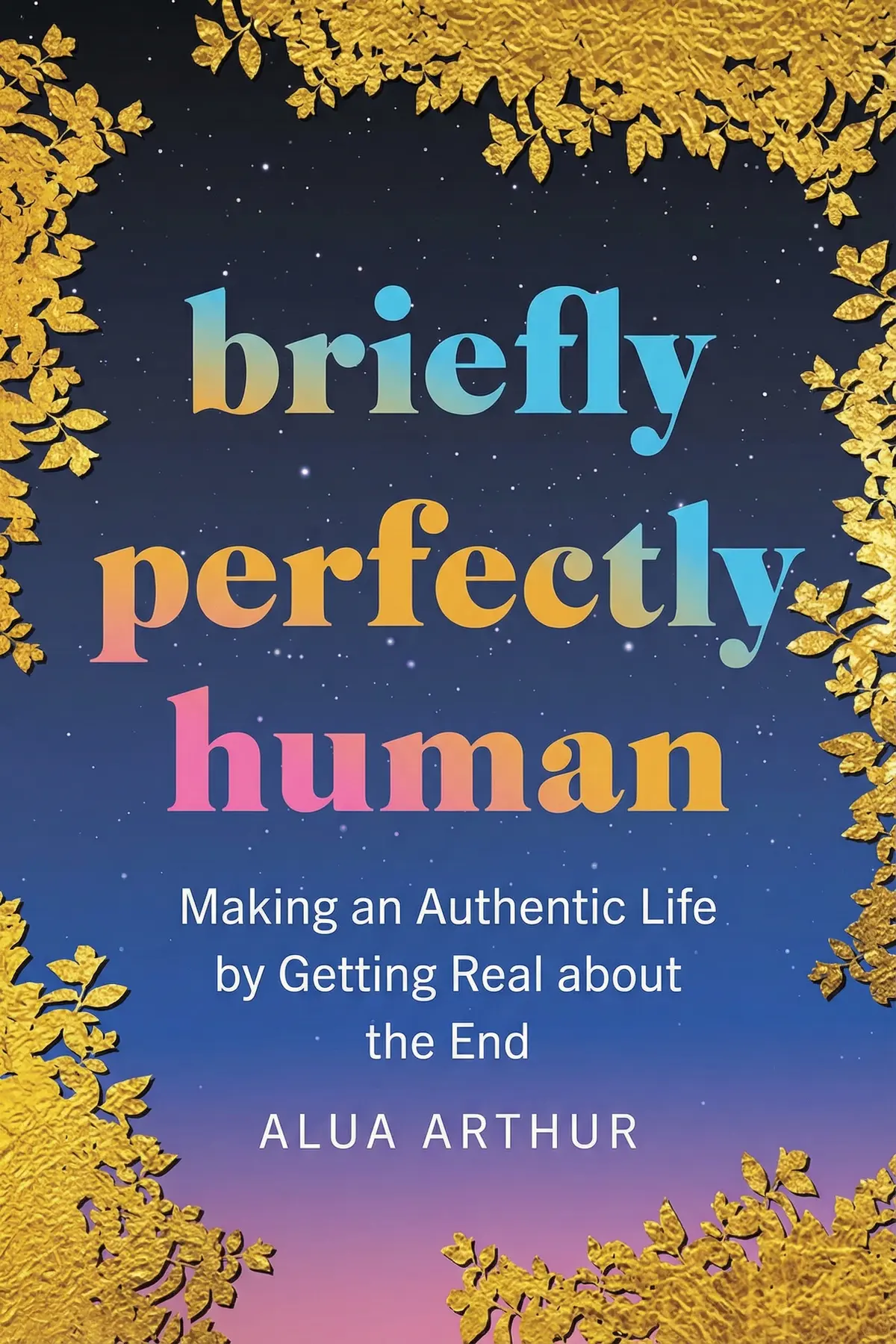
Death doula Alua Arthur shows how thinking and talking about death helps you see what matters now, care well for a dying loved one, and plan ahead so your family isn't left guessing.
58 sec
Most people put off thinking about death until it arrives. Then they meet it unprepared, with words left unsaid and decisions made in a panic. In Briefly Perfectly Human, death doula Alua Arthur argues that the opposite habit improves life itself: looking at your own end makes it clearer what deserves your time now.
Arthur sits with people in their final days. She handles the paperwork of dying, and she also listens to the regrets and feelings that surface at the threshold. Her argument runs through everything she describes. When we face mortality openly, in private reflection, at a bedside, around the family table and in ordinary conversation, we live more deliberately and meet the end with less fear. Along the way she offers concrete help: what to do when a dying parent lashes out, how a caregiver avoids running empty, and how to start the family conversation nobody wants to start.
1 min 45 sec
A lawyer unhappy in her career met a dying stranger while traveling, and her life took a new direction. What she learned there now shapes the work she does with people in their last days.
1 min 51 sec
A dying person may turn angry, frustrated or afraid, and Arthur asks loved ones not to take it personally. Arthur explains what is happening underneath, and what to offer in the room instead of retreating.
1 min 44 sec
Many people end up caring for a dying relative, yet the work can still leave them feeling alone in it. Arthur explains why that loneliness sets in and the plain habits that keep a caregiver standing.
2 min 02 sec
Families often end up making hard medical choices in a hospital corridor, already grieving and guessing at what their loved one wanted. Arthur lays out a simple way to settle those questions well before a crisis arrives.
1 min 55 sec
Most of us will one day sit with someone who is dying, with no training and no idea what to say. Arthur names the skills that fill that gap, and how to find help when you lack them.
1 min 46 sec
Grief that is pushed aside does not vanish; it moves somewhere else, sometimes into the body. Arthur traces that pattern up to whole societies and argues that the cure is surprisingly ordinary.
1 min 07 sec
Arthur’s book rests on a paradox she lives every day: the person who spends the most time near death is the one urging the rest of us to live with more intent. Her own path, from a law career that left her unfulfilled to the bedsides of strangers, makes the argument better than any principle could. Mortality, looked at directly, becomes a lens on the present. It shows the regrets you can still repair, the relationships you can still tend and the hours you can still choose how to spend.
The work she describes is ordinary enough for anyone to start. Start one conversation with your family, perhaps sparked by a news story, pick the person you trust to speak for you on medical matters, and formalize that choice through a health care durable power of attorney. When you sit with someone who is dying, let their anger pass without taking it personally, ask before you comfort, and stay in the room in mind as well as in body. Look after yourself while you look after them.
None of this makes death any less certain. It makes the time before it more fully yours.
Most people avoid the subject of death until it arrives. Then they face it unprepared, with feelings never voiced and medical decisions made in a rush. Alua Arthur, a death doula who left a law career to sit with the dying, argues that this avoidance costs us twice: once at the end, and again in how we live before it. Her case is that looking at mortality directly brings values, relationships and the use of limited time into focus, and that talking about death makes it less frightening. From her work at the bedside she offers practical guidance: how to stay present with a dying loved one, how caregivers can protect themselves, how to run a family meeting about end-of-life wishes, and how to choose a health care proxy and make it official. Readers get both a change of attitude and a set of concrete steps. Arthur calls these skills death literacy and argues that nearly everyone will need them, because nearly everyone will one day care for someone at the end.
Adults with aging parents who have never discussed end-of-life wishes and don't know how to begin.
People caring for a seriously ill relative who feel worn out and alone.
Anyone whose fear of death keeps them from thinking clearly about how they want to live.
Alua Arthur is a death doula. She accompanies and supports people and their families through the end of life. She founded Going with Grace, which offers planning and support for that stage. Her 2023 TED Talk on how thinking about death can improve the way people live has been viewed more than 1.5 million times. She has also appeared on CBS's The Doctors and in the Disney docu-series Limitless.
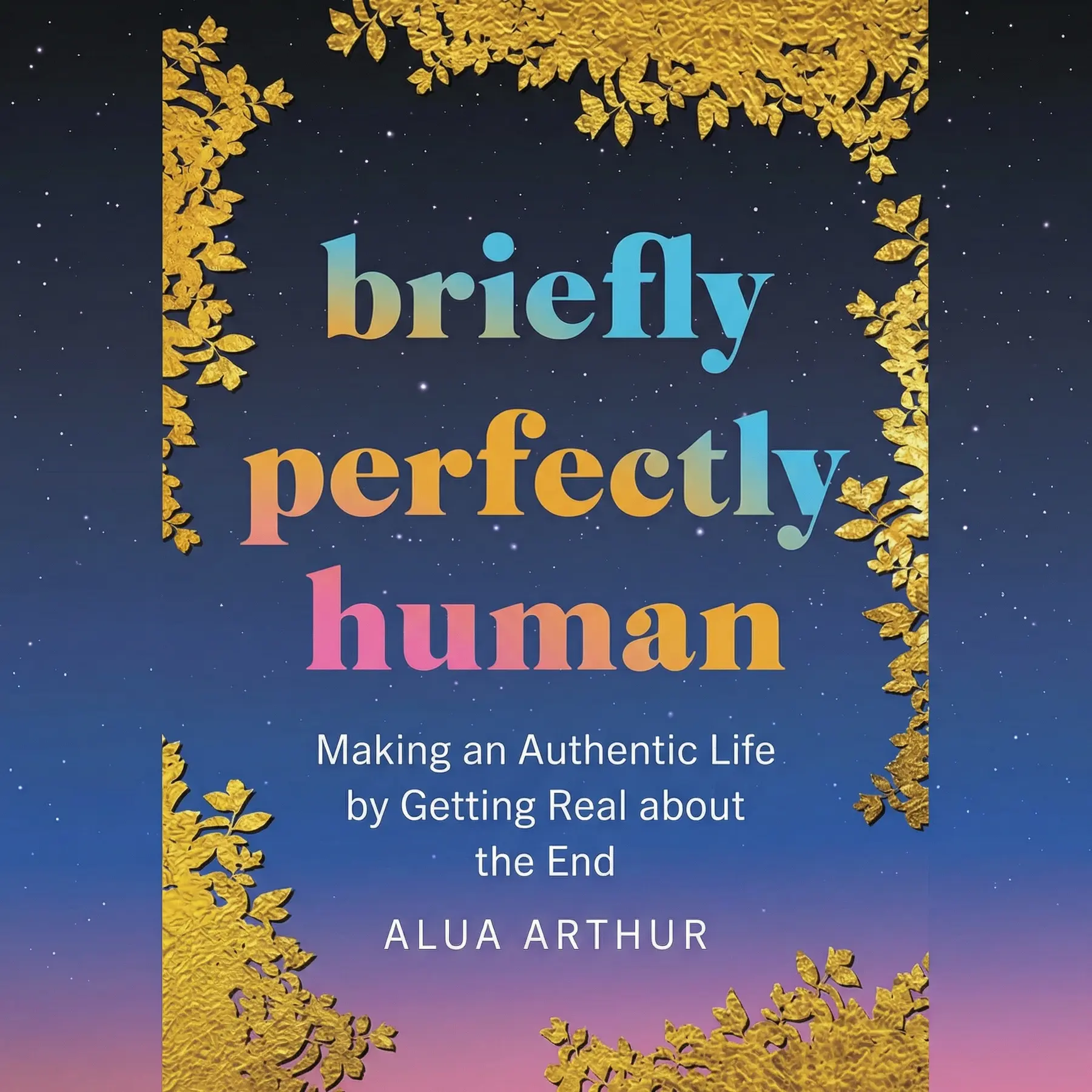
Listeners describe this memoir as an accessible and elegantly composed narrative, offering stimulating insights that evoke both humor and sorrow. They value its educational merits and life lessons, while one listener emphasizes how the story fosters fresh paths toward self-acceptance. The work encourages people to build a wholesome connection with the inevitability of death.
Wow. This book completely shifted my perspective on what it means to live while knowing that we are all inevitably heading toward an exit. Alua Arthur writes with a raw, luminous honesty that made me both laugh and cry in the same chapter. I found the stories about her transition from a miserable lawyer to a compassionate death doula to be deeply inspiring and humbling. Her reflections on self-acceptance and body positivity were unexpected but felt so necessary within the context of mortality. It’s not just a book about dying; it is a sacred invitation to show up for your own life before it’s over. I finished this feeling a strange sense of peace and a renewed desire to cherish every fleeting, messy moment. Truly a beautiful, life-altering read.
Show moreThe chapter regarding her brother-in-law’s passing is something that will stay with me for the rest of my life. It was gut-wrenching, yet Arthur’s ability to weave that personal tragedy into a larger narrative about legacy and love is masterful. Personally, I found her storytelling style to be incredibly authentic and courageous. She doesn’t shy away from the gritty, uncomfortable parts of the human experience, including her own struggles with depression. While some might find her tangents into her personal life distracting, I felt they were the heartbeat of the book. It highlights that we don’t become saints just because we’re facing the end. We remain briefly, perfectly human. This is a must-read for anyone navigating grief or simply looking to understand the mechanics of a 'good death' through a more spiritual lens.
Show moreAfter hearing Alua Arthur speak in an interview, I knew her book would be special, but I wasn't prepared for how much it would mirror the emotional depth of her sister Bozoma St. John’s work. There is clearly a lot of wisdom in that family. Arthur’s prose is poetic and fluid, making a heavy topic feel accessible and even light at times. I particularly appreciated her intersectional lens as a Ghanaian woman navigating the very white, very clinical death industry in America. She brings a unique cultural richness to the conversation that is often missing from Western literature on the subject. Not gonna lie, I cried through the last fifty pages. It’s enlightening, challenging, and ultimately a very refreshing take on a topic we usually spend our lives trying to avoid.
Show moreRarely do I find a book that feels like it was written specifically for the questions I was too afraid to ask out loud. This is a courageous exploration of the one thing we all have in common. Arthur’s honesty about her 'failures' and her depression makes her feel like a friend rather than an untouchable expert. I felt like I was sitting across from her, sharing a cup of tea while we talked about the end of the world. Her descriptions are vivid and her empathy is palpable on every page. This book doesn't just teach you how to die; it teaches you how to be present. I’ve already recommended it to my entire book club because the conversations it sparks are just too important to miss.
Show moreEver wonder what a death doula actually does? This book answers that, but it also asks you what YOU are doing with your time right now. It is raw, honest, and sacrosanct. Alua Arthur has a way of making the most terrifying topic feel like a warm hug. I loved the blend of her Ghanaian heritage with her American reality; it added a layer of depth that most memoirs lack. The stories of her patients were handled with such tenderness, even the difficult ones. It’s educational without being dry and emotional without being manipulative. This book creates a space for self-acceptance that I didn't know I needed. Ten stars if I could give them. It is simply profound.
Show morePicked this up during a period of intense grief, and it served as a gentle companion through the dark. I loved the way she describes the logistical 'death work'—the financial and spiritual preparation—as a form of ultimate self-care. It’s a thought-provoking read that pushes you to ask yourself the hard questions before it’s too late. There were a few moments where the narrative felt a bit preachy, especially regarding her views on ageism and the 'full life' trope. I didn't necessarily agree with all her takes, but I appreciated the challenge to my own assumptions. Her writing is gorgeous, and her voice is distinct. Even when I disagreed with her perspective, I couldn't stop reading because her journey from the law to the bedside is so compelling.
Show moreIs it possible for a book about death to be vibrant? Alua Arthur proves it is. She manages to balance the somber nature of her profession with a cheery, almost irreverent disposition that makes the content easier to digest. I loved the stories about her clients, though I wish there were more of them and fewer chapters about her dating life. Some of the memoirs felt a bit like fillers. However, the lessons on 'dying with grace' and the burden that puts on the dying were truly eye-opening. It made me realize how performative we expect the end of life to be for the sake of the survivors. It’s a solid four-star read for me, though the structure could have been a bit tighter to keep the momentum going.
Show moreNot what I expected, but in a way that I actually enjoyed. I went in thinking this would be a handbook for end-of-life planning, but it’s much more of a spiritual and personal memoir. Arthur’s voice is strong, and she isn't afraid to be the 'unfortunate extra' in someone else's story. She addresses racism and the Black experience in America with a bluntness that is necessary and timely. While the flow is a little chaotic—kind of like life itself, I suppose—the emotional payoff is worth it. I did find the audiobook narration a bit slow, so I switched to the physical copy and enjoyed it much more. It's a beautiful meditation on the fleeting nature of our existence.
Show moreTo be fair, I think your enjoyment of this book depends entirely on what you think you’re buying. If you want a clinical, step-by-step guide on how to prepare for end-of-life logistics, you might be disappointed. I was expecting more 'how-to' and less 'here is my life story.' The marketing implies a heavy focus on her clients, but in reality, it’s about 80% autobiography and 20% death doula insights. The timeline felt a bit chaotic and disjointed at times, jumping between her travels and her career pivots without a clear through-line. I also struggled with the tone when she discussed her own 'reckless' choices, like the mushroom trip during a depressive episode. It’s well-written, but it felt more like a personal venting session than the educational resource I was hoping for.
Show moreFrankly, I struggled with the author’s tone throughout much of the narrative. As a healthcare worker myself, some of her comments regarding patients were incredibly off-putting and lacked professional boundaries. Calling a man with a bowel obstruction 'full of shit' felt mean-spirited rather than insightful. I also found it difficult to reconcile her claims of universal love with the way she openly relished a dying man’s physical discomfort because of his racist views. While I understand the pain of experiencing discrimination, wishing more pain on a dying person feels like the opposite of what a doula should represent. The book felt like one long humble brag where she is constantly the hero of the story. It was more about her identity crisis than the actual process of dying. I’m honestly surprised by the high ratings.
Show moreAlua Arthur argues that facing death openly improves life before it ends. Thinking about your own mortality brings your values, relationships and use of time into focus, and talking about death makes it less frightening. From her work as a death doula, she shows how this attitude helps people resolve regrets, care for dying loved ones and plan ahead, so the end can be met with more peace and dignity.
A death doula supports dying people and their families through the end of life. Arthur’s work covers practical tasks, such as medical directives, memorial planning and finding suitable care. It also covers emotional and spiritual needs: listening, keeping company and helping people make peace with regrets. She notes that many doulas charge on a sliding scale, and she advises choosing one whose religious, spiritual or secular outlook matches yours.
Arthur suggests scheduling a family meeting, in person or by video call, and opening with a news story about a health issue such as dementia. Bring a checklist, for example the National Institute on Aging’s end-of-life guidelines. Pick a trusted health care proxy, settle what belongs in your living will, and finish the durable power of attorney that covers health care. Then hold regular follow-up meetings.
Arthur advises acknowledging the person’s fear and anger without taking it personally, since they are grieving the loss of everything familiar to them. Stay present instead of distracting yourself, and fill your mind with love and gratitude for their life. Ask before you comfort others in the room, because not everyone who cries wants reassurance. Look after your own basic needs and tell people what help you need.
Death literacy is Arthur’s term for the skills needed to support someone at the end of life. It includes active listening, knowing how funeral services work, and understanding legal and medical documents such as living wills and powers of attorney, along with how possessions are handled after a death. She argues that most people will need these skills one day, yet society rarely teaches them.
J. Craig Venter



Ishmael Beah
James Herriot

William B. Irvine



Barack Obama

Andrew D. Thompson
AUDIO SUMMARY AVAILABLE
Get the key ideas from Briefly Perfectly Human by Alua Arthur, plus 5,000+ more nonfiction titles.









