

A Long Way Gone: Memoirs of a Boy Soldier
Ishmael Beah
 English
 ไทย
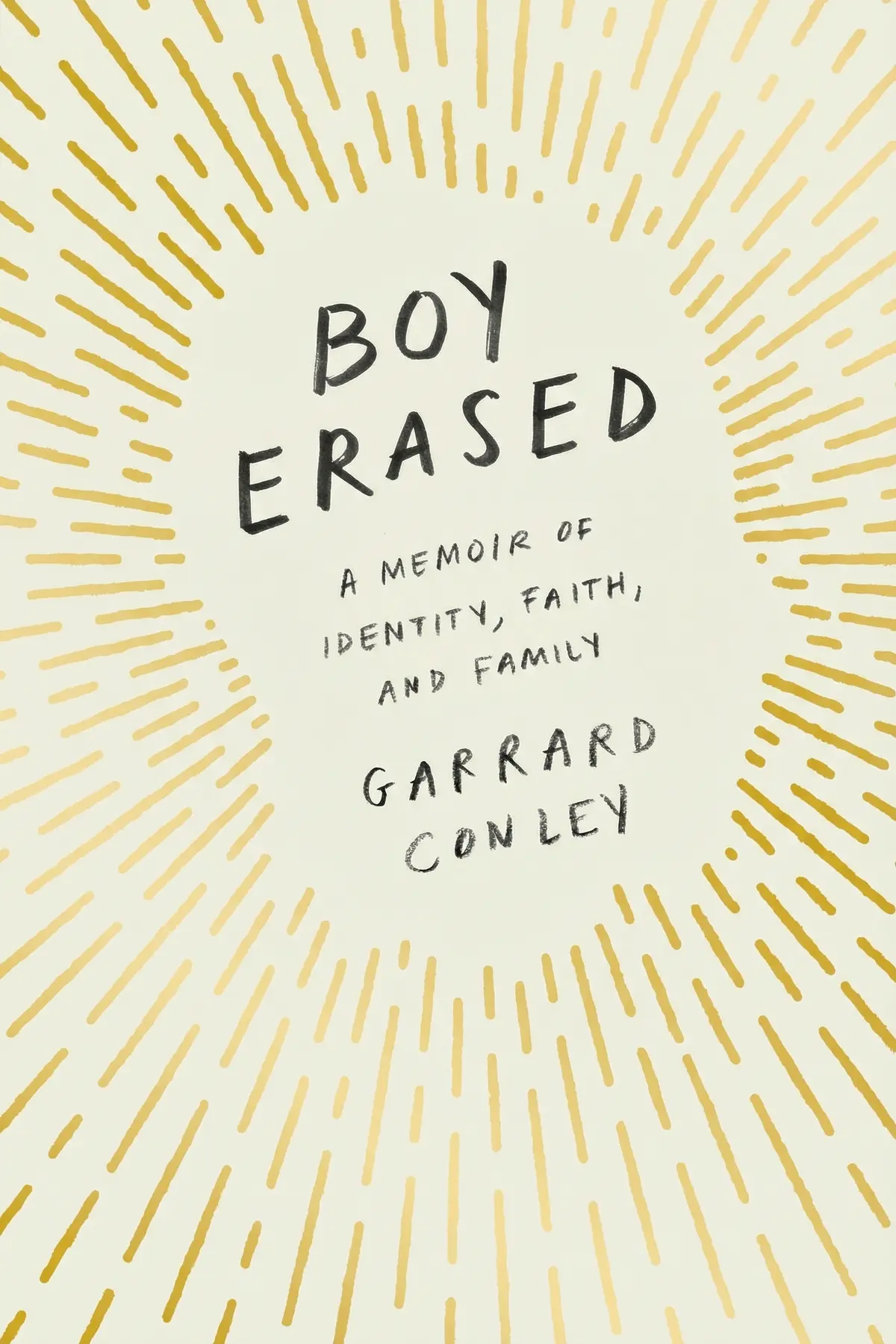
A memoir of the two weeks Garrard Conley spent in a Christian program meant to make him straight. It shows how family pressure, faith and fear push people into conversion therapy, and what that costs them.
1 min 02 sec
When a family’s love comes with a condition, agreeing to almost anything can feel like survival. That was Garrard Conley’s position at 19, when his parents told him to cure his attraction to men or lose their support. In Boy Erased, Conley recounts the two weeks he spent in 2004 at Love in Action, a Christian program that treated being gay as an addiction, much like gambling or drink.
The throughline of his memoir is stark. A movement that promised healing worked by stripping people of who they were. It relied on families, churches and fear to make them sign up. And the scars lasted far longer than the treatment.
Follow Conley’s story and you will see how such a program draws people in, what it does to the people inside it, and why its effects stay for years. It is a clear guide to recognizing coercion that calls itself care, and to understanding what someone you love may still be carrying.
1 min 58 sec
A phone call from someone Conley trusted turned his first year of college upside down. What followed at home left a nineteen-year-old with two terrible options and very little time to choose between them.
2 min 06 sec
Nearly everyone at the center had been threatened with losing something they could not live without. Yet some of the strongest pressure on them came from a place their families never had to reach.
2 min 16 sec
The program borrowed the language of recovery and the twelve steps of a famous support group. Look closely at who was running the sessions, and the whole treatment begins to fall apart.
2 min 02 sec
On his first day, staff searched Conley’s bags for anything that might stand in the way of his cure. The thing they found most threatening had come from his own hand.
1 min 57 sec
Each evening brought a writing assignment, and each morning brought an audience. The ritual was framed as spiritual guidance, and accounts of the program’s leader show how far its logic could go.
2 min 00 sec
The movement that held Conley eventually fell apart, and its leader said sorry. For Conley, the ending was far less tidy, in his love life, his faith and his family.
1 min 15 sec
Conley’s memoir is finally about what happens when love is made conditional on becoming someone else. Every part of Love in Action pointed one way. Families supplied the ultimatum, the community supplied the fear, and the program supplied a diagnosis, a set of rules and a nightly ritual of shame. Each step took something away: a notebook, a shirt, a piece of music, and later trust, faith and the warmth of a father’s voice.
The memoir supports a few habits of attention. When any group claims to cure part of who someone is, look at who is doing the curing and what qualifies them, remembering that Conley’s counselor had no training at all. Notice when a choice is really an ultimatum, especially for someone young and already hurt. And if someone you love has come out of a program like this, expect its effects to last long after they leave, since Conley was still living with them a decade later.
The image that stays is the torn-out page. A story written in a young man’s own voice was judged too dangerous to keep, and years later he wrote the book that told what happened.
At 19, Garrard Conley was raped by a college friend, who then outed him to his deeply religious parents. His father, a Baptist preacher, gave him a choice: be cured of being gay or lose his education. Conley chose Love in Action, a Christian program that treated homosexuality as an addiction to be broken with twelve steps and prayer. Boy Erased recounts his two weeks inside. Conley describes a counselor with no training and rules that took away his notebook of stories. He describes nightly confessions of sin read aloud in group, and a leader who once told a young man that suicide would be better than living as a gay man. He also shows why so many participants felt they had no way out, cornered by families, churches and towns in the American South. The memoir follows the movement's collapse and its leader's apology. It is honest about what lasted: a decade of broken trust, lost faith and a father who writes one-line emails. Readers come to understand how coercion can pass itself off as love.
Parents and relatives of LGBT young people who want to understand what religious pressure can do to a child.
Readers raised in strict faith communities who are making sense of their own past.
Counselors, teachers and youth leaders who need to recognize harmful programs that present themselves as care.
Garrard Conley grew up in Arkansas, where his fundamentalist family sent him to conversion therapy. As a survivor, he speaks and campaigns to end the practice. He helped create UnErased, a podcast on the history of conversion therapy in America. He studied at Auburn University and Brooklyn College, has taught creative writing, including at Kennesaw State University, and served in Ukraine as a Peace Corps volunteer. Boy Erased became a New York Times bestseller and a 2018 film.
Listeners find this memoir captivating and expertly crafted, viewing it as an excellent coming-of-age narrative that is simultaneously moving and insightful. The work is commended for its sincere depiction of conversion therapy encounters, with one listener noting the author's refusal to adopt an anti-Christian tone. Listeners characterize it as a gut-wrenching account that remains poignant throughout, with one review emphasizing how it guides the audience through a painfully distressing subject matter.
Wow. This was a punch to the gut that I didn't see coming. Conley manages to navigate the excruciating topic of 'praying away the gay' without ever descending into a purely anti-Christian tirade. Instead, he explores the intersection of faith and identity with a level of compassion that is rare in modern memoirs. The scenes detailing his struggle to reconcile his upbringing with his true self are heart-wrenching and beautifully rendered. I felt his isolation in every page, particularly during the group therapy sessions where the counselors were so clearly out of their depth. It’s a brave account of survival that everyone should read to understand the damage these programs cause.
Show moreEver wonder what it’s like to survive a system designed to erase your very soul? Conley’s account of his time in Love In Action is a devastating look at the psychological warfare waged against LGBTQ youth. The beauty of this book lies in its refusal to be bitter, choosing instead to find empathy for those who hurt him. I found myself moved to tears by the scenes with his mother in the hotel room. She starts the book as a bystander but slowly transforms into his greatest ally. This is a heart-wrenching, necessary read that shines a bright light on a dark corner of American religion. It stayed with me long after I turned the final page.
Show moreAfter hearing about the film, I wanted to experience the source material for myself. I’m glad I did, because Conley’s voice is so unique and evocative. He does a wonderful job portraying the internal conflict of someone who truly loves their God and their family but cannot change who they are. The complexity of his Baptist father, a man caught between his church and his son, was handled with incredible maturity. It’s not an easy read, and the middle does slow down a bit, but the emotional payoff is worth it. This book is a testament to the power of self-acceptance and the courage it takes to live your truth. Highly recommended for any reader.
Show morePicked this up after the movie left me breathless. While the film packs a sharper punch, the book offers a deeper dive into Conley's psyche and his complicated relationship with his Baptist pastor father. To be fair, the narrative can get a little bogged down in descriptions of scenery that don't always drive the plot forward. However, the raw honesty regarding his time in the Love In Action program is truly haunting. I appreciated how Conley humanizes his parents rather than making them caricatures of religious fundamentalism. It’s a touching, thought-provoking coming-of-age story that highlights the resilience of the human spirit. The epilogue provided the closure I desperately needed after such a heavy journey.
Show moreAs someone raised in a similar religious environment, I found Conley's journey to be painfully authentic. He captures that specific brand of Southern Baptist culture perfectly, especially the pressure to maintain appearances at all costs. The way he describes his father’s transition into the ministry while he was being outed was particularly stressful. Not gonna lie, some of the descriptions of nature felt a bit too literary for my taste, but the emotional core remains solid. It’s a thoughtful look at how family love can be weaponized by dogma. I was cheering for him when he finally walked out of that 12-step program. This is an essential read for anyone interested in LGBTQ identity and religious trauma.
Show moreFinally got around to reading this memoir, and it definitely left me thinking about the complexities of parental love. Conley refuses to paint his mother and father as villains, which makes the story even more tragic in a way. You can see they think they are saving him, which is a terrifying realization. The chapter where he visits a prison with his father was a standout for me, showing the deep roots of their shared faith. My only gripe is that the timeline is a bit jumpy, making it hard to track his emotional progress at times. Still, it’s a powerful coming-of-age story that handles a sensitive subject with remarkable grace.
Show moreGotta say, I'm a bit conflicted after finishing this one. On one hand, Conley is clearly a talented writer who knows how to craft a lyrical sentence. On the other hand, the book suffers from some serious pacing issues in the middle sections. Why are we spending so much time watching The Passion of the Christ with his college friends? It felt like he was stretching a very short outpatient experience into a full-length book. Personally, the message is important and the ending is moving, but the narrative often feels underdeveloped. I wish there had been more focus on his life after the program rather than the repetitive journaling exercises.
Show moreThe prose is definitely lyrical, maybe even a bit too much so for the subject matter. In my experience, memoirs about trauma work best when the writing is direct, but Conley leans heavily into metaphors and similes. He spends a lot of time circling around events rather than confronting them head-on. It’s a bit frustrating that the core of the book is based on only eight days of outpatient treatment. While the psychological impact was clearly massive, the narrative feels a little light on the harrowing details promised by the blurb. That being said, the epilogue is fantastic and provides a much-needed sense of hope. It’s a decent read, just don't expect a fast-paced narrative.
Show moreTruth is, the most compelling thing about this memoir is the title itself. I found the structure incredibly confusing, with random leaps in time that disrupted the emotional flow of the story. A lot of the content feels like filler, especially the long sections about cleaning cars or visiting prisons with his father. For a book about the horrors of conversion therapy, the actual outpatient portion only lasted eight days. Look, the writing feels a bit bloodless and overworked, like it was edited to death in a writing workshop. I wanted to feel more for Conley’s struggle, but the florid prose kept me at arm’s length. See the movie instead; it has the momentum this book lacks.
Show moreNot what I expected based on the massive hype surrounding the film release. This memoir is shockingly thin on actual content, spending most of its time on mundane details that don't add much to the themes. I was looking for a harrowing exposé on ex-gay ministries, but Conley was only there for a week. The rest of the book is padded with journal entries and philosophical tangents that felt like they belonged in a writing seminar. It’s hard to stay engaged when the author himself admits he can’t remember much of the experience. The writing is too fussy and tries way too hard to be poetic. For me, it was a boring slog.
Show moreBoy Erased is Garrard Conley’s memoir of growing up gay in a fundamentalist Christian family in Arkansas. After a college friend raped him and outed him to his parents, his father told him to cure his homosexuality or lose his education. In 2004, at 19, Conley entered Love in Action, an ex-gay program, for two weeks. The book describes what happened there and the damage it left behind.
Participants followed a twelve-step course that treated being gay as an addiction like alcoholism. Staff confiscated anything they called a False Image, including Conley’s notebook of short stories. A counselor with no qualifications blamed homosexuality on too little childhood sport and on Satan. Each night participants wrote a Moral Inventory of past sins and read it aloud in group the next day.
No. Conley left after two weeks, against his parents’ wishes, fearing that staying longer could lead him to suicide. Years later, the program’s leader, John Smid, admitted that it could not change anyone’s sexual orientation and publicly apologized. Conley spent roughly a decade struggling with trust and relationships, lost his faith, and remains distant from his father.
It suits parents and relatives of LGBT young people who want to understand the pressure religious communities can apply, and readers raised in strict faith settings who are reflecting on their own past. Teachers, counselors and youth leaders will find a clear account of how a harmful program recruits people, controls them and leaves lasting harm.
The memoir shows that an ultimatum from family is rarely a free choice, especially for someone young and already traumatized. It suggests checking who runs any program that promises to cure part of a person’s identity, and what training they have. It also shows that recovery takes years: Conley felt the effects on his trust, faith and family a decade later.
Ishmael Beah
James Herriot


Barack Obama


Masaji Ishikawa


Ben Macintyre

Fay Bound Alberti

AUDIO SUMMARY AVAILABLE
Get the key ideas from Boy Erased by Garrard Conley, plus 5,000+ more nonfiction titles.









