

A Long Way Gone: Memoirs of a Boy Soldier
Ishmael Beah
 English
 ไทย
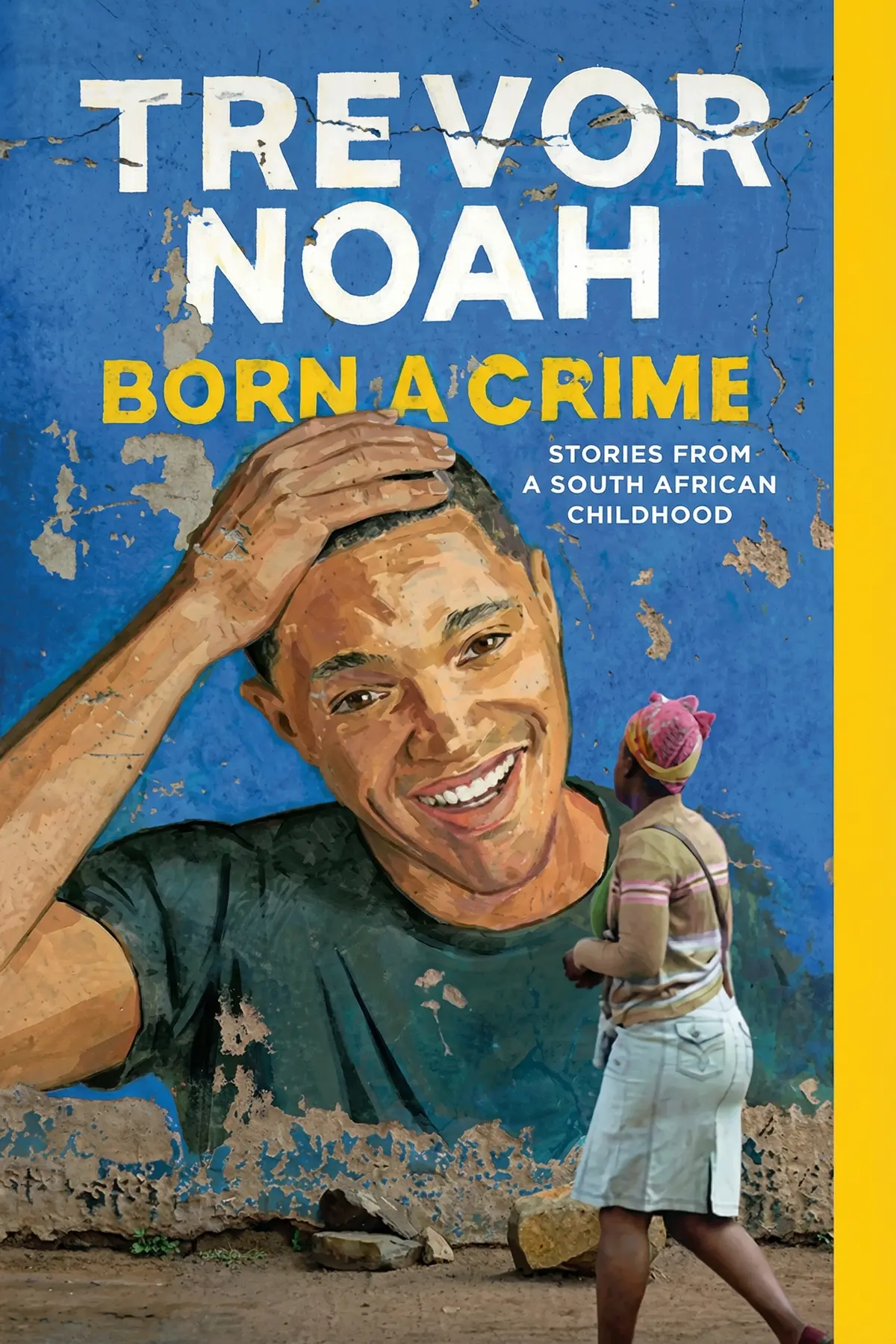
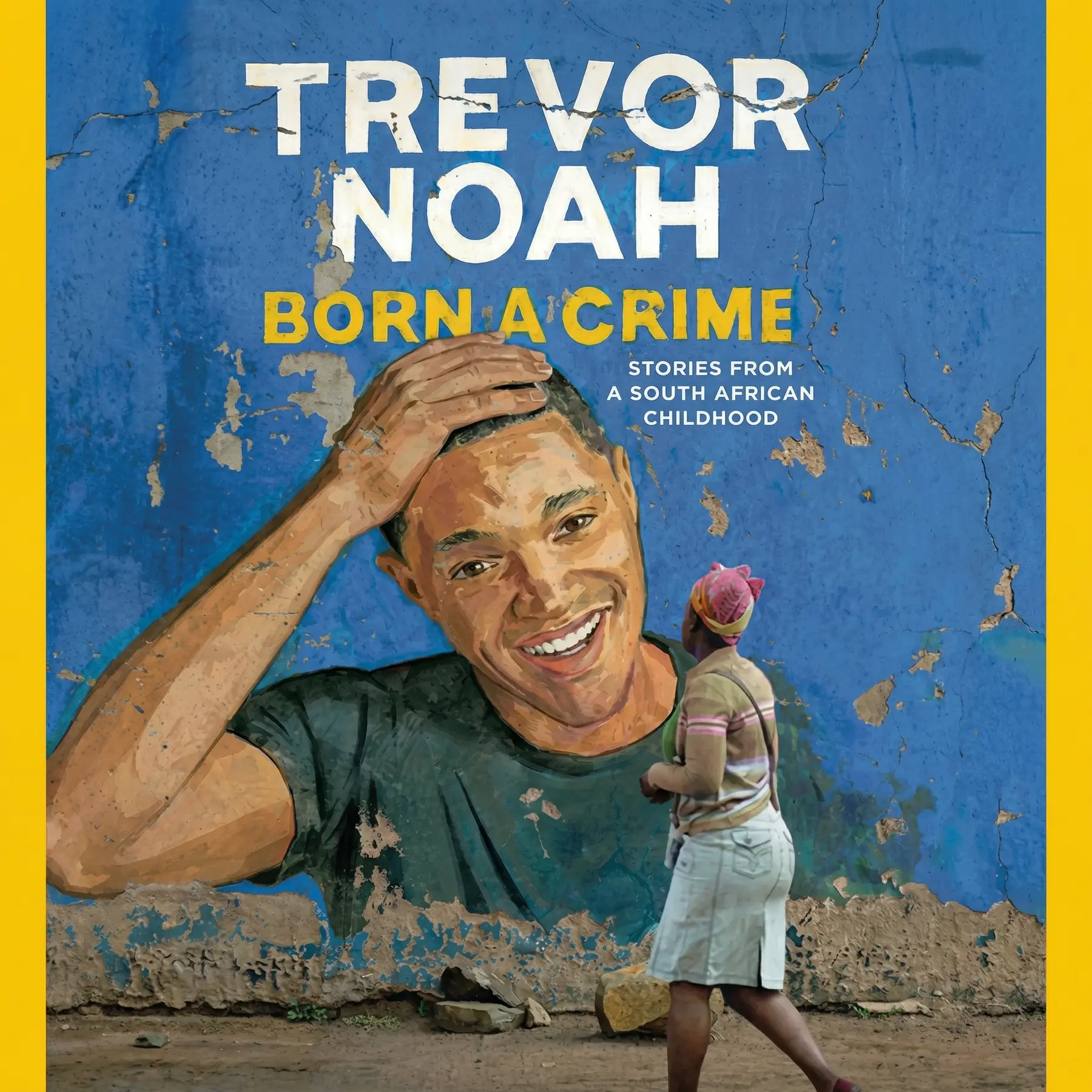
Trevor Noah's memoir of growing up mixed race in South Africa, during and after apartheid, shows how race laws shaped his family's life and how his mother's courage and his own humor carried them through.
58 sec
Feeling caught between groups can be a weakness or a skill, and Trevor Noah’s childhood shows how to turn it into the second. In Born a Crime, the South African comedian who took over The Daily Show from Jon Stewart in 2015 explains that his birth itself broke the law: his mother was Black, his father white, and apartheid made sex between races a crime.
His stories add up to one argument. Race laws shaped almost every part of his life, before apartheid ended and long after, and he survived on his mother’s stubborn courage and his own gift for crossing between groups with languages, deals and jokes. A leap from a speeding minibus, a candy racket run during school assembly, a dancer named Hitler and a week in jail all serve that case. The reward is a clear picture of how injustice outlives the laws that created it, and of the nerve it takes to slip past it.
1 min 33 sec
A 3,000-page legal code, police units watching through windows and a single law about who could love whom. Noah explains why the apartheid state cared so much about mixed couples, and what that meant for him.
1 min 35 sec
One parent was a quiet Swiss-German who kept his distance. The other grew up hungry in a crowded hut and refused every limit placed on her. Between them, they shaped the son who would tell their story.
1 min 42 sec
A two-room house, a whole family of relatives asleep on the floor and soup made from little more than water and bones. Noah’s mother saw a trap in that poverty that could swallow her son’s future, and she had an unusual plan to spring it.
1 min 45 sec
Apartheid ended, and in some ways the streets grew more dangerous. A furious bus driver and a gang of boys planning a robbery both learned that Noah’s family had their own ways of getting out alive.
1 min 39 sec
Officially, Noah fit neither the Black box nor the white one, and the end of apartheid made that question even messier. His answer came with an unexpected bonus, discovered in a crowded line for sweets.
1 min 43 sec
A teenage DJ with a huge music library and a brilliant dance crew was booked all over town. Then one gig at a school festival went silent in seconds, and nobody on stage understood why.
1 min 43 sec
A police bullet ended one business, and a borrowed car landed Noah behind bars. Inside, he met a gentle stranger whose fate taught him more about his country than any law book could.
1 min 47 sec
Noah’s mother survived poverty, a hostile city and a speeding bus. The greatest threat to her life came from inside her own home, and the institutions meant to protect her kept looking away.
1 min 14 sec
The title holds the whole book. Trevor Noah began life as living proof that apartheid’s logic was false, and he spent his youth discovering how long that logic would outlive the law. The 3,000 pages of rules disappeared, yet qualified Black workers were still turned away, a bus driver still saw a Xhosa woman to punish, police still shrugged at a beaten wife and a court still let a gunman walk free on probation.
Against all that stands Patricia, a girl from a crowded hut in Transkei who bought encyclopedias with money she did not have and pushed her sons from a moving bus to save them. Beside her stands her son, who found that a few words of Zulu or a well-timed joke could open doors the law kept shut.
The stories leave a few habits worth keeping. Learn the language of the people you need to reach, in every sense. Before you speak to a new crowd, find out what its history makes painful. And when a system claims to be neutral, ask who it protects when someone cannot pay.
Out of touch with his son, a quiet father kept a scrapbook of the crime that grew up to make the world laugh.
When Trevor Noah was born in Johannesburg in 1984, apartheid made sex between races a crime. Because the woman who bore him was Black and the man who fathered him was white, the boy's very existence showed that both parents had violated the law. Born a Crime tells the story of the boy who grew up as that evidence, and of the country that kept failing him after its racist laws were gone. Noah writes as a comedian, but the stories carry weight. A mother leaves a crowded hut in Transkei, learns the city while hiding and, as a hostile minibus slows, pushes one son out and leaps after him with the other in her arms. A boy turns a school candy line into a business, talks his way out of a mugging in Zulu, runs a DJ crew, spends a week in jail and watches the police shrug at the man who beats his mother. Readers get a vivid, human picture of apartheid and its aftermath, along with lessons about belonging, about the power of speaking someone's language, and about how unjust systems protect the people who can pay.
Readers who want to understand apartheid and its aftermath through one family's real stories.
People of mixed heritage, or anyone who moves between cultures, wondering where they belong.
Fans of Noah's comedy curious about the poverty, danger and humor that shaped him.
Trevor Noah was born in Johannesburg on 20 February 1984 and began his career in South Africa in 2008, presenting several shows for the South African Broadcasting Corporation and creating the late-night program Tonight with Trevor Noah. He joined The Daily Show as Senior International Correspondent in 2014 and succeeded Jon Stewart as host in 2015, staying until 2022. Born a Crime won the 2017 Thurber Prize for American Humor and has sold more than 3 million copies. In 2018 he launched the Trevor Noah Foundation to widen access to quality education for underserved young South Africans.
Listeners find the book both funny and amusing, with one review noting that it holds their attention from beginning to end. Furthermore, the narration is captivating, and one listener characterizes the story as a coming-of-age narrative. The work also receives credit for its meaningful substance, as one review points out its life lessons; listeners also call it deeply moving, with one mentioning it brought them to tears. The prose earns high marks for being fantastically written and easy to understand.
This memoir is a stunning tribute to the resilience of a mother who refused to let the system define her son. While Trevor's wit is the engine that keeps the pages turning, Patricia is the heart of every single chapter. I found myself laughing out loud at their church-going battles one minute and then feeling a lump in my throat during the more harrowing accounts of domestic struggle. It’s a rare coming-of-age story that manages to be both hilariously entertaining and deeply educational regarding the nuances of South African history. Even the parts that felt a little repetitive only served to drive home how precarious their existence was. If you want a book that offers profound life lessons wrapped in sharp comedy, look no further.
Show moreAs someone who only had a surface-level understanding of Apartheid from history class, this book was a complete revelation. Noah breaks down the macro-level forces of systemic oppression through the micro-lens of his own "illegal" birth. The way he explains the categorization of people into Black, White, and Coloured is both tragic and absurdly logical in its own twisted way. It’s heart-rending to read about the lengths his mother went to just to ensure he had a future, yet the tone remains surprisingly hopeful. The writing style is incredibly easy to understand, making complex sociopolitical issues feel accessible. I finished it in two sittings and immediately felt like I’d learned more than I ever did in a classroom.
Show moreWow, I really wasn't prepared for the emotional rollercoaster this book would put me through. One chapter has you wheezing with laughter over a prom date gone wrong or a misunderstanding about the name "Hitler," and the next has you reeling from the violence of the police. It is a beautifully written coming-of-age story that doesn't shy away from the grimmer aspects of Trevor's upbringing. Not gonna lie, the ending where he describes the shooting of his mother had me in tears; it was such a powerful testament to her strength. This is more than just a celebrity memoir; it’s a vital piece of social commentary that feels urgent and necessary.
Show moreAfter hearing so many people rave about this, I finally sat down with the physical copy and was blown away by the prose. It’s rare to find a book that is this entertaining while also delivering such heavy life lessons on every page. Trevor’s mother is the undisputed hero here, showing a level of hustle and faith that is honestly mind-blowing. The way he describes the "crime" of his existence is both witty and horrifying, forcing the reader to confront the ridiculousness of racial laws. I loved how the essays were grouped by theme rather than a strict timeline, as it allowed the growth of his relationship with his mom to take center stage. This is a must-read for any memoir fan.
Show moreTo see the world through the eyes of a child who was never supposed to exist is an experience I won't soon forget. This book is a fantastically written exploration of love, race, and the power of a mother’s conviction. Trevor’s journey from a "tuck shop" businessman to a global star is filled with moments of pure comedy and deep sorrow. I was particularly moved by the way he talks about education and how his mother used it as a weapon against the limitations placed upon them. It’s a heart-rending narrative that somehow leaves you feeling energized and inspired. I think everyone should read this, regardless of whether they follow his comedy or not.
Show moreNot what I expected at all, but in the best possible way! I thought this would be a lighthearted collection of jokes, but it’s actually a very deep dive into the soul of South Africa. Trevor Noah manages to find humor in the darkest corners of poverty and discrimination without ever trivializing the suffering. The writing is incredibly accessible and the pacing is brisk, making it a very quick read despite the heavy themes. His mother is such a formidable presence that she almost steals the show from Trevor himself. Honestly, this is one of the most engaging memoirs I’ve picked up in years, and the ending is absolutely unforgettable.
Show moreEver wonder why everyone insists on the audiobook for this one? After listening, I totally get it—Noah’s ability to switch between languages and mimic various accents adds a layer of authenticity you just can't get from the page. The stories are fascinating, especially seeing how his identity was constantly reshaped by the people around him in post-Apartheid South Africa. My only real gripe is that the non-linear structure made the timeline feel a bit muddled at times. One moment he’s a toddler being thrown from a moving vehicle, and the next he’s a teenager running a DJ business. Still, his fresh perspective on race and class is eye-opening for anyone who thinks they already know everything about the subject.
Show moreThe chapter on "The Mulberry Tree" really hit home for me because it perfectly captured that feeling of being an outsider in your own neighborhood. Trevor navigates his childhood as a bit of a chameleon, using language as a tool to bridge gaps between different racial groups. It’s a fascinating look at how identity is often a performance dictated by survival. I did find that he tends to over-explain certain cultural contexts, which slowed the pacing down in the middle sections. However, the humor is so sharp that it’s easy to forgive the occasional repetition. It's an insightful, easy-to-read journey that makes you think twice about how we categorize the people around us.
Show moreTruth is, I wasn't sure if a late-night talk show host could actually write a compelling book, but Noah proves he is a master of the craft. The narrative flows with a casual, conversational tone that makes you feel like you're sitting in a bar listening to him tell these stories. While the jumping around in time was a little confusing at first, the individual vignettes are so strong that I stopped caring about the order. The specific details about life in the townships and the "hustle" of the informal economy were especially eye-opening. It loses a bit of steam toward the very end, but the final story is so gripping that it makes up for the slight dip in energy.
Show morePicked this up because of the hype, and while the subject matter is undeniably important, the loose editing kept me from fully loving it. Trevor Noah is a charismatic storyteller, no doubt, but the book reads more like a collection of stand-up bits than a cohesive narrative. Some of the anecdotes, like the one about the shoplifting video, are brilliant and highlight the absurdity of racism perfectly. Other chapters felt like they were just filler or ended abruptly before reaching a satisfying conclusion. To be fair, his mother is an incredible character, and their bond is the highlight of the book. It’s a solid read if you're a fan of his show, but as a memoir, it lacked a bit of that narrative polish I usually look for.
Show moreIt is Trevor Noah’s memoir of growing up in South Africa during and after apartheid. Because sex between races was illegal, his birth to a Black mother and a white father was literally evidence of a crime. The book follows his poverty in Soweto, his mother’s fierce determination, his school hustles, his DJ crew, a week in jail and his mother’s survival of a shooting by her ex-husband.
Under apartheid, sex between people of different races was a criminal offense, punished with up to five years in prison for men and four for women. Special police units even spied on suspected couples. Since Noah’s father was white and his mother Black, having him put both of them at risk of imprisonment. His existence was proof that they had broken the law.
Patricia Nombuyiselo Noah is the book’s central figure. She escaped a poor childhood in Transkei, learned English from a missionary and moved illegally to Johannesburg. She spent her small income on books to help her son avoid what she called the black tax, jumped from a speeding minibus to protect her children and survived being shot twice by her ex-husband Abel.
South Africa had eleven official languages after apartheid, and Noah learned several. When a group of Zulu boys planned to rob him, thinking he was white, he spoke to them in Zulu and they left him alone. At school, his ability to move between groups, plus a few jokes, made him welcome everywhere and started his path into comedy.
The book suggests that unjust systems outlast the laws behind them, as Noah saw in job discrimination, police indifference and a lenient sentence for his mother’s attacker. On a personal level, it shows the value of speaking other people’s language, of knowing an audience’s history before performing for it, and of investing in what a child can imagine even with very little money.
Ishmael Beah

James Herriot


Barack Obama


Masaji Ishikawa


Ben Macintyre

Fay Bound Alberti

AUDIO SUMMARY AVAILABLE
Get the key ideas from Born a Crime by Trevor Noah, plus 5,000+ more nonfiction titles.









