

14 min 42 sec
Available in: English
Body Kindness: Transform Your Health From the Inside Out – and Never Say Diet Again
Shows how to replace strict diets, punishing workouts and self-criticism with small, value-based habits around food, movement, sleep, fun and self-talk, so that each kind choice makes the next one easier.
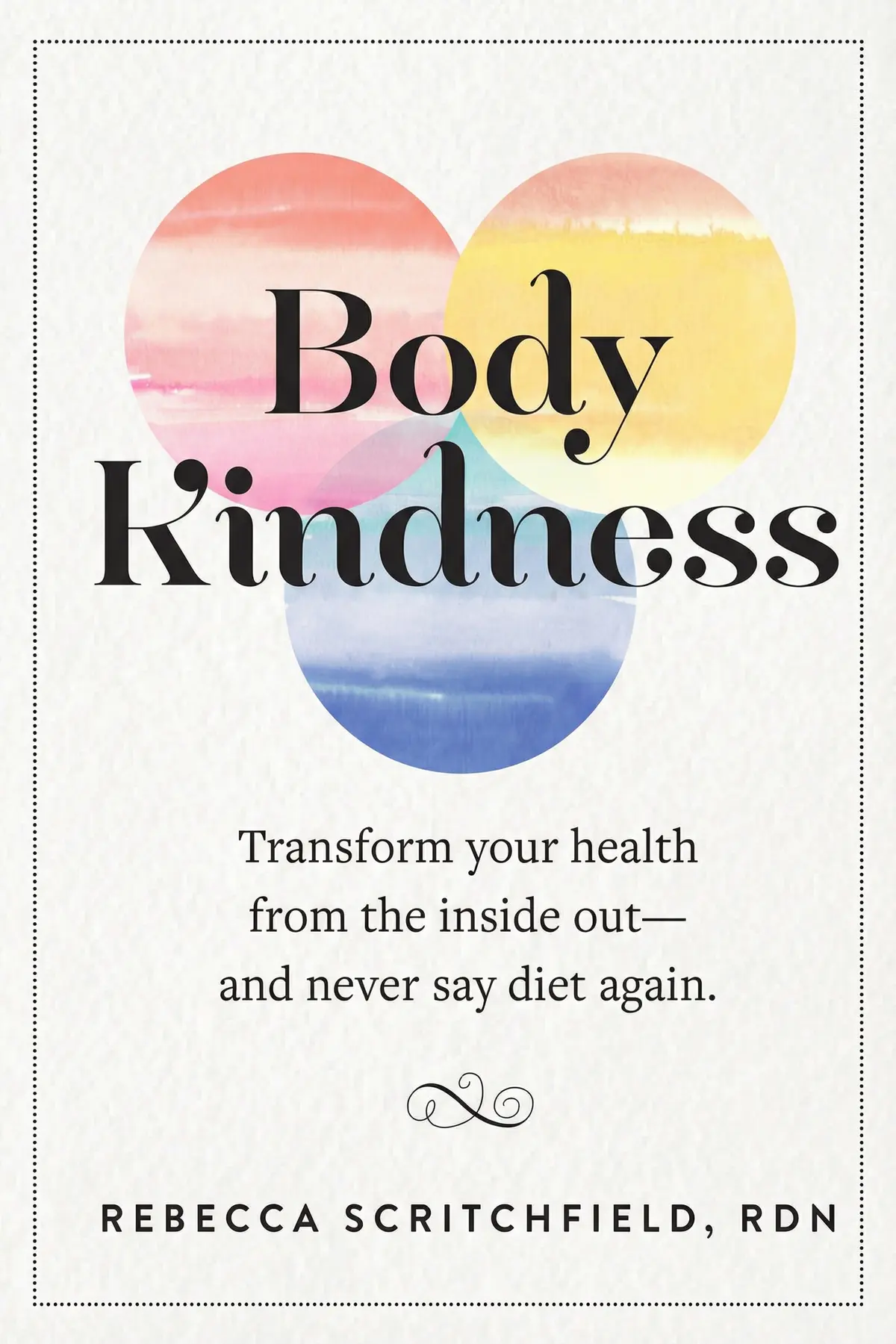
Table of Content
1. Introduction
58 sec
Most diets and workout plans end the same way: a strong start, a slow drift and a fresh load of guilt. In Body Kindness, counselor and podcast host Rebecca Scritchfield argues that the drift is no personal failing. The plans themselves pile on more rules than anyone can follow for more than a few weeks, and the stress of counting every calorie does its own harm.
Her alternative is to treat your body with care instead of control. Choose small habits that fit your own values and handle self-critical thoughts without obeying them, and each kind choice makes the next one easier.
Along the way you’ll meet a woman whose ban on bread kept her away from parties. You’ll hear why most people need far more than six hours of sleep. And you’ll get a four-step pact for the moment your inner critic says you will never stick with anything.
2. Make peace with food by easing the rules
1 min 29 sec
A single cupcake at a birthday party can trigger hours of guilt. Scritchfield thinks the worry may do more damage than the food itself, and one client’s long battle with bread shows a calmer way out.
3. Small daily choices can lift your whole day
1 min 34 sec
Money, youth and a slim figure explain far less of your happiness than most people assume. Another factor is fully in your hands, and once it gets going it tends to pull the rest of your day along with it.
4. Choose a reason to exercise that keeps you going
1 min 31 sec
Almost everyone knows exercise is good for them, yet huge numbers barely move at all. Scritchfield traces the gap to the reason people give themselves for working out, and the usual reason sets them up to quit.
5. Turn your bedroom into a place that restores you
1 min 34 sec
Plenty of people insist six hours of sleep is all they need. Genetics says only a tiny minority are right, and the rest pay for it in memory, mood and metabolism. A few changes to one room can help.
6. Stop self-doubt from making your decisions
1 min 46 sec
After enough failed plans, a voice starts saying there is no point trying again. Scritchfield doesn’t ask you to drown it out with positive thinking. She offers a four-step pact that takes away its authority instead.
7. Bring play back into ordinary chores
1 min 31 sec
Scritchfield thinks many adults are suffering from a shortage of something they rarely take seriously. Her cure starts in the supermarket aisle and at a breakfast table covered in spilled coffee.
8. Build a plan around what matters most to you
1 min 31 sec
An exhausted, lonely client was living on fast food and television after long workdays. Her turnaround came from a sheet of paper and one question about her priorities, with no strict rules involved.
9. Talk to yourself the way a good friend would
1 min 34 sec
No pain, no gain sounds like discipline, yet Scritchfield argues it is a reliable route to giving up. The alternative she offers starts with imagining a friend who is struggling and the words you would choose for her.
10. Conclusion
1 min 14 sec
Body Kindness turns health from a contest with yourself into a form of care. Scritchfield’s case is that strict diets, punishing workouts and a harsh inner voice all fail for one shared reason: they run on fear and guilt, and those wear out. Kindness lasts because it makes each good choice a little more pleasant, and a pleasant choice invites the next.
For anyone who feels adrift, Scritchfield offers one more exercise. Imagine a single day with no limits and list everything you would do with it. Then star the items that make you feel most excited and energized. Those are the activities that deserve more room in your real week.
From there, pick one change tied to something you value. It could be a regular place for a food you once banned, a bedroom cleared of screens, or a reason to move that is about how you feel. When the critic says it will never last, notice the thought and do the kind thing anyway.
On Scritchfield’s terms, health is something you do for your body every day, in small and generous ways.
About this book
What is this book about?
Most diets and fitness plans start strong and fade within weeks. What they leave behind is guilt about every cupcake and every skipped workout. Rebecca Scritchfield argues that the fault lies with the plans: too many rules, too much fear and constant measuring, a stress that can harm health all by itself. Her alternative, body kindness, sets the rules aside and asks what will work for your circumstances and your values. She covers the main areas of daily health. Food rules give way to balance, as with a client who stopped banning bread. Exercise becomes an act of care, no longer a chase after the perfect body. The bedroom becomes a sanctuary for the eight to ten hours of sleep most people need. Laughter and small adventures come back into ordinary chores. Two mental tools hold it all together. One is a four-step PACT for handling negative thoughts without obeying them. The other is self-compassion, modeled on how you would speak to a best friend. Readers also get a method for drawing a personal plan of small, realistic steps, and a gentler way to stick with it.
Book Information
Who it's for
Chronic dieters
Chronic dieters worn out by food rules and the guilt that follows every treat.
Losing workout momentum
People who start workout plans with energy and abandon them within weeks.
Professionals wanting kinder self-talk
Busy, tired professionals who want better sleep, more joy and a kinder inner voice.
About the Author
Rebecca Scritchfield
Rebecca Scritchfield runs a weight-inclusive counseling practice, where clients learn to make peace with food, find exercise they enjoy and set goals tied to their own interests. She created the Body Kindness approach, which swaps diet restrictions for personalized self-care and self-compassion and does not treat weight loss as a condition for better health. She hosts the Body Kindness podcast, mentors registered dietitians and works with women in online learning communities. Her work has appeared on CNN and the TODAY show and in The Washington Post.
Ratings & Reviews
Ratings at a glance
What people think
Listeners find this to be a wonderful, inspiring resource that explains how to achieve health and happiness by practicing self-compassion. The prose is skillfully composed, and listeners appreciate that it avoids the typical diet mentality. They value the way it prompts them to reflect deeply and transform their perspective on their bodies. Listeners report significant benefits for their emotional health, with one listener noting a reduction in stress and anxiety.
Top reviews
Supachai
Scritchfield’s approach is a breath of fresh air for anyone tired of the grueling cycle of self-criticism. Instead of a list of rules, she offers a mindset shift that starts with the radical idea that you can’t hate yourself healthy. I loved the concept of 'the least I can do' because it makes wellness feel accessible rather than like another chore on my to-do list. The focus on making choices based on personal values rather than a number on a scale changed how I view my morning walks. It’s not about burning calories anymore; it’s about nurturing my spirit and honoring my body’s need for movement. The writing is warm and encouraging, making it feel like you're chatting with a supportive friend. This book really helped me lower my stress levels and start treating myself with genuine compassion.
Show moreFord
Ever wonder what it would feel like to actually be on your own team? This book provides the roadmap for that exact transition. I’ve spent decades fighting my body, and Scritchfield’s mantra about nourishing yourself instead of punishing yourself hit me like a ton of bricks. The journaling prompts are actually useful, forcing me to confront why I view certain foods as 'moral' choices. I’ve stopped weighing myself entirely, and the mental freedom is indescribable. Frankly, the advice on resilience and goal setting was more impactful for me than the nutrition advice. It's about building a life that feels good from the inside, not one that looks a certain way to outsiders. If you are ready to ditch the shame and start living, this is the book you need on your nightstand.
Show moreGame
Finally got around to reading this and I’m genuinely impressed by how Scritchfield connects physical health to our emotional and spiritual well-being. This isn't just about what you eat; it's about how you talk to yourself when you're tired, stressed, or lonely. The inclusion of wisdom from people like Brené Brown and Pema Chödrön added a layer of soulfulness that I didn't expect from a dietitian. I appreciated the client vignettes, though I agree with other reviewers that more of the author’s own story would have been even better. It’s a very actionable book—I’ve already started implementing the 'least I can do' strategy for my evening routine. It has significantly reduced my daily anxiety. This is a must-read for anyone who is done with the 'no pain, no gain' mentality and wants to find peace.
Show moreSatit
Wow. I didn't expect a book by a dietitian to spend so much time talking about sleep and relationships, but I'm so glad it did. Rebecca looks at health as a holistic puzzle where food is only one small piece. The sections on positive psychology were quite enlightening, though I do understand why some might find the 'bounce back' advice a bit oversimplified. To be fair, the visual layout is a bit chaotic with all the different colors and illustrations, but as a visual learner, I actually appreciated the breaks in the text. My favorite takeaway was the 'rebel voice' concept—it really helped me identify why I sabotage my own self-care goals. It’s a solid resource for anyone starting their journey away from diet culture, even if it feels a little surface-level at times.
Show moreWorawit
Picked this up during a particularly low point with my body image and it really helped shift my perspective. Scritchfield argues that inactivity is the real health risk, not fatness, which is a message we rarely hear in mainstream media. I really took the 'get rid of your scale' advice to heart and it’s been the best thing I’ve done for my mental health this year. Not gonna lie, some of the psychological advice felt a bit clichéd, but the practical steps for better sleep and stress management were gold. The book is very gendered toward women, which is a bit of a drawback in terms of inclusivity. Still, the core message that health is about kindness rather than restriction is something I think everyone needs to hear. It’s a great tool for unlearning years of toxic fitness culture.
Show moreLek
Not what I expected, but in a good way. I thought this would be a typical nutrition guide, but it’s more of a manual for self-compassion. The way she breaks down the 'clean eating' movement as a source of shame was particularly eye-opening for me. I’ve realized how much I’ve been judging my worth based on my plate. However, I do wish the book had engaged more with intersectional issues, as the advice often assumes a certain level of financial and social privilege. The graphics are a bit much—sometimes the pages feel cluttered and hard to navigate—but the content itself is solid. It’s a great resource for anyone looking to build resilience and stop the cycle of emotional restriction. It’s not perfect, but it’s definitely a step in the right direction for the health industry.
Show morePui
The chapter on emotions was the standout for me. Rebecca does a great job explaining how our feelings drive our choices and how to handle them without turning to food as the only solution. While some of the 'replace eating with a manicure' advice felt a bit like old-school diet talk, the broader message of body kindness is very strong. I found the section on family dinners and the importance of community connection to be really moving. It reminds us that health happens in the context of our relationships, not just in a vacuum. I’ve started focusing more on my sleep and stress levels thanks to her suggestions, and I feel much more balanced. It’s a very encouraging read that helps you focus on what your body can do rather than just how it looks.
Show moreMaria
As someone who listens to the author’s podcast, I had high hopes for this book, but it felt a bit like a collection of blog posts. The constant references to the movie Frozen felt dated and a bit distracting after the third or fourth mention. While the message of being kind to your body is vital, I found the lack of scientific references frustrating, especially when she cites psychological research. Look, the advice isn't bad, but if you've already read Intuitive Eating, there isn't much new ground covered here. It’s a very beginner-friendly book, which is great for some, but I wanted more depth and less fluff. I also felt the book didn't quite address the systemic issues that make body kindness difficult for people of color or those in larger bodies. It’s a decent starting point, but not the definitive guide I was hoping for.
Show moreSuthida
In my experience as a healthcare professional, I have very mixed feelings about this one. On one hand, I appreciate the move away from calorie counting and the 'clean eating' obsession which often leads to orthorexia. However, the author still leans heavily on 'self-control' and 'managing' emotions in a way that feels very much like a diet in disguise. Personally, I found the advice to ignore your 'rebel voice' and exercise even when exhausted to be potentially harmful for those recovering from burnout or over-exercise. The tone is very bright and bubbly, which can be uplifting, but it occasionally masks a lack of clinical depth. It’s a fun, colorful self-help book that might inspire some, but I wouldn't recommend it to my clients with active eating disorders. It’s a bit too 'wellness-washed' for my professional comfort.
Show moreOrathai
If you are truly looking for a book that embraces Health at Every Size (HAES), you might find yourself as frustrated as I was. While it claims to be anti-diet, the text is riddled with references to portion sizes and 'controlling' emotional eating that feel incredibly regressive. Truth is, telling someone to brush their teeth to avoid a cupcake isn't body kindness; it’s a 1990s weight loss trick in new packaging. I found the 'just do it' tone toward exercise to be quite ableist, ignoring the reality of many people’s physical limitations. The busy graphics and constant font changes made it physically difficult to focus on the message. It felt more like a lifestyle magazine than a grounded guide to healing your relationship with food. If you have a history of disordered eating, please proceed with extreme caution because the triggers are everywhere.
Show moreQuestions about this book
What is the main idea of Body Kindness?
Rebecca Scritchfield argues that strict diets and exercise plans fail because they pile on rules and run on guilt, which wears people out within weeks. Body kindness replaces control with care. You build small habits that suit your own values and circumstances, handle negative thoughts without obeying them and speak to yourself with compassion. Each kind choice improves your mood, and that mood makes the next good choice easier, a pattern she calls spiraling upward.
What is the PACT method in Body Kindness?
PACT is Scritchfield’s tool for taking the power out of negative thoughts. The letters represent Presence, Acceptance, Choice and Taking action. You notice the thought as it appears and accept it as natural while asking what triggered it. Then you recognize that you don’t have to follow it and choose what is kind to your body. Finally, you act on that kind choice and let it lead to the next positive step.
How much sleep does Body Kindness recommend?
Scritchfield puts most people’s need at eight to ten hours. She cites research showing that only about 5 percent of people have a genetic variation that lets them fully recover on six hours. In her account, each sleep cycle lasts around two hours and most people need four or five of them. She advises clearing the bedroom of screens, keeping the bed clean and comfortable, and avoiding electronic devices for an hour before sleep.
How can I start applying Body Kindness?
Draw a mind map with a circle for each area of your life, such as work, exercise, nutrition and friends, and note small positive changes in each. Tie every step to something you value, as Scritchfield’s client Sheryl did with weekly time with friends and a 9 p.m. bedtime. If a food is banned, give it a regular place instead, the way Susan allowed herself bread with one meal a day.
Is Body Kindness a weight-loss book?
No. Scritchfield runs a weight-inclusive counseling practice, and her approach does not treat weight loss as a condition for better health. The book asks readers to exercise for their mood and physical health, not to chase the perfect body. It focuses on food without fear, enough sleep, laughter, a personal plan built on values, and the self-compassion that helps people keep going.
Featured in
Readers also enjoyed



AUDIO SUMMARY AVAILABLE
Listen to Body Kindness in 15 minutes
Get the key ideas from Body Kindness by Rebecca Scritchfield, plus 5,000+ more nonfiction titles.
- 5,000+ titles
- Listen as much as you want
- 7-day free trial
- Cancel anytime









