

A Promised Land
Barack Obama
 English
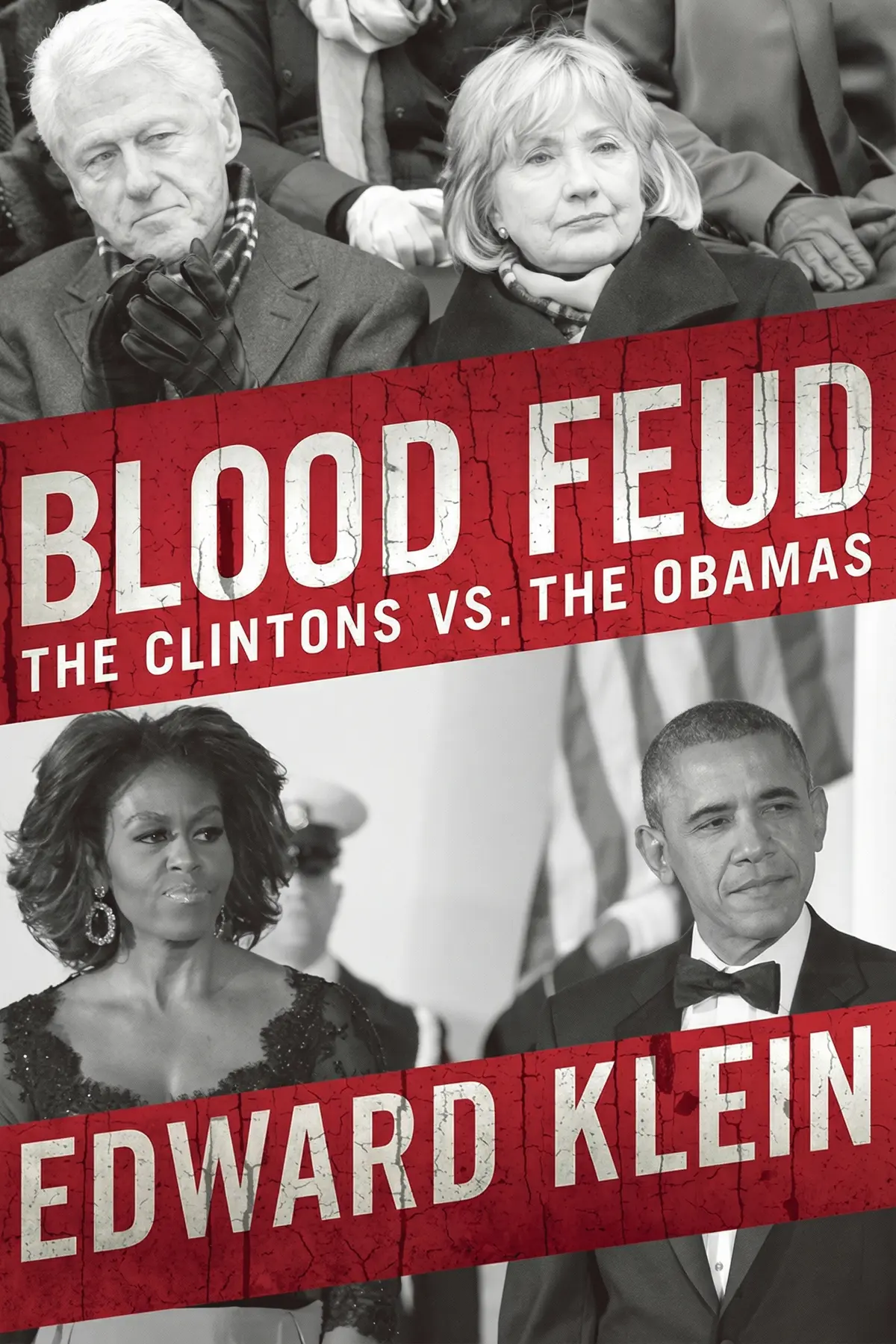
Edward Klein's account of the private war between the Clintons and the Obamas. It shows how old campaign insults, a reluctant 2012 alliance and the Benghazi fallout shaped the road to Hillary Clinton's 2016 run.
1 min 04 sec
If you read politics only through speeches and handshakes, you miss the deals that actually decide things. In Blood Feud, veteran journalist Edward Klein argues that two of the Democratic Party’s most visible partners, the Clintons and the Obamas, spent years in a private war. By one attendee’s account, Hillary Clinton told old classmates at a 2013 Wellesley College reunion that Barack Obama was “incompetent and feckless.”
Klein’s throughline is that this hostility shaped real decisions. Obama needed Bill Clinton to win a second term, Bill had his own reasons for agreeing, and each family then used the other to protect its future, with Hillary’s 2016 run as the prize. The story moves from the insults of the 2008 primaries through the 2012 campaign, the Benghazi attack and the troubles of Obama’s second term. Along the way it offers a sharper way to read public alliances, and some hard warnings about any partnership between people who distrust each other.
2 min 01 sec
A single comparison to a former president, a remark about who should fetch the coffee, an old campus episode. Klein argues small slights like these hardened into contempt that outlasted the race that produced them.
1 min 46 sec
Sinking polls and a lost celebrity backer left Obama facing a choice his closest advisor begged him to avoid. The deal he made carried a hidden escape clause, and the other side had plans of its own.
1 min 55 sec
Bill Clinton defended Obama’s economy and nominated him before the whole party. Commentators reading closely heard something else in the same words, a case for a different president and a different future.
2 min 02 sec
Four Americans died in Libya, and the official explanation mattered as much to a campaign as to the families. Klein describes who was asked to deliver it, and why she believed she was being set up.
1 min 58 sec
A crashing website and an ignored warning to a dictator gave a former president his openings. None of his remarks looked like an open break, yet each one pointed listeners toward the same alternative.
1 min 09 sec
Blood Feud, in Klein’s telling, is about two families who needed each other and never forgave each other. The round of golf and the convention speech were real. So were the grudges underneath them: a comparison with Reagan, a joke about fetching coffee, an old episode from Wellesley. Each side entered the 2012 bargain with an exit already in mind, and Benghazi convinced the Clintons that Obama would never keep his side of it.
Several of Klein’s sharpest details come from people he says were in the room, such as a reunion attendee and Senator Ted Kennedy, and they are best heard as his reporting. Even so, the habits his story teaches are useful. When a powerful figure praises a rival, listen for whose record the praise is measured against. When a crisis arrives, watch where the blame is sent, because that shows who is protecting whom. And before you join forces with someone who resents you, ask what each of you privately expects to collect when the work is done.
In Klein’s version of Washington, the warmest endorsement can be the first move of a long revenge.
On stage, the Clintons and the Obamas looked like close allies: shared party, shared speeches, shared applause. Journalist Edward Klein argues that the reality behind the handshakes was a long and bitter feud, rooted in the insults of the 2008 primaries and kept alive by mutual contempt. Klein follows that feud through a series of high-stakes moments. With his poll numbers sinking and Oprah Winfrey's support gone, Barack Obama turned to Bill Clinton for help in 2012, against the advice of his closest advisor. Clinton defended Obama's economic record and gave the nominating speech at the convention, while, in Klein's reading, promoting his own legacy and his wife's future. After the attack in Benghazi, the Clintons came to believe Obama was pushing the blame onto Hillary. When Obama's second term stumbled over the Obamacare website and Syria, they used every misstep. Readers get an insider's version of a defining political rivalry, attributed to the people Klein says witnessed it, along with a sharper eye for the self-interest that can sit behind any public alliance.
Readers of American politics who want an insider account of the Clinton and Obama rivalry.
Anyone following the road to the 2016 election who wonders how Benghazi and the 2012 campaign fit in.
Professionals who must work alongside rivals and want to recognize self-interest behind public support.
Edward Klein started as a copy boy at the New York Daily News, studied at Columbia University's Graduate School of Journalism and reported from Asia for United Press International. He became foreign editor of Newsweek and was top editor of The New York Times Magazine from 1977 to 1987. He later wrote for Vanity Fair and, for nearly 20 years, Parade's Personality Parade column. His books cover the Kennedys, the Clintons, the Obamas and Donald Trump, including the bestseller The Amateur.

Listeners consider this title an ideal fast-paced read featuring engaging, high-quality writing. Furthermore, the narrative provides remarkable investigative work and internal details regarding two political dynasties, serving as a revelatory experience. Listeners also value the objective delivery and brisk tempo. Nevertheless, the speed of the story draws varied responses; while some enjoy the rapid progression, others characterize the work as petty and disloyal.
This book is a total page-turner for anyone who follows DC power dynamics. Klein manages to synthesize what he calls "deep background" into a narrative that feels both urgent and revealing. Whether or not you agree with his politics, the level of research into the interpersonal conflicts between Michelle Obama and Hillary Clinton is incredible. To be fair, it reads like a "Who’s Who" of political maneuvering, highlighting how these two families were essentially forced into a marriage of convenience that neither side wanted. The details about the 2012 election and the backroom deals are particularly gripping. I appreciated how fast-paced the writing was; I finished the whole thing in a single weekend. It’s an eye-opener regarding the "cabal" surrounding the presidency. Some might call it disloyal, but I found the factual presentation of these rivalries to be refreshing compared to the usual sanitized biographies.
Show moreEver wonder what really happens behind those closed doors at 1600 Pennsylvania Avenue? Blood Feud provides a fascinating glimpse into the animosity and competition between America’s most powerful political couples. Klein uses his insider contacts to weave a story of jealousy and survival that feels incredibly authentic. The research into the internal dynamics of the Obama White House is particularly impressive, especially the role of the "inner circle" in keeping the Clintons at arm's length. I’ve read a few of Klein’s other books, and this one feels like his most focused work yet. It’s a fast-paced, gripping account that doesn’t pull any punches. Personally, I found the details about the 2016 maneuvering and the rise of Elizabeth Warren to be the most prophetic parts of the book. If you want a factual presentation of the friction that defined the Democratic party for a decade, this is it.
Show moreFinally got around to reading this political exposé and it certainly didn't disappoint in terms of pace. Edward Klein has a knack for making modern history feel like a high-stakes thriller, even if you suspect some of the dialogue is reconstructed. The book offers an eye-opening look at the friction between the Obama and Clinton camps that most of the mainstream media ignored. I was particularly fascinated by the chapters detailing Valerie Jarrett’s influence in the West Wing; the level of control she supposedly exerted is staggering. While the "National Enquirer" comparisons in other reviews have some merit because of the gossipy tone, the sheer volume of insider information makes it feel more substantial. It’s a well-written, quick read that holds your interest from the first page. I did find some of the descriptions of physical appearances a bit petty, but that's par for the course with Klein. Definitely worth a look if you want a different perspective on the 2008-2016 era.
Show moreAs someone who follows politics closely, I found Klein’s work to be an illuminating, if controversial, addition to the shelf. The central thesis—that there is a deep-seated "blood feud" between the Obamas and the Clintons—is supported by a wealth of anecdotal evidence that fits the public timeline of events perfectly. The book is remarkably well-written and moves at a clip that puts many modern thrillers to shame. I particularly liked the analysis of how Bill Clinton tried to navigate his wife's career while clashing with Obama’s advisors. While some critics argue it’s just gossip, the truth is that personal relationships drive policy and power in Washington. This book serves as an eye-opener into the messy human element behind the polished public personas. It might feel a bit sensationalized at times, but the core insights into the struggle for control over the DNC's future are worth the price of admission.
Show morePicked this up on a whim after seeing it on the bestseller list, and I ended up finishing it in two sittings. The book is a perfect quick read for a flight or a lazy afternoon. Klein’s writing style is punchy and direct, which keeps the narrative moving through what could have been dry political history. While I have some reservations about the anonymous sourcing, the "deep background" he provides for the major players feels consistent with their public actions. The tension between Hillary’s ambition and Obama’s desire to maintain his legacy is palpable. To be fair, it’s a bit of a "hit job," but it’s a well-executed one that offers a perspective you won't find in the mainstream press. It really highlights the "fishbowl" of public office and the stress it places on these individuals. Even if only half of it is true, it’s still a wild ride.
Show moreWhat a fascinating, albeit controversial, look at the internal warfare of the Democratic Party! Klein provides what feels like a front-row seat to the friction between the Obama and Clinton camps. The book is well-written and manages to explain complex political concepts, like how permanent interests trump friendships in DC, without slowing down the pace. I found the sections on the 2012 campaign particularly revealing, as they highlighted the lack of trust between the two powerhouses. It’s a fast-paced account that offers incredible research and insider information that explains a lot of the weird optics we saw during those years. Some parts are a bit sensationalized, but that makes it all the more engaging. It’s a solid 4-star read for anyone interested in the personalities that shape our country.
Show moreAfter hearing a lot of buzz about this book, I finally decided to see what all the fuss was about. I’m glad I did, as it’s a real eye-opener. The book is a fast-paced deep dive into the animosity that seemingly fuels the relationship between these two political dynasties. Klein’s ability to get people to talk on "deep background" is his greatest strength, providing a factual presentation of events that feels both shocking and plausible. The rivalry described here is more than just political; it’s personal, involving everything from social snubs to strategic betrayals. I especially appreciated the insights into the "cabal" surrounding the President and how they managed his public image. While the book has been called petty by some, I think it’s just a raw look at the reality of high-level politics. It held my interest throughout and left me with a lot to think about.
Show moreIs this journalism or just high-end gossip? That’s the question I kept asking myself while flipping through Blood Feud. On one hand, Klein provides a lot of "insider" details that explain the coldness we often saw on camera between the two families. On the other hand, he leans heavily into petty descriptions of Hillary's wardrobe and Bill's physical appearance, which detracts from the more serious political analysis. Look, I enjoy a good tabloid-style political hit job as much as the next person, but some of the anonymous sourcing feels a bit thin. The section on Elizabeth Warren being Obama’s "Mini-Me" was an interesting take I hadn't heard before, though. It’s a quick read and certainly entertaining, but take the revelations with a grain of salt. It’s a decent enough book if you’re looking for a sensationalist history of the DNC's internal wars, but don't expect a scholarly masterpiece.
Show moreThe premise is definitely intriguing, but the execution left me feeling conflicted. On the positive side, Edward Klein is a seasoned writer who knows how to structure a narrative to keep the reader engaged. The book is an eye-opener when it comes to the logistical hurdles and personal slights that defined the Obama-Clinton working relationship. However, the tone often shifts from investigative to unnecessarily petty. Does it really matter that Bill Clinton has a bulbous nose? These kinds of descriptors make the book feel more like a tabloid piece than a serious history. I got some interesting takeaways regarding the influence of Valerie Jarrett and the strategy behind the 2016 election, but I wish the author had stuck to the political chess match rather than the personal insults. It's a decent read for political junkies, but it lacks a certain gravitas.
Show moreLook, I wanted to like this because the premise of a hidden rivalry is fascinating, but it ultimately felt like a series of unsubstantiated rumors. The writing style is fast-paced, sure, but it’s fueled by a level of vitriol that makes it hard to trust the author’s objectivity. Klein seems obsessed with Michelle’s supposed iciness and Valerie Jarrett’s "intravenous" connection to the first family, yet there’s very little hard documentation to back these claims up. It often feels like the author is just airing his personal grievances against the Democratic establishment. Frankly, it’s a bit disloyal to the craft of investigative reporting when so much of the book relies on "a friend who was present." I stayed for the drama, but I left feeling like I’d just read a supermarket tabloid rather than an actual political exposé. It’s petty, often mean-spirited, and lacks the intellectual depth I was hoping for.
Show moreKlein argues that behind their public alliance, the Clintons and the Obamas shared a deep mutual hostility that began in the 2008 primaries. He follows it through Bill Clinton’s help in Obama’s 2012 re-election, the dispute over blame for the Benghazi attack, and the Clintons’ public criticism of Obamacare’s launch and Obama’s handling of Syria, all of which Klein links to Hillary’s 2016 ambitions.
According to Klein, Obama’s approval had fallen to 41 percent in a 2011 Gallup poll, support among independents had dropped, and Oprah Winfrey had withdrawn her backing. Advisor David Plouffe argued that Clinton’s popularity and appeal to white working-class voters were essential. Valerie Jarrett opposed the move, but told Obama he could abandon any deal with Clinton after the election.
Klein claims Obama pressed Hillary Clinton’s State Department to describe the 2012 attack as a reaction to an offensive online video, protecting his claim to have ended the War on Terror. He argues the Clintons came to believe Obama was shifting blame to Hillary, pointing to Joe Biden’s debate remarks that the State Department never warned the White House about security needs.
Klein reads the nominating speech as praise with a second purpose. By presenting Obama as a centrist focused on responsibility and opportunity, Clinton held up his own presidency as the standard. Newt Gingrich and others noted the implied contrast: Clinton had worked with Republicans, kept the economy strong and reformed welfare. In Klein’s view, the speech also promoted Hillary.
Klein’s story shows how old insults can drive decisions for years, how alliances built by people planning to break them tend to collapse under pressure, and how praise can promote the person giving it. It encourages readers to ask what each side privately expects from a partnership, and to notice where blame is directed when something goes wrong.
Barack Obama

Masaji Ishikawa

John Rawls



Miles Taylor



Tracy Rosenthal

Jessica Valenti
AUDIO SUMMARY AVAILABLE
Get the key ideas from Blood Feud by Edward Klein, plus 5,000+ more nonfiction titles.









