

14 min 51 sec
Available in: English
Biohack Your Brain: How to Boost Cognitive Health, Performance and Power
A neuroscientist's practical guide to keeping your brain sharp at any age through better circulation, brain-friendly food, enough water, targeted mental workouts, deep breathing and a simple method for questioning negative thoughts.
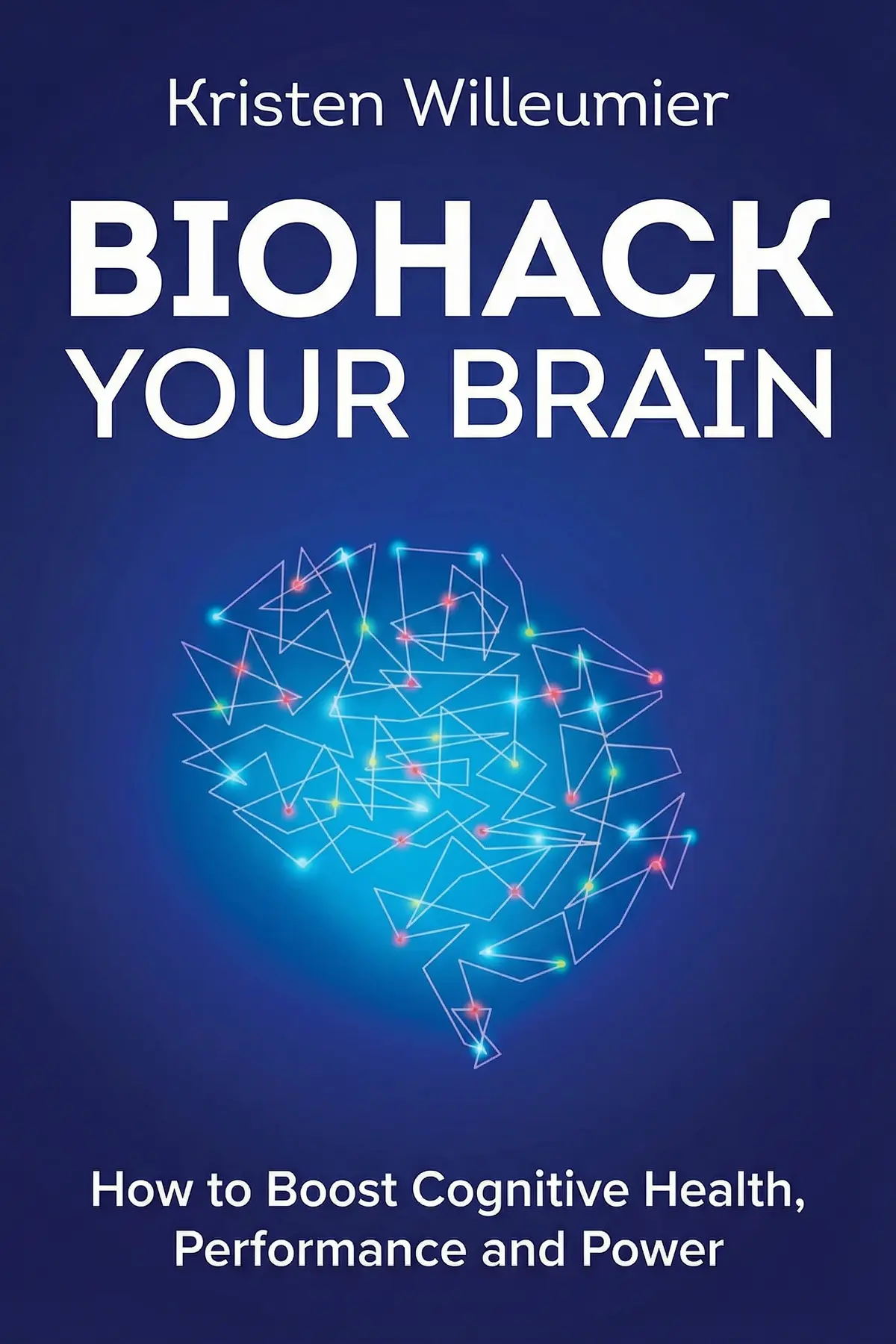
Table of Content
1. Introduction
1 min 00 sec
If your afternoons fade into brain fog and you assume a slipping memory is just what age does, neuroscientist Kristen Willeumier has news for you. In Biohack Your Brain, she points to research showing that adults keep making new brain cells even in their eighties, as long as they help the process along. Willeumier trained in neurobiology at UCLA. She sees the brain less as a computer and more as a high-powered sports car that runs on good fuel and regular servicing.
Her argument comes down to maintenance. The brain is changing all the time, and the blood, food, water, mental effort, breathing and thoughts you give it each day decide whether it grows stronger or wears down. Every piece of her advice is small enough to start this week: a brisk walk when an idea stalls, two servings of oily fish, a daily water target, a six-count breath and a notebook that catches your gloomiest thoughts before they become habits.
2. A brain that can still grow at eighty
1 min 50 sec
Scientists long believed that brain cells, once lost, were gone forever. Newer research overturned that view, and it changes what a forty-year-old or an eighty-year-old can expect from the organ inside their skull.
3. Walk off brain fog and sit up straight
1 min 30 sec
The midafternoon slump that ruins focus is often blamed on boredom or too little coffee. A neuroscientist traces it to plumbing instead, and her fix takes no equipment and almost no time.
4. Put berries and oily fish on your plate weekly
2 min 01 sec
Dementia is usually treated as bad luck that arrives in old age. One long study of older adults suggests a humble supermarket item may buy years of clearer thinking, and the reason lies in the brain’s chemistry.
5. Drink enough plain water to keep your focus
1 min 48 sec
Most people assume they only need extra water on hot days. The body’s daily losses tell a different story, and a quick check you can do in private shows whether your brain is running dry.
6. Match your mental workout to your goal
1 min 59 sec
A jigsaw puzzle, a novel and a love letter all exercise the brain, yet they don’t train the same thing. Picking the wrong one is like doing sit-ups to build stronger legs.
7. Breathe your way out of the stress loop
1 min 52 sec
The hormone that helps you hit a deadline can also reshape the part of the brain that makes you anxious, which then invites more of the same hormone. Breaking that cycle takes less time than making coffee.
8. Question the negative thoughts that rewire you
1 min 53 sec
Ask people whether their thoughts are mostly positive and they’ll usually say yes. When researchers had them keep count, the real picture was very different, and the brain pays a physical price for it.
9. Conclusion
58 sec
Willeumier’s sports car image works because a car never stays the same. Either it gets serviced or it slowly heads toward a breakdown, and the brain works the same way. Every day it loses cells and every day it can grow new ones. What tips the balance is ordinary: how much blood reaches it, what you eat and drink, how hard you make it work, how you handle pressure and what you tell yourself.
None of it needs a lab. You can start with a glass of water and a glance in the toilet bowl, aiming for pale straw. When an idea stalls, take a walk before you push harder, and sit tall when you come back. Put berries and oily fish on the shopping list twice a week. When worry builds, close your eyes for six counts in, three held and six out. Later, open a notebook and test the worry against the evidence.
The brain may be the most complicated object we know of. Looking after it turns out to be surprisingly simple.
About this book
What is this book about?
Brain fog, poor focus and a memory that seems to slip a little more each year are easy to accept as part of getting older. Neuroscientist Kristen Willeumier disagrees. She points to research showing that the adult brain keeps rewiring itself and growing new cells late in life, as long as it gets the right support. Willeumier compares the brain to a high-powered sports car that needs regular servicing and good fuel. She explains how blood flow feeds and cleans it, why berries and oily fish slow cognitive decline, and why plain water matters more than most people think. She also covers mental workouts matched to specific goals, how chronic stress shrinks gray matter, and how negative thinking can rewire the brain for fear. Each idea comes with a small, concrete habit. There is a brisk walk when your thinking stalls, a weekly target for berries and seafood, a daily water goal with a quick self-check, a six-count breathing exercise and a journal method for testing gloomy thoughts against the evidence. Readers finish with a simple routine for keeping their brain healthy now and lowering the risk of decline later.
Book Information
Who it's for
Knowledge workers wanting focus
Knowledge workers who fight afternoon brain fog and want simple habits that sharpen focus.
Worried about memory loss
Adults worried about memory loss or dementia in later life who want to start preventing it now.
Stuck in negative thinking
Anyone stuck in cycles of stress or negative thinking who wants a practical way out.
About the Author
Kristen Willeumier
Kristen Willeumier is a neuroscientist whose research covers neurobiology and neuroimaging. After a BA in Psychology from Boston College, she earned master's degrees in Physiological Science and Neurobiology and a PhD in Neurobiology at UCLA. She went on to a postdoctoral post in the neurology department at Cedars-Sinai Medical Center, researching neurodegenerative disease, and won a fellowship from the National Institutes of Health. Her work has been presented internationally, and she lives in Los Angeles.
Ratings & Reviews
Ratings at a glance
What people think
Listeners find the work extremely educational and accessible, with one noting how it simplifies complex science into digestible terms. They value the emphasis on cognitive wellness, especially the relationship between mindset and neurological performance, while one listener mentions it enhances functioning at any age. The content is praised for its uplifting tone, authentic anecdotes, and engaging prose, with one review emphasizing the writer’s deep commitment to mental health. Listeners consider the material very practical, with one remarking that it's packed with valuable steps.
Top reviews
Liam
As someone who has always been terrified of cognitive decline, finding a resource that feels this empowering was a breath of fresh air. Dr. Willeumier writes with a clear passion that makes you want to immediately overhaul your pantry and start doing crosswords. I loved the actionable steps provided at the end of the chapters; they make the science feel less like a lecture and more like a toolkit for longevity. The way she explains how our internal thoughts can physically reshape our brain function is fascinating. It’s not just about what you eat, but how you live. This is easily the most readable book on brain health I’ve come across, and the NFL anecdotes really bring the research to life.
Show moreNan
Picked this up on a whim and I’m so glad I did because it has completely changed how I view my morning routine. The connection between physical movement and brain plasticity is explained so simply that anyone can understand it. I’ve read a lot of health books that are just dry lists of 'don'ts,' but this one is incredibly encouraging. It focuses on what you can add to your life to enhance your focus and memory. The chapters are organized well, and the writing style is very engaging. It’s rare to find a scientist who can communicate this effectively to the general public without getting bogged down in jargon. Highly recommended for any age.
Show moreSuvannee
Wow, I wish I had read this ten years ago! The author’s passion for brain health is contagious, and her expertise shines through on every page. She manages to take complex neurobiology and turn it into something that feels like a conversation over coffee. I particularly appreciated the sections on how to 'reverse' brain age, which gave me a lot of hope as I enter my sixties. The personal stories about her patients were moving and served as great proof-of-concept for her methods. It’s an essential read for anyone who wants to stay mentally fit and understands that brain health is just as important as physical fitness.
Show moreEleanor
This book is a solid primer for anyone looking to sharpen their mental edge without needing a PhD in neuroscience. Dr. Willeumier does a fantastic job translating complex biological processes into lifestyle habits that actually feel achievable. I particularly appreciated the focus on how our daily environment impacts cognitive longevity. While some might find the 'biohacking' label a bit of a stretch for what is essentially healthy living, the advice is grounded in her work with professional athletes. It’s encouraging to see a roadmap that isn’t just about pills but includes mindfulness and mental games. A few sections on specific food combinations felt a little repetitive, but the overall message is powerful and easy to digest.
Show moreWacharapol
Ever wonder why some people stay sharp into their nineties while others struggle in their fifties? This book dives into the concept of 'cognitive reserve' and offers practical ways to build it up through daily habits. I was skeptical about the brain games section, but the author makes a compelling case based on her clinical experience. The tone is chatty and friendly, making it a quick read even when she’s discussing things like neurotransmitters and blood flow. I do wish there were fewer anecdotes about football players—I get that's her background, but it felt a bit repetitive after the fourth story. Still, the advice on hydration and magnesium is gold for the average reader.
Show moreJackson
The chapter on nutrition was a bit of a slog, but the rest of the book is genuinely enlightening. I wasn't aware of how much impact simple things like water intake and specific berry consumption had on neural pathways. Willeumier’s perspective as a researcher working with high-impact athletes gives her a unique vantage point on recovery. Look, it’s not a dense academic textbook, and it doesn't try to be. It’s a lifestyle guide for people who want to feel better now. I started implementing the breathing exercises she recommends and noticed a difference in my stress levels within a week. Solid information that is actually usable for ordinary people.
Show moreSawit
Finally got around to finishing this, and while it's a bit buzzword-heavy, the core advice is undeniably valuable. The book does a great job of explaining how our modern lifestyle is often at odds with our brain’s evolutionary needs. I enjoyed the specific 'brain hacks' like changing up your route to work or learning a new language to spark neurogenesis. Truth is, most of us are neglecting our brains while we obsess over our waistlines. This book corrected that imbalance for me. It’s a bit light on the hard science citations, but for a mainstream audience looking for actionable steps to lift the brain fog, it hits all the right notes.
Show moreBook
Not what I expected when I saw the title, but that isn't necessarily a bad thing depending on your goals. To be fair, if you’re looking for high-tech neuro-interventions like TMS or experimental stimulants, you’ll be disappointed. This is much more of a 'back to basics' guide focusing on sleep, diet, and hydration. The stories about working with NFL players who suffered TBIs were the highlight for me, as they added a much-needed human element to the science. However, the term 'biohack' feels like a marketing buzzword here. It’s a good entry-level book for my parents, but seasoned health enthusiasts might find the suggestions a bit elementary and the lack of hard data frustrating.
Show moreSiraporn
After hearing so much hype about this book, I found it to be a bit of a mixed bag. On one hand, the advice is sound and the author clearly knows her stuff when it comes to the brain. On the other hand, the format is a little overwhelming. It almost feels like it should have been a website with clickable links for the supplements and blood work she recommends. There is so much information packed into these pages—from diet combos to exercise routines—that it’s hard to know where to start. It’s a great reference, but as a narrative book, it gets bogged down in lists that become difficult to track while reading.
Show moreNutnicha
Frankly, I found this to be a bit of a letdown in terms of scientific rigor. The author relies heavily on phrases like 'research shows' without actually providing the citations or specific data to back up the more striking claims about toxins and EMFs. It feels like it was written for an Instagram audience that prioritizes aesthetic health over peer-reviewed evidence. There were way too many mentions of specific brand names and supplements for my liking, which started to feel like a sales pitch. If you want a deep dive into the 'why' of neurology, look elsewhere. It’s too simplified to the point of being misleading about sample sizes and methodology, neglecting the context necessary for a serious science book.
Show moreQuestions about this book
What is the main idea of Biohack Your Brain?
Kristen Willeumier argues that the brain keeps changing throughout life, rewiring itself and growing new cells even in old age. Whether it grows stronger or wears down depends on daily care: good blood flow, brain-friendly food, enough water, mental exercise, stress control and healthier thinking. She compares the brain to a high-powered sports car that needs good fuel and regular servicing.
Which foods does Kristen Willeumier recommend for brain health?
She singles out berries and oily fish. A Harvard study that followed 16,000 adults over the age of 70 found that people who ate berries regularly declined more slowly, in some cases by up to 2.5 years, and researchers credited antioxidants. Oily fish and seafood supply omega-3 fats that protect the brain’s myelin insulation. She suggests at least two portions of berries a week and about two servings of oily fish or seafood.
How much water should you drink for your brain, according to Biohack Your Brain?
The brain is 75 percent water, and losing just 1 percent of body weight as water can dull focus and slow reactions. Willeumier’s rough guide is about 3.7 liters a day for men and 2.7 liters for women, more in heat or during exercise. To check, look at your urine: pale straw or clear is good, while anything darker than light honey means drink more.
What breathing exercise does the book suggest for stress?
Close your eyes and rest one palm on your belly while the other hand covers your heart. Breathe in through your nose for a count of six, hold for three, then breathe out slowly for six. Repeat five to ten times. Willeumier says deep breathing quickly lowers cortisol, heart rate and blood pressure, which helps break the loop in which stress enlarges the amygdala and breeds more anxiety.
How can I stop negative thoughts from affecting my brain?
Willeumier suggests writing down your thoughts for a week, especially the ones that change your mood, then looking for patterns in when and where they appear. Take the most common one, list every reason it might be true, then every piece of evidence against it. Seen this way, she argues, the thought often turns out to be an emotional overreaction and loses its hold.
Readers also enjoyed








AUDIO SUMMARY AVAILABLE
Listen to Biohack Your Brain in 15 minutes
Get the key ideas from Biohack Your Brain by Kristen Willeumier, plus 5,000+ more nonfiction titles.
- 5,000+ titles
- Listen as much as you want
- 7-day free trial
- Cancel anytime









