

15 min 31 sec
Available in: English
An Ugly Truth: Inside Facebook's Battle for Domination
A reported account of how Facebook's drive for growth and engagement turned it into an amplifier for misinformation, hate and political chaos, and why each scandal brought appeasement long before it brought real change.
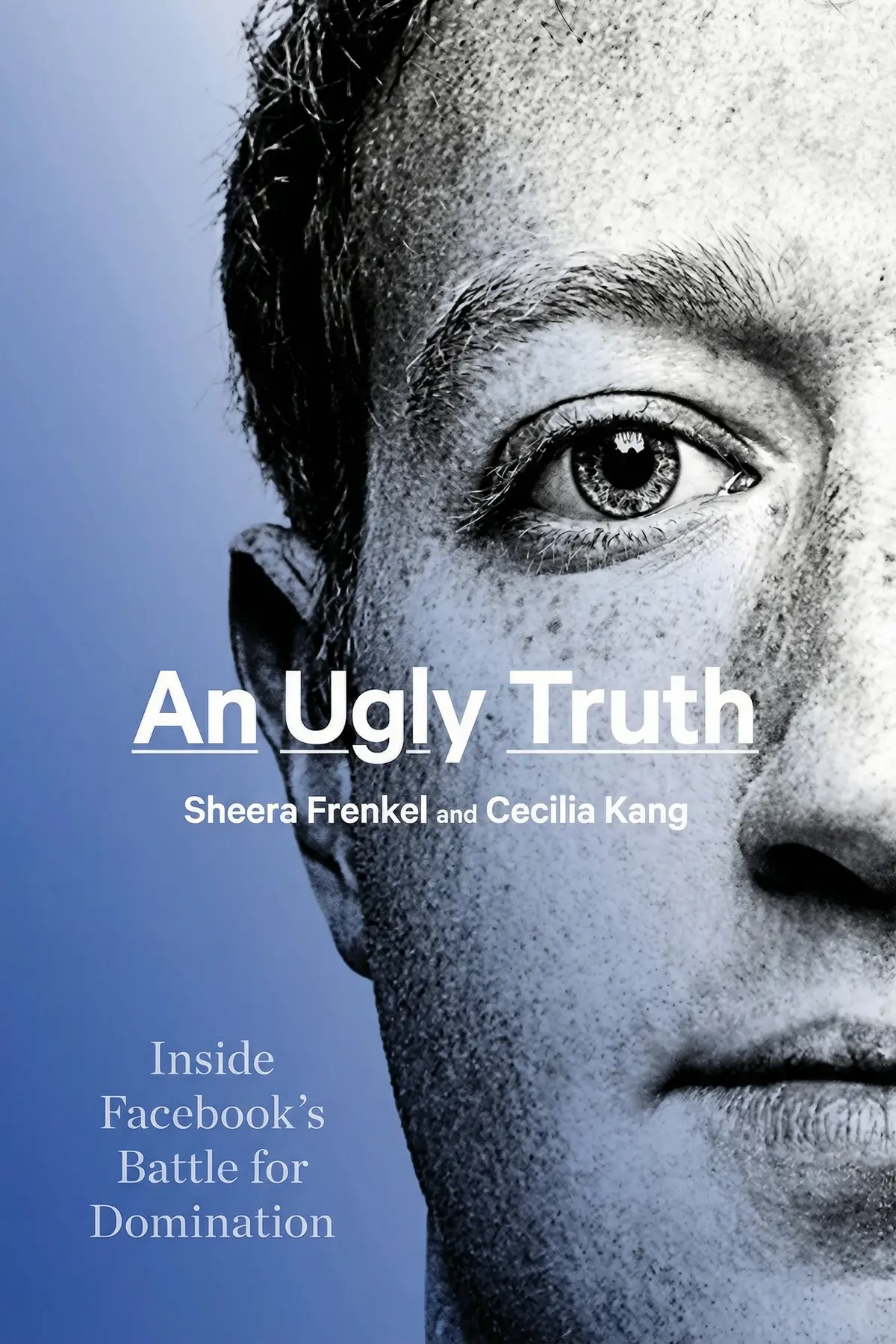
Table of Content
1. Introduction
1 min 10 sec
If you use Facebook, work in tech or simply wonder why online life feels angrier than it used to, the story behind the platform explains a great deal. In An Ugly Truth, New York Times reporters Sheera Frenkel and Cecilia Kang trace that story to one habit formed early: Mark Zuckerberg judged nearly every decision by whether it kept people engaged.
Sheryl Sandberg later turned that engagement into an advertising machine, and the formula that built an empire also amplified hate, foreign propaganda and political chaos. The authors argue the scandals were not accidents along the way. They followed from choosing growth over responsibility, again and again, and from meeting each crisis with appeasement until outside pressure left no choice.
The trail runs from a Harvard dorm to Myanmar and the US Capitol. Follow it and you gain a sharper eye for the incentives behind any product you use or build, and for the moment a company’s metrics start to overrule its conscience.
2. See how one metric can outrank a company's values
1 min 36 sec
Users hated one of Facebook’s earliest features and said so loudly. Zuckerberg kept it anyway, and the reason he trusted explains a decade of decisions that followed, including one about a viral campaign video.
3. Follow the data to see who pays for free
1 min 25 sec
A Christmas party, an hour of shop talk and a new hire changed what Facebook was for. The feature that made it happen looks friendly and harmless, and most people still press it every day.
4. See why Facebook's neutrality never held up
1 min 40 sec
Facebook hired someone to hunt down employees who talked to reporters, and in 2016 she had plenty of work. The leaks were true, and the company’s attempt to look neutral ended up angering both political camps.
5. A quick stock rebound is not accountability
1 min 37 sec
An internal investigation traced a stream of divisive ads to an office in St. Petersburg. Then came a data scandal, a falling share price and a day in Congress that ended very differently than critics expected.
6. Growth without local eyes can cost lives
1 min 42 sec
A push to bring the next billion people online looked like generosity and good business. In Myanmar it met a wave of hate the company could not even read, and an activist’s warning went nowhere.
7. Learn how buying rivals turned friends into enemies
1 min 45 sec
One of Facebook’s own cofounders publicly called for the company to be split apart. The deals behind his anger made Facebook enormous, and a later technical decision looked to some experts like a shield against regulators.
8. Read a free speech pitch for what it protects
1 min 44 sec
Diet Cokes in the Oval Office, a warning about Chinese apps and a grand speech about free expression. Facebook’s 2019 charm offensive was meant to win friends, and almost everyone who heard it came away unconvinced.
9. Recognize the pressure that finally forces change
1 min 45 sec
A president’s remarks about disinfectant, a rival platform’s warning label and a staff walkout all failed to move Facebook on their own. It took a combination of forces, and a day in January, before the company changed course.
10. Conclusion
1 min 07 sec
Frenkel and Kang leave Facebook’s future open, but the arc of their reporting is hard to miss. A student who ranked classmates for attention built a company that ranked everything for attention, then hired one of the industry’s best ad builders to sell what that attention revealed. The Myanmar posts, the Russian ads, Cambridge Analytica and the groups behind January 6 were what that design produced whenever nobody at the top chose to slow it down. Each crisis drew the same first response, protect growth and court the powerful, and the costs landed on people who never sat in a Facebook meeting.
The pattern travels well beyond one company. At work, notice which number your team is rewarded for, and ask what it would take for a warning like the one Matt Schissler carried from Myanmar to outweigh it. As a user, remember that a free feed is paid for with what it learns about you, and that its ranking already decides much of what you see.
A dashboard can show that people are staying longer. It cannot show what staying is costing them.
About this book
What is this book about?
Facebook went from a Harvard dorm project to a global empire in about a decade. Over the same years it became known for privacy failures, viral falsehoods, foreign propaganda and uneasy alliances with the powerful. New York Times reporters Sheera Frenkel and Cecilia Kang set out to explain how that happened, and their answer is that the trouble was there from the start. They follow one pattern through the company's history. Mark Zuckerberg measured success by engagement and growth. Sheryl Sandberg turned that engagement into an advertising machine built on user data. When ads from a Russian group reached 126 million Americans, Facebook at first played down the findings; when activists warned about hate speech in Myanmar before a genocide, it did little; only after many January 6 participants were found organizing in its unmoderated groups did it finally change course. Readers get a clear story of a company most of the world uses, with names, dates and numbers. They also get a lens for any organization: watch which metric leaders reward, and notice how long it takes for warnings to outweigh it.
Book Information
Who it's for
Tech, media, policy professionals
Professionals in tech, media or policy who want the inside story of how Facebook's choices shaped elections and public debate.
Founders and managers
Founders and managers who want to see what happens when one growth metric overrules every warning.
Curious about their feed
Everyday users curious about what their feed collects and why it shows them what it does.
About the Author
Sheera Frenkel
Sheera Frenkel covers cybersecurity for The New York Times from San Francisco, after more than ten years as a Middle East correspondent for outlets including BuzzFeed, National Public Radio and the Times of London. Cecilia Kang is a national technology correspondent for The New York Times in Washington, covering privacy, antitrust and cybersecurity. She has reported on Facebook since its early Silicon Valley days, won the George Polk and Loeb Awards, and was a Pulitzer finalist in 2018 for her Facebook coverage.
Ratings & Reviews
Ratings at a glance

What people think
Listeners find the work meticulously researched and thoroughly documented, making it an outstanding source of knowledge. They also value its readability and the quality of the prose, with one listener remarking that it is relatable for a broad audience. Additionally, the storytelling earns praise, with one review describing it as a gripping narrative about scrupleless business people. However, some listeners find the book rather boring.
Top reviews
Mo
What an absolute eye-opener this was. Even if you think you follow tech news closely, the sheer volume of research Frenkel and Kang poured into this narrative is staggering. They don’t just summarize headlines; they take you inside the rooms where the decisions happened. I was particularly struck by the sections on Sheryl Sandberg. For years, she was the 'adult in the room,' but this book paints a much more complicated, almost cutthroat picture of her role in scaling the company at the expense of user safety. The details about the 16,000 privileged accounts and how engineers abused that power to snoop on people were chilling. It reads like a high-stakes thriller, but the consequences are unfortunately very real for our democracy. If you care about where your data goes, you need to read this.
Show moreIce
This reads less like a business book and more like a true crime novel where the victim is democracy itself. I was floored by the revelations regarding the newsfeed experiments. The fact that they purposely manipulated people's emotions—showing more negative content because it drove higher engagement—is absolutely sociopathic. It explains so much about the polarization we see today. The authors' access to former employees provides a perspective you just don't get from standard journalism. You really feel the internal tension between the engineers who wanted to do the right thing and a leadership team that viewed every scandal as a PR problem to be managed rather than a systemic failure to be fixed. I finished this and immediately changed all my privacy settings.
Show moreBae
Frankly, the most disturbing part wasn't the data mining, but the internal culture of 'loyalty' over truth. One former employee in the book says you don't get fired for stupidity, you get fired for being disloyal. That explains why they were so slow to admit to the Russian interference in 2016. They were more worried about protecting the brand than protecting the public. The reporting on how the platform was used to incite violence against the Rohingya is devastating and should be required reading for every tech executive. Frenkel and Kang have done a massive public service by documenting this. It’s an 'ugly truth' indeed, and it makes you realize that we are the product being sold to the highest bidder.
Show moreLincoln
After hearing a lot of buzz about this, I finally dove in. Wow. The sheer arrogance of the leadership team described here is mind-blowing. The book perfectly captures the 'Napoleonic' ambition of Zuckerberg and the cold, calculating business sense of Sandberg. I loved the specific details about the 2019 diversity stats and how the platform failed to protect marginalized groups. It’s not just a book about tech; it’s a book about power and what happens when that power is concentrated in the hands of people who believe they are 'connecting the world' while actually tearing it apart for profit. The writing is sharp, urgent, and incredibly well-supported by evidence. Highly recommend for anyone interested in the intersection of tech and politics.
Show moreNora
Picked this up after the Meta rebrand because I wanted to understand the 'before' times better. The authors do a fantastic job of illustrating how the 'move fast and break things' culture led directly to the humanitarian crises in Myanmar. It’s horrifying to realize there were only five Burmese speakers moderating content while a genocide was being fueled by their platform. The book is structured thematically, which makes it feel a bit disjointed at times, but the individual stories are gripping. I appreciated the deep dive into the 2016 Russian interference and that $100,000 ad campaign that reached millions. It makes you realize how fragile our systems are when growth is the only metric that matters. Definitely worth a read for the historical documentation.
Show moreSing
Finally got around to reading this and the level of detail is impressive. The authors managed to interview over 400 people, and it shows. The most interesting part for me was the origin of the 'Like' button and how something so simple was designed to create a dopamine loop that keeps us addicted. It’s easy to blame the users, but this book proves the 'product' is designed to exploit our worst instincts. My only complaint is that it can be a bit dry in the middle sections when they get into the weeds of DC lobbying. However, the chapters on Cambridge Analytica are the best summary of that mess I've encountered yet. It’s a heavy read, but an essential one for the digital age.
Show moreHarper
Ever wonder why your feed feels like a rage machine? This book explains the exact mechanics behind it. I was fascinated by the contrast between Zuckerberg’s libertarian 'free speech' stance and the reality of how they censored things when it suited their business interests. The authors do a great job of showing how Facebook tries to have it both ways. They want the protection of being a 'neutral platform' while acting like a massive media publisher. It’s a complex legal and ethical web, and this book untangles it as well as anyone could. It loses a star for being a bit too long, but the content is gold. It definitely made me rethink my relationship with Instagram and WhatsApp too.
Show moreKung
To be fair, I went into this expecting a bombshell, but it felt like a very long recap of things I’d already read in the New York Times. The writing is top-notch and the authors are clearly experts, but did we really need another 400 pages to tell us that Zuckerberg is an introverted guy obsessed with growth? The book frames him as this uniquely 'evil' figure, but frankly, every CEO in Silicon Valley is playing the same game. I was hoping for more analysis on how they compare to TikTok or Twitter, but the focus is very narrow. It’s a well-documented history, but if you’ve been paying attention since 2016, you might find yourself skimming a lot of the chapters. It’s a solid 3-star effort for the reporting alone, though.
Show moreTern
I've been a fan of Frenkel and Kang’s reporting for a while, but this book didn't quite hit the heights of 'Bad Blood' or 'Super Pumped' for me. Those books had a clear 'rise and fall' arc, whereas Facebook just keeps growing despite the scandals. The truth is, the book is a bit repetitive. We get it: growth was the priority, and privacy was an afterthought. How many times can you say the same thing? That said, the specific anecdotes about internal company politics—how departments fought each other and how loyalty was valued over transparency—were enlightening. It's a good reference book to have on the shelf, but it’s not exactly a page-turner if you’re already familiar with the broad strokes of the story.
Show moreDiego
Look, I’m no fan of Facebook—I actually deleted my account years ago—but this book felt incredibly one-sided. It felt more like a 'Trump basher' than a serious look at tech infrastructure. The authors seem to imply that every mistake was a calculated move of pure malice, rather than the reality of a massive company being incompetent at policing global speech. Monitoring free speech is probably the hardest job in the world, yet the book treats it like there are simple 'right' answers that Zuck just ignored for profit. Also, the portrayal of Sandberg felt almost personal at points. It’s well-written, but the bias is so thick that I found it hard to trust the narrative. Expected a more objective business analysis.
Show moreQuestions about this book
What is An Ugly Truth by Sheera Frenkel and Cecilia Kang about?
It is a reported history of Facebook’s rise and its scandals. The authors argue that Mark Zuckerberg valued engagement and growth over ethics from the start, and that Sheryl Sandberg’s data-driven ad business deepened that bias. The book follows the consequences through Russian election ads, the Cambridge Analytica data scandal, hate speech in Myanmar, antitrust fights and the January 6 attack on the Capitol.
What role did Facebook play in Myanmar according to An Ugly Truth?
Facebook expanded into developing countries through its Next One Billion project without hiring enough moderators for the many languages on the site. In Myanmar, posts attacking the Rohingya Muslim minority spread widely, even after activists such as Matt Schissler warned the company from 2014 onward. More than 24,000 Rohingya were killed, and a United Nations team found Facebook played a determining role in the genocide.
What does An Ugly Truth say about Cambridge Analytica and the 2016 election?
An internal inquiry led by Alex Stamos found that Russia’s Internet Research Agency spent more than $100,000 on divisive Facebook ads that reached 126 million Americans. In March 2018, Cambridge Analytica was revealed to have taken data on up to 87 million users and sold it to the Trump campaign. Shares fell 10 percent, but after Zuckerberg’s testimony the stock recovered the same day.
What finally made Facebook change its content policies?
According to the authors, it took several pressures at once. In 2020 employees staged a digital walkout, 33 founding employees signed an open letter, and advertisers such as Verizon, Starbucks and Ford boycotted the site for a month. After the January 6 Capitol attack, Facebook tightened its rules, suspended Trump’s account for several weeks and created an independent Oversight Board, which critics say shifts responsibility away from executives.
What lessons can managers take from An Ugly Truth?
The book shows how a single rewarded metric, engagement, can outweigh complaints, staff concerns and outside warnings for years. Leaders can ask which number their own teams chase, who raises warnings and whether anyone acts on them. Facebook’s Myanmar expansion also suggests hiring people who understand local languages and risks before entering a new market, rather than after harm appears.
Readers also enjoyed

A Warning
Miles Taylor



AI 2041: Ten Visions for Our Future
Kai-Fu Lee

Abolish Rent: How Tenants Can End the Housing Crisis
Tracy Rosenthal


Abortion: Our Bodies, Their Lies, and the Truths We Use to
Jessica Valenti


Adults in The Room: My Battle With Europe’s Deep Establishment
Yanis Varoufakis
AUDIO SUMMARY AVAILABLE
Listen to An Ugly Truth in 15 minutes
Get the key ideas from An Ugly Truth by Sheera Frenkel, plus 5,000+ more nonfiction titles.
- 5,000+ titles
- Listen as much as you want
- 7-day free trial
- Cancel anytime









