
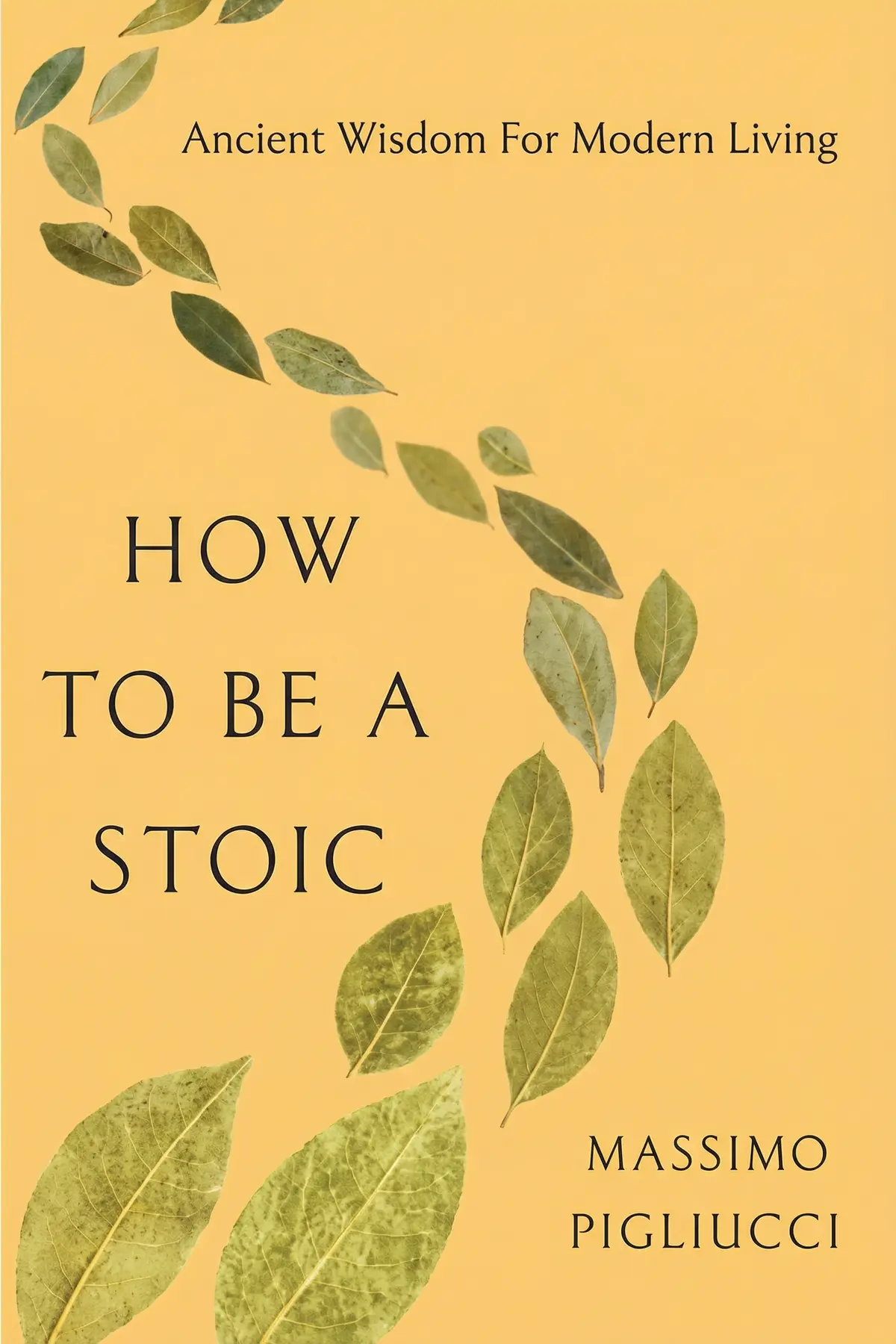
How to Be a Stoic: Using Ancient Philosophy to Live a Modern Life
Massimo Pigliucci
 English
A practical introduction to Stoicism that turns its three disciplines of desire, action and assent into short exercises for staying calm, judging fairly and building character when much of life is outside your control.

1 min 07 sec
If your mood rises and falls with traffic, the weather, the economy and other people’s opinions, your happiness is in the hands of things that will never answer to you. In A Handbook for New Stoics, philosopher Massimo Pigliucci and Stoic group leader Gregory Lopez argue that this can be trained away, starting with one sorting habit: separating what is up to you from what is not. That habit dates back to around 300 BCE, and, the authors note, its core survives today in cognitive behavioral therapy.
The authors spread 52 exercises across a year, and they single out nine as a trial run, three for each Stoic discipline: desire, action and assent. Their case is that calm and good character are skills, built by aiming your wants, your actions and your judgments only at what you control. Those nine exercises are enough to test the idea on a tense review, a broken car and a rude stranger.
1 min 22 sec
Most of what spoils an ordinary week has one thing in common, and it explains why the same irritations keep returning. An ancient school of thought built its entire program around that single observation.
1 min 31 sec
An ancient teacher claimed we fully control only three things, and one of them seems plainly false: nobody chooses the thoughts that pop into their head. The puzzle dissolves once you see what he actually meant.
1 min 39 sec
A performance review, a diagnosis, a market crash: each can decide how you feel for weeks. The Stoics pointed to one thing nobody can take from you, and it changes what counts as a good day.
1 min 41 sec
Critics call Stoics cold and gloomy for dwelling on loss. A Roman emperor who outlived most of his children suggests the opposite: facing endings squarely can make the present feel richer and the hard days lighter.
1 min 32 sec
Most outbursts we regret begin with being caught off guard by someone else’s behavior. Two ancient Stoics used a bathhouse and a morning ritual to make sure rudeness never took them by surprise.
1 min 30 sec
One of the most important books of ancient Stoicism is, at heart, a copy of its author’s own journals. The habit behind it helped a Roman senator sleep, and it still works for restless minds.
1 min 31 sec
Snap verdicts about people and events arrive before we decide anything, and many of them are wrong. Epictetus had a short line for talking back to them, and the authors suggest saying it out loud.
1 min 32 sec
Calling a week bad or a salary good sounds like harmless everyday speech. The Stoics thought those small labels shape decisions in ways most people never notice, and they offered a single question to replace them.
1 min 09 sec
What the book finally offers is a new address for happiness. Pigliucci and Lopez take a philosophy from around 300 BCE and show that its promise is modest and practical. Stop storing your peace in traffic, markets, reviews and other people’s moods, and keep it in the one territory you govern: your judgments, your impulses and what you choose to want. Equanimity, in their telling, grows through steady practice, and setbacks are part of it.
That practice can begin this week. When a harsh verdict about someone forms in your head, call it an impression and ask where it came from. Before the next tense meeting, name the behavior you expect so it cannot ambush you. At night, write a few lines about what was in your hands and what was not. And when something you own breaks, as it will, spend a moment thanking it for the days it worked.
Marcus Aurelius lost most of his children before they grew up, ruled through a plague, and still kept journals that helped him find and hold to his virtues. If an emperor needed daily practice, the rest of us can start with a pen and one honest evening.
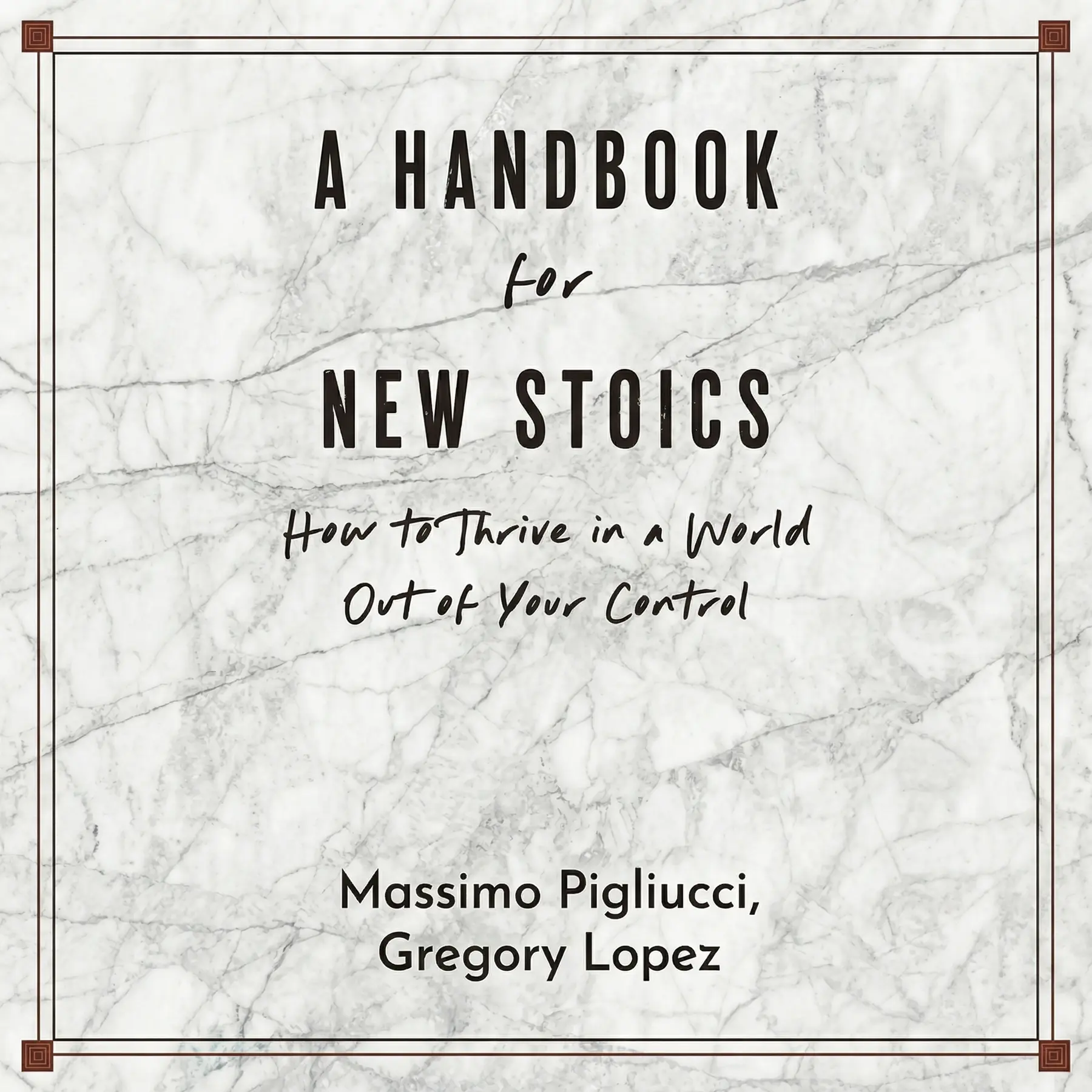
Much of what ruins an ordinary day sits outside anyone's control: traffic, illness, the economy, other people's opinions. Massimo Pigliucci and Gregory Lopez argue that Stoicism, a philosophy from ancient Greece, still offers one of the most dependable ways to stop those things from deciding how you feel. Its core is the dichotomy of control, the habit of separating what is up to you from what is not, and the authors point out that the same idea lives on in cognitive behavioral therapy. The book lays out 52 exercises spread over a year, and the authors highlight nine as a starting set. They fall into three disciplines. Desire teaches you to want only what you govern, above all your own character, and to accept that everything else is temporary. Action prepares you for difficult people and situations before you meet them. Assent trains you to catch snap judgments and question them. Along the way, readers meet Epictetus at the Roman bathhouses, Marcus Aurelius writing his Meditations and Seneca reviewing each day before sleep. What remains is a set of small, repeatable practices, from evening journaling to one question about character, for anyone who wants more calm without pretending to feel nothing.
Professionals whose mood swings with reviews, deadlines and other people's opinions.
Readers curious about Stoicism who want exercises they can start this week.
People who snap at rude coworkers or relatives and want a calmer first response.
Massimo Pigliucci is an Italian philosopher and biologist who teaches philosophy at the City College of New York, after earlier work as a professor of ecology and evolution. He writes columns for Skeptical Inquirer and Philosophy Now and is the author of How to Be a Stoic. Gregory Lopez founded and runs the New York City Stoics Meetup, co-founded The Stoic Fellowship, works with the Modern Stoicism team and leads Stoic Camp New York with Pigliucci. He is also lead editor at Examine.com.
Massimo Pigliucci
Listeners find this guide to Stoicism effective for learning principles through brief summaries and actionable tasks. The content is simple to grasp and navigate, featuring an organized system that explores Stoic concepts in detail. They value its clarity and find it intellectually stimulating, with one listener remarking that it keeps them consistently involved in personal reflection.
Finally, a guide that doesn't just talk about Marcus Aurelius but actually tells you what to do with his advice. It isn't a lecture. Instead, the authors provide a year-long roadmap of fifty-two specific exercises that force you to confront your own reactions to the world in real-time. I found the succinct summaries of ancient wisdom incredibly easy to digest during my morning coffee. Some chapters felt more relevant than others, but the overall structure is brilliant for anyone who finds pure theory a bit too dry. Truth is, I’ve spent years reading about the Stoa without ever actually 'doing' Stoicism until I picked this up. It’s an effective teaching tool that turns abstract concepts into a physical habit. Highly recommended for those who want to move beyond just reading quotes on Instagram.
Show moreThis book arrived at exactly the right moment in my life when my anxiety was starting to feel like an unmanageable weight. I wasn’t even looking for a philosophy book, but the practical nature of the 52 lessons hooked me immediately. I’ve been reading passages to my husband, who tends to fret about the future and veer toward negativity when he’s left to his own thoughts. We both found ourselves nodding along to the clear, easy-to-understand explanations. It’s a very positive book that doesn't demand you change your whole life overnight. You just take one exercise a week and sit with it. Not gonna lie, I was skeptical about the 'homework' aspect, but manually inputting my thoughts into the pages has been a game-changer for my mental clarity. Truly life-changing stuff if you actually do the work.
Show morePigliucci and Lopez have managed to turn a dusty academic subject into a living, breathing exercise routine for the mind. I’ve been following the weekly prompts for about three months now and the shift in my perspective is palpable. The truth is, most of us know we shouldn't worry about things outside our control, but we do it anyway. This book gives you the actual tools to stop that cycle. The exercises are effective because they are succinct and don't take up hours of your day. It’s well-structured and perfect for someone who wants a deeper delve into Stoic practice without getting bogged down in dense, archaic language. This is how philosophy should be taught. It’s engaging, challenging, and immensely practical.
Show morePicked this up on a whim after seeing it mentioned in a discussion about mental resilience. I didn't expect to actually do the 'homework,' but the way the book is laid out makes it almost impossible not to join in. It’s a very good, positive book to read if you struggle with daily stress. Every week has a new theme that keeps you reflecting on your habits. I love the physical act of manually inputting my notes into the exercises. It makes the lessons stick in a way that just reading a normal book never does. In all honesty, it’s the most useful thing I’ve read all year. If you want to improve your mindset, just buy it and start Week 1 tomorrow.
Show moreAs someone who has dabbled in Cognitive Behavioral Therapy before, I found the parallels in this handbook absolutely fascinating. The authors clearly lean into the connection between ancient logic and modern psychology, which makes the lessons feel grounded and scientific rather than mystical. It’s a very well-structured curriculum that breaks the year down into manageable weekly bites. Personally, I appreciated that each section begins with a quote from a philosopher followed by a modern interpretation that actually makes sense in a 21st-century context. My only minor gripe is that some of the exercises feel a bit repetitive after the first few months. However, the discipline of writing in the book itself keeps you engaged in constant reflection. It’s a solid 4-star resource for practical living.
Show moreThe 52-week curriculum approach is brilliant because it prevents you from just speed-reading the wisdom and then immediately forgetting it ten minutes later. Pigliucci and Lopez have crafted a thought-provoking guide that demands consistency above all else. Each theme is presented with a succinct summary that gets straight to the point without unnecessary fluff. Frankly, some of the weekly tasks seemed almost too simple at first, like just observing your initial impulses, but they are deceptively difficult to master. I liked the focus on practical living over academic debate. While I would have liked a bit more historical context regarding the different schools of Stoicism, the focus on 'how to live' is what most people are actually looking for. It’s a great curriculum for the modern world.
Show moreEver wonder how ancient philosophy could possibly apply to a modern office job or a messy breakup? This handbook provides the answer through very direct, actionable steps. It’s a really good practical curriculum for those who want to try living Stoicism rather than just debating it in a classroom. I found the formatting to be excellent—it’s easy to follow and the lessons build on one another logically. In my experience, the biggest hurdle to philosophy is how abstract it feels, but this book kills that problem entirely. It’s very readable and the tone is encouraging without being overly 'preachy.' I did find a few of the middle weeks to be a bit of a slog, but pushing through the curriculum is part of the discipline, I suppose. A very solid, helpful read.
Show moreNot what I expected from a philosophy book, but in a mostly positive way. Instead of long-winded essays, you get short, punchy lessons that are very easy to understand. It’s clearly influenced by the authors' backgrounds in science and CBT, which gives it a very modern, rational feel. Some might say it’s a bit too 'self-help,' but for a beginner, it’s an ideal entry point. I appreciated the varied exercises, though I’ll admit I skipped a couple that felt a bit too mundane. Still, the overall curriculum is strong and keeps you engaged with the core principles of Stoicism. It’s a thought-provoking journey that actually requires you to participate. Definitely worth the time if you're looking for a structured way to improve your emotional regulation.
Show moreLook, if you want a deep dive into the complex metaphysics of the ancient Stoa, this isn't going to satisfy that itch. It is basically self-help for people who don't have a defined complaint, and it misses a massive percentage of what the actual philosophy is about by ignoring the logic and physics. To be fair, it’s meant for beginners, but I think beginners are capable of handling more than just 'Stoicism-lite.' The book essentially treats the philosophy as a precursor to CBT and ignores the rest. That said, the exercises are okay if you just want to be a bit calmer during your commute. It’s a banal take on a rich tradition, but useful enough as a daily planner for mindfulness. Just don't expect a masterclass in philosophy.
Show moreTo be fair, I might not be the target audience, but I found this incredibly banal and repetitive. It feels like the authors took a few interesting exercises and stretched them out to fill a whole year just for the sake of the '52 weeks' gimmick. There is so much missing here regarding the actual depth of Stoic thought. They’ve basically stripped the soul out of the philosophy and turned it into a generic productivity hack. If you want a self-help book with a Stoic coat of paint, you might like it. But if you actually want to understand what Epictetus or Seneca were talking about, you’re better off reading their original letters. It’s way too simplified. Not much here to write home about if you’ve read even one other book on the subject.
Show moreMassimo Pigliucci and Gregory Lopez present Stoicism as a practical training for calm and good character. Its foundation is the dichotomy of control, separating what is up to you from what is not. The book offers 52 exercises across a year, and the authors pick nine as a starter set, grouped into three disciplines: desire, action and assent. They also note that Stoic principles reappear in cognitive behavioral therapy.
The Discipline of Desire trains you to want only what you control, chiefly your character, and to accept that everything else is temporary. The Discipline of Action prepares you for difficult people and situations so you do not lose your temper. The Discipline of Assent, the most advanced, teaches you to catch snap judgments and question them. Each one works on one of the three things Epictetus said we fully control.
Epictetus named three things: thought, impulse, and the will to get and to avoid. The authors explain that thought here means the judgments we attach to what pops into our heads, which is why they suggest reading it as judgment. You cannot stop hunger from arriving, but you decide whether to walk to the kitchen and what to eat.
The authors recommend an evening journal. Pick a recent hard encounter, note what was and was not in your control, and ask how you could prepare better. Marcus Aurelius’s Meditations grew from exactly this habit, and Seneca credited it with helping him sleep. During the day, meet harsh first impressions by reminding yourself they are only impressions, and ask how a choice can improve your character.
Pigliucci and Lopez reject the idea that Stoics are cold or joyless. The goal is equanimity, a steady calm. Accepting that things end, they argue, makes you appreciate good things more and bear hard times better. Even the most committed Stoics admitted their flaws and sometimes lost their tempers; the practice is about learning from those moments, not about perfection.


Richard Wiseman






William B. Irvine

Andrew D. Thompson

AUDIO SUMMARY AVAILABLE
Get the key ideas from A Handbook for New Stoics by Massimo Pigliucci, plus 5,000+ more nonfiction titles.









