

14 min 41 sec
Available in: English
 ไทย
EnglishไทยHow to Be a Stoic: Using Ancient Philosophy to Live a Modern Life
Pigliucci shows how ancient Stoic practices help you stop worrying about what you cannot change, make choices by your values, stay calm under provocation and face loss with appreciation in place of fear.
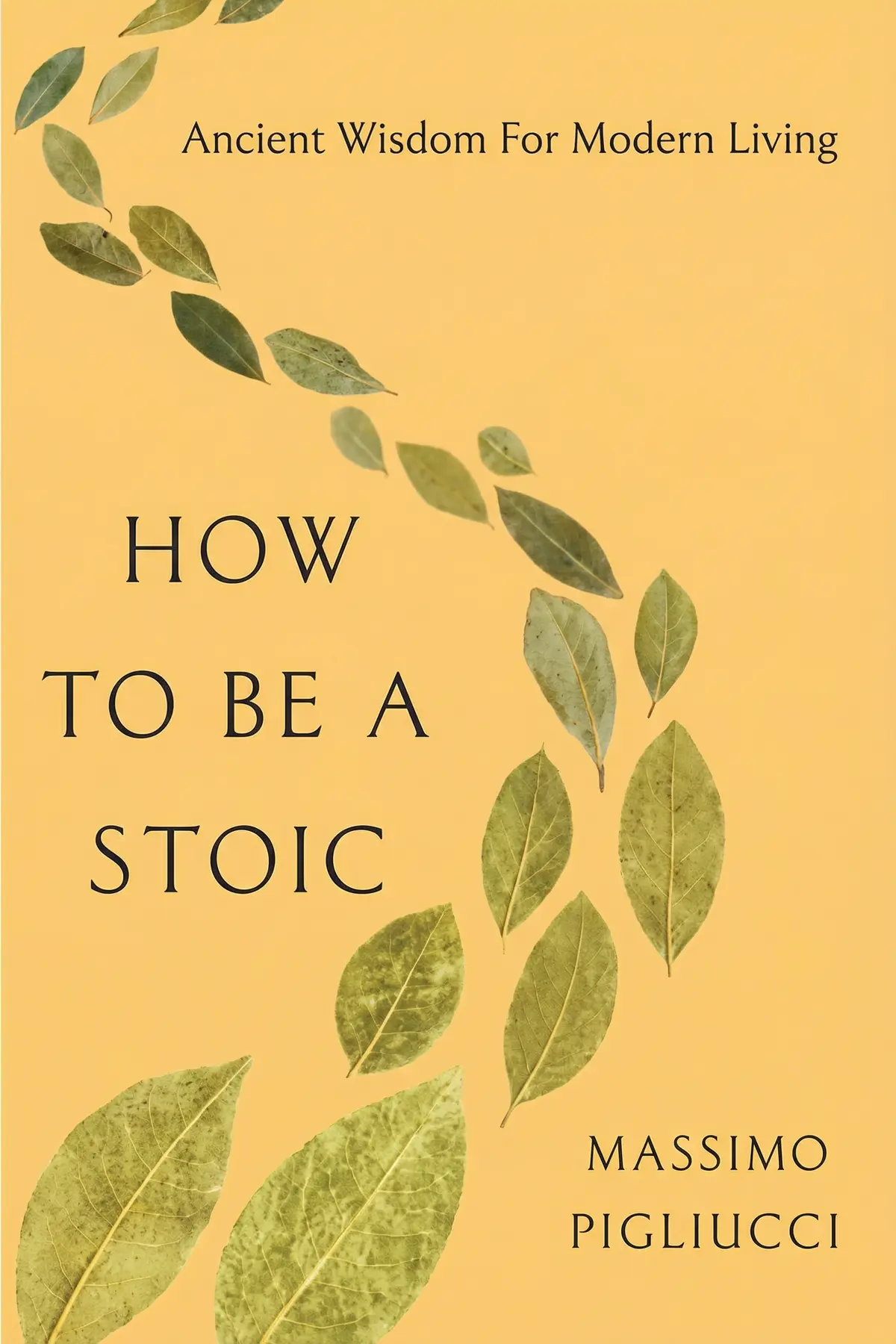
Table of Content
1. Introduction
1 min 03 sec
Much of the stress in an ordinary week goes into things nobody could change: turbulence on a flight, a rival’s maneuvering at the office, a stranger’s rude remark. In How to Be a Stoic, philosopher and biologist Massimo Pigliucci argues that a school of thought founded in Athens around 300 BCE still offers the cleanest remedy. Sort each worry into what you can influence and what you cannot, then spend your energy only on the first.
The popular image of a stoic is someone who grits their teeth and feels nothing. Pigliucci describes the opposite: an active, practical discipline for deciding what to want, how to act and how to respond, built from exercises small enough to try tonight. Follow his argument and you gain a set of ancient tools for staying calm when provoked, letting your values settle hard choices, picking friends with care and treating the people you love as precious while you have them.
2. Spend your worry only where you have control
1 min 57 sec
A nervous flyer, a dieter fighting his genes and an employee waiting on a promotion all share one mistake. The Stoics had a simple sorting rule for it, and it is far from passive.
3. Stay calm when someone provokes you
1 min 34 sec
An elbow on a crowded train can ruin a morning, yet the Stoics insisted it cannot actually harm you. Two small mental moves explain why, and a broken glass shows how to use them.
4. Let your values outrank your comfort
1 min 49 sec
The Stoics did not think money was bad, and they happily preferred health to sickness. So why did they call such things indifferent, and what made one philosopher walk into his bank and close his account?
5. Let wisdom guide every other virtue
2 min 01 sec
Four qualities sat at the heart of Stoic ethics, and the same four turn up again and again across philosophical and religious traditions. One of the four ranks above the rest, and a teenager in Pakistan shows all of them at once.
6. Borrow courage from people braver than you
1 min 48 sec
A Roman senator refused easy riches, fought a would-be dictator and met his end in a way that still shocks readers. The Stoics told his story on purpose, and the reason applies to your next hard conversation at work.
7. Friendships and conversations that make you better
1 min 38 sec
Your hairdresser, your weekend teammates and your oldest confidant are all called friends. Aristotle split them into three kinds, and the Stoics thought only one truly deserved the word.
8. Love people more by remembering they are mortal
1 min 43 sec
Epictetus compared human life to a field of wheat and told parents what to think while kissing their children. It sounds cold at first, until you see what he was asking them to notice.
9. Conclusion
1 min 08 sec
What links a nervous flyer, a closed bank account and a kiss goodnight is one habit of attention. Each time, the Stoic stops to ask what is really happening, which part of it is theirs to shape, and what a good person would do with that part. Pigliucci admits this is hard, as anything that puts virtue first will be. Still, it turns philosophy into something you do on an ordinary weekday.
The book’s own closing advice, a quiet review of the day before sleep, makes a good place to begin. Before sleep, find a quiet spot at home and go back over the day. Recall the moments that mattered, a tense exchange with a colleague or a small kindness toward your partner. Ask what each one taught you, whether you slipped into a bad habit, and how you might have acted with more thought. During the day, add a breath before you answer any provocation and a quick sort of each worry into yours and not yours.
Marcus Aurelius ran an empire and still wrote private notes on how to behave better. A few honest minutes each night continue that same notebook.
About this book
What is this book about?
Most people want to live well but spend their energy fretting about things they cannot change, from a bumpy flight to a promotion decision. Philosopher and biologist Massimo Pigliucci argues that Stoicism, a school founded in Athens around 300 BCE and later practiced by the Roman emperor Marcus Aurelius, still offers a workable answer. He starts by clearing up a misunderstanding. Stoicism is not passive endurance or the suppression of feeling. It is a hands-on discipline for deciding what to want, how to act and how to respond. Its center is the dichotomy of control: work hard on what is in your power and accept the rest. From there Pigliucci explains why the Stoics placed virtue above wealth and comfort, why wisdom heads their four virtues, and how figures like Socrates, Cato and Malala Yousafzai show those virtues in action. Readers get concrete exercises rooted in Stoic teaching, such as pausing before reacting, imagining your misfortune happening to a friend, valuing friendships of the good and reminding yourself that loved ones are mortal, plus the book's own advice to review each day before sleep.
Book Information
Who it's for
Sleepless over work outcomes
Professionals who lose sleep over outcomes they cannot control, from promotions to office politics.
Hoping to snap less
People who snap at small provocations and want a calmer, more deliberate response.
Curious about practical Stoicism
Curious readers who want Stoic philosophy as a set of daily practices, explained without jargon.
About the Author
Massimo Pigliucci
Massimo Pigliucci is an Italian philosopher and biologist, born in 1964, who teaches philosophy at the City College of New York after an earlier career as a professor of ecology and evolution. His work spans evolutionary biology, practical philosophy and the philosophy of science. He writes columns for Skeptical Inquirer and Philosophy Now, formerly co-hosted the podcast Rationally Speaking, and in recent years has focused on Stoicism. He also wrote Nonsense on Stilts.
Ratings & Reviews
Ratings at a glance

What people think
Listeners find this work offers a solid entry point into Stoicism and includes useful daily exercises. Furthermore, the prose is accessible and straightforward, with one listener pointing out the inclusion of a thorough appendix. The title also earns praise for being easy to grasp, with one review emphasizing its beautiful interpretation for modern times. Conversely, some listeners mention worries regarding the author's personal political views affecting the material.
Top reviews
Mia
Ever wonder how ancient wisdom actually fits into a 21st-century schedule? This book answers that question with a very approachable and friendly tone that makes complex ideas feel manageable. I loved the connection made between the Stoic mindset and the modern Serenity Prayer, showing just how long these ideas have been around. The author isn't just reciting Marcus Aurelius; he's evaluating how these principles of courage and temperance function in a world of dating and workplace stress. Personally, I found the Socratic style of the narrative quite refreshing, even if it was a bit disorienting at first. It’s a beautiful interpretation for modern times that focuses on what we can actually control. I will definitely be returning to the practical exercises at the end whenever life feels overwhelming.
Show moreSuthida
Wow, I didn't expect a philosophy book to feel so much like a conversation with a friend. Pigliucci has a talent for taking dense concepts from Cicero and Seneca and making them feel relevant to our current social landscape. The book is incredibly easy to read and understand, avoiding the heavy jargon that usually plagues this genre. I found myself highlighting passages on almost every page, especially regarding the four principles of justice and practical wisdom. Some might find his personal anecdotes a bit too focused on his own life, but I think it adds a layer of authenticity. It’s a realistic approach to a philosophy that is often misunderstood as being cold or emotionless. This is definitely a book I'll keep on my shelf for years to come as a reference guide.
Show moreSau
The chapter on the twelve spiritual exercises in the final section alone makes the purchase price worth it. I’ve read a lot of self-help, but this feels grounded in a much sturdier tradition than your average modern guru’s advice. Pigliucci writes with a smile, yet he never loses sight of the seriousness of the ethical questions he's tackling. The way he interprets the 'discipline of assent' helped me understand how to better manage my own impulsive reactions to stress. I did find the parts where he pretends to talk to Epictetus a bit silly, but the actual philosophy shines through regardless. It’s a practical toolkit for anyone trying to live a more virtuous life in a chaotic world. Highly recommended for those who want action over just theory.
Show moreRania
Finally got around to reading this, and it’s a solid introduction for anyone curious about how ancient ideas apply today. Pigliucci breaks down the core tenets like the dichotomy of control without making it feel like a dry textbook. I found the section on the three disciplines—desire, action, and assent—particularly helpful for structuring my own thoughts. Truth is, some of the personal anecdotes felt a bit self-indulgent, but they didn't detract from the overall message too much. The appendix is a goldmine for those wanting a specific toolkit of exercises to try out in their daily routine. It’s definitely more of a 'how-to' than a scholarly deep dive into history. If you're looking for a realistic way to handle modern stress, this is a great starting point.
Show moreKofi
As someone who has always leaned towards Marcus Aurelius, I appreciated how this book focused on Epictetus as the primary mentor. The structure is very clear, dividing the philosophy into the disciplines of desire, action, and assent, which helps organize the learning process. Pigliucci explains the land requirements for vegetarianism and other modern dilemmas through a Stoic lens, though some of these examples felt a bit shallow. Look, the book isn't perfect—the conversational tone can occasionally feel a bit patronizing—but the core message remains strong. I particularly liked the distinction between things we control and things we don't, which is a life-changing realization. It serves as a fantastic bridge between ancient theory and practical, daily application. If you can get past the slightly chatty prose, there is a wealth of wisdom here.
Show moreJackson
Picked this up on a whim after seeing it mentioned in a podcast, and I’m glad I did. It’s a comprehensive presentation that manages to meld ancient ideas with the realities of modern society quite effectively. The author does a great job explaining why Stoicism isn't just about suppressing feelings, but rather about logical reflection. I especially appreciated the detailed appendix which provides a concrete list of spiritual exercises to practice. My only real gripe is that some sections felt a bit superficial when I wanted a deeper dive into the history. Still, for a general reader, this is likely the most accessible guide on the market today. It makes you think about your own behavior in a way that is both challenging and encouraging.
Show moreWanphen
After hearing so much about the 'Stoic revival,' I wanted a guide that didn't just feel like a collection of quotes. This book delivers a cohesive narrative that traces the philosophy from Zeno to the modern day with great clarity. Pigliucci's personal journey is woven throughout, which makes the advice feel more lived-in and less like a lecture. I did notice some of the 'chatty' writing that other reviewers mentioned, and it does occasionally distract from the heavier topics. But the insights into the difference between Epicureanism and Stoicism were exactly what I was looking for. It’s a friendly, approachable volume that works well for anyone who feels like their life is currently a bit of a mess. A solid four-star read that offers genuine value to the modern seeker.
Show moreLuke
It’s hard to ignore the author’s tendency to get a bit chatty, which sometimes muddies the waters of an otherwise brilliant philosophy. Pigliucci chooses Epictetus as his guide, literally staging imaginary conversations with the ancient teacher. While the concept is interesting, the execution felt a bit awkward and forced during the mid-narrative segments. I wanted more of a rigorous analysis of Stoic logic rather than a memoir of the author’s personal journey toward inner peace. To be fair, the book does a decent job of distinguishing between the 'stiff upper lip' stereotype and actual Stoic practice. However, the disjointed writing style makes it difficult to stay engaged for long periods. It’s a fine overview, but it lacks the depth of more academic texts I've encountered.
Show morePatcharaporn
To be fair, the content here is exceptionally rich, but the presentation felt disjointed at times. The author uses a lot of parenthetical examples that interrupt the flow of the argument and make the reading experience a little mediocre. I also found the 'interviews' with Epictetus to be a strange stylistic choice that didn't always work for me. However, I can’t deny that I learned a great deal about the origins of Stoicism and its connection to Socrates. The discussion on how to handle a physical injury or a bad breakup using Stoic logic was genuinely insightful. It’s a good introduction if you can overlook the writing quirks and occasional political diversions. Not a masterpiece, but certainly a useful starting point for a beginner.
Show moreFrida
This book was a major disappointment for me, primarily because Pigliucci injects far too much of his own political bias into the text. He tends to dismiss opposing viewpoints, like New Atheism or certain environmental arguments, with a level of flippancy that feels very un-Stoic. It’s difficult to trust a guide on wisdom when the author seems to struggle with nuance himself in several chapters. The writing is also quite disjointed, moving from deep philosophical insights to mundane personal stories that don't always land. Frankly, the 'imaginary friend' routine with Epictetus was more cringeworthy than enlightening for a serious reader. While there are some interesting excerpts from primary sources, the surrounding commentary is too clouded by the author's personal opinions. I’d recommend sticking to the original Meditations instead of this modern filter.
Show moreQuestions about this book
What is the main idea of How to Be a Stoic?
Massimo Pigliucci argues that Stoicism is an active, practical philosophy, not passive endurance. Its center is the dichotomy of control: put full effort into what is in your power and accept the rest calmly. Around that core he explains why the Stoics placed virtue above wealth and comfort, and he offers exercises for handling provocation, friendship and the fear of death.
What is the dichotomy of control in Stoicism?
Taught by Epictetus, it divides life into what you can influence and what you cannot. A nervous flyer can choose whether to travel and which airline to use, but once airborne he must trust the crew and the weather. Pigliucci applied it to his own weight loss: he controlled diet and exercise, accepted the limits his genes set, and took satisfaction in doing his part.
What are preferred indifferents?
They are things like wealth, health, friends and comfort. The Stoics preferred having them, so being rich beats being poor, but considered them indifferent to the real goal of a virtuous life. Pigliucci illustrates this with his own decision to close his bank account on ethical grounds, giving up some convenience for the sake of supporting better behavior.
How can I apply Stoicism to everyday anger?
Pigliucci draws on two exercises. First, follow Epictetus and pause before reacting, perhaps with a few deep breaths and a short walk. Second, other-ize: imagine the irritating event happening to a friend. If a friend broke a glass, you would call it bad luck and move on, and you can give your own small misfortunes the same easy acceptance.
Who should read How to Be a Stoic?
It suits people who worry about outcomes beyond their control, who react quickly to small insults, or who want their choices guided by values more than convenience. It also serves readers curious about Epictetus, Seneca, Marcus Aurelius and Cato, presented through stories and daily practices such as reviewing each day before sleep.
Readers also enjoyed


59 Seconds: Change Your Life in Under a Minute
Richard Wiseman






A Guide to the Good Life: The Ancient Art of Stoic Joy
William B. Irvine

A High-Performing Mind: Strengthen Your Mind and Live Your Best Life
Andrew D. Thompson
AUDIO SUMMARY AVAILABLE
Listen to How to Be a Stoic in 15 minutes
Get the key ideas from How to Be a Stoic by Massimo Pigliucci, plus 5,000+ more nonfiction titles.
- 5,000+ titles
- Listen as much as you want
- 7-day free trial
- Cancel anytime









