
15 min 13 sec
Available in: English
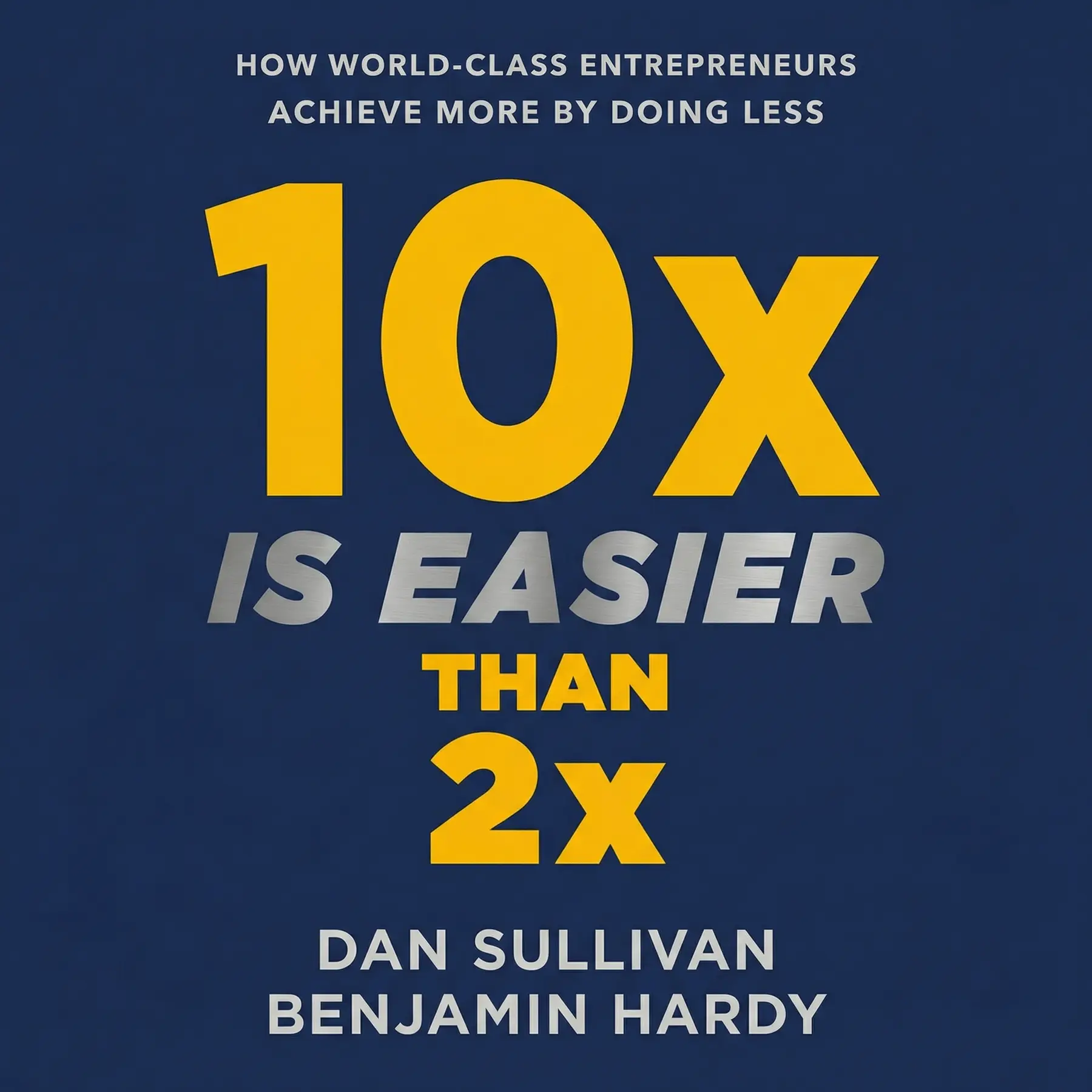
10x Is Easier Than 2x: How World-Class Entrepreneurs Achieve More by Doing Less
Shows why aiming ten times higher can be simpler than aiming to double: a huge goal cuts your options, frees you from low-value work and pushes you toward the few things only you do well.
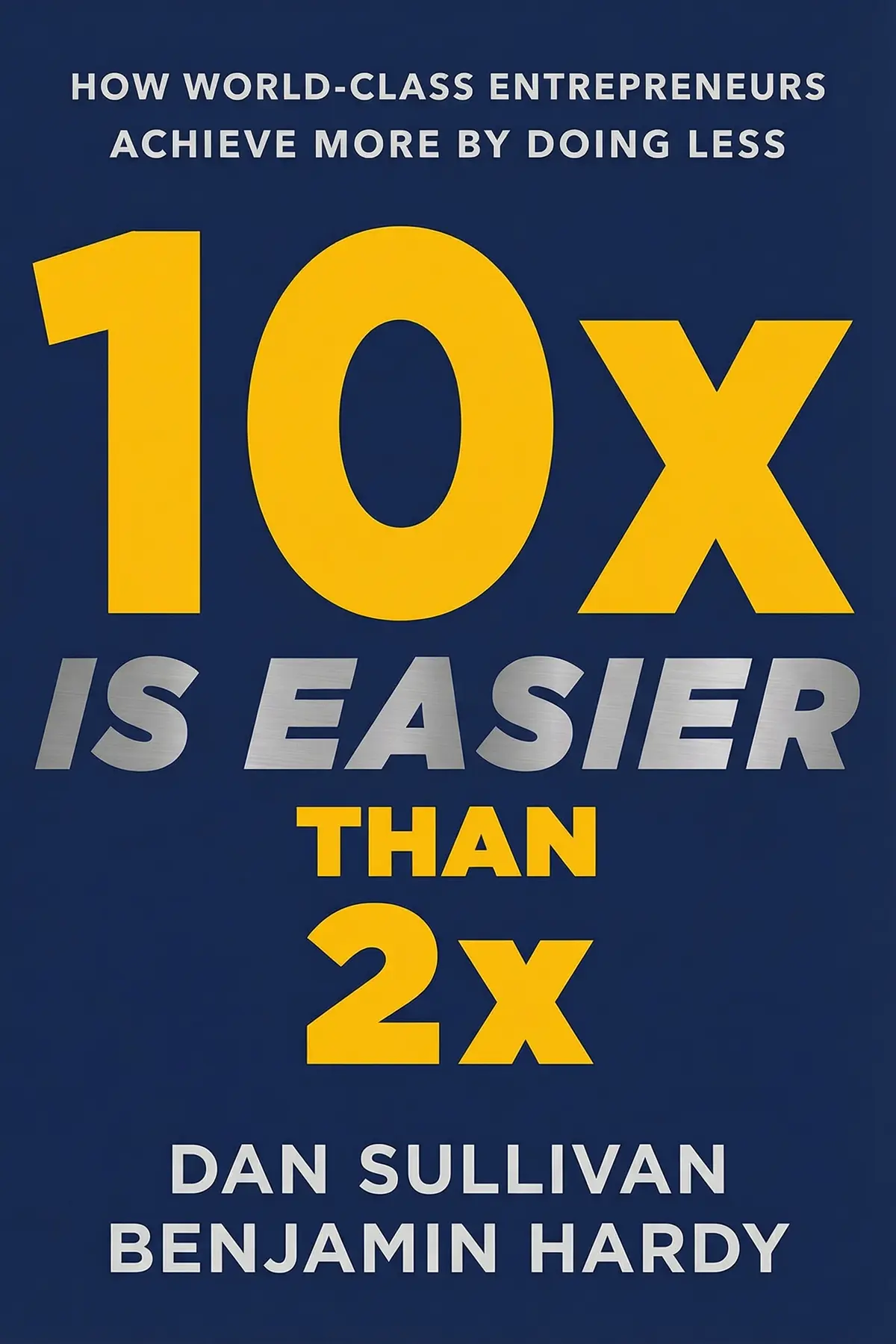
Table of Content
1. Introduction
1 min 00 sec
If you are working longer hours than ever and your results have barely moved, the size of your goal may be the real problem. In 10x Is Easier Than 2x, strategic coach Dan Sullivan and organizational psychologist Benjamin Hardy argue that aiming for ten times more is often simpler than aiming for double. A doubling goal invites you to do more of everything. A goal ten times bigger forces you to drop most of what you do and keep only the few things that truly pay off.
That is the idea the whole book builds on: a tenfold goal makes work simpler, better and more fun because it makes you cut the 80 percent that holds you at your current level. Along the way, you will see why fewer options calm the mind, how your self-story sets your ceiling, why counting past progress matters, and how Free Days and a self-running team turn a big ambition into a calendar you can actually keep.
2. A bigger goal leaves fewer, clearer choices
1 min 49 sec
Ask for ten percent more and you get a page full of reasonable ideas. Ask for ten times more and the page goes almost blank. The authors argue that blank page is exactly what you want.
3. Keep the vital 20 percent and drop the rest
1 min 46 sec
Some people log 80-hour weeks and inch forward, while others take half the year off and multiply their returns. What sets them apart is that they think and act 10x, and that means letting go of much of what got you this far.
4. Rewrite the self-story that sets your ceiling
1 min 58 sec
An inner script about what kind of person you are decides how high you aim before you ever set a goal. The authors offer a four-step cycle for changing it, and it gets easier each time.
5. Want what you want without apology
1 min 58 sec
Most ambition runs on proving that every goal is necessary. Sullivan argues that this habit keeps people small, and that a word many of us feel guilty about is the real source of large goals.
6. Count the tenfold leaps you have already made
1 min 54 sec
If you always feel behind, you may be using a measuring stick that can never be satisfied. A short look backward, which some high achievers resist, can be the thing that gets you moving forward again.
7. Work like a performer, then take real days off
1 min 54 sec
Most professionals still organize their time the way a factory did. Athletes and entertainers do something different, and Sullivan’s challenge about rest days sounds reckless until you try it and watch the results.
8. Stop being the bottleneck in your own growth
1 min 41 sec
Capable people love staying close to the details, and that instinct is exactly what holds them back. Sullivan’s answer applies even if you work alone or your main job is running a household.
9. Conclusion
1 min 13 sec
The book’s sharpest point is that a plateau can be a product of your effort. Doubling invites you to add, and adding fills your days with the 80 percent that keeps you where you are. Aiming ten times higher forces you to subtract, and in Sullivan and Hardy’s telling, subtraction is what makes the work simpler, the person better and the life more enjoyable. The big goal works as a filter as much as a destination.
The authors are frank that this path is not for everyone, and that shedding so much of your comfort zone can feel daunting at first. What they offer is a choice between staying busy at your current level and becoming someone who can work at the next one.
To test the idea, start with one goal and multiply it by ten, then see which paths are still standing. Before you chase it, write down the tenfold jumps you have already made, so you begin from the gain. Then put a few uncomfortable Free Days on the calendar and hand one routine task to someone else, so there is room for the work only you can do.
A plateau rarely breaks when you work harder at everything. It breaks when most of everything is gone.
About this book
What is this book about?
Many entrepreneurs hit the same wall. Early growth was fast, and now longer and harder hours barely move the results. Dan Sullivan and Benjamin Hardy argue that the trouble is the linear model most of us learned at school and work, where twice the reward needs twice the effort. Their alternative is to think in tens. A goal ten times bigger than today rules out almost every possible route and leaves only the few high-return activities that drive most results. Everything else, from low-value tasks to limiting beliefs and draining relationships, gets left behind. What remains asks for a new identity and higher standards, and the authors lay out a four-step cycle for building both. The book then turns the idea into practice. Readers learn to measure progress from where they started, to find the tenfold leaps they have already made, to split time into preparation, performance and recovery with real Free Days, and to build a team, even a single assistant, that runs without them. The promise is doing less while achieving much more.
Book Information
Who it's for
Founders whose growth stalled
Founders whose early growth has stalled despite longer and harder hours.
Professionals buried in tasks
Solo professionals and ambitious employees who feel buried in tasks and want to know which few matter.
High achievers feeling behind
High achievers who always feel behind and want a calmer way to aim higher.
About the Author
Dan Sullivan
Dan Sullivan founded The Strategic Coach Inc., which he runs with his wife, Babs Smith, and has spent more than 35 years coaching and advising entrepreneurs. He has written more than 40 publications, including the Wall Street Journal bestseller Who Not How. Dr. Benjamin Hardy is an organizational psychologist with a PhD from Clemson University, where his doctorate focused on entrepreneurial courage. He co-founded Scaling.com, and his work has appeared in the New York Times and Harvard Business Review.
Ratings & Reviews
Ratings at a glance
What people think
Listeners find this book to be an essential guide for entrepreneurs, noting its power to alter mindsets and transform habits and thinking. Many describe the experience as transformative and motivating, and one listener mentions the work is packed with actionable strategies. However, opinions on the prose are split; while some find it well-crafted, others describe the writing as messy.
Top reviews
Chan
Honestly, this was the exact right book at the exact right time for my business. I’ve always been a grinder, thinking that if I just worked more hours, I’d see the results double. Sullivan and Hardy completely flipped that script for me. They argue that 10x isn't about more effort; it’s about stripping away the 80% of your life that doesn't actually matter. I felt a huge weight lift off my shoulders when I realized I was the bottleneck in my own company. By focusing only on my 'Unique Ability' and delegating the rest, everything became simpler. Is it a bit repetitive? Sure. But the mindset shift is so profound that I needed those points hammered home. It’s a must-read if you feel stuck on a plateau.
Show moreScarlett
This is life-changing stuff. Most business books tell you how to do things 10% better, but this teaches you how to think non-linearly. The idea that 10x is actually easier than 2x sounds like a marketing gimmick, but it’s logically sound once you realize it forces you to stop doing low-value tasks. I personally found the sections on 'Unique Ability' to be the most empowering parts of the book. It’s not just for CEOs either; it’s for anyone who wants to reclaim their time. You might not agree with every single anecdote—some are definitely a bit 'niche'—but the overarching framework is brilliant. I’ve already started restructuring my whole week around preparation, performance, and recovery modes.
Show moreOmar
10x is simpler! That’s the big takeaway for me. When you aim for 2x, you have a thousand options. When you aim for 10x, you only have one or two. That clarity is worth the price of the book alone. I’ve read a lot of Sullivan’s stuff before, and while some people might find it a bit 'old school,' the logic of removing the bottleneck is undeniable. I’ve already hired a virtual assistant to handle my operations after reading this. It’s about moving from a rugged individualist mindset to a 'Who Not How' approach. If you’re tired of the constant hustle and want to actually enjoy your life, read this book. It’s a total reframing of what success looks like.
Show moreLucas
Wow. Just wow. This book challenged everything I thought I knew about growth. I’ve been living in 'the gap' for years, always feeling like I wasn’t doing enough. Learning to measure from the 'gain' has completely shifted my mindset. I feel more confident and less stressed. The authors explain that wanting is the opposite of selfishness, which was a huge 'aha' moment for me. It’s about creating abundance. The 10x goal forces you to be honest about what you actually want. It’s not just a business book; it’s a manual for a better life. Honestly, I think everyone should read this at least once to see what’s possible.
Show moreDimitri
Best $25 I've spent all year. This book is a must-read for anyone who feels like they are working harder but getting nowhere. It’s not about working more hours; it’s about working on the right things. The authors show you how to identify your 20%—the things only you can do—and how to build a team to handle the rest. It’s empowering to realize that you don’t have to be a 'bottleneck manager.' You can be a leader. The writing is clear, the steps are actionable, and the results are real. I’m already seeing a shift in my productivity and my happiness. Buckle up, because this will change your life if you let it.
Show moreJirapat
The concepts in here are powerful, specifically the idea of 'The Gap and The Gain.' Measuring yourself against your past self instead of an unreachable ideal is a game-changer for mental health. However, the writing quality is a bit hit-or-miss. It feels like Benjamin Hardy wrote the whole thing and just slapped Dan Sullivan’s name on it for credibility. There are a lot of bullet points at the end of chapters that feel like they’re just trying to add page count. Still, I can't deny that the 'Free Days' concept has already improved my productivity. I’m actually taking time off and seeing better results. It’s a solid 4 stars because the advice works, even if the delivery is a bit sloppy.
Show moreNew
A very strong addition to the Hardy/Sullivan series. The book is packed with practical steps for anyone looking to make a quantum leap. I especially appreciated the focus on rest and recovery. Most 'hustle culture' books ignore that. My only gripe is that it feels a bit cherry-picked. They use examples of success that could easily be attributed to luck or market timing, and they don't really address the power of compounding over time. But as a motivational tool and a way to reframe your habits, it’s excellent. The writing is easy to digest, though a bit repetitive in the middle chapters. I'd recommend it to any entrepreneur who feels like they're redlining their engine.
Show moreYam
I'm a fan of the concepts, but the presentation is a bit clunky. It quotes a lot of other great business books, which is helpful, but sometimes it feels like a highlight reel of someone else’s ideas. However, the specific application of the 80/20 rule to one's own identity is fresh. I felt like the book gave me permission to stop doing the things I hate. That’s a powerful thing. It’s a bit 'American Dream 101' and there's definitely some Mormon phrasing that slips in, but if you can look past that, the core strategy is sound. It’s about becoming a master of your craft by shedding the average.
Show moreHugo
Mixed feelings on this one. On one hand, the central premise of focusing on quality over quantity is great. On the other hand, the book is incredibly repetitive. It feels like they took one decent blog post and stretched it into a full-length book with endless stories that don't always land. I also struggled with the tone; it leans quite heavily into a specific worldview that might not resonate with everyone. The authors mention 'cleaning the house' as something that should be outsourced to reach your 10x potential, which feels a bit tone-deaf to the average person's reality. There are useful nuggets here, for sure, but you have to dig through a lot of fluff to find them.
Show moreViolet
I really wanted to like this, but it just felt gross. The core idea is essentially business essentialism, which is fine, but it’s buried under 300 pages of filler and anecdotes that feel incredibly out of touch. There’s a distinct 'male privilege' vibe throughout the whole thing. The authors talk about achieving 10x growth because they have wives and an army of assistants handling every 'non-essential' task like cleaning or childcare. It subtly tells you that to be successful, you just need to find people to exploit for your own freedom. Also, the weird religious undertones and the example of 10x-ing baptisms at a church felt totally out of place in a business book. Skip this and just read a summary of the 80/20 rule.
Show moreQuestions about this book
What is the main idea of 10x Is Easier Than 2x?
Dan Sullivan and Benjamin Hardy argue that a goal ten times bigger than today is often easier to pursue than a goal of doubling. A doubling goal offers many possible routes and invites you to do more of everything. A tenfold goal leaves only a few viable paths and forces you to focus on the 20 percent of activities that produce most results, so you end up doing less while achieving more.
Why do the authors say 10x is simpler than 2x?
When you list ways to grow profit by 10 percent, you find many options, which leads to indecision and fatigue. Listing ways to grow it ten times leaves perhaps two or three. The authors add that a tenfold goal also cuts your task list, because the 80/20 rule means only a small share of your work drives most results. Even if you only want to double, aiming tenfold reveals the most likely path.
What are Free Days in 10x Is Easier Than 2x?
Free Days are Sullivan’s name for days set aside completely for recovery, with no work at all. He borrows the idea from athletes and entertainers, who split their time into preparation, performance and recovery. He argues tenfold results come from working less and recovering more, and he challenges readers to block off enough Free Days to feel slightly uncomfortable, then track their results.
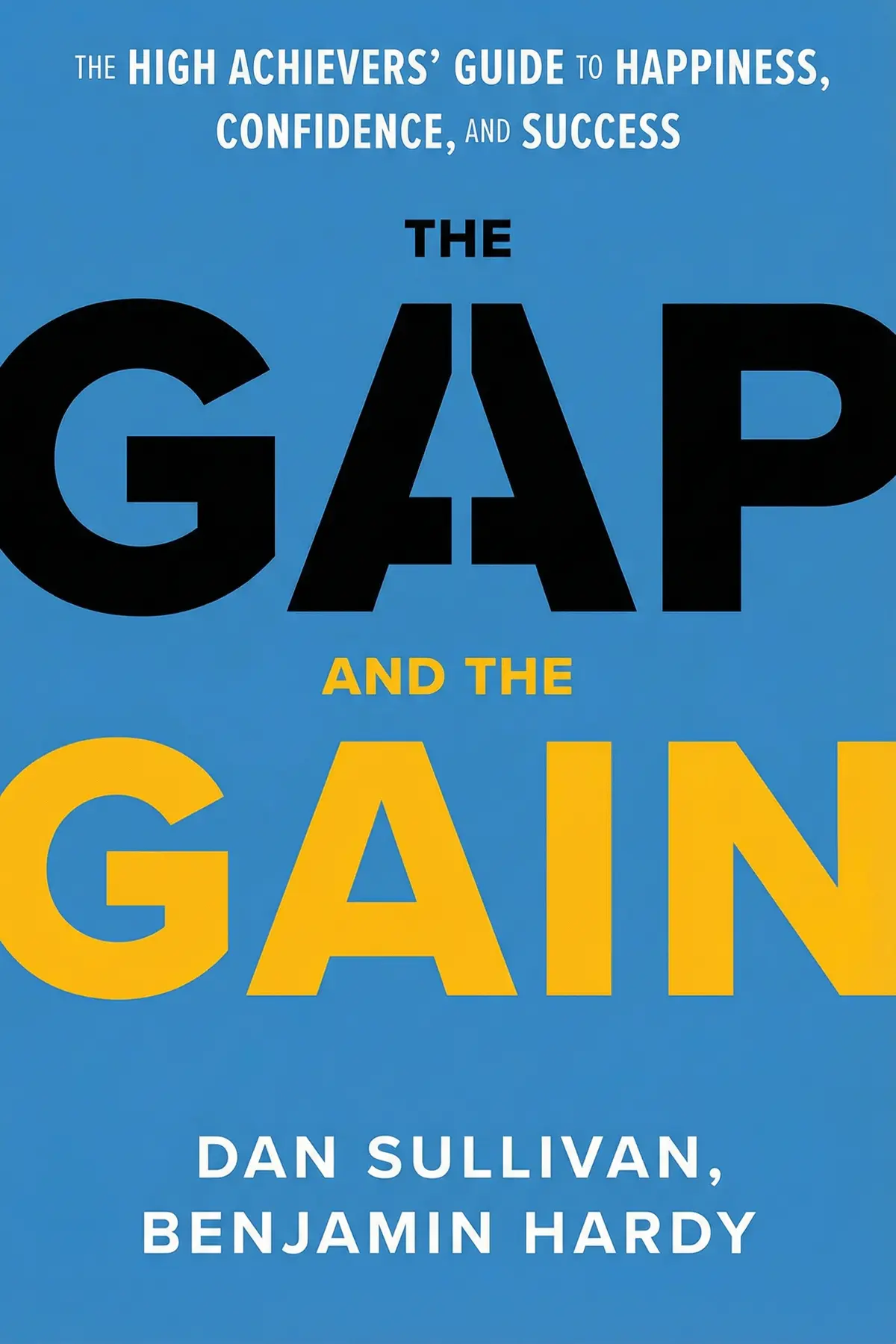
What is the difference between the gap and the gain?
People in the gap measure themselves against an ideal of where they should be, which works like a horizon you can never reach. People in the gain measure from where they started and feel ahead of their past selves. The authors suggest finding the tenfold jumps you have already made; most people find at least one and often five or more, which shows they can do it again.
How can I apply 10x Is Easier Than 2x if I work alone?
Sullivan argues that saying you have no team actually proves you need one. A solo entrepreneur serious about tenfold growth should have at least a part-time personal assistant, and someone whose main work is running a home should hire help. The aim is to hand off the 80 percent of tasks others can do so you can focus on your Unique Ability.

Readers also enjoyed


7 Powers: The Foundations of Business Strategy
Hamilton Helmer






Alibaba: The House That Jack Ma Built
Duncan Clark

A Guide to the Good Life: The Ancient Art of Stoic Joy
William B. Irvine

AUDIO SUMMARY AVAILABLE
Listen to 10x Is Easier Than 2x in 15 minutes
Get the key ideas from 10x Is Easier Than 2x by Dan Sullivan, plus 5,000+ more nonfiction titles.
- 5,000+ titles
- Listen as much as you want
- 7-day free trial
- Cancel anytime









