
15 min 04 sec
Available in: English
You’re Invited: The Art and Science of Connection, Trust, and Belonging
By Jon Levy
Shows how to build trust, belonging and community on purpose by designing gatherings around how people really behave: letting them contribute, inviting a little shared vulnerability and offering a membership worth joining.
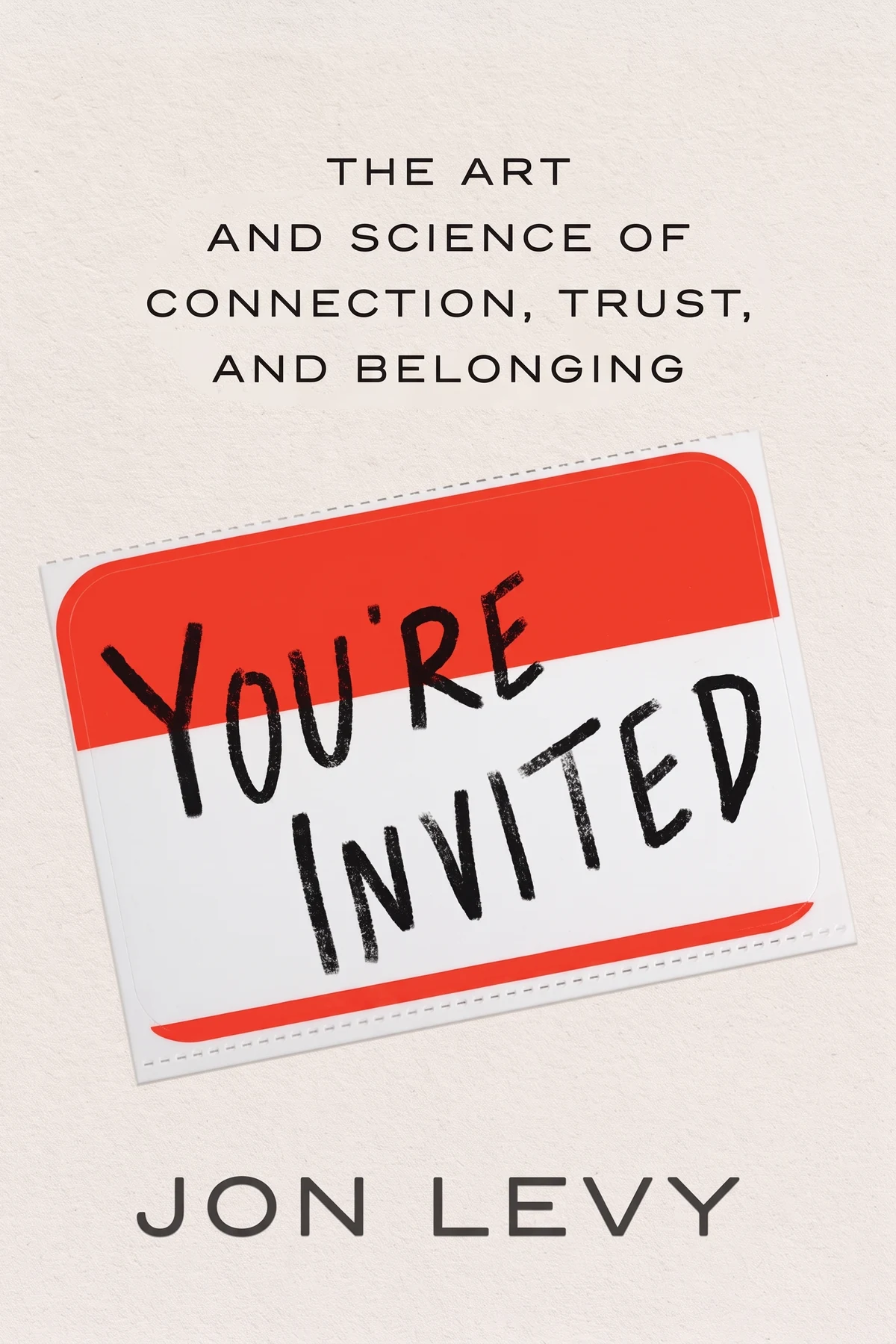
Table of Content
1. Introduction
1 min 06 sec
If your calendar is full of networking events that leave you with business cards and no real allies, Jon Levy has a different idea: stop collecting contacts and start hosting. In You’re Invited, the behavioral scientist argues that what people want most is connection and community, and that both can be designed. He came to this through a hard stretch. In his late twenties, with a failed start-up behind him and the 2008 financial crash around him, he invited 12 strangers to cook dinner for him. That evening grew into the Influencers Dinner, a network with thousands of members today, including winners of the Nobel Prize, Olympic gold medalists and musicians who have won awards.
The book’s argument is simple. Trust and belonging grow when you design for how people actually behave: let them contribute, let them be a little vulnerable, and give them a membership worth having. Along the way you’ll hear why flat-pack furniture feels precious, how a rugby coach won a World Cup with one promise, and how to plan a first gathering of your own.
2. See why connection drives every lasting movement
1 min 45 sec
A woman who failed at every diet her doctor handed her ended up founding a business worth millions. What changed was not her willpower, and the reason touches a need most people leave unmet.
3. Earn trust from strangers without waiting years
1 min 42 sec
The companies people trust most have mostly been around for decades. A knife seller with no shops and no ads showed one way to earn that kind of trust from strangers quickly, and shared vulnerability offers another.
4. Let people pitch in and they care more
1 min 33 sec
Benjamin Franklin won over a political rival by asking him for a favor instead of doing him one. Flat-pack furniture runs on the same strange logic, and so can your next gathering.
5. Reach people outside your circle by walking in their shoes
2 min 04 sec
You may know no celebrities, no chief executives and no activists. Levy didn’t either. He found that each group responds to a different kind of invitation, and one energy drink brand got it right.
6. Give members the four things belonging needs
2 min 02 sec
A rugby coach facing a World Cup made his struggling team one promise most coaches would never make. It reveals one of four things that separate a real community from a crowd of followers.
7. A slow entrance makes your event feel better
1 min 41 sec
Disney World makes paying visitors wait 23 minutes before they reach the gates. The delay is deliberate, and it points to a simple fix for the awkward first moments of most meetings and parties.
8. Design the membership first, then recruit
2 min 01 sec
A lonely designer with no budget built an event series now held in 216 cities. She did it by planning in an order that most organizations get backward.
9. Conclusion
1 min 10 sec
Levy’s book adds up to a single claim: belonging can be built on purpose, and it starts with an invitation. His own dinner shows almost every principle at once. Strangers share a task under time pressure, show a little vulnerability, contribute to the meal, settle in before the work begins and leave knowing they belong to something. What looks like a party is a designed experience.
That has practical consequences for your calendar. Levy’s advice is to give up networking events. They are crowded and awkward, and in such a crush it is hard to find the few people who could really shape your work. Spend those evenings on activities you love, where real connection has room to grow. When you host, ask guests to contribute something, the way Franklin asked for a book, and bring newcomers in through a friend they already trust. Then do it again, ideally on a regular schedule, because CreativeMornings grew by showing up every month.
His network of Nobel laureates and Olympic champions did not begin at a mixer. It began with 12 strangers who were asked to cook.
About this book
What is this book about?
Many people collect contacts and still feel alone, at work and at home. Jon Levy argues that what people want most is connection and community, and that both can be designed. Loneliness, he notes, registers in the brain much like physical pain. Levy, a behavioral scientist, learned this after a failed start-up, when he asked 12 strangers to cook him dinner. That evening grew into the Influencers Dinner, a network of thousands. He draws on research about trust, effort and cognitive bias, and on cases ranging from Weight Watchers and IKEA to a Springboks rugby coach, Red Bull's music academy and the 23-minute ride to the gates of Disney World. Readers learn how to win trust from strangers quickly through referrals and shared vulnerability, why people value what they help create, and how to invite people far outside their own circle. They also get the four pillars that turn a group into a community, and a way to plan a first gathering by deciding what membership means before recruiting anyone.
Book Information
Who it's for
Tired of awkward networking
Professionals tired of awkward networking events who want relationships that actually help their work.
Hoping to build community
Founders, team leads and organizers trying to turn customers, staff or volunteers into a real community.
New to hosting gatherings
Anyone feeling isolated who wants to host a first gathering and doesn't know where to start.
About the Author
Jon Levy
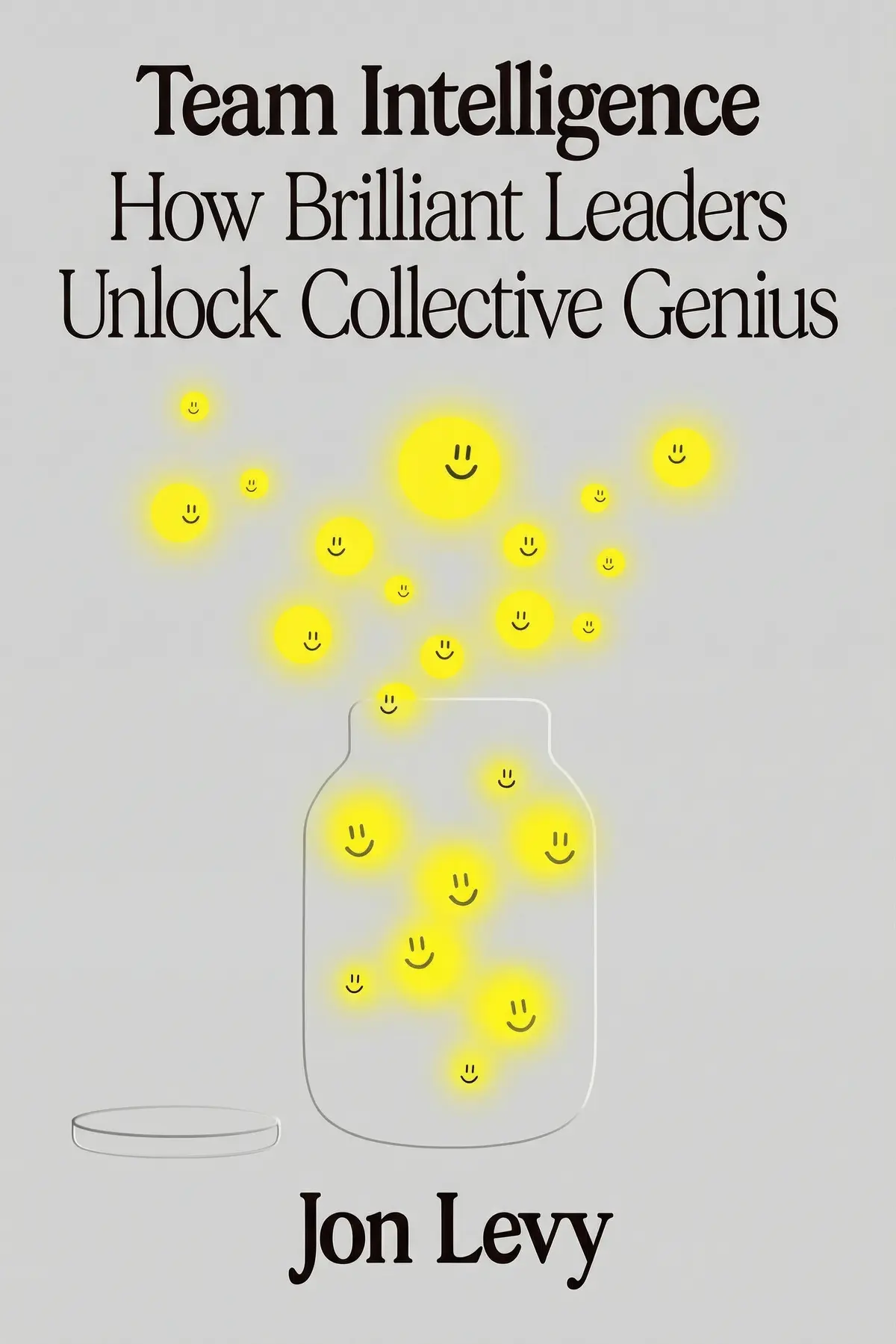
Jon Levy is a behavioral scientist and New York Times bestselling author whose work centers on trust, leadership and teams. He has used findings on influence and decision making in his work with companies on marketing, sales and culture. He founded Influencers, which started as a private dinner for leaders from many fields, among them Nobel laureates, Olympians, celebrities and executives. Guests cook together without talking about their jobs or giving surnames, and only reveal who they are when everyone sits down to eat. The dinners have since grown into a private community. His newer book is Team Intelligence.
Ratings & Reviews
Ratings at a glance
What people think
Listeners applaud the work’s incredible mix of fascinating studies and practical insights, with one listener highlighting the way it employs anecdotes to illustrate its key concepts. Furthermore, the book successfully merges the art and science behind interpersonal relationships, and listeners consider it a fun, deeply engaging experience. They also value its gripping narrative approach and high-quality writing, finding it motivational, while one listener mentions how it offers a fresh outlook on building community.
Top reviews
Ryan
Finally got around to reading this and it is exactly the medicine needed for our current loneliness epidemic. Levy manages to weave together complex behavioral science with genuinely moving stories about human vulnerability. Have you ever wondered why some groups just click while others feel forced? This book explains the mechanics behind that magic. The chapter on the elephant and the rider was a standout for me, illustrating how we need to engage people’s emotions and logic simultaneously to build lasting bonds. Personally, I found the anecdotes about the secret dinners fascinating rather than boastful, as they provide real-world proof that his theories on trust-building actually work. It’s a highly entertaining read that left me feeling inspired to host my own gathering. This isn't just a book about networking; it’s a blueprint for living a more connected life.
Show moreVarinee
Wow. This book totally shifted my perspective on what it means to be a connector in today's world. I’ve always felt a bit awkward at networking events, but Levy’s approach is different because it focuses on shared experiences and vulnerability. The idea of the dinner where nobody knows what anyone else does for a living is genius. It strips away the status games and forces people to connect as humans first. Not gonna lie, I was worried it might be another dry business book, but it’s actually quite emotional and inspiring. The writing is compelling, and the storytelling is top-notch. It’s more than just a manual; it’s an invitation to build a life surrounded by people who challenge and support you. I’ve already recommended it to several colleagues who are struggling with team building in a hybrid work environment.
Show moreTawee
In my experience as a professional who deals with community management, this is one of the most practical books I’ve come across. It addresses the how of making deep, meaningful relationships with anyone, regardless of their status. The author does a great job of balancing engaging stories with applied advice that you can start using tonight. I especially appreciated how he talks about meeting people where they are and where they are heading to create long-lasting attachments. After finishing the book, I felt a genuine surge of motivation to go out and build new friendships instead of just staying in my social slump. The tips on fostering a sense of belonging are excellent. It’s an easy, informative read that doesn’t cause those science eye-rolls because the research is handled with care. Get the book, do what it says, and you'll see a positive change.
Show moreSaowalak
After hearing Jon Levy speak on a panel, I was curious to see if his written work held the same energy. The book is an influential look at how community serves as the foundation for success in any field, whether you're running a nonprofit or a tech startup. He uses a great blend of research and personal experience to demonstrate that connection is a skill that can be developed. I particularly enjoyed the sections on how to sustain connections for the long haul, rather than just making a good first impression. To be fair, there is a bit of padding with stories of entrepreneurial types that feel a little repetitive after a while. Still, the overarching framework is solid and offers a fresh perspective on why we choose to belong to certain groups. It’s a well-written guide for anyone looking to increase their social impact.
Show moreGiulia
What a fascinating deep dive into the art and science of how we meet. Levy explores the question of how to build trust quickly and effectively, even with people who might seem out of reach. The core idea is that influence isn't about manipulation, but about creating an environment where people feel they truly belong. I loved the formula for influence because it turns a feel-good concept into something quantifiable and actionable. While some reviewers mention the name-dropping, I saw those stories as necessary case studies for his methods. Look, if you’re a behavioral science nerd, you’ll appreciate how he handles the research references without getting bogged down in academic jargon. It strikes a tough balance between being an easy read and having real substance. It’s definitely motivated me to rethink my own social circles and how I contribute to them.
Show moreMaya
Ever wonder how some people seem to have an endless network of fascinating friends and opportunities? This book breaks down that mystery using behavioral science and a lot of trial and error. Jon Levy shares his journey of going from a regular guy to someone who hosts exclusive dinners for global leaders. The science is interesting and, in my experience, many of his theoretical theses actually hold up when put into practice. The book provides a new lens through which to view community, emphasizing that trust is the currency of influence. It’s a bit all over the place at times, and some of the examples feel a little entrepreneur-heavy, but the core message is vital. It’s a great companion piece to books like Give and Take. Definitely worth the read if you want to be more intentional about your social life.
Show moreLeila
As someone who organizes local meetups, I found the strategies for building deep connections fairly useful. The author’s formula for influence—combining connection, trust, and community—provides a structured way to think about social dynamics that usually feel intuitive. However, the book suffers from being a bit too wordy and could have benefited from a few more tables or bulleted lists to summarize the advice. Not gonna lie, it feels like it’s trying to be a scholarly text while maintaining the breezy tone of a memoir, and it doesn't always hit that balance. It rehashes some common psychological frameworks like the halo effect, which might be redundant if you’ve already read a lot of Adam Grant. It’s a decent read for networking, but be prepared for a lot of prose before you get to the actionable parts.
Show moreGioia
Decent book, but it would have been much better with another pass through editing to trim the fat. The premise is strong: we are social creatures who need community, and Levy has a specific system for building it. Some of the opening stories in the chapters were genuinely interesting and hooked me immediately. However, the prose tends to meander, and I found myself wishing for more how-to lists and fewer long-winded anecdotes about the author’s private community. To be fair, his insights into human behavior are sharp, and his Influencer dinners are a brilliant concept for studying connection. It just feels like a short book stretched out. If you can read at a fast pace, you can easily filter out the padding and get to the gems of wisdom hidden inside. It’s well-intentioned and offers some good advice for purposeful social interaction.
Show moreSkylar
Picked this up after seeing a recommendation on a podcast, but it didn't quite live up to the hype for me. While the concept of the Influencers dinners is undeniably cool, the execution of the book felt more like a long-form resume than a helpful guide. Truth is, the constant name-dropping and references to being asked by the biggest companies in the world became distracting very quickly. I wanted more of the behavioral science and less of the author's self-congratulatory anecdotes about who he knows. It’s a shame because the core message about trust and belonging is actually quite important in our digital age. If you can get past the tone, there are some decent takeaways about fostering community. For me, it was just too much fluff to sift through to find the actual gems. I ended up skimming the last few chapters.
Show moreSamart
This was an incredibly frustrating reading experience. The author seems more interested in telling you about the important people who hire him than actually providing value to the reader. It’s pretentious, shallow, and full of the kind of humble bragging that makes you want to roll your eyes on every page. There are much more humble ways to share experiences without constantly reminding us of your proximity to celebrities. Frankly, the actual science is buried under so much self-serving fluff that I'm not even sure what the core takeaway was supposed to be. It’s mostly name-dropping and recycled pop psychology that you can find in any other business book. If you want a book on how to actually host a meaningful gathering, go read something else. This one is just an ego trip in book form.
Show moreQuestions about this book
What is the main idea of You're Invited by Jon Levy?
Levy argues that what people want most is connection and community, and that both can be built on purpose. By designing gatherings around how people really behave, through trusted referrals, shared vulnerability, chances to contribute and a clear sense of membership, anyone can create a company, cause or circle of friends that people trust and return to. His own Influencers Dinner, where 12 strangers cook together, is the model.
What are the four pillars of community in You're Invited?
Levy draws on researchers David McMillan and Davis Chavis, who identified four pillars. Membership is a clear line between insiders and outsiders, plus emotional safety. Influence means members can shape the group and both give and receive. Shared values or needs keep it going over time. Emotional connection comes from sharing experiences and building trust. By this test, a celebrity’s Instagram followers are a fan base.
How do you build trust quickly according to Jon Levy?
Levy describes two shortcuts. A trusted referral transfers trust, a pattern called the halo effect: Cutco Cutlery’s door-to-door sellers always mention the friend or neighbor who sent them. Shared vulnerability works too, since people who reveal weaknesses and help each other build what researcher Jeffrey Polzer calls vulnerability loops. Levy suggests designing activities that use both, without anything as harsh as boot camp or hazing.
Why does Jon Levy say to stop networking?
Levy finds networking events awkward and of little use for most careers, because so many people are packed together that it is hard to identify the few who could truly matter to your business. He suggests spending that time on activities you enjoy, where genuine connections can form, and hosting gatherings where guests contribute something, such as cooking a meal together.
Who should read You're Invited?
It suits founders and managers who want customers, staff or volunteers to feel part of something, organizers planning events or causes, and anyone who feels isolated and wants deeper friendships. Its advice is concrete: ask guests to contribute, ease them in gently, and decide what membership means before recruiting anyone, as Tina Roth-Eisenberg did with CreativeMornings.
Featured in
Readers also enjoyed






AUDIO SUMMARY AVAILABLE
Listen to You’re Invited in 15 minutes
Get the key ideas from You’re Invited by Jon Levy, plus 5,000+ more nonfiction titles.
- 5,000+ titles
- Listen as much as you want
- 7-day free trial
- Cancel anytime









