

A Liberated Mind: How to Pivot Toward What Matters
Steven C. Hayes
 English
Explains why the person you will be in ten years feels like a stranger, why that distance drives procrastination, overspending and regret, and how to bring that future self close enough to choose well for.
1 min 08 sec
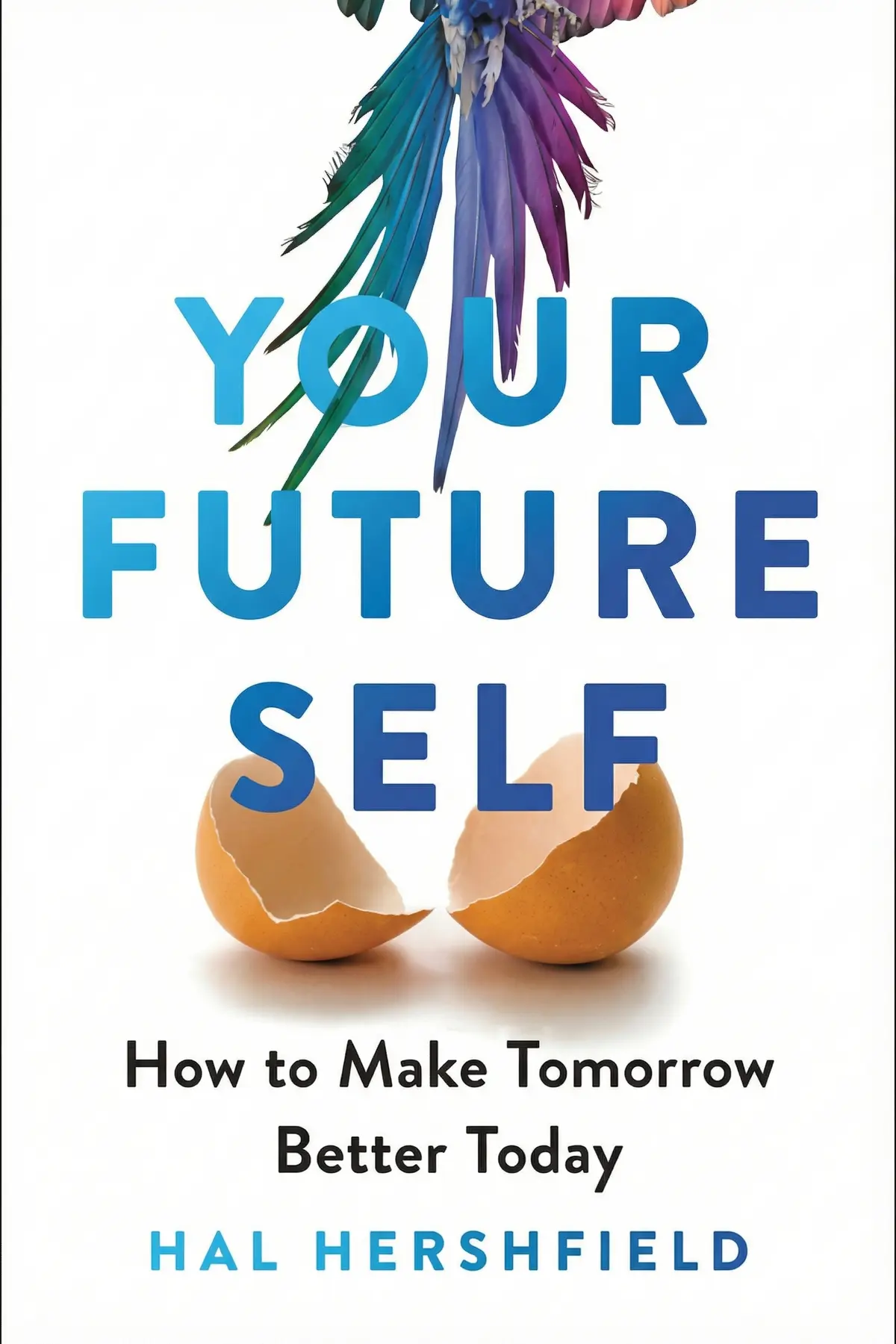
Most of us treat the person we will be in ten years as a stranger, and we spend, eat and delay as if someone else will pay the bill. In Your Future Self, UCLA professor Hal Hershfield argues that this sense of distance sits behind many of the choices we later regret. When people picture an event a few decades away, many start describing themselves in the third person, as if talking about somebody else.
Hershfield’s case is that the gap can be closed. Make your future self feel near, vivid and worth caring about, then back that feeling with commitments that do not depend on willpower, and today’s choices begin to favor the later you.
The argument moves from a puzzle about identity to the pull of instant rewards, then to the biases behind procrastination and regret, and finally to practical tools: letters to yourself, counting in days, locked-away phones and small fines. By the end, saving money or starting a hard task looks less like sacrifice and more like a favor to someone you know well.
1 min 47 sec
A man who killed dozens of people later claimed he had been reborn. A study of caregivers suggests which part of a person others treat as the real self, and it is neither the body nor the memories.
1 min 35 sec
Ask people about next year and they say I. Ask about thirty years from now and something odd happens to their language. That small slip explains why giving things up for later feels so pointless.
1 min 47 sec
Most people turn down ten extra dollars to avoid a six month wait. Change one detail of the offer and the same people become remarkably patient, which reveals how time itself plays tricks on us.
1 min 29 sec
Cramming the night before an exam and dreading a party you happily accepted weeks ago look like different failures. Hershfield traces both to the same blind spot, and the first part of his fix is surprisingly kind.
1 min 26 sec
Regretted tattoos and badly packed suitcases share a hidden cause. Two mental habits make us misjudge the person who will live with today’s decisions, and naming them gives you a moment to catch them.
1 min 32 sec
People give more readily to a family that has already been chosen than to one that might be. Hershfield borrows that finding to make your own future self harder to ignore, using tools as simple as an envelope.
1 min 38 sec
Resisting temptation in the moment is a contest most people lose. A timed safe, a fine you charge yourself and a well-chosen video at the sink each sidestep that contest in a different way.
1 min 11 sec
Hershfield’s book rests on one odd image: a coffee with a stranger who knows every habit and secret you have, and who turns out to be you, ten years on. Most of the trouble he describes comes from treating that person as someone else’s concern. The extra cake, the impulse purchase, the last-minute rush and the party you regret accepting all look sensible when the one who pays seems far away and out of focus.
His answer is to change the relationship instead of demanding more discipline. If people locate identity in moral character, then you will keep changing, and you have some say in who you become. The tools exist to bring that person into view and tilt everyday choices in their favor.
Start small. Write one letter to yourself and leave it somewhere you will come across it. Before agreeing to anything weeks away, ask whether you would accept it for tomorrow. For a habit you keep skipping, attach either a small fine or a treat you only get while doing it.
The stranger at that coffee table already knows what you chose today. Give them a reason to be glad.
Most of us know we should save more, start sooner and think twice before choices we cannot undo. We still pick the cake, the impulse buy and the last-minute scramble. Hal Hershfield, a UCLA professor working between psychology and economics, argues that the problem is not weak character. The person who will pay for those choices, our future self, feels blurry and distant, almost like someone else. Hershfield starts with a puzzle about identity: how much of you stays the same over time, and what makes you you. He then shows how the pull of the present distorts simple choices about money and food, why we procrastinate and say yes to plans we later dread, and which two biases lead us into decisions we come to regret. The second half is practical. Readers get ways to make the future self feel real, from writing letters to yourself and counting in days to timed phone safes, self-imposed fines and pairing dull tasks with pleasures. The promise is a better balance between the life you want now and the one you will be living later.
Professionals who keep putting off saving, exercise or hard projects and want to understand why.
Students and young workers who cram, overspend or say yes to plans they later dread.
Anyone weighing a decision that is hard to undo and wanting a way to check it first.
Hal Hershfield is a professor at the Anderson School of Management at the University of California, Los Angeles. His work sits where psychology meets economics and focuses on how people can make better long-term decisions. He has written op-eds for the New York Times, has advised firms including Morgan Stanley, and has been recognized among the best business school professors under 40.

Listeners find this work practical and stimulating, noting its engaging narratives and compelling topics. The content is grounded in science, and one listener emphasizes its potential beyond financial decisions. They also value the book’s clear writing, with one individual mentioning it's worth several hours to read.
Wow, this really changed my perspective on why I procrastinate. Hershfield argues that procrastination is essentially a battle between our past, current, and future selves, and that we often fail because we can’t visualize that future version of us vividly enough. I loved the section on "pre-commitment devices," like locking your phone away to force your future self to work. The blend of rigorous science and narrative storytelling makes the concepts stick. One of the most fascinating parts was the study on Alzheimer’s versus ALS patients and how our "moral self" defines who we really are. It’s rare to find a book that is both intellectually stimulating and immediately applicable to your daily routine. This is easily worth a few hours of your time if you want to understand your own decision-making better.
Show moreEver wonder if you’re actually the same person you were when you were eight years old? This book dives deep into that riddle. Hershfield uses the concept of "memory" and the "moral self" to explain why we feel a thread of continuity even as our cells and preferences change. I was fascinated by the "projection bias" section—how we pack the wrong clothes for a trip because we can’t imagine feeling differently than we do right now. It’s a brilliant exploration of the human psyche. The storytelling is excellent, and the practical strategies for "befriending" your future self are actually doable. It's a must-read for anyone interested in why we struggle with long-term goals and how to finally overcome that gap.
Show moreAs someone who always puts off saving for retirement, this was a necessary wake-up call. Hal Hershfield explores the "temporal chasm" between who we are now and the person we'll become in twenty years. To be fair, I never realized that I treat my future self like a complete stranger. It’s a bit jarring to realize I’d rather have $990 today than $1000 in a few months, but the ship anchor metaphor explains that pull of the present perfectly. The writing is accessible and moves quickly, though some of the behavioral psych points felt familiar if you've read other popular habit books. Still, the specific focus on "mental time travel" provides a fresh lens on why we sabotage our own goals. It isn't just about money; it’s about identity and how we perceive our own evolution.
Show moreFinally got around to finishing this, and I’m glad I did. It’s a thought-provoking look at how our perception of time shapes our choices. I particularly appreciated the advice on "mental time travel" and using days instead of years to make the future feel closer. If you think about an event being 3,650 days away instead of 10 years, it suddenly feels more urgent. The book is full of these little practical "hacks" that go beyond simple financial planning. My only gripe is that it occasionally feels like a collection of studies stitched together. That said, the "vampire reference" about endless existence was a brilliant way to frame the question of who we’d be if time didn't matter. It’s a great read for anyone into behavioral psychology.
Show moreThis book manages to turn complex behavioral economics into something actually fun to read. I loved the comparison of our lives to a "ceaseless evolution." We aren't just one person; we are a collection of separate selves. The advice on using "commitment devices" with automatic punishments was a game-changer for my productivity. Not gonna lie, I’ve already started writing a letter to my future self to make that "stranger" feel more like a friend. The book is quite long and gets a bit bogged down in the middle, but the overall message is powerful. It’s practical, scientifically grounded, and makes you look at your daily calendar in a completely different way. Definitely worth the read.
Show moreI had high hopes for this one because the premise of "befriending your future self" is so compelling. However, the execution felt a bit repetitive after the first hundred pages. The author uses a lot of cake analogies—if you eat the cake now, will your future hips thank you? It’s a bit reductive. Frankly, I was more interested in the deep philosophical questions about identity, like the "end-of-history illusion," than the constant focus on avoiding being "fat or poor." I wanted more on how to build a creative, expansive life, not just how to avoid worst-case scenarios. It’s a decent read with some solid science, but it could have been trimmed down significantly. It’s a good concept that gets a bit lost in its own length.
Show moreThe research here is top-notch, but I’m not sure all the case studies hit the mark. For instance, the story about the serial killer Pedro Rodrigues Filho felt like an extreme way to illustrate that people can change. Did we really need a murderer's story to understand the concept of a "reborn" self? Look, the book offers plenty to ponder, especially the "yes/damn" effect—we’ve all agreed to a future party only to regret it when the day actually arrives. But the middle sections drag. I found myself skimming through some of the redundant explanations of projection bias. It's worth a read for the core takeaways, but don't expect to be gripped by every single chapter. It’s more of a 3.5-star experience for me.
Show moreAfter hearing Hal on a podcast, I was excited to dive into the full text. As someone in my mid-fifties, the realization that my current choices will impact the "final third" of my life is becoming very real. I want to stay healthy and independent, yet I still find myself choosing the immediate reward over the long-term benefit. This book explores that "why" in great detail. The science is solid, and the writing style is very readable. However, I found it a bit too focused on avoiding negative outcomes like loneliness or poverty. I would have loved more discussion on pursuing dreams and growth. It’s a solid book, just a bit repetitive in its examples.
Show moreTruth is, the concept here is better than the execution. I support the idea of thinking about the future self to motivate today’s actions, but the book spends too much time on the "how many parts of you need to change" philosophical debate. It felt a bit disjointed. On one hand, you have very practical tips for avoiding procrastination, and on the other, you have deep dives into the "vampire" existential crisis. It’s a bit of a mixed bag. I did appreciate the "yes/damn" effect explanation, as it explains so much of my social anxiety regarding over-committing. It's worth several hours of your time if you're a fan of psychology, but it didn't quite live up to the hype for me.
Show moreNot what I expected. While I appreciate the author's credentials, this felt like another "pop-psych" book that stretches a single good idea into far too many pages. The core message is simple: connect with your future self to make better choices. Do we really need twenty different ways to say that? I found the tone a bit patronizing at times, especially with the constant warnings about eating too much or not flossing. To be fair, there are some interesting bits about the "end-of-history illusion," but they are buried under layers of filler and those repetitive cake analogies. If you've read any other behavioral economics books lately, you can probably skip this one and just read a summary. It felt very repetitive by the end.
Show moreHershfield argues that we often treat our future self as a stranger, so we make choices that please us now and burden the person we will become. When people imagine events decades ahead, many even switch to the third person. His fix is to make that future self feel close and real, then support good intentions with commitments, small penalties and pleasant pairings that do not depend on willpower.
Hershfield describes how most people take $990 today over $1,000 in six months, yet choose $1,000 in eighteen months over $900 in a year. The present feels familiar and looms large, while time seems to shrink as we look further ahead. Uncertainty may play a part too. Once neither reward is immediate, people become far more patient, which shows that nearness, not value, drives the choice.
They are the two biases Hershfield links to regret. Projection bias is assuming your future self will feel the way you feel right now, like packing for a hot destination with winter clothes because today is cold. The end-of-history illusion is believing your personality and preferences will barely change from here. Both can lead to choices such as a tattoo someone later dislikes.
Make the future self concrete by writing a letter to yourself or creating a time capsule, and think in days rather than years. Follow that with firm commitments, such as buying a 30-session gym membership. Remove temptation, for example by locking your phone in a timed safe, fine yourself for missed workouts, pair dull tasks with enjoyable ones, and break large debts into smaller payments.
Steven C. Hayes



Deborah Gruenfeld




Anthony Pratkanis


AUDIO SUMMARY AVAILABLE
Get the key ideas from Your Future Self by Hal Hershfield, plus 5,000+ more nonfiction titles.









