

14 min 47 sec
Available in: English
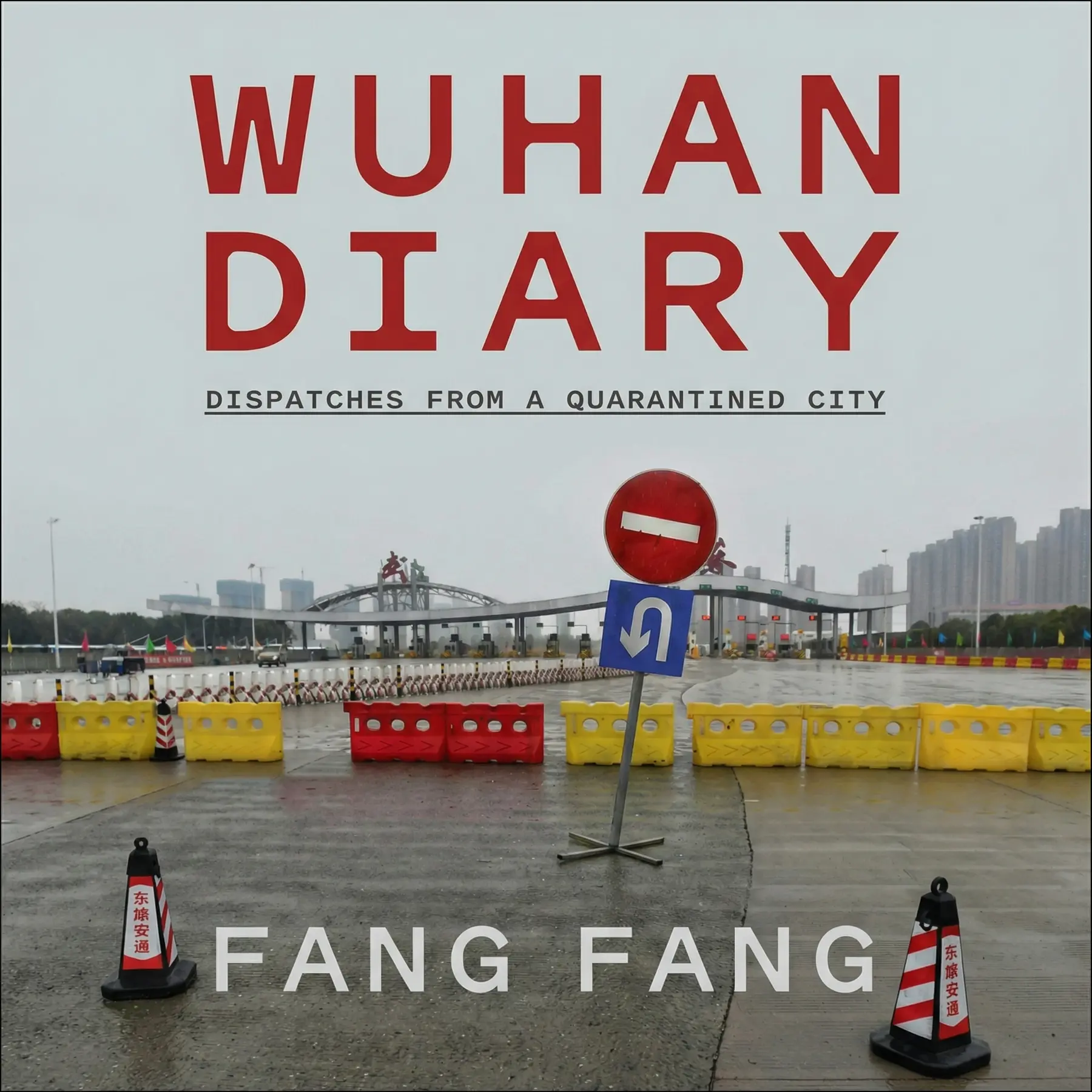
Wuhan Diary: Dispatches from a Quarantined City
By Fang Fang
Fang Fang's public diary of Wuhan's 76-day lockdown shows how official silence deepened the first COVID-19 disaster, how neighbors kept one another alive, and what it cost her to keep telling the truth.
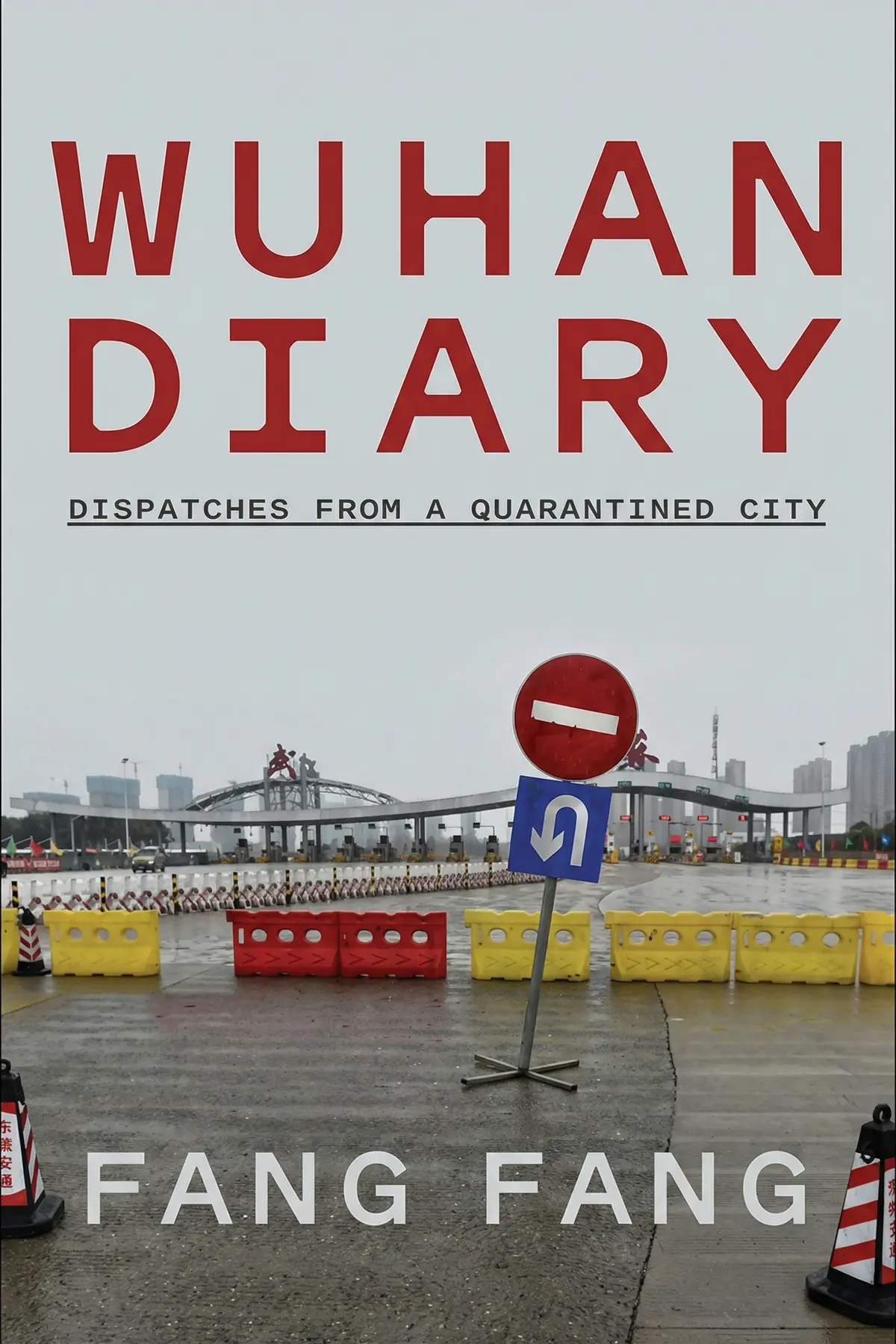
Table of Content
1. Introduction
1 min 08 sec
When officials tell a frightened public there is nothing to worry about, people pay for that comfort later, in lives. That hard lesson sits at the center of Wuhan Diary, in which the novelist Fang Fang kept a public record of her quarantine as the coronavirus swept through her city in early 2020, writing 60 entries before she stopped in late March. Weeks before the world paid attention, Wuhan residents were trading rumors of a strange illness while the official line said all was well.
She posted her entries publicly on Sina Weibo, a Chinese platform much like Twitter, and some drew more than 10 million views. Her diary shows how a government’s habit of hiding bad news turned an outbreak into a catastrophe, and how neighbors, doctors and one stubborn writer carried the city through by helping each other and telling the truth. Following her days gives you a crisis seen from the inside: where it hits first, who suffers most, and what it takes to keep speaking when powerful people want silence.
2. What false reassurance costs when lives are at stake
1 min 50 sec
A specialist’s short public statement, repeated endlessly by the press, shaped what millions believed during the weeks that mattered most. Then a banquet for tens of thousands went ahead, and the truth arrived one day too late.
3. Where a locked-down city breaks first
1 min 40 sec
Chinese New Year should have filled Wuhan’s streets with noise and family. Instead, the sick walked to hospitals that sent them home, and the rushed official response created a second wave of suffering of its own.
4. Neighbors who kept a quarantined city alive
1 min 53 sec
At the outbreak’s worst point, with more deaths every day, Fang Fang noticed the mood of her city begin to shift. The change started with people she lived beside and soon reached a sister city across an ocean.
5. Understand how grief turned into demands for answers
1 min 46 sec
Three weeks in, the numbers were finally improving, yet the rules grew stricter and the city’s mood darkened. One doctor’s death gave people’s anger and frustration a public outlet, as his social media page filled with grief and fury.
6. Keep telling the truth when trolls swarm
1 min 40 sec
Her account was blocked, a photo she shared was called a fake, and trolls found it suspicious that she never gave her friends’ full names. How one writer answered a growing online mob without going quiet holds a lesson for anyone who speaks up.
7. Recovery takes longer than the curve suggests
1 min 53 sec
Elsewhere in China the case numbers were already falling, while Wuhan kept counting new infections despite its strict rules. Fang Fang saw a slower and wider kind of damage arriving behind the hospital figures.
8. What a city carries out of lockdown
1 min 45 sec
When the lockdown finally lifted and the city reopened, the celebration was real. Fang Fang’s last entries, though, mixed gratitude with a sharp verdict on who had made the losses so heavy, inside China and beyond it.
9. Conclusion
1 min 12 sec
Wuhan Diary is the record of a city learning, day by day, that the most dangerous thing in a crisis can be the story officials tell about it. Eight reassuring words left millions exposed. A banquet for 40,000 went ahead. A doctor who warned early was silenced and then died. Against all that, Fang Fang set something small and stubborn: a daily account of what she and her neighbors actually saw, posted where anyone could read it.
Her diary also shows that honesty and kindness traveled together. The weeks that produced censors and trolls also produced young volunteers at older people’s doors, shopping groups, warm meals left by a neighbor and masks from a sister city across the ocean.
What she models is modest and usable. When those in charge insist there is nothing to worry about while the evidence says otherwise, believe the evidence, and look first to the people least able to protect themselves. When someone tries to shout you down for telling the truth, find another channel and keep writing, as she did the week her Weibo account went dark.
About this book
What is this book about?
In January 2020, Wuhan, a city of 11 million, was suddenly sealed off. For weeks before that, residents had heard only rumors and official reassurance about a strange new illness. The novelist Fang Fang, confined to her apartment with her old dog, began posting a daily diary on the social platform Sina Weibo. Some entries drew more than 10 million views. Her 60 entries follow the city from shock and panic, through the peak of the outbreak, to the slow and grief-filled path toward reopening. She records hospitals turning patients away, migrant workers stranded without food, volunteers carrying groceries to older neighbors, and the death of Dr. Li Wenliang, a doctor who had warned early and been silenced. She also asks the questions officials did not want asked: why it took so long to admit the virus spread between people, and who was responsible. Readers get an inside view of how a modern crisis unfolds for the people living through it. The book also shows what it took for one writer to keep speaking while censors blocked her account and online trolls called her a liar.
Book Information
Who it's for
Curious about Wuhan's lockdown
Readers who want to know what the first COVID-19 lockdown was like for the people inside it.
Professionals weighing official silence
Professionals in health, media or public service who think about crisis communication and official silence.
Piled on for honesty
Writers and anyone who has faced an online pile-on for speaking honestly.
About the Author
Fang Fang
Fang Fang is the pen name of Wang Fang, born in Nanjing in 1955. She started writing poetry in 1975, studied Chinese at Wuhan University and graduated in 1982, the year her first novel came out. Her fiction portrays the working poor, and she won the Lu Xun Literary Prize in 2010, with other novels also earning national prizes in China. Wuhan Diary, her record of the pandemic's first phase, brought her international attention. She has also spoken out publicly against internet censorship in China.
Ratings & Reviews
Ratings at a glance
What people think
Listeners find that this work offers a remarkably educational perspective on the pandemic, with one review emphasizing its thorough depiction of the lockdown in Wuhan. Furthermore, the prose is highly regarded, and listeners value the straightforward yet empathetic storytelling that portrays the communal spirit and altruism experienced during the emergency. Additionally, the volume earns praise for its sincere tone and precise idiomatic translation, with one listener observing that it functions as a first-hand account of ground zero.
Top reviews
Tun
Finally got around to reading this, and it is a searingly honest account of what it was like at ground zero during the initial outbreak. Fang Fang captures the sense of community and the quiet selflessness of ordinary citizens while the rest of the world was still looking the other way. The translation by Michael Barry is excellent, keeping the direct yet compassionate tone intact without losing those specific cultural nuances. Look, it is not a polished novel with a traditional plot; it is a raw, real-time chronicle of survival and government oversight. She writes with such dignity even when facing immense pressure from her detractors. Some readers might find the daily entries repetitive, but that is the reality of quarantine life. It serves as a vital time capsule for future generations to understand the fear and the courage that defined early 2020.
Show moreSarawut
After hearing so much controversy about Fang Fang, I expected a political manifesto, but what I found was a compassionate narrative about community resilience. The way she describes neighbors helping each other and the frantic search for masks feels very human and grounded. Michael Barry’s translation is remarkably fluid, capturing the unique Chinese humor that often gets lost in more academic texts. While there are some unverified anecdotes that might make skeptics wary, the emotional truth of the situation is undeniable. She holds leaders accountable for the critical delay that allowed the virus to seep out, and that courage is palpable throughout the diary. It is a bit long-winded in the middle sections, but the urgency of the account keeps you turning the pages. This is an important piece of living history that deserves a spot on your shelf.
Show moreAroha
The chapter on the early days of confusion really struck a chord with me because it mirrors the delay we saw in other parts of the world. It is striking to compare her late January entries with what happened in the West months later. Questions like "where do I get masks?" and "why are prices so high?" are universal themes that transcend borders. Personally, I think the book's value lies in its honesty about the initial chaos and the government's attempt to save face. It isn't a perfect book—it could have been twice as good at half the length—but it captures the atmosphere of Wuhan better than any news report. She manages to balance the macro politics of the situation with the micro struggles of a woman just trying to care for her aging dog while the world changes outside.
Show moreDen
Wow, the sheer weight of these sixty days is captured with such dignity that it is hard to ignore the human cost mentioned in every entry. Fang Fang writes bold sentences that rally against the minimization of the virus. I was particularly moved by her descriptions of the medical workers and the community spirit that emerged despite the strict isolation rules. The translation is excellent, making the text feel accessible to a Western audience without stripping away its authentic roots. My only gripe is that it can feel a bit like a watched pot—waiting for developments that we already know the outcome of. Nevertheless, her call for accountability is scorching and provides a much-needed counter-narrative to the official reports. It is a solid account of a global tragedy that shows the power of a single voice.
Show moreDao
As someone who follows global health, seeing how the "saving face" culture impacted the initial response was the most enlightening part of this diary. Fang Fang isn't afraid to curse out those who deserve it, and her bluntness is refreshing. The book documents the shift from initial denial to full-scale mobilization with impressive detail. I appreciate how she highlights the selflessness of the volunteers while also critiquing the inferior managers who rose to the top during the crisis. The translation feels right, capturing the simple humor and directness of her style. It does get a bit repetitive, and the mentions of her online trolls can be a distraction, but the overall message of solidarity is powerful. It is a direct, ground-zero perspective that feels essential for understanding the chaos of 2020.
Show moreNikolai
Picked this up during my own lockdown and found the day-by-day progression incredibly relatable, even if the entries get a bit repetitive after a while. The truth is, actual quarantine is boring and monotonous, so the book reflects that reality perfectly. I enjoyed her musings on the "ultra-leftists" and the way she fought back against the deletion of her posts. However, I was left wanting more detail about her personal family life. We hear about her dog and her grocery runs, but the emotional interiority of her loved ones is often sidelined by her arguments with online trolls. Despite that, the book is informative regarding the logistical nightmare of a city-wide lockdown. It is a three-star read for me—historically significant for its honesty, but occasionally a slog to get through due to the daily format.
Show morePannipa
To be fair, the prose is quite crisp and the translation captures those specific Chinese idioms better than I anticipated. I went into this expecting a dry account, but Fang Fang has a very distinct voice that is both weary and resilient. She isn't necessarily anti-government, but she is fiercely pro-truth, which makes for a tense reading experience given the censorship context. The repetition of her daily routine—checking temperatures and worrying about food supplies—perfectly mirrors the anxiety we all felt later on. I did find the sections where she defends herself against "thugs" a bit exhausting to read in one sitting. It probably worked much better as a daily blog post than a continuous book. Still, it is a fascinating look at the dynamics of a society under extreme pressure and the selfless community spirit that emerged.
Show morePranee
Not what I expected in terms of depth, as the author focuses heavily on her own internet battles with critics rather than the broader suffering of the city. I found the narrative teetered awkwardly between being a historical document and a defensive diary. While I appreciate the courage it took to post these daily, the constant "I heard from a friend" stories felt a bit thin at times. To be fair, she is a literary figure, not a scientist, so her perspective is naturally biased toward her own social circle. It is an interesting time capsule, but it lacks the scientific rigor I was looking for. The politics seem to dominate the later half of the book, which might be frustrating for readers looking for a more personal or human-centric story about the victims of the pandemic.
Show moreJune
Ever wonder how a single voice can cause such a massive stir in a country of billions? This book provides the answer through its raw look at life under lockdown. Fang Fang’s diary is a mix of gossip, grief, and grit. While some of the rumors she mentions are questionable, the atmosphere of fear she describes feels very authentic to those of us who lived through 2020. It is not an easy read, not because of the prose, but because it is a bit of a slog through daily mundane activities. I would have preferred more about her family and less about the "ultra-leftist" drama that takes up so much space in the latter half. In my experience, this works best as a historical artifact rather than a literary masterpiece. It is informative but definitely has its share of dead space.
Show moreDiego
This book feels more like a collection of unverified social media whispers than a definitive historical record. I was excited to get a perspective from inside Wuhan, but the constant reliance on phrases like "a doctor friend told me" or "a journalist messaged me" makes much of it feel like hearsay. Frankly, when some of these rumors were debunked—like the nurse who supposedly died but was actually just ill—it cast a significant shadow over the rest of the entries. It is an interesting cultural artifact regarding how panic spreads through social media, but I wouldn't call it rigorous journalism. There is a lot of dead space where the author simply complains about internet trolls. To be honest, I preferred the scientific reports coming out of the Lancet for a clearer, less politicized picture of the actual situation. It is a polarizing read that leans heavily on gossip juice rather than verified facts.
Show moreQuestions about this book
What is Wuhan Diary by Fang Fang about?
It collects the 60 public entries novelist Fang Fang posted on Sina Weibo during Wuhan’s 76-day COVID-19 lockdown in early 2020. She follows the city from panic and overwhelmed hospitals, through neighbors helping one another, to growing anger at officials who had played down the virus. It ends with Wuhan’s reopening on April 8 and her verdict on what the crisis should teach.
What were the eight words in Wuhan Diary?
After a government team inspected Wuhan Central Hospital, a specialist named Dr. Wang told the public, in eight words, that the virus did not spread between people and could be controlled and prevented. The press repeated the line again and again. Fang Fang treats it as a fateful mistake, because Dr. Zhong Nanshan revealed soon after that the virus did pass from person to person.
Why was Fang Fang attacked online for her diary?
She wrote critically about the government’s handling of the outbreak, which drew both censors and trolls. Her Weibo account was blocked for several days, so she shared entries in private WeChat groups. A user accused her of faking a photo of victims’ cellphones at a crematorium, then returned with many others, who accused her of spreading lies and fabricating stories and called it suspicious that she never gave her friends’ full names.
What lessons does Fang Fang draw from the Wuhan lockdown?
She argues that concealment by Chinese officials and the arrogance of Western governments both cost countless lives, and that the shared fight showed humankind must work together. She also urged help for the weakest, such as stranded migrant workers, called for financial aid to struggling households, and asked for therapists to come to Wuhan to ease the trauma once the lockdown ended.
Readers also enjoyed

Age of Anger: A History of the Present
Pankaj Mishra

A Promised Land
Barack Obama

Age of Propaganda: The Everyday Use and Abuse of Persuasion
Anthony Pratkanis


A River in Darkness: One Man’s Escape from North Korea
Masaji Ishikawa

A Spy Among Friends: Philby and the Great Betrayal
Ben Macintyre

21 Lessons for the 21st Century
Yuval Noah Harari


AUDIO SUMMARY AVAILABLE
Listen to Wuhan Diary in 15 minutes
Get the key ideas from Wuhan Diary by Fang Fang, plus 5,000+ more nonfiction titles.
- 5,000+ titles
- Listen as much as you want
- 7-day free trial
- Cancel anytime









