

Acting with Power: Why We Are More Powerful Than We Believe
Deborah Gruenfeld
 English
Uses six famous pairs from Disney, Berkshire Hathaway, Hollywood, fashion and nightlife to show why most great businesses rest on a partnership, and what trust, humility and shared credit look like in practice.
1 min 06 sec
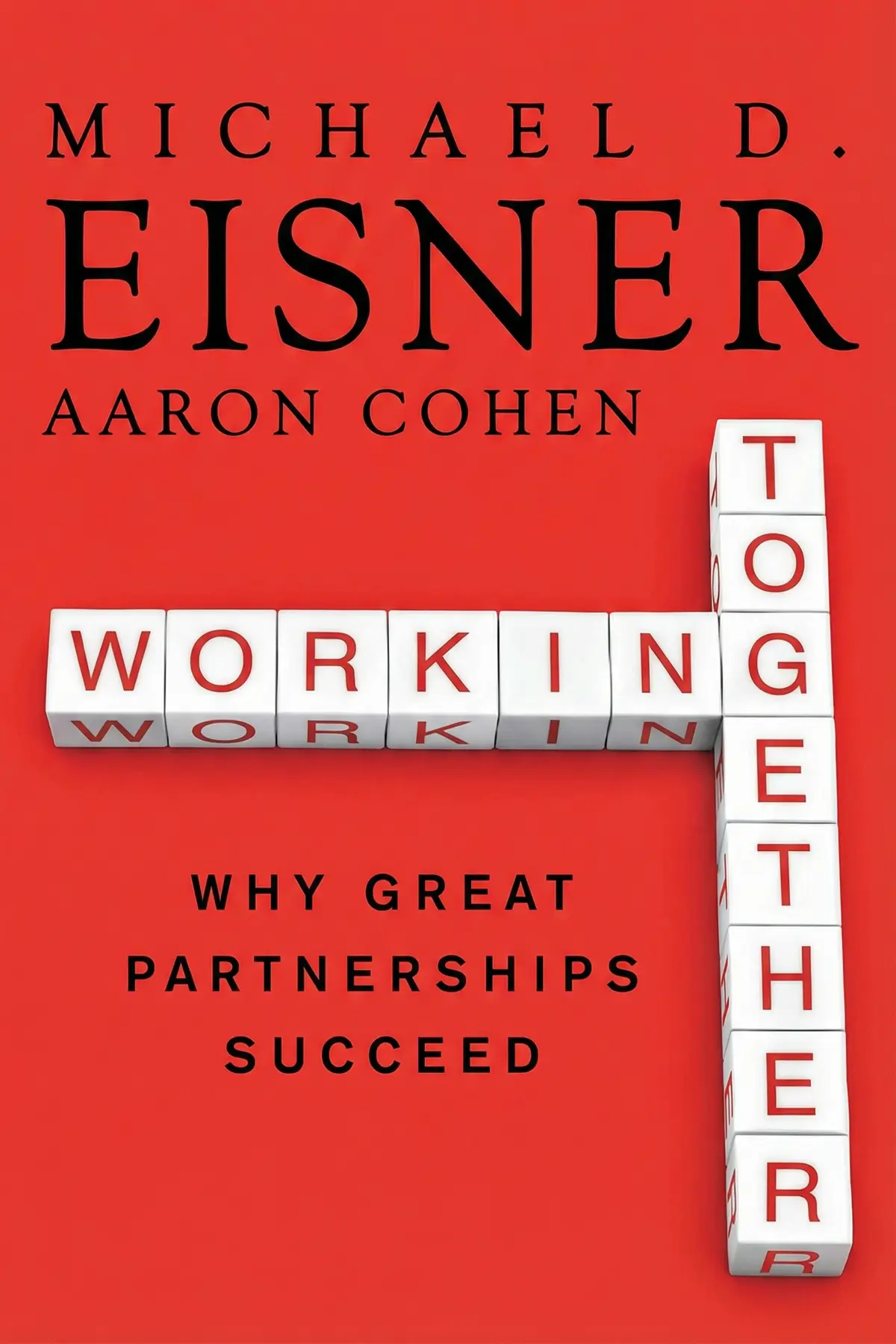
Building a company on your own is far harder than it looks, and the magazine profiles that celebrate lone founders hide the reason. In Working Together, former Disney chief Michael D. Eisner, writing with television producer Aaron Cohen, argues that behind nearly every great business stands a partnership. The lone hero struggling against the world is mostly a story the media likes to tell.
Their case rests on six famous pairs, from Eisner’s own years running Disney with Frank Wells to Warren Buffett and Charlie Munger, Bill and Melinda Gates, and the two friends who opened the nightclub Studio 54. The pairs look nothing alike. Some split everything evenly, some keep a clear number one, and one began as a love affair. What they share is trust, integrity and respect, with partners who fill each other’s gaps and stop competing for credit.
Listen through, and you will know what to look for in a cofounder or close colleague, and what to stop doing in the partnership you already have.
1 min 51 sec
A Disney president once settled a movie dispute over a game of tennis, and later stepped back from the top job without a fight. His habits show what one partner can do to make the other stronger.
1 min 53 sec
Warren Buffett, who leads Berkshire Hathaway, runs his ambitious ideas past a partner who regularly calls them dumb. The way the two handle disagreement explains why the criticism makes their company stronger instead of splitting it.
1 min 53 sec
A suit-wearing producer and a director in a baseball cap split up after their first two films together, then reunited. The money rule they adopted the second time removed a source of tension most partners never address.
1 min 40 sec
Bill Gates says he has done almost nothing alone. His partnership with Melinda shows what changes when neither person has to lead, and why that can make the hard seasons easier to get through.
1 min 52 sec
A famous designer’s partner gave up his studies, does most of the hard work and takes the smaller share of the money. Yet calling him the weaker half would miss where his influence really lies.
1 min 43 sec
Prosecutors offered one of the Studio 54 founders a lighter sentence if he would turn on his best friend. His answer, and what the two did after prison, reveals what holds a partnership together.
1 min 17 sec
Working Together turns a familiar picture inside out. The founder on the magazine cover rarely got there alone, and the people standing just outside the frame, a Wells, a Munger, a Giammetti, often made the difference. Eisner and Cohen show that the shape of a partnership matters less than its footing. Equal or unequal, lovers or old friends, the pairs that last are built on trust, integrity and respect, and each partner brings something the other lacks. A good partnership, the authors add, does more than grow a company. People are social creatures, and working well with someone can make you happier.
Their most direct advice is to stop keeping score. Do not measure yourself against your partner or fret over who did which piece of work; that competitive habit works against you, and treating your partner as an equal lets you both share every win. Then look at the people you work with most closely. Find the one who covers your weak side, tell them plainly that you are in it together, and give them your loudest support when it counts.
Frank Wells carried a small slip of paper about humility for 30 years. The partners who last carry the same idea every day, and they never count who gave more.
Business success is usually told as the story of one brilliant person fighting the world. Michael D. Eisner, who led The Walt Disney Company from 1984 to 2005, and television writer and producer Aaron Cohen argue that the lone hero is mostly a myth. Behind nearly every great business, they say, stands a partnership. Without a partner who complements and supports you, building something great is very hard. Their evidence is six well-known pairs: Eisner and Frank Wells at Disney, Warren Buffett and Charlie Munger, Bill and Melinda Gates, Brian Grazer and Ron Howard, designer Valentino Garavani and Giancarlo Giammetti, and Studio 54 founders Steve Rubell and Ian Schrager. Some are equals, some keep a clear number one, and one began as a romance. What unites them is trust, integrity and respect. Readers see what a cheerleading partner does, how a skeptic improves decisions, why some pairs split earnings evenly, and how a refusal to betray a friend deepened a bond that later led to a new business. The central advice is simple to say and hard to practice: stop keeping score.
Founders choosing a cofounder, or wondering why an existing partnership feels strained.
Managers and number twos who work closely with one boss or one peer every day.
Couples and close friends thinking about building a business together.
Michael D. Eisner, born in 1942, worked at several television networks and was president of Paramount Pictures from 1976 to 1984. He then led The Walt Disney Company as chairman and chief executive until 2005, years that brought The Little Mermaid, Beauty and the Beast, Aladdin and The Lion King, and the purchase of ABC and a majority share of ESPN. He later founded The Tornante Company. Aaron Cohen is a television writer and producer whose work at HBO and NBC has won Emmy and Peabody Awards. He runs Patent Seven Productions and helped Eisner with his memoir Camp.

Listeners find the work an engaging read and appreciate its concentration on one-on-one business alliances. The book's tempo earns positive remarks, with one listener specifically mentioning it is rich with anecdotes. However, the motivational elements draw a more varied response from listeners.
Finally got around to reading this, and I was genuinely surprised by the deep emotional weight found in the chapter regarding Frank Wells. Before picking this up, I only knew Eisner as the notoriously difficult manager from the media headlines. But as I read, I realized I’d fallen prey to a limited perspective. He wasn't just being mercurial; he was a man publicly grieving his best friend and partner while the world watched with a critical eye. This book is a profound reminder that we aren't meant to build empires in isolation. The pacing is quick, filled with stories about Buffett and Munger that prove how the right pair can achieve much more than a solo act. It’s touching, rare, and incredibly motivating for anyone looking for their own professional 'other half'.
Show moreThis is a profound reminder that we aren't meant to build empires in isolation, and the right partner makes all the difference. Eisner goes into great detail about the importance of synergy, using iconic pairs like Munger and Buffett to illustrate his points beautifully. I found the book incredibly motivating because it shifts the focus from the 'lone genius' myth to the power of the duo. The pacing is excellent, and the book is absolutely full of anecdotes that keep the reader engaged from start to finish. Even if you aren't a fan of Eisner's history at Disney, the insights provided here are universal. It’s a guide to building something great with someone you trust. I walked away feeling inspired to look at my own professional relationships with a much more collaborative and appreciative lens.
Show moreWorking alongside the right person is often the secret sauce that separates a good company from a legendary one. Michael Eisner uses his platform to show that humans are essentially social creatures who thrive when they have a trusted co-pilot. I particularly enjoyed the sections on Warren Buffett and Charlie Munger, which highlight how a partner can bring happiness as well as financial success. Not gonna lie, the book is quite anecdote-heavy, which keeps the pacing fast and engaging throughout. While it doesn't offer a step-by-step 'how-to' guide, it serves as a great reminder that working together is almost always better than going it alone. You might need to do some mental translation to apply these elite examples to your own life, but the core message remains powerful and relevant.
Show moreAs someone who has followed the media industry for years, I found the insider perspective on Disney’s golden era absolutely fascinating. This isn't just about business; it’s about the psychology of trust and how two people can build something much larger than themselves. Eisner provides an excellent guide to finding a person you can truly create with, using examples ranging from the Yankees to the Gates Foundation. I appreciate how he details his own partnerships with a level of vulnerability I didn't expect from a former CEO. Some parts feel a bit like a name-dropping exercise, but the overall sentiment is one of genuine appreciation for collaboration. It’s a smooth read that moves quickly through various industries, making it hard to put down once you start the first few chapters.
Show moreNot what I expected from a former Disney CEO, but the focus on interpersonal synergy is surprisingly refreshing. The book operates more as a collection of case studies than a traditional business text, which makes it very readable. I enjoyed the diverse range of pairs he chose to highlight, from sports icons to tech giants. In my experience, business books can get dry, but this one stays lively because it focuses on the human element of success. There are some minor criticisms to be made regarding the lack of a clear 'action plan' for the reader, but the examples are strong enough to speak for themselves. You learn how people interact better and add value to their collaboration through these stories. It’s a solid addition to any manager's bookshelf.
Show morePersonally, I think the value here lies in the storytelling rather than the specific business advice. It’s a good read if you're looking to work closely with someone else and want to understand the dynamics involved. Eisner’s writing is conversational and the pacing is brisk, making it an easy book to finish in a weekend. The highlights for me were the sections on the New York Yankees; the relationship between Torre and Zimmer was a perfect example of complementary skills. While it’s true that some of the partnerships mentioned seem like lucky accidents, the book does a good job of showing the work required to maintain them. It’s an enjoyable look at how the right collaboration can lead to both professional success and personal happiness. Definitely worth picking up for the anecdotes alone.
Show moreEver wonder why some duos just click while others crash and burn spectacularly? This book attempts to answer that, though the final conclusion seems to be that great partnerships are more about kismet than any conscious effort. The anecdotes are certainly entertaining, especially the deep dives into the New York Yankees with Joe Torre and Don Zimmer. However, the book lacks the depth I was expecting from a business guide. It functions more as a collection of high-level observations rather than a practical manual for collaboration. Truth is, if you aren't already interested in the famous people featured, you might find the lack of a structured framework a bit frustrating. It’s a decent read for the plane, but don't expect a masterclass in management.
Show moreTo be fair, the premise of this book is absolutely stellar, yet the execution left me wanting something more substantial. I really wanted to like this, but it just didn't seem to have much intellectual depth beyond the surface-level storytelling. The book is essentially a series of examples explaining how partnerships work rather than teaching you how to build one yourself. It’s interesting to see the inner workings of relationships like those at Disney or in the investment world, but it feels like a highlight reel. If you are looking for a light read full of business lore, you will enjoy this thoroughly. If you want a rigorous analysis of organizational behavior, you should probably look elsewhere. It’s more of a memoir-lite than a true business resource.
Show moreThe entire volume feels less like a business manual and more like a curated list of Eisner’s high-profile contacts. Frankly, it drips with an ego that overshadows the actual message of collaboration. He draws almost no academic conclusions and speaks to zero outside experts, making the research feel remarkably thin for a book of this stature. It's just an exercise in showing off which famous people will answer his phone calls. Highlights of this narcissism include interrupting a discussion about Bill Gates just to relay a story about having dinner with the Clintons. He even tries to contextualize Studio 54 by boasting that Paramount never lost money under his watch. It is a worthwhile topic with the completely wrong author at the helm.
Show moreLook, I really tried to find the 'working' part of this book, but it’s mostly just the 'Eisner' part. While the topic of partnership is vital for any entrepreneur, the author spends too much time reflecting on his own glory days. The writing style is breezy enough, but the substance is lacking because he ignores outside experts and data in favor of personal stories. It feels like he is trying to rehabilitate his image as a 'difficult' manager by showing how much he loved Frank Wells. While that specific chapter is somewhat moving, it doesn't save the rest of the book from feeling like a vanity project. There are better books on collaboration that don't require you to sift through so many stories about dinner with celebrities. Disappointing overall.
Show moreEisner and Aaron Cohen argue that the lone business hero is mostly a myth: behind nearly every great company stands a partnership. Through six pairs, including Eisner and Frank Wells at Disney and Warren Buffett and Charlie Munger, they show that lasting partnerships rest on trust, integrity and respect, with partners who complement each other and do not compete for credit.
The authors point to mutual respect, integrity and trust as the base. On top of that, good partners play different roles that fill each other’s gaps, support each other loudly, accept honest criticism and drop rivalry. Some pairs, like Grazer and Howard, split earnings 50/50 so nobody keeps a tally, while others, like Valentino and Giammetti, keep a clear number one by choice.
Munger acts as the skeptic, answering Buffett’s ambitious ideas with blunt criticism, and Berkshire Hathaway decides based on how Buffett responds to it. When Buffett proceeds anyway, Munger commits fully out of loyalty. Munger also introduced the approach of buying well-run companies and holding them for the long run, and he accepts the number two role because he believes Buffett is better at the job.
The book’s central advice is to stop keeping score: do not compare yourself to your partner or worry over who did which task, and treat them as an equal so you both share the wins. You can also champion your partner’s ideas in public, invite one trusted person to challenge your plans, and agree on shared principles instead of expecting agreement on every detail.
It suits founders picking or managing a cofounder, executives who work closely with a single boss or deputy, and couples or friends considering going into business together. Its lessons come through real pairs, from Disney and Berkshire Hathaway to Hollywood producers, a famous fashion designer and his partner, and the founders of Studio 54, which makes them easy to remember and discuss.
Deborah Gruenfeld

Mike Michalowicz



Hamilton Helmer


Margaret Heffernan



AUDIO SUMMARY AVAILABLE
Get the key ideas from Working Together by Michael D. Eisner, plus 5,000+ more nonfiction titles.









