Extra Life: A Short History of Living Longer
Steven Johnson
 English
Steven Johnson shows how the human taste for games, color, flavor and illusion drove inventions from the first programmable machine to global trade, the steam engine and cinema, and why the brain creates best at play.
57 sec
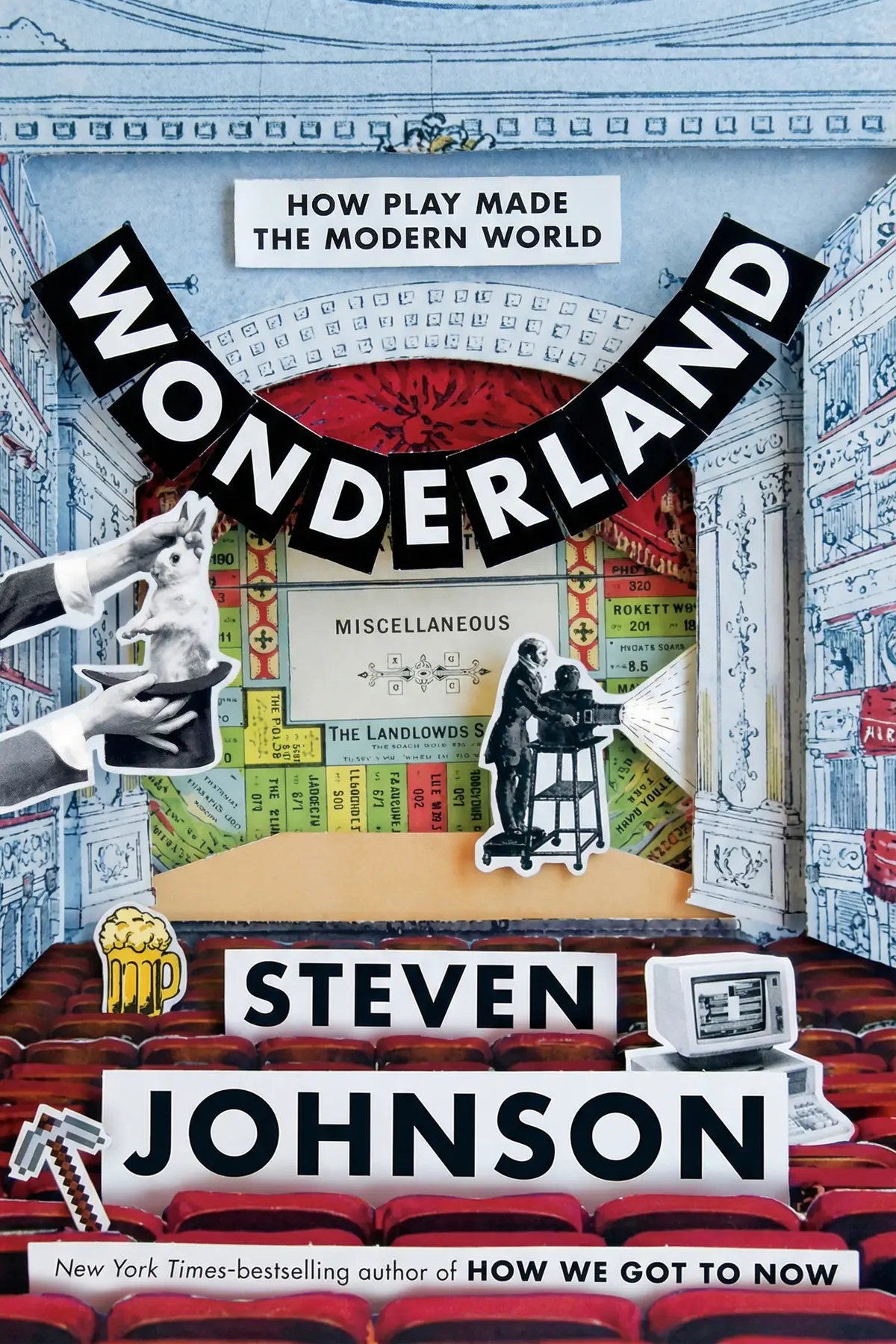
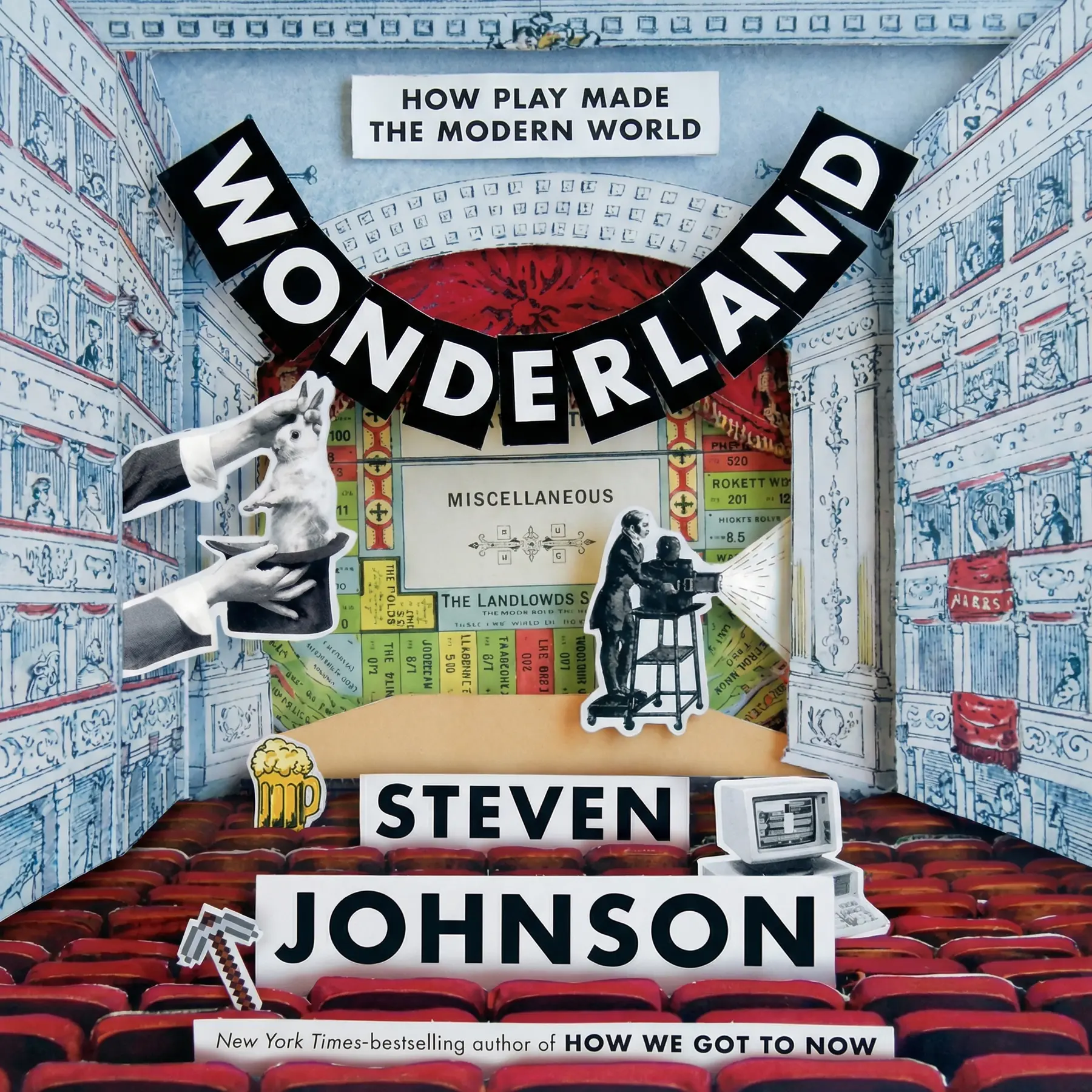
If you treat fun as the reward you earn after the real work, you may be missing where the real work often begins. In Wonderland, author Steven Johnson shows that a programmable machine existed in ninth-century Baghdad, and it was built to play the flute for an audience’s amusement. His case is that the hunger for surprise and delight, for games, bright cloth, rare tastes and clever illusions, has moved history about as much as war and conquest.
Many inventions we now treat as serious, from computing to global trade and cinema, started as entertainment and only later found their practical use. Johnson ties this to the brain, which rewards novelty and thinks most freely while it plays. Follow his trail from mammoth bone flutes to a board game built to fight inequality, and the toys, tastes and pastimes around you start to look like early drafts of the future.
1 min 37 sec
Two of the finest engineers of their age spent most of their time building toys, including a peacock that handed out soap. Johnson sees in their hobby a clue to how the human mind produces its biggest ideas.
1 min 40 sec
The information age did not begin in a lab full of punch cards. Its roots reach back to prehistoric musicians and to a Baghdad machine whose clever design anticipated something every programmer uses today.
1 min 51 sec
A single fashionable shade sent sailors into an ocean long feared and avoided, and centuries later a craving for bright fabric helped set off the Industrial Revolution. Vanity turns out to be a strong engine.
1 min 51 sec
A cheap bag of chips holds ingredients that once would have taken a year of travel to gather. The craving behind that bag made one city rich and turned a seasoning into money.
1 min 41 sec
A German showman scared paying crowds with smoke, sulfur and electric shocks, while a spinning children’s toy exposed a trick the human eye plays on itself. Both were needed before anyone could sit in a cinema.
1 min 48 sec
An ancient board game may have nudged Europeans to question their kings, and the world’s best-known property game was invented to teach the opposite of what it now celebrates. Rules carry ideas.
1 min 42 sec
A famous colonial protest and a civil rights movement both took shape over drinks, and travelers once begged to be blindfolded at the sight of mountains. Leisure has redrawn where and how we gather.
1 min 15 sec
Wonderland rewrites the usual history lesson. Beside the generals and factory owners stand two Baghdad engineers building a soap-dispensing peacock, Phoenician sailors hunting snails, a Leipzig showman shocking his audience and a woman designing a board game to share wealth fairly. In Johnson’s telling, the hunger for surprise and delight is one of the steady forces behind change, because the brain rewards novelty and thinks most freely at play. Much of what runs the modern world was first made to amuse and found its serious use later.
That view has uses in an ordinary week. Notice where your attention goes when nothing is required of you, and give that curiosity some room, since it may be exploring ground your planned work never reaches. When you try to read the next shift in your field, watch what people do for fun as closely as what they say they need. And whenever you set the rules of a game, at work or at home, ask what picture of the world those rules teach.
The first programmable machine played a flute for an audience’s pleasure. Keep that in mind the next time play looks like wasted time.
History lessons tend to credit war, conquest and hard necessity for human progress. Steven Johnson argues that a lighter force has also shaped history, far more than we tend to assume: our appetite for fun, novelty and delight. Many breakthroughs that now look serious began as toys, fashions and amusements. Johnson roots this in the brain. Novelty releases dopamine, so we are built to explore, and play loosens the mind enough to make links it would otherwise miss. From there he follows pleasure through history. A flute-playing machine in ninth-century Baghdad worked like a programmable computer. A craze for purple dye sent Phoenician sailors into the Atlantic, and a taste for bright Indian cotton helped bring about the steam engine. A hunger for spices built trade routes thousands of years old, a toy revealed how the eye perceives motion, and a board game meant to fight inequality became Monopoly. Readers come away with a new way to read history and a practical lens for the present: watch what people do for fun, take curiosity seriously and look at the rules of every game for the worldview they teach.
Professionals and creatives who feel guilty about curiosity and want a reason to make room for play.
Founders and product people looking for where new demand first shows up.
History lovers who want a fresh angle on computers, trade, cinema and social movements.
Steven Johnson is a bestselling American author of popular science and history, as well as a television and podcast host and a software creator. He hosts the podcast American Innovations and co-created and presented How We Got to Now, a television series for PBS and the BBC. Earlier he co-created the websites FEED, Plastic.com and outside.in. His other books include Where Good Ideas Come From, Farsighted, The Ghost Map and Emergence, and he has written for The New York Times and The Wall Street Journal.
Listeners find the book captivating and quick-moving, noting that the deep research offers a stimulating look at significant moments in history. Furthermore, the caliber of prose earns high marks, and listeners value the exploration of how play and imagination drive major breakthroughs. The book's arrangement also draws compliments, with one listener specifically highlighting its well-structured format. Nevertheless, there is a lack of consensus among listeners regarding whether the work is genuinely enjoyable to read.
I never realized how much our craving for spices shaped the modern world until I dove into these pages. The section on black pepper and the global trade routes it necessitated was an eye-opener for me. Johnson’s storytelling is top-notch, weaving together seemingly random inventions like robotic automatons and the development of the insurance industry. The book’s layout is fantastic, with each chapter focusing on a specific sensory or cultural experience that most historians ignore. It is one of those rare non-fiction books that manages to be both profoundly educational and genuinely fun to read. After reading this, I have been thinking a lot about the senses and how our desire for pleasure drives technology. Truly a masterpiece of popular science writing that makes history feel alive.
Show moreEver wonder why we play the games we do and how they actually change our brains? Johnson’s exploration of Monopoly and its socialist roots was absolutely fascinating to me. He manages to turn a history of rubber and games into a compelling narrative about how humans learn and adapt to their environments. The writing is sharp and the pace never sags, which is a testament to his skill as a communicator. I particularly loved the sections on the illusion of early cinema and how that led to our modern understanding of visual spectacle. It is a well-researched deep dive into the things we usually dismiss as mere hobbies. This book successfully argues that our hobbies are actually the things that define our future. Highly recommended for curious minds.
Show moreAfter finishing this, I can't look at a simple shopping mall or a game of chess the same way again. Johnson has this incredible way of making you see the serious world as a byproduct of our collective need for amusement. To be fair, I was skeptical about the chapter on music, but seeing the link between early flutes and the binary system was a total lightbulb moment. The book is beautifully written and captures that sense of curiosity that makes science so exciting in the first place. It is a fast-paced journey through centuries of innovation that celebrates the rebels and the dreamers. Highly recommended for anyone who thinks history is just a list of boring wars and treaties. It is an absolute joy to read and left me wanting more.
Show moreSteven Johnson has a gift for finding the invisible threads that connect high-stakes history with low-stakes fun. While we often think of progress as a series of solemn meetings and grim laboratories, this book argues that the search for novelty is the true engine of change. The way he links the Phoenician purple dye trade to modern shopping malls is nothing short of brilliant. It is well-researched and fast-paced, though occasionally he leans a bit too hard into the serendipity angle without acknowledging the darker sides of some historical shifts. Still, the writing is incredibly engaging. I found myself highlighting passages every few pages because the insights were so unexpected. It is a refreshing take on cultural evolution that doesn't feel like a dry textbook at all. To be fair, his optimism is infectious even if you don't agree with every single conclusion.
Show morePicked this up after seeing the author's previous work on television, and it definitely follows his signature style. The book is incredibly fast-paced, jumping from the origins of Monopoly to the invention of the computer without ever losing the reader. Not gonna lie, I think his strongest points are when he discusses how frivolous things like fashion and toys paved the way for serious breakthroughs in manufacturing. The research is deep, yet it never feels bogged down by unnecessary jargon or dry dates. One minor gripe is that the narrative occasionally feels a bit repetitive in its structure across chapters. Despite that, the enthusiasm Johnson has for his subject matter is infectious. It is a thought-provoking perspective on key historical junctures that most people overlook.
Show moreFans of old-school science documentaries like James Burke’s Connections will find a lot to love here. Johnson excels at drawing lines between Phoenician sailors searching for purple dye and the layout of a modern-day shopping mall. The way he frames history as a series of playful experiments rather than a planned march of progress is very compelling. To be fair, some of the stories felt a bit familiar if you have read his previous books like How We Got to Now. But his ability to synthesize disparate facts into a coherent story about human ingenuity is still unmatched. It is an engaging and accessible piece of cultural history that I will probably end up recommending to my friends. The layout is clean and the illustrations add a nice touch to the experience.
Show moreAs a student of game design, I was eager to see how Johnson tackled the concept of play as a driver of innovation. Personally, I found the book informative, but his definition of play feels a little too loose for my liking. He often conflates play with mere entertainment or leisure, which misses the deeper, immersive psychological state that true play entails. The chapters on music and illusion were fascinating, yet the connection-building sometimes felt like a stretch to fit his specific thesis. It is a fun, breezy read that will definitely spark some interesting dinner conversations. However, if you are looking for a rigorous academic study of play theory, you might find this a bit too focused on the commercial outcomes. It’s good, but not groundbreaking.
Show moreThe structure of the book makes it very easy to digest, with clear chapters on themes like fashion and public space. I appreciated how Johnson highlights the role of the coffeehouse in fostering democratic ideals and scientific exchange. However, look, some of the historical leaps are so broad that they start to lose their impact after the fourth or fifth example. The book is well-structured and definitely offers a unique lens through which to view human history, but it can feel a bit scattered. I liked the focus on how creativity inspires great inventions, though I wish there was more focus on the failures too. It is a solid read that provides a decent introduction to cultural history. Good for a weekend read but not necessarily life-changing for me.
Show moreFrankly, I found some of the transitions between historical anecdotes a bit of a stretch in this latest volume. While the exploration of how the human desire for play shapes culture is interesting, the narrative can feel a bit formulaic after a while. I did enjoy the bits about the development of the piano and how it influenced the precision engineering required for the industrial revolution. It is a bit of a mixed bag; some chapters are riveting while others feel like they are just filling space to meet a word count. The research is obviously there, but the wonder promised in the title didn't always materialize for me. It is informative enough, just don't expect it to reinvent the way you think about history entirely. Decent, but not his best work.
Show moreThe premise is certainly catchy, but the execution left me wanting much more than just a collection of historical trivia. To be honest, it felt like Johnson was trying too hard to force a connection between every fun activity and a major industrial revolution. While the writing quality is praised by many, I found the tone to be a bit too pop-science for the weight of the topics he was covering. The link between rubber balls in Mesoamerica and modern economics felt tenuous at best and confusing at worst. It is an easy enough read, but it lacks the analytical bite I was expecting after hearing so many good things. If you enjoy light anecdotes, you might like it, but for me, it just didn't quite land. It felt like a collection of trivia rather than a cohesive argument.
Show moreJohnson argues that the human appetite for play, surprise and pleasure has driven history about as much as war or necessity. Many inventions began as entertainment and only later proved useful, from a ninth-century flute-playing machine that worked like a programmable computer to the toy that revealed persistence of vision. He links this to the brain, which releases dopamine when it meets novelty and makes unexpected connections while playing.
Johnson explains that wealthy Londoners in the seventeenth century wanted bright, soft cotton from India, which kept its color after washing. Imports surged, and British entrepreneurs looked for ways to make cotton cloth cheaply and in bulk. In his account, that effort produced the steam engine, the machine that later powered the Industrial Revolution. Much earlier, demand for purple dye from murex snails had sent Phoenician sailors into the Atlantic.
Its predecessor, The Landlord’s Game, was created in 1904 by Lizzie Magie to spread the ideas of economist Henry George, who wanted heavy taxes on private property and the money used for the common good. Magie’s version aimed to share money as evenly as possible. The game was later copied and turned into Monopoly, which now stands for unrestrained capitalism, an irony Johnson highlights.
The book suggests taking play seriously. Protect time for the things you explore out of curiosity, since play is when the mind makes its freest connections. Watch what people do for fun, because entertainment has often been the testing ground for new industries. And when you design rules for a team, a class or a game, ask what view of the world those rules teach, as chess and Monopoly did.
It suits curious readers who enjoy history told through surprising connections, such as how pepper became money or how a showman’s ghost tricks led toward cinema. Founders, designers and creative professionals will find a case for taking leisure and delight seriously as sources of innovation. Team leads and organizers may value its point that bars and other informal spaces have launched real movements.

Tom Standage

Ishmael Beah




William J. Bernstein

Ben Macintyre


Charles C. Mann
AUDIO SUMMARY AVAILABLE
Get the key ideas from Wonderland by Steven Johnson, plus 5,000+ more nonfiction titles.