

A Promised Land
Barack Obama
 English
 ไทย
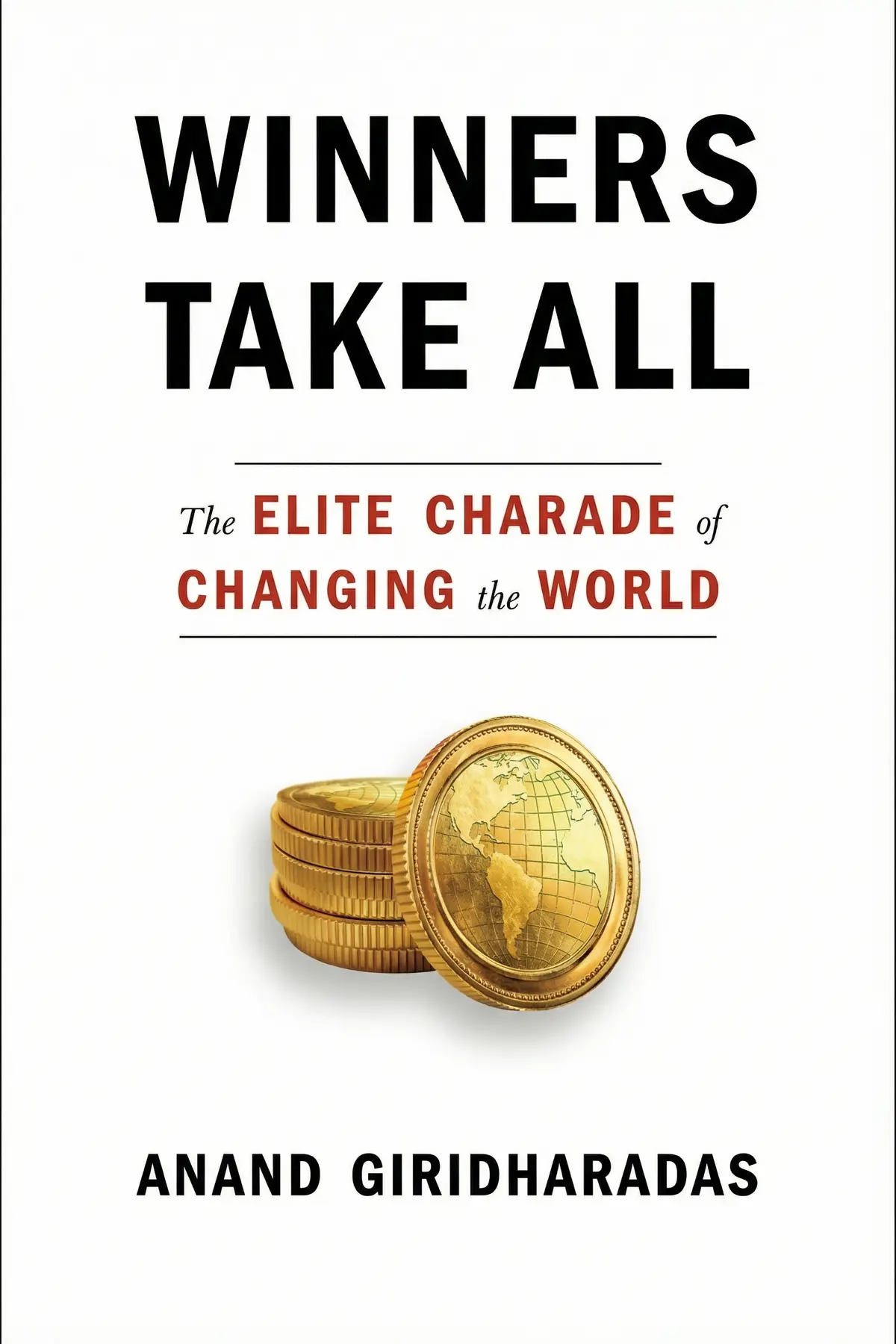
Giridharadas shows how wealthy elites use win-win ventures, upbeat thought leaders, business methods and philanthropy to look like agents of change while protecting the system that keeps them on top.
1 min 01 sec
If all the talk about making the world better seems to leave the richest people even further ahead, Anand Giridharadas says you are reading it right. In Winners Take All, the journalist and former New York Times columnist begins with a stark fact: ninety percent of the planet’s wealth belongs to just the richest 10 percent, and the biggest fortunes grow twice as fast as everyone else’s earnings. Yet those same winners fund ethical investing, host panels on global justice and speak constantly about giving back.
His argument is that this is no contradiction. The powerful have made themselves the leaders of change so they can choose only the changes that cost them nothing. Each of their tools, from the win-win pitch to the charity gala, protects the system that made them rich. Once you can see those tools at work, a startup pitch, a keynote or a museum wing can be judged by one sharper question: who gives something up?
1 min 52 sec
A thoughtful philosophy graduate wanted to fight inequality, and the path she picked felt like the obvious way to help. Giridharadas argues that the choice itself reveals whose rules now decide what counts as doing good.
1 min 56 sec
Everyone loves a deal where all sides come out ahead. Applied to a whole society, though, the same cheerful rule can hide an old injustice, and a Silicon Valley inventor’s good intentions show exactly how.
1 min 56 sec
Founders love to tell us what tomorrow will bring, as calmly as a weather report. A ride-hailing company’s day in court shows what such forecasts can be hiding, and why a judge refused to believe them.
1 min 53 sec
One of the most watched talks ever offered women a quick way to feel stronger at work. Giridharadas explains why that kind of cheerful fix is so welcome in boardrooms, and what it leaves untouched.
1 min 52 sec
A famous consulting puzzle about ping-pong balls trains a way of thinking that now runs companies and charities alike. Coffee shop workers learned what that thinking can do to an ordinary week.
1 min 56 sec
Museums from New York to Paris proudly display one family’s name on their walls. Trace that generosity back far enough and you reach a small pill, a public health crisis and a court ruling.
2 min 00 sec
In 2016, a room full of the world’s most socially minded leaders kept asking the same puzzled question about ordinary people. Giridharadas explains the new divide behind their confusion, and why it will not close by itself.
1 min 12 sec
Winners Take All describes a world where the people who gained most from the system have also appointed themselves to fix it. Giridharadas does not doubt that many of them mean well. His charge is that their good intentions pass through a filter. Win-win deals, humble forecasts, power poses, optimized schedules and named museum wings all let them look generous while keeping what they hold, and they convince others, and often themselves, that life is improving for everyone.
What the book leaves you with is one portable question. Before applauding a social venture, a keynote or a donation, ask who has to give anything up; if the answer is nobody, expect little to change. When a forecast calls some shift inevitable, look for who profits if it arrives. When an efficiency gain is announced, ask who absorbs the new uncertainty, as Starbucks workers did with their shifting hours. And when a famous name hangs above a doorway, remember the pill behind the Sackler Wing.
Real change, in this account, always has a price, and someone powerful has to pay it.
Productivity has soared across much of the West, yet the gains have gone mostly to the top. The richest 10 percent now own 90 percent of the planet's wealth. At the same time, the winners have never talked more about making the world better, with ethical investing, panels on global justice and generous giving back. Anand Giridharadas argues that these two facts belong together. The rich and powerful have made themselves the leaders of social change so they can pick the kinds of change that never cost them anything. He follows the pattern through a young graduate who joins a consultancy to fight inequality, a win-win software startup, Uber's courtroom claim to be powerless, a famous TED talk about power poses, Starbucks' optimized schedules and the Sackler family's museum wings. Readers get a clear way to judge any promise of progress, whether a startup pitch, a keynote or a charitable gift. Giridharadas also offers a reading of the populist anger that shook elite gatherings in 2016, and one blunt question that cuts through the language of change: who, exactly, is giving something up?
Graduates and career switchers who want to do good and wonder whether business is the way.
Professionals tired of win-win pitches, keynotes and corporate purpose statements that change little.
Readers trying to understand the populist anger aimed at global elites.
Anand Giridharadas is an American journalist and political commentator born in Cleveland, Ohio. For more than a decade he reported from abroad and wrote a column for The New York Times, and his work has appeared in The New Yorker, The Atlantic and Time. He has taught narrative journalism at New York University. His other books include India Calling, The True American, The Persuaders and Man in the Mirror, and he has received the Porchlight Business Book of the Year award.
Listeners find the book compelling and skillfully written, commending its thorough investigation and stimulating material. Furthermore, they value its revelatory perspectives, with one listener mentioning that it provided a fresh way to perceive philanthropy. The book also earns praise for its narrative style, as one review points out how personal anecdotes are utilized to enhance the appeal of its arguments. Conversely, listeners have varied opinions regarding the book's pacing.
Wow. This is easily the most eye-opening book I’ve encountered this year. Giridharadas expertly deconstructs the "MarketWorld" mentality, revealing how the global elite use philanthropy as a shield to maintain their status while pretending to solve the world's problems. The narrative is incredibly engaging, moving quickly between high-stakes conferences and deep philosophical questions. I was particularly struck by the detailed analysis of how we've traded genuine democratic progress for the whims of billionaire donors. It’s a thought-provoking read that will change how you view every "charitable" foundation you see in the news. The writing is sharp and the message is urgent.
Show moreThe chapter on Sean Hinton and the "arsonist" metaphor alone is worth the price of admission. It perfectly captures the cognitive dissonance of people who work for predatory corporations by day and try to "save the world" by night. I loved how the author didn't hold back on figures like Bill Clinton or the TED-talk circuit. The storytelling is masterful, weaving together complex economic theories with real-world examples of how systemic change is being sidelined for "win-win" solutions that don't actually cost the winners anything. It’s a blistering, brilliant, and deeply necessary piece of social commentary.
Show morePicked this up last weekend and couldn't put it down. The way Giridharadas tells the story of Darren Walker trying to navigate the elite world while pushing for justice was genuinely moving. It’s rare to find a book that is this intellectually rigorous while still being a total page-turner. The author really captures the "insider-out" perspective, probably because he was part of that world himself. It’s a blistering, thought-provoking critique of how we’ve let the winners of the current system decide how to fix it. This is absolutely essential reading for anyone trying to understand the 21st-century economy.
Show moreLook, we need more books like this. It’s a brave, scathing indictment of a system that allows the ultra-rich to pose as saviors while they profit from the very systems causing inequality. The prose is engaging and the analysis is incredibly detailed. I was especially fascinated by the discussion on how we need to reclaim "world-changing" through the messy, slow process of politics rather than through the "efficient" but undemocratic methods of billionaires. It’s a thought-provoking, uncomfortable, and ultimately necessary read for anyone who cares about the future of democracy and the fight against rising inequality.
Show moreAfter hearing so much buzz about this title, I finally dove in. The writing style is top-notch—journalistic, sharp, and punchy. Giridharadas uses personal stories to humanize what could have been a very dry academic subject, making the hypocrisy of "doing well by doing good" feel visceral. However, I have to agree with some other readers that the pacing is a bit uneven; certain sections felt like a slogging read compared to the electric opening. Still, the core message about how "arsonists make the best firefighters" is an essential takeaway for anyone interested in social justice and the reality of modern wealth.
Show moreEver wonder why inequality keeps rising even as billion-dollar foundations multiply? This book provides a chilling answer. Giridharadas exposes the "charade" of modern philanthropy with surgical precision. I found his description of how elites co-opt the language of social change—using terms like "empowerment" to avoid talking about power—to be incredibly insightful. The book is well-written and engaging, though it’s definitely a depressing look at the state of our democracy. It forces you to question the motives behind every "impact investment" you hear about in the media. Truly a thought-provoking piece.
Show moreTo be fair, Giridharadas is a bit of an "insider" himself, which gives him a unique vantage point even if he waits until the end to fully acknowledge it. His deep-dive into the "MarketWorld" culture—where everyone wants to change the world but no one wants to change themselves—is both brilliant and infuriating. The writing is incredibly persuasive and detailed. My only minor gripe is that he occasionally conflates different types of elites, but the overall analysis of how we've privatized social change is spot on. It really helped me understand philanthropy in a totally new, more skeptical light.
Show moreFinally got around to reading this, and it’s a necessary bucket of cold water for anyone who thinks "social entrepreneurship" is going to save us. The critique of "win-win" solutions is particularly strong; Giridharadas shows how these approaches specifically avoid any change that would actually sacrifice the wealth or power of the elite. The storytelling is great, and the chapters on Amy Cuddy and the "thought leader" circuit were eye-opening. It loses a star for being a bit repetitive toward the end, but the core argument about our hollowed-out democratic institutions is undeniable and very well-written.
Show moreAs someone who works in the nonprofit world, I found the core message here to be absolutely vital, but the pacing was a bit of a slog in the middle. The truth is, the book spends a lot of time repeating the same points about "win-win" solutions and the Aspen Institute. While the storytelling is well-written, it feels like it could have been sixty pages shorter without losing any impact. I appreciated the eye-opening insights into how the ultra-rich maintain the status quo, yet I left feeling more hopeless than empowered. It’s an essential critique, but be prepared for some repetitive stretches.
Show moreNot what I expected at all. While the central thesis regarding "MarketWorld" is somewhat intriguing, the author's execution is deeply flawed. He spends way too much time slogging through personal anecdotes about his friends at the Aspen Institute, yet he waits until the acknowledgments to admit he’s an insider himself. To me, his criticism of Bill Clinton felt disproportionate compared to the silence on far-right actors. I also found his use of terms like "globalists" to be a weirdly jarring choice. Frankly, if you aren't already part of this elite "club," the book feels like an exhausting, repetitive read that offers very few practical solutions.
Show moreAnand Giridharadas argues that wealthy elites have made themselves the leaders of social change so they can choose only the reforms that cost them nothing. Through win-win ventures, inevitable-sounding forecasts, upbeat thought leaders, business methods and philanthropy, they appear to improve the world while protecting the system that made them rich. Real change, he says, would require the powerful to give up some of their power.
He contrasts them with public intellectuals, who asked hard questions about how society works. Thought leaders are optimistic believers who skip root causes and offer simple fixes that disturb nothing. His example is Amy Cuddy’s TED talk, the second-most popular ever, which offered women a Wonder Woman power pose to feel confident. In his reading, women feel powerful while men give up nothing.
Win-win works between two negotiators, but applied to society it turns into the claim that what helps the winners helps everyone. Giridharadas points to Economic Policy Institute figures: from 1973 to 2014, American workers became 70 percent more productive while the median wage rose less than 10 percent. More efficiency was never the missing piece; sharing its gains was.
The Sacklers are Giridharadas’s example of philanthropy covering the source of wealth. Their company Purdue made a $14 billion fortune from OxyContin, an addictive painkiller tied to the US opioid epidemic. Purdue resisted regulation and later paid a $635 million fine for fraudulent tactics, yet the family’s name remains on museum wings around the world.
Use the book’s central test: when someone promises to change the world, ask who has to give something up. Treat confident predictions as possible plans by people who gain from them. When an efficiency drive is announced, ask who absorbs the uncertainty, as Starbucks workers did with last-minute shifts. And when a donor’s name appears on a building, ask how that fortune was made.
Barack Obama

Masaji Ishikawa

John Rawls



Miles Taylor



Fay Bound Alberti

AUDIO SUMMARY AVAILABLE
Get the key ideas from Winners Take All by Anand Giridharadas, plus 5,000+ more nonfiction titles.









