

A River in Darkness: One Man’s Escape from North Korea
Masaji Ishikawa
 English
Evan Osnos follows three very different American places, one rich, one emptied out and one segregated, to show how two decades of inequality, broken trust and fear set the stage for the January 6 attack.
1 min 06 sec
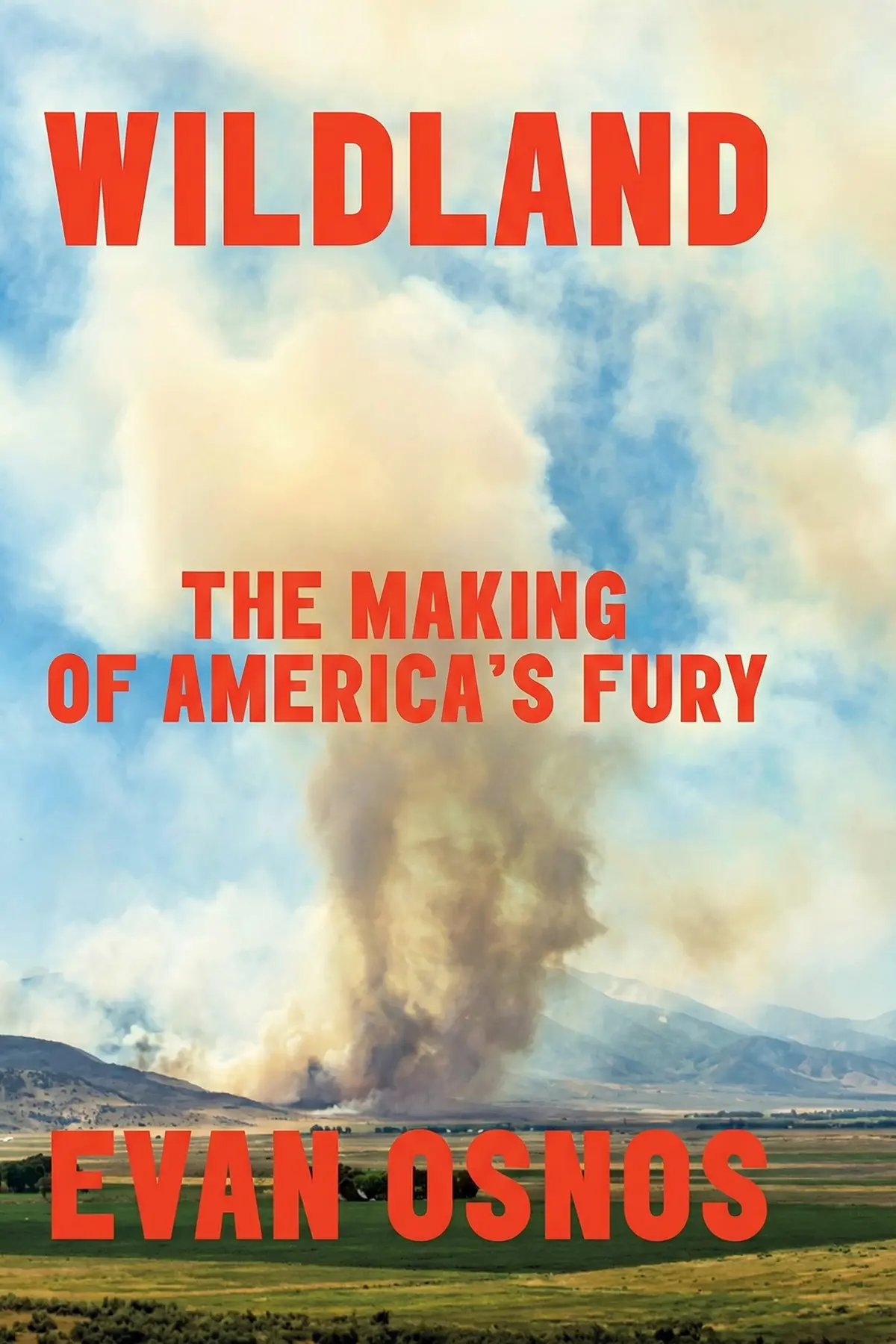
If American anger looks to you like rage without a cause, Wildland shows you the fuel underneath it. Evan Osnos, a staff writer at The New Yorker, opens with a California farmer in 2018 who hammered a stake into a wasp nest, struck a spark and set his fields burning. Within half an hour, 20 acres were alight.
Firefighters call country that dry wildland. Osnos argues the United States became one between September 11, 2001, and January 6, 2021. Inequality, failing institutions, vanishing local news and old racism dried everything out, and a politics of fear and lies struck the spark.
He tells it through three places: wealthy Greenwich in Connecticut, struggling Clarksburg in West Virginia and the South Side of Chicago. Follow them and the attack on the Capitol stops looking like sudden madness. It becomes the end of a long drying season, with lessons about trust, news and fear that apply to any democracy.
1 min 40 sec
A small Connecticut town once chose courage and thrift as its motto. A century later, a handful of its residents could move an entire state’s budget, and the change in what they valued mattered as much as the money.
1 min 50 sec
A Republican senator from Greenwich once stood up to Joseph McCarthy and backed civil rights. His neighbor on the town council had very different plans, and a booing convention hall hinted at which vision would win.
1 min 58 sec
A proud mountain city once hosted Lyndon Johnson and three Kennedys. Then the mountaintops came off, the young left, retirees lost their health insurance, and something less visible disappeared that held neighbors together.
1 min 45 sec
A boy rode a bus to a good school until the route simply stopped. What followed shows how housing rules written a century ago can still decide where a young man’s life ends up.
1 min 59 sec
Three years into the Iraq War, fewer than one in four Americans who had attended college could find Iraq, Iran, Syria and Afghanistan on a map. Yet they felt surrounded by enemies, and a few politicians discovered that the feeling was worth more than any statistic.
1 min 56 sec
Less than a week after Trump’s inauguration, scientists moved a famous clock closer to midnight. The empty offices and broken trust that followed looked abstract, until a virus arrived and the bill came due.
1 min 57 sec
A summer of protest, record gun sales and an election that was not close all led to one winter morning in Washington. For a few hours afterward, it seemed the fever might break.
1 min 14 sec
Wildland leaves you with the farmer’s hammer. The blow was small and ordinary; the danger lay in how dry everything around it had become. Osnos makes the same case about January 6. A financial elite drifted away in money and in values. A party traded its moderates for a war on government. Clarksburg lost jobs, health care and its newspapers, and Chicago’s South Side carried a century of segregation into the present. Into that tinder came a leader who sold fear over fact and treated truth as an enemy.
The warning reaches beyond one country. In Osnos’s account, democracy weakens when people stop trusting institutions that failed them and stop sharing the same facts. That points to habits anyone can keep. Pay for the local reporting that tells you what your own leaders do. When a speech makes you afraid, look for the figure behind the fear, the way Osnos sets immigrant crime rates against the rhetoric. And judge a system by whom it protects, the retired miner or the mayor sitting on a video.
Biden said it plainly at his inauguration: democracy is precious, and it is fragile. Protecting it means keeping the ground from drying out.
The storming of the US Capitol on January 6, 2021, looked to many people like a sudden collapse. Evan Osnos argues it was nothing of the kind. In his view, the twenty years after September 11, 2001, turned American politics into a wildland, the firefighters' word for country so dry that one spark can set it burning. Osnos tells this story through three places. In Greenwich, Connecticut, hedge fund wealth pulled the very rich away from everyone else, in money and in values, while the local Republican tradition of moderation faded. Clarksburg, West Virginia, lost its mountains to mining, its young people to other states, its retirees' health insurance and its local newspapers. On the South Side of Chicago, a century of housing segregation still decides which schools children attend and where many end up. Into that dry ground came politics built on fear rather than fact, a presidency that hollowed out government and attacked the press, a pandemic and a summer of protest. Readers come away with a clear account of how a democracy wears down, and what that slow process looks like from the inside.
Readers around the world puzzled by American politics who want the causes, not just the headlines.
Students of politics, media or economics looking for one story that links inequality, local news and populism.
Professionals worried about trust and division in their own country who want to see how it unfolds.
Evan Osnos has been a staff writer at The New Yorker since 2008, covering politics and foreign affairs and, since 2016, the world's wealthiest people. Before that he worked for the Chicago Tribune, serving as its Beijing bureau chief and reporting from China and the Middle East. His first book, Age of Ambition, won the 2014 National Book Award for nonfiction, and in 2020 he published a biography of Joe Biden. Wildland became a New York Times bestseller.
Listeners find the work perceptive and excellently composed, with one listener remarking on its sharp New Yorker-style prose. They also value the storytelling technique, as one listener notes the way individual experiences are integrated into the main narrative. Additionally, the content earns praise for being deeply thought-provoking. Nevertheless, reactions to the tempo are varied, with one listener characterizing the account as scary and depressing.
Finally got around to reading Osnos, and I was struck by how he weaves personal histories into the broader decay of American institutions. He doesn't just throw stats at you; instead, he takes you into the living rooms of West Virginia and the manicured lawns of Greenwich. It's a sobering look at how the twenty years between 9/11 and the Capitol riot transformed us into a "cloven nation." The prose is crisp, almost like a high-end documentary in print form. I found the section on the decline of local news particularly insightful because it explains why everyone is so focused on national outrage now. It’s a heavy read, certainly, but it feels necessary for anyone trying to understand the current fracture. This isn't just a political book—it's a story about what happens when we lose the vision for the common good.
Show moreThe contrast between the hedge fund towers of Greenwich and the struggling coal towns of West Virginia is what makes this book stick in your mind. Osnos has this way of humanizing the macro-economic shifts that usually feel too abstract to care about. Truth is, I hadn't really considered how the demise of the local newspaper contributed so directly to our national polarization until I read his take on it. He tracks the shift from the trust of the 1960s to the deep-seated suspicion of today with surgical precision. It’s an ambitious project that succeeds because it keeps the human element front and center throughout the narrative. Truly insightful stuff. It's scary to realize how much the idea of "public service" has been replaced by the pursuit of private profit over the last fifty years.
Show moreThe storytelling here is masterfully executed, especially when Osnos delves into his own family history to explore broader themes of justice and inequality. He asks the right questions about why we’ve lost the capacity to see the union as larger than ourselves. I was particularly fascinated by the interviews with the insurrectionists; the detail about it being their first time at the Capitol was a real "aha" moment for me. The book manages to be both a macro-level analysis and a collection of intimate portraits. It’s smart, historically informed, and written with a level of clarity that you rarely see in political non-fiction these days. Even when the content is upsetting, the New Yorker style writing keeps you turning pages. It's an excellent piece of reporting that goes beyond the headlines to find the pulse of a divided nation.
Show morePicked this up on a whim and couldn't put it down, even though it made me want to hide under the covers. The "wildland" metaphor for our current political landscape is spot on. Osnos highlights the "all-about-winning" mentality of leaders like Mitch McConnell and pairs it with the genuine suffering of people in the heartland. It’s a devastating examination of how we’ve traded community for a hollowed-out version of liberty. The way he weaves together the stories of three very different American places creates a panoramic view of a nation at war with itself. From the opioid epidemic to the super PACs, everything is connected in a way that feels both enlightening and terrifying. It’s easily one of the most thought-provoking and well-written books I’ve read all year. Essential reading for anyone who feels disaffected by the current state of the union.
Show moreEvan Osnos paints a picture of America that is, frankly, pretty terrifying. By focusing on three distinct locales—Chicago, Greenwich, and Clarksburg—he shows how the same rot manifests in different ways across the economic spectrum. The storytelling approach makes the data points about inequality and the opioid epidemic feel much more visceral than a standard political science text. To be fair, the book can feel a bit depressing at times as it charts the rise of "radical self-reliance" at the expense of our shared future. My only gripe is that it lingers a bit too long on the "how" without offering much of a "what now?" regardless, the writing is top-tier and incredibly thought-provoking. If you want to understand the shift from 77% trust in government to the current 18%, start here.
Show moreThis reads exactly like a long-form New Yorker piece stretched into a compelling, if harrowing, book. I appreciated the specific focus on the period between the twin towers falling and the Jan 6th insurrection; it frames our current chaos as a slow-motion car crash rather than a sudden accident. The stories about the Chicago neighborhoods were particularly moving and offered a gritty counterpoint to the "ill-gotten gains" of the private equity crowd. While the pacing is a bit uneven—some chapters fly by while others feel like a bit of a slog—the crispness of the prose keeps you engaged. It’s a chilling read that avoids being just another "Trump book" by looking at the deep-seated structural decay that paved the way for his rise. Definitely a thought-provoking addition to my shelf.
Show moreAfter hearing so much about "Wildland," I was prepared for it to be bleak, and it definitely delivered on that front. The way Osnos connects the dots between deregulation, racism, and the "deconstruction of the administrative state" is genuinely scary. He captures that sense of "radical self-reliance" that has replaced the idea of the common good in our society. It’s a lot to digest. The book is filled with fascinating stories about people who feel forgotten or emboldened, often at the same time. While it doesn't offer much guidance for a way out of the mess, it does a pretty good job of demonstrating that everyone in the country is a combination of angry and frightened. It is a depressing picture, but one that is masterfully painted with crisp, insightful reporting.
Show moreEver wonder why everything feels so broken lately? Osnos attempts to answer that, but I’m not sure he lands on anything particularly groundbreaking. The reporting is definitely excellent—he’s a New Yorker writer, after all—but if you’ve been paying attention to the news for the last decade, much of this will feel like a retread of familiar grievances. The focus on Mitch McConnell’s "winning at all costs" and the greed of private equity in Connecticut is enlightening, yet it feels like it’s missing a truly balanced perspective on what’s driving the fury on both sides. It’s a smart book, but it occasionally feels like it’s preaching to the choir in a very polished way. I found his previous work on China more stimulating than this recounting of the gloom and doom we live through every day.
Show moreLook, I’m not saying this isn’t a good book, but the pacing can be quite challenging if you’re not in the mood for a deep, depressing dive. There is some great material here, specifically regarding how the super-rich in Greenwich have managed to insulate themselves from the consequences of their own policies. However, the book often feels like it's retreading ground that has been covered extensively by other journalists since 2016. It’s a high-quality production, and the storytelling approach is appreciated, but I didn't find many "new" conclusions to chew on. It’s more of a very well-documented summary of our collective decline than a revolutionary thesis. Personally, I found it to be an ongoing read that took me a long time to digest because the tone is so consistently heavy.
Show moreI wanted to like this more, but it ended up feeling like a very long, very articulate lecture that I've already heard. Osnos is a fantastic writer, but his conclusions seem to ignore anything that doesn't fit a specific progressive narrative about American decay. He laments the loss of the 20th-century "good old days," but his data on the collapse of trust in government feels more like a necessary awakening to me than a disaster. If you’re looking for a balanced view of what’s driving the current fury in the US, you won’t find it here. It’s well-researched but ultimately feels like an echo chamber for people who already agree with the author’s worldview. It’s unstimulating if you’ve lived through these events and were hoping for a fresh perspective rather than a depressing recap.
Show moreWildland traces how American politics changed between September 11, 2001, and January 6, 2021. Osnos borrows the firefighters’ term for land so dry that one spark can burn it, and argues that inequality, failing institutions, collapsing local news and racism made the country that dry. He follows three places, Greenwich in Connecticut, Clarksburg in West Virginia and Chicago’s South Side, to show how those forces built up.
Each shows a different part of the story. Greenwich reveals how hedge fund wealth pulled the very rich away from everyone else and how the moderate Republican tradition of Prescott Bush faded. Clarksburg shows mining damage, a shrinking population, lost health insurance and vanishing local news. Chicago shows how housing segregation dating to the Great Migration still shapes schools, prison rates and trust in police.
Osnos argues that after September 11, Americans felt surrounded by enemies, and politicians turned that feeling against immigrants. He notes that first-generation immigrants commit less crime than people born in the United States, yet Tom Tancredo and later Donald Trump stirred fear anyway. He also traces modern gun culture to a 1970s National Rifle Association marketing shift that recast guns as self-defense.
The January 6 attack was not a sudden accident. In Osnos’s account, it came at the end of twenty years in which wealth concentrated, institutions failed ordinary people, local newspapers closed and a politics of fear spread. Once Trump weakened government and attacked the press, the costs became clear in the pandemic and the protests of 2020, and finally at the Capitol.
The book suggests watching for the conditions that dry a society out. Support local reporting, since Osnos links its decline to isolation and to fewer people knowing who governs them. When a message makes you afraid, check the figures behind it, as he does with immigrant crime and violence rates. And judge institutions by whom they protect, from retired miners to families waiting for the truth about a police shooting.
Masaji Ishikawa

John Rawls



Miles Taylor


Fay Bound Alberti


Daniel Goleman
AUDIO SUMMARY AVAILABLE
Get the key ideas from Wildland by Evan Osnos, plus 5,000+ more nonfiction titles.









