All About Love: New Visions
bell hooks
 English
 ไทย
Explains how abusive and controlling men think, why their charm and blame confuse their partners, which early signs to watch for, and how to leave safely instead of waiting for a promised change.
54 sec
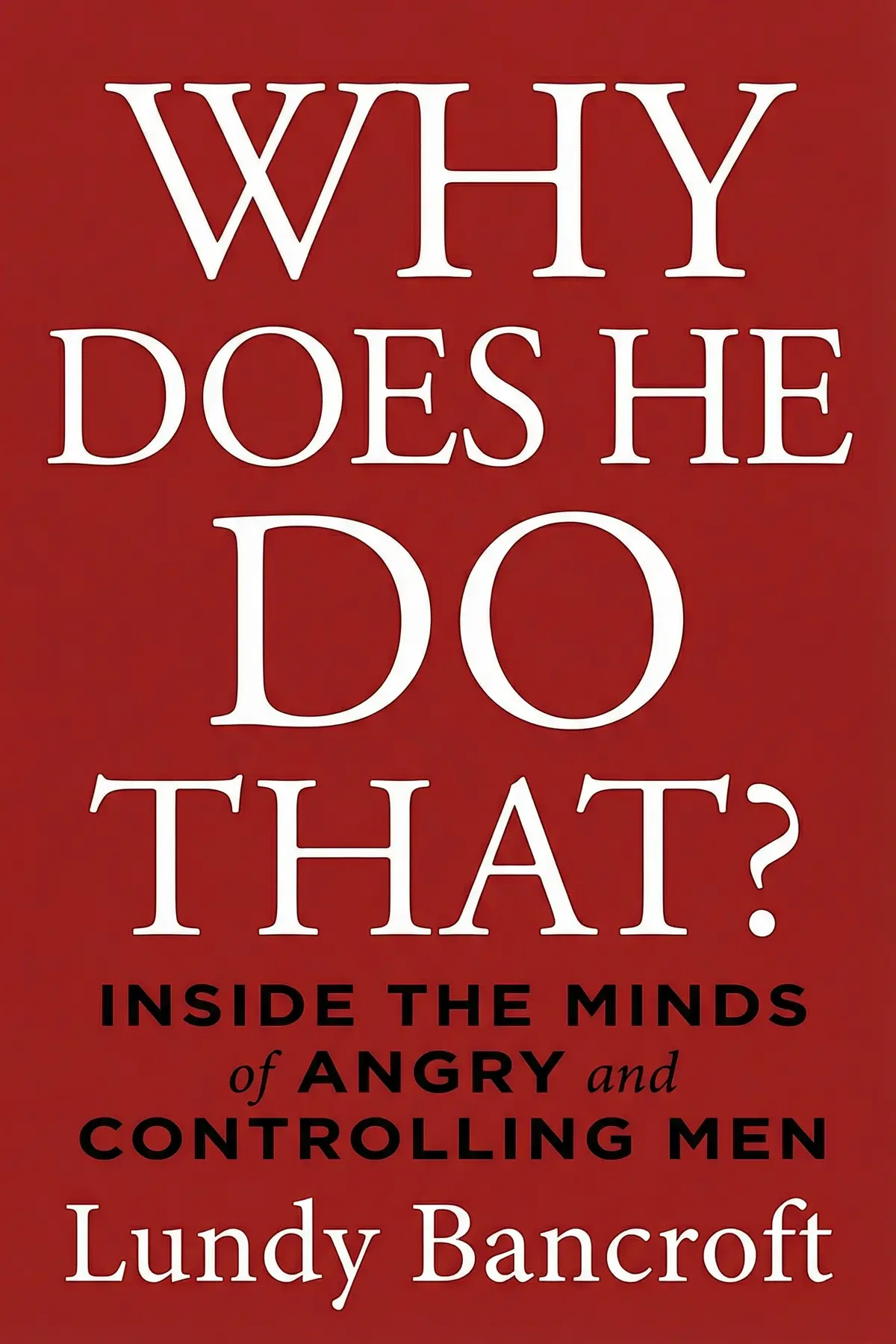
If someone you love keeps leaving you unsure whether you are the problem, start with this: abuse is not a man losing his temper. In Why Does He Do That?, Lundy Bancroft, who counseled abusive men for more than ten years, argues that controlling men act on beliefs about what they are owed. Many are charming and fun in public, which is exactly why their partners struggle to name what is happening.
His case is that abuse grows from a learned sense of entitlement and control, so safety comes from reading the pattern early, planning a careful exit and no longer waiting for him to change. Through his clients’ stories, from a husband who shredded his wife’s college paper to a man who nearly killed his partner and then seemed reformed, Bancroft gives readers the means to spot warning signs, weigh a promise of change and help themselves or a friend get out safely.
1 min 48 sec
A partner who never raises a hand can still do lasting harm, and many survivors say the damage that hurt most left no mark at all. A wider definition changes what counts as a warning.
1 min 36 sec
One client walked into group therapy proud of the cruelest thing he had done all week. His openness exposed the belief that sits underneath controlling behavior, and it is not the one most people expect.
1 min 30 sec
It is tempting to explain a cruel partner through a painful childhood or a hidden disorder. Bancroft points somewhere else entirely, to lessons a boy absorbs at the dinner table and through his headphones.
1 min 34 sec
A shy, wounded man can seem to need nothing more than patience and reassurance. Then one party changes everything. The pattern behind his sudden swings is designed to be hard to see from inside.
1 min 32 sec
There is no reliable way to identify an abuser on a first date. Yet some small habits, including a kind of generosity that looks admirable, tend to show up early and say more than they seem to.
1 min 30 sec
Telling yourself you will act if things get worse feels sensible and kind. Bancroft has seen where that reasoning leads, and he names the specific behaviors that tend to come right before a first assault.
1 min 22 sec
The most dangerous moment can be the one where a woman finally speaks up. A few quiet preparations, made in advance and shared with the right people, change what happens next.
1 min 28 sec
Bancroft once watched a man who had nearly killed his partner become the most honest voice in his group. What happened weeks later shows exactly how to judge a promise of change.
1 min 21 sec
The title asks a question that partners of controlling men spend years trying to answer by searching his past, his stress or their own faults. Bancroft’s reply is that the reason lives in his beliefs: he thinks he is owed control, he learned that early, and charm and blame keep it hidden. By his definition, abuse covers any behavior that frightens, manipulates, humiliates or demeans someone else, and a man may need his whole life to unlearn it, assuming he decides to try in the first place.
That moves the work from fixing him to protecting yourself. Take contempt for exes, a rushed romance and unwanted favors seriously from the start. Treat rising threats and punched doors as signs that violence may be close, and have a plan ready before you announce anything. Give little weight to a few good months, and look instead for full responsibility and respect for your independence.
Nobody has to carry this alone. Bancroft urges anyone in an abusive relationship, or close to someone who is, to talk with friends and family and find local help. Glenn tore up a paper to teach his wife a lesson. The lesson worth keeping is that his behavior was never hers to fix.
Many women in harmful relationships spend years asking what they did wrong. Their partner may be charming in public, loving one hour and cruel the next, and he may never have hit anyone. That makes the problem hard to name and easy to blame on themselves. Lundy Bancroft spent more than ten years counseling abusive men, and he argues that their behavior has nothing to do with lost tempers or old wounds. It comes from a learned belief that they are owed control over a partner, picked up from fathers, peers and culture, and kept hidden by charm, mood swings and blame. Through the stories of his clients, from a husband who shredded his wife's college paper to a man who nearly killed his partner, Bancroft shows how that mindset works. The book then turns practical. It names the early warning signs that show up while dating, the signals that verbal abuse is moving toward violence, and the steps of a safety plan for living with an abuser and for leaving him. It also gives a clear test for judging whether a man who says he has changed really has.
Women who feel controlled, belittled or afraid in a relationship and keep wondering if they are to blame.
Friends and relatives worried about someone they love and unsure how to help her stay safe.
Counselors and other professionals who support people leaving abusive partners.
Lundy Bancroft counseled abusive men for more than ten years and has also worked as a custody evaluator and a child abuse investigator. He later turned to teaching what he had learned to women who have been abused and to the family, friends and professionals who support them. He has written five books, including The Batterer as Parent, which won an award from the North American Resource Center for Child Welfare, and The Joyous Recovery. He also created the Peak Living Network, a free support system for emotional healing.
Listeners consider this book essential reading, noting that it clarifies many concerns and offers actionable guidance. The material is often described as transformative for its ability to illuminate cycles of mistreatment, with one listener even calling it the Bible for domestic violence/emotional abuse. Beyond that, listeners value the deep dive into the psychology of abusers and the clarity gained regarding toxic behaviors, which ultimately provides comfort and a path toward personal tranquility.
Every woman needs to have this on her shelf, especially if she’s ever questioned her own reality in a relationship. Bancroft acts as a fly on the wall, describing scenes so familiar they’ll make your hair stand up. He completely shatters the myth that abuse comes from a simple loss of control. Instead, he reframes it as a conscious choice rooted in entitlement and a skewed value system. It’s a firm, non-judgmental guide that empowers the reader to stop making excuses for their partner’s bad childhood or supposed anger issues. Truly, this is life-altering work that provides a roadmap to inner peace and clarity.
Show moreFinally got around to reading this after hearing it called the 'Bible' of domestic violence, and it absolutely lives up to the hype. The way it dismantles the idea that mental illness or alcohol causes abuse is revelatory. Bancroft explains that these men aren't out of touch with their own feelings; they are actually out of touch with their partner's feelings. It gave me a sense of clarity I haven’t had in years. The prose is clear, and the case studies are heartbreakingly relatable. If you’ve ever felt like you’re walking on eggshells, please pick this up. It will save you years of confusion.
Show moreIs it possible for a book to make you feel both horrified and completely seen at the exact same time? Bancroft manages it. He explains why your partner can be perfectly charming to the neighbors but a monster behind closed doors—it’s because he can control it. This book provides a lifeline for victims who have been told by therapists to 'work on the relationship' when the problem is actually the partner’s entitlement. I loved the section on how the court system and community often side with the abuser. It’s a heavy read, but it’s essential for reclaiming your autonomy and finding peace.
Show moreFrankly, it’s a bit chilling how accurately Bancroft describes behaviors I thought were unique to my situation. I spent years trying to help my ex 'heal' his trauma, only to realize he was using that trauma as a weapon to keep me in line. This book answers the 'why' in the title with brutal honesty: because it works for him. It’s not about anger; it’s about a lack of empathy and a desire for control. Reading this felt like a drawing back of the curtain. I wish I had read it ten years ago before I wasted so much energy on a man who never intended to change.
Show moreAs someone who has worked in social services for years, I still found myself learning so much from this text. Bancroft avoids the clinical jargon that usually makes these books feel cold. Instead, he uses case examples that show exactly how manipulation works in real-time. He highlights how society normalizes violence through pornography and entertainment, which was a very salient point. The way he advocates for community support over just calling the authorities is a nuanced take I didn’t expect. It’s a compassionate, powerful resource that I will be recommending to every client I work with from now on.
Show moreThis book acted like a giant mirror for my past relationship, and the reflection was pretty ugly but necessary. Bancroft is firm about the fact that abusers almost never change, which is a hard pill to swallow but ultimately life-saving. He shows how the 'gentle, sensitive' man can be just as damaging as the loud, angry one. The taste of freedom and equality is sweet, just like the ending of the book says. It’s not just a book; it’s an intervention. If you are struggling to understand your partner's behavior, do yourself a favor and buy this today.
Show moreLook, I went into this expecting a dry clinical study, but it ended up being a deeply emotional experience. Bancroft is a counselor for abusers, so he knows all their tricks, especially the 'sensitive man' act that hides a controlling nature. The truth is, I struggled with how he views gender roles sometimes, as it feels a bit binary and occasionally paints men as purely opportunistic schemers. However, the practical advice on identifying red flags is unmatched. He holds society accountable for how it enables this behavior through movies and pop culture. It’s a necessary, though sometimes uncomfortable, read for anyone trying to understand toxic cycles.
Show moreThe chapter on myths about abusers completely dismantled my previous understanding of why some men lash out. I always thought it was about low self-esteem, but Bancroft argues it’s actually about power and the belief that a partner is property. I do think the book is a bit dated in its approach to the patriarchy without explicitly naming it enough. Also, the discussion on race and class could have been expanded to show how those factors complicate a survivor's exit. Despite those minor gripes, the empathy Bancroft shows for the survivors is moving. He doesn’t blame the victim for staying; he blames the system for failing them.
Show moreWhile I found the insights into the 'Mr. Sensitive' archetype incredibly accurate, the lack of citations for certain statistics bothered me. Bancroft makes some very bold claims about gender, specifically asserting that women in heterosexual relationships are never the primary abusers. This feels like an oversimplification that ignores the complexity of modern psychology and human behavior. I also found it a bit demoralizing that he offers so few examples of what a healthy, nonabusive man looks like during a crisis. Still, the core message about abuse being a value system is a perspective worth considering. It’s an important book, but it shouldn’t be the only one you read.
Show moreTo be fair, the author’s stance that women are essentially never the primary aggressors feels a bit dated and lacks statistical backing. I felt like the book occasionally drifted into a 'men are villains, women are victims' binary that doesn't account for the messiness of human behavior across the spectrum. However, I can't deny that his breakdown of abusive tactics—like gaslighting and isolation—is incredibly sharp. It’s a great guide for identifying control, but you have to take some of his broader generalizations with a grain of salt. It helped me realize my own relationship was toxic, even if I didn't agree with every single conclusion Bancroft drew.
Show moreLundy Bancroft argues that abuse comes from a man’s belief that he is entitled to control his partner, not from a lost temper or emotional wounds. That belief is learned early from fathers, peers and media. Abusers hide it behind charm, sudden mood swings and blame, which is why partners often think the problem is them. The answer is to spot the pattern, plan safely and stop waiting for him to change.
Bancroft points to a man who speaks of his exes with contempt or casts himself as their victim, especially one who claims a former partner falsely accused him of abuse. He also flags a man who gets serious too fast and plans your future before knowing you, and one who pushes unwanted favors or showy generosity that builds a sense of indebtedness, as his client Alan did with his girlfriend’s family.
In Bancroft’s experience, the most common forerunner of physical violence is a rise in verbal abuse, especially threats about what will happen if he gets angry. A second sign is physical intimidation: coming very close to your face, poking, pushing or restraining you, throwing objects or punching doors. Even when it seems accidental, he reads intimidation as evidence that emotional abuse has already begun.
Bancroft recommends a safety plan in two stages. While living with him, set up code words with friends, family or children, plan escape routes and a place to stay, and hide spare keys and important documents. After leaving, change the locks, give neighbors his photo and car description, inform police and your children’s school. Do not tell him it is over until you are somewhere safe.
Bancroft says most do not make deep or lasting change, even in good programs, because they cling to excuses and avoid facing the harm they caused. Real change means admitting the abuse, accepting it was wrong, building respectful habits and committing for life without conditions. His client Van looked reformed for weeks, then cornered his former partner in a restaurant. The desire to change must come from the man himself.
AUDIO SUMMARY AVAILABLE
Get the key ideas from Why Does He Do That? by Lundy Bancroft, plus 5,000+ more nonfiction titles.