

A History of the World in 6 Glasses
Tom Standage
 English
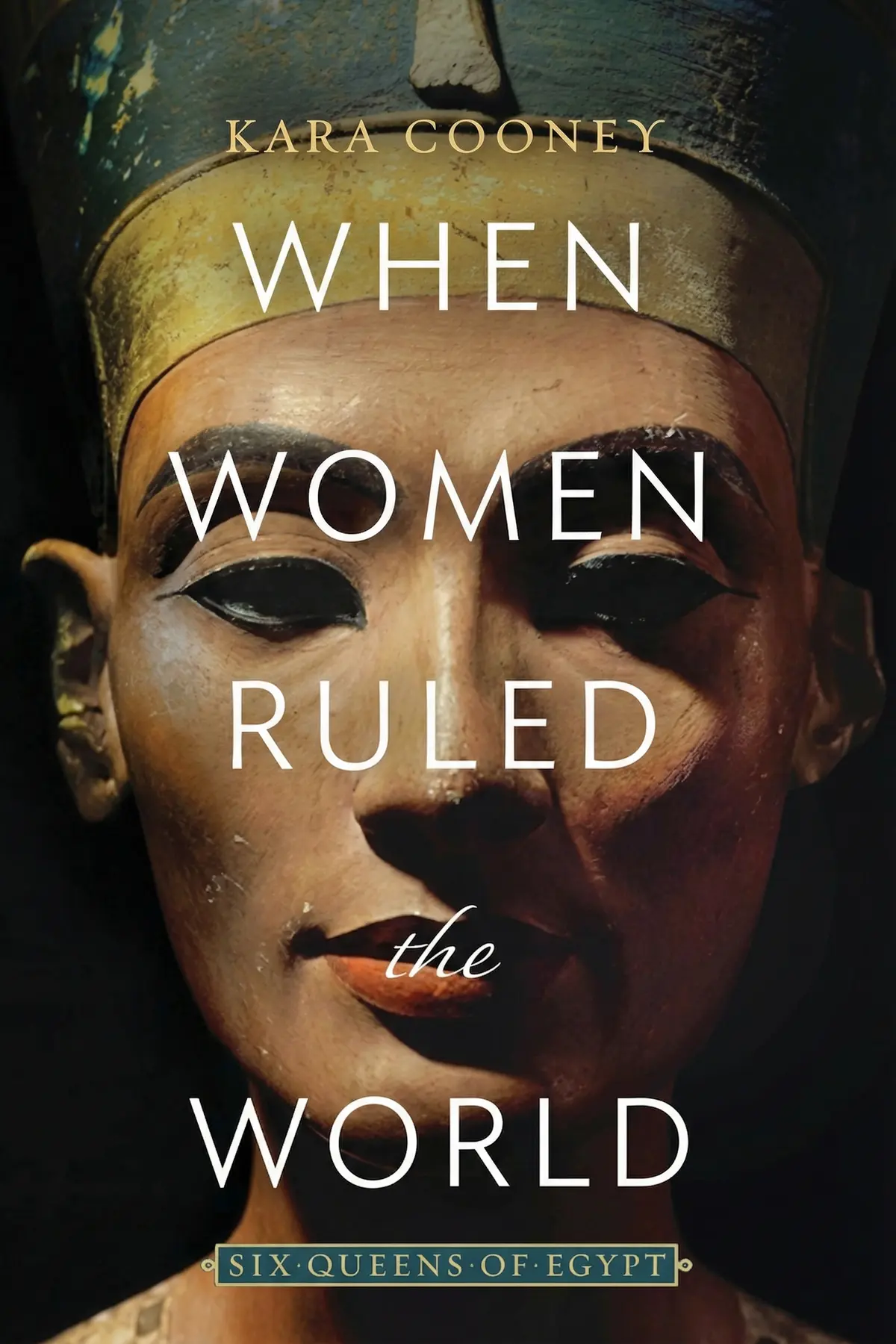
Egyptologist Kara Cooney tells the stories of six women who ruled ancient Egypt. She shows why a male-centered system kept turning to them in crises and what their erased achievements say about how female leaders are judged today.
1 min 02 sec
Ambitious women are still called shrill, bossy or selfish, and research keeps finding a bias against female leaders even in societies that see themselves as progressive. Yet in When Women Ruled the World, Egyptologist Kara Cooney shows that ancient Egypt, a deeply patriarchal state, turned to women to lead again and again, from its first dynasty to its last. The timing was the key: women were trusted with the throne mostly when the male line was failing and the country needed someone steady.
Using recent archeological findings, Cooney follows Merneith, Neferusobek, Hatshepsut, Nefertiti, Tawosret, and at last Cleopatra, six women who held that role. Her throughline is simple to state. Egypt’s system let women rule in a crisis, they often ruled well, and the men who followed tried to erase them. By the end, six lives become one pattern, and you will hear the old labels used against ambitious women with sharper ears.
1 min 38 sec
Egypt’s rules were built for fathers and sons, backed by myth and by kings with many wives. Still the throne kept landing with women, and one recurring moment made them hard to replace.
2 min 06 sec
One queen secured her son’s crown with a royal funeral that doubled as a purge. Another became the first woman to call herself King, thanks to a family habit that backfired badly.
1 min 47 sec
She ruled for over twenty years, then her nephew tried to erase her from stone. Her two-part approach to winning over a doubtful kingdom still fits any leader starting on shaky ground.
1 min 58 sec
Her name vanishes from the records in Year 12, and for a long time historians assumed she had died. Newer evidence points to a far bolder move, and possibly to a hidden tomb.
1 min 46 sec
A scheming officer installed a sick child king and a queen he thought he could control. He misjudged her badly, and her bold route to ruling alone came with a steep price.
1 min 55 sec
Exiled by her own brother, Egypt’s last queen fought her way back through Rome’s most powerful men. The same strategy that raised her so quickly also set up her fall.
1 min 38 sec
The insults Rome threw at Cleopatra sound oddly familiar today. Cooney argues that the traits used to dismiss women in charge deserve a second look, especially when a crisis hits.
1 min 01 sec
Across Egypt’s long history, the same bargain repeated. A system built for fathers and sons broke down, a woman held it together, and once the danger passed, men chipped her name off the walls. Merneith cleared the way for a toddler king. Neferusobek stood in for a sterile line. Hatshepsut ruled for over two decades and was erased by the boy she had shared the throne with. Nefertiti’s own grave may lie hidden behind Tutankhamun’s famous tomb. Too often these women are remembered for how they fell, even when circumstances beat them.
Cooney’s point is that their achievements belong in the story we tell about leadership. That gives you something to watch for. When a woman is handed authority only because things are falling apart, judge her by what she saved, and remember who left the mess. When the old words come out, test them against how a man would be described.
Thutmose III tried to erase Hatshepsut. Her Temple of Millions of Years is still standing.
In ancient Egypt, power was supposed to pass from father to son. Yet from the first dynasty to the last, royal women stepped in to rule again and again, usually when a king died young, left no heir or threw the country into turmoil. Kara Cooney, an Egyptologist at UCLA, draws on archeological evidence to tell the stories of six of them: Merneith, Neferusobek, Hatshepsut, Nefertiti, Tawosret and Cleopatra. Their methods were varied and often ruthless. Merneith protected her toddler son's throne with a royal funeral that doubled as a purge. Hatshepsut rewarded the elite and staged signs of divine approval. Nefertiti appears to have reinvented herself as a male king to repair the damage left by her husband's religious revolution. Tawosret probably killed her way to sole rule, and Cleopatra built her power through Roman allies. Again and again, the rulers who followed tried to wipe them from the record. Cooney closes with an argument about the present. She holds that the labels once thrown at Cleopatra still follow ambitious women, and that the empathetic, consensus-building style she sees in these rulers is what a crisis calls for. Readers get a vivid tour of Egyptian history and a lens for how gender and power interact.
History lovers who want ancient Egypt told through the women who ruled it.
Women in leadership, and those who mentor them, tired of being called bossy or too emotional.
Readers curious how power, succession and reputation really worked in the ancient world.
Kara Cooney is a professor of Egyptian Art and Architecture at UCLA and earned her PhD from Johns Hopkins University in 2002. Her research covers coffins, craft production and ancient economies, as well as death preparations, beliefs about the afterlife and gender. She has worked on excavations in Egypt, including at the artisans' village of Deir el Medina, and hosted the Discovery Channel series Out of Egypt.
Listeners find the book accessible and skillfully written, commending its extensive detail and instructive look at ancient Egyptian queens. Furthermore, the narrative approach gets positive mentions, with one listener depicting it as a fresh take on a timeless tale. The work is also lauded for its representation of historical figures, as one review mentions that the women profiled were amazing. Nevertheless, views on the work's accuracy are varied, as several listeners point out that it's mostly conjecture rather than facts.
Absolutely stunning narrative that reclaims the voices of these forgotten rulers through a unapologetically feminist lens. This book is basically a Game of Thrones style deep dive into real Egyptian history, which makes the educational content feel incredibly alive and urgent. I was especially captivated by the chapter on Merneith; I had honestly never heard her name before despite her being one of the first to wield such massive influence. Cooney’s storytelling is evocative and rich with detail, turning what could be dry archaeological records into a vibrant tapestry of power and survival. While some might find her 'archaeological imagination' a bit too speculative, I think it’s a necessary tool to bridge the gaps in our knowledge of the ancient world. Seeing these women as real, ambitious individuals rather than just statues or myths was a transformative experience for me. This is the kind of history that stays in your heart and makes you question how much of our past has been curated to serve patriarchal narratives.
Show moreWow. Just wow. This book completely changed how I view the concept of leadership and gender parity. Cooney is a professor who clearly knows her stuff, but she writes with a accessibility that makes the ancient world feel like it happened yesterday. The chapter on Cleopatra VII was a particular highlight because it dismantled so many of the sexist tropes that have surrounded her for two millennia. Instead of the 'seductress,' we see a brilliant linguist and a savvy political operator. I loved the way the author discussed the right to own property and divorce in Egypt, comparing those rights to our modern standards. It makes you realize that progress isn't always a straight line. Every page is filled with passion and conviction. If you’re looking for a book that combines rigorous research with a fast-paced, engaging style, this is the one. It’s a 10/10 for me and a must-read for any feminist history buff.
Show moreIf you are looking for a book that makes history feel like a page-turning thriller, this is it. Cooney’s narration in the audio version is wonderful to listen to, but the physical book is just as compelling. She has this way of pinpointing exactly how one woman made way for the next, even if they were separated by centuries. I found the sections on the social rights of Egyptian women to be especially eye-opening. The book is rich with detail and serves as a powerful reminder of how much we can learn from the past. Got to say, I was completely invested from the first page to the last. It’s a brilliant, feminist-forward look at a civilization that was far more inclusive than the Greeks or Romans. This is definitely one of my favorite non-fiction reads of the year because it combines amazing storytelling with a deep love for the subject matter.
Show moreEver wonder why we only ever hear about Cleopatra when Egypt had thousands of years of civilization? Cooney dives deep into five other fascinating women, from the early power of Merneith to the sophisticated diplomacy of Hatshepsut. The writing is incredibly readable and well-written, making complex dynastic shifts easy for a casual reader to follow without getting lost in the weeds. To be fair, the book leans heavily on conjecture and phrases like 'perhaps' or 'she must have felt,' which can be a bit polarizing if you want strictly dry facts. I found that her passion for the subject matter more than made up for the speculative gaps in the archaeological record. It’s a fresh take on a timeless tale that manages to be both educational and deeply emotional. I do wish there was a bit more evidence provided for her claims about their specific ruling styles, but as a gateway into Egyptology, this is a fantastic and engaging read.
Show moreAfter hearing so much buzz about this title, I finally sat down with it and was immediately struck by the rich detail of the Ptolemaic period. Cooney manages to weave these six lives together across thousands of years to show a recurring pattern of how women are called upon in times of crisis. The way she portrays these characters is amazing; they aren't just tropes, but complex leaders navigating impossible odds. Not gonna lie, I was surprised by how much I learned about the nuances of the Great Royal Wife position and the regency system. My only minor gripe is that some of the chapters feel a bit repetitive in their thematic focus on 'male-dominated worlds.' We get it—it was tough for them. Still, the prose is fluid and the narrative arc for each queen is satisfyingly complete. It’s a well-written educational piece that successfully brings these six queens out of the shadows of their male counterparts.
Show moreFinally got around to reading this and I’m struck by how much Cooney humanizes these figures who are usually just names on a king list. The storytelling is the strongest part of the book; she has a flair for making you feel the heat of the desert and the tension in the palace courts. I appreciated the educational aspect of seeing how these women used mythology and religion to legitimize their rule. It’s a fresh take that doesn't just focus on the 'big names' but shows the progression of female power over 3,000 years. Personally, I didn't mind the speculation as much as other reviewers did because the evidence for someone like Neferusobek is naturally scant. You have to fill in the blanks somehow. It’s a well-written, thought-provoking journey through the ancient world that feels very relevant to today’s conversations about power.
Show moreAs someone who has followed Kara Cooney's documentaries for years, I went into this with high expectations. The truth is, I’m torn on the final product. On one hand, her analysis of how these queens managed to hold onto power in a hyper-masculine society is genuinely fascinating and meticulously researched in terms of the artifacts she presents. However, her constant comparisons to modern politics, specifically referencing the 2016 election and the rivalry between Donald Trump and Hillary Clinton, felt very forced and took me out of the ancient setting. I don't mind a contemporary touchstone now and then, but it became a recurring distraction that clouded her historical thesis. The book is still worth reading for the profiles of lesser-known figures like Sobekneferu and Tausret. It’s a decent overview, but I think the author’s personal biases regarding gender roles were a bit too heavy-handed. It’s more of a sociological commentary wrapped in an Egyptology book than a straightforward history.
Show moreNot what I expected after seeing her documentaries on TV with my kids. While I admire Cooney’s drive and her ability to make the subject matter alive, this book felt a bit too much like an opinion piece. She makes a lot of generalizations about 'the feminine style' of ruling that don't always align with the historical evidence of queens who were just as ruthless as the men. Frankly, the omissions of certain other powerful women like Neithhotep or Tiye felt like a missed opportunity to provide a more comprehensive view of Egyptian queenship. The writing is good, but the tone is often quite angry, which might be off-putting for some readers. It’s an interesting look at the six queens she selected, but I found myself wanting more hard archaeology and less political theory. It’s a solid 3-star read that serves as a good introduction but requires a critical eye regarding the author's personal interpretations.
Show morePicked this up hoping for a rigorous historical analysis, but it felt more like historical fiction disguised as a scholarly work. Cooney is a talented storyteller, but she often presents her own interpretations as absolute truths without enough supporting evidence to back them up. For example, her claims about the specific psychological motivations of Hatshepsut are almost entirely based on her own 'archaeological imagination' rather than tangible records. Look, I appreciate the effort to center women, but the reliance on gender stereotypes—the idea that women are naturally more nurturing or less likely to start wars—felt scientifically dated and unconvincing. It ignores the reality of how these queens actually functioned as heads of state in an authoritarian system. The narration in the audiobook version is excellent, as she is a wonderful speaker, but the content itself is thin on new facts. It’s a bummer because I really wanted to love this, but the speculation was just too much for me.
Show moreTruth is, I found the constant comparisons to modern American politics incredibly distracting and, at times, quite superficial. This book screams a certain brand of Western feminism that tries to force ancient Egyptian queens into a very specific modern mold. The narrative that these women only rose to power because they were 'safe' or 'compliant' is such a limited view of their actual agency. I also found several historical inaccuracies regarding the Ptolemaic line and the succession of Ramesses II’s sons that made me question the overall rigour of the work. If you are looking for a deep, factual dive into the archaeology of these periods, you might be disappointed. It feels more like a collection of essays about the author’s feelings on gender than a definitive history. The storytelling is okay, but the lack of objective analysis really hindered my enjoyment of the topic.
Show moreKara Cooney tells the stories of six women who ruled ancient Egypt: Merneith, Neferusobek, Hatshepsut, Nefertiti, Tawosret and Cleopatra. She argues that Egypt’s patriarchal system of divine kingship turned to women mainly in crises, when a king died young, left no heir or destabilized the country. Many governed well, yet later rulers often tried to erase them, and Cooney draws lessons from that pattern for female leadership today.
In Cooney’s account, Egyptians saw the king as a divine representative whose authority was beyond challenge, and protecting the royal line came first. When succession broke down, through a toddler heir, a sterile king or a ruler who bankrupted the country, a royal woman was often a safer choice than chaos. Since a succession crisis seemed a greater danger to stability than a female king, women were allowed to rule as stabilizers.
Cooney presents Hatshepsut as the most influential. She ruled for more than two decades, first for the young Thutmose III and then as his co-king. She shared wealth with elites to win their support, presented her rule as the gods’ will through grand projects like the Temple of Millions of Years, led campaigns in Nubia and Kush and backed rewarding trade ventures.
Cooney argues that labels used against Cleopatra, such as selfish and too emotional, still follow women in power, and she cites Hillary Clinton’s 2016 loss as an example. In her view, the Egyptians saw that emotional sensitivity and caution could help in troubled times. She links this style to empathy, prudence and pragmatism and calls for women to be trusted with leadership again.
It suits readers who enjoy ancient history told through vivid lives, from Merneith’s sacrificial burials to Cleopatra’s Roman alliances. It also speaks to women in leadership and those who support them, since Cooney connects these queens to the bias ambitious women still face. Anyone interested in how succession, propaganda and reputation shape power will find concrete cases throughout.
Tom Standage


Ishmael Beah

bell hooks




William J. Bernstein

Ben Macintyre

AUDIO SUMMARY AVAILABLE
Get the key ideas from When Women Ruled the World by Kara Cooney, plus 5,000+ more nonfiction titles.









