

15 min 22 sec
Available in: English
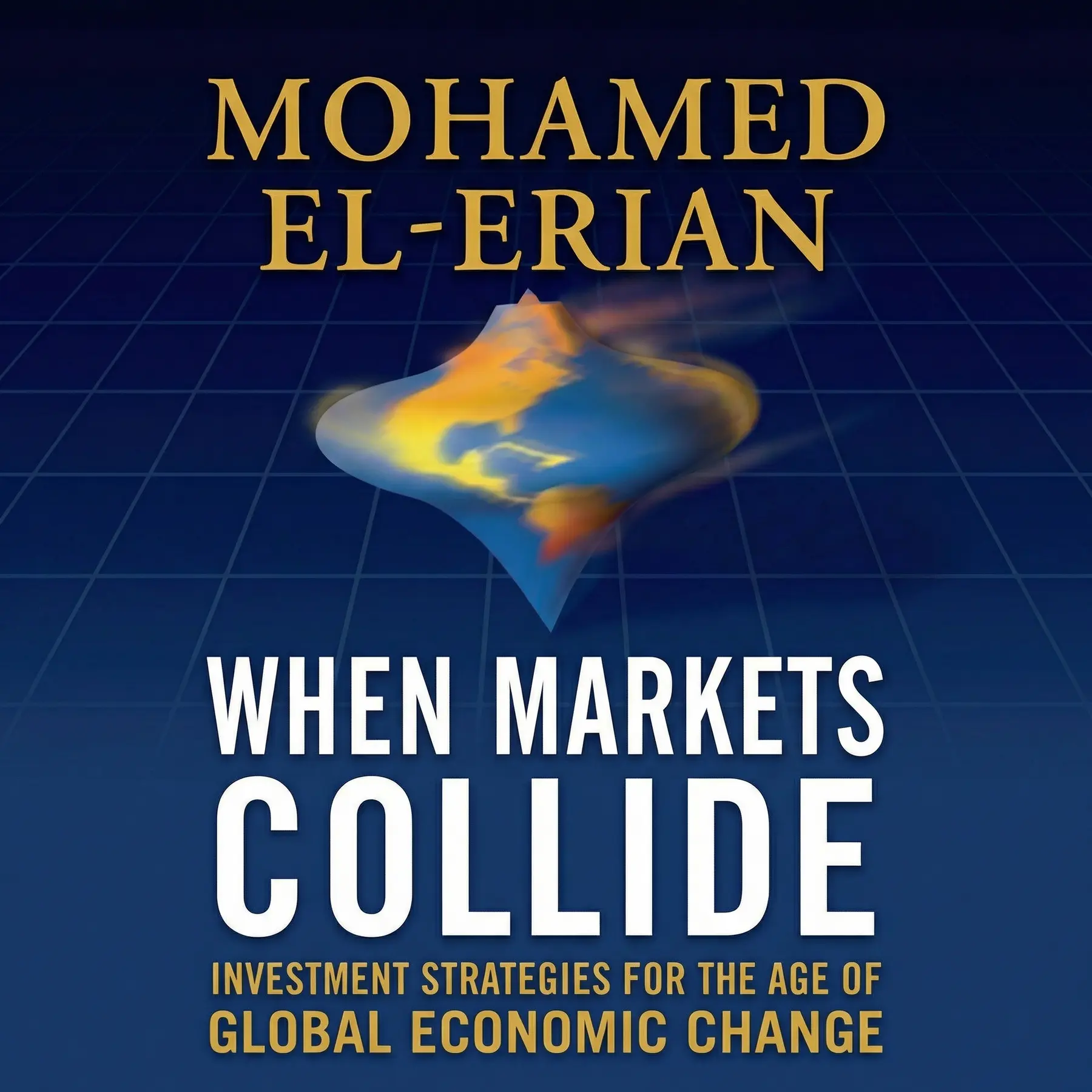
When Markets Collide: Investment Strategies for the Age of Global Economic Change
Shows how to read the market shifts experts dismiss as noise, from the rise of emerging economies to new financial instruments, and how to build a disciplined, global, inflation-protected portfolio that survives them.
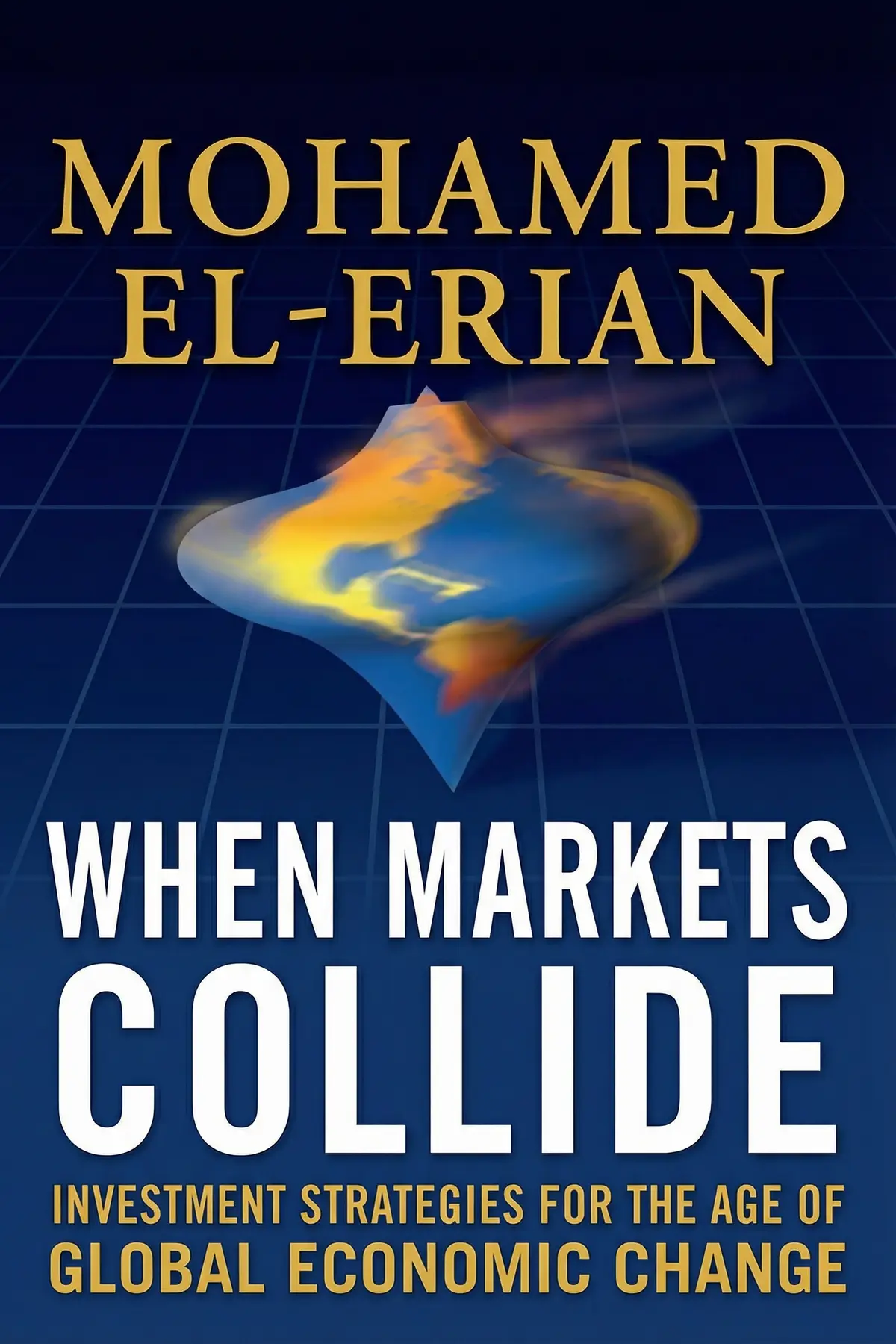
Table of Content
1. Introduction
1 min 05 sec
Most investors still steer by a picture of the world economy that stopped being accurate years ago, and they pay for it in nasty surprises. In When Markets Collide, Mohamed El-Erian, who spent 15 years at the International Monetary Fund and went on to lead the bond firm PIMCO, argues that the odd price moves experts brushed aside as noise were signals. Behind them sat a deep shift: growth and wealth moving toward emerging economies, new financial instruments changing how markets behave, and institutions that had not caught up. He sums up his theme as tomorrow’s markets colliding with today’s.
His case is that investors who learn to read those signals, and who guard against their own reflexes, can turn the collision to their advantage. Along the way come a three-year test for any portfolio, a way to buy quality while others panic, and four blunt questions to put to your own savings.
2. Read strange market behavior as an early warning
1 min 47 sec
A Fed chairman, Larry Summers and a finance minister all remarked on markets behaving in ways that seemed odd. Each gave the oddity a name and moved on. El-Erian asks what they collectively missed.
3. See where world growth is really coming from
1 min 53 sec
For a decade the world economy ran on a single engine. El-Erian’s numbers show that engine was spent, and why investors badly misjudged how fast the replacements would arrive.
4. Buy good assets when fear prices them as bad
1 min 56 sec
When buyers cannot tell good from bad, sound loans and rotten ones get punished together. That breakdown nearly froze markets in 2007, and it also created some of the strangest bargains El-Erian had seen.
5. Spot the mental traps that drain your returns
1 min 50 sec
Investors hold on to losers, sell winners too soon and follow the crowd, even when they know better. The reason sits partly in the brain, and the fix lies outside it.
6. Set your portfolio as if you can't touch it
1 min 53 sec
Imagine you had to pick an investment mix today and leave it alone for three years. The exercise sounds artificial, yet it exposes what you really believe about risk, and about where the world is heading.
7. Protect your savings when inflation returns
1 min 53 sec
Inflation protection looked unnecessary for years, and many portfolios dropped it. Harvard’s experience with timberland shows both why real assets help and what happens when everyone discovers the same good idea.
8. Keep a winning record from leading you astray
1 min 52 sec
The fund manager with the best recent results may be the one to worry about most. El-Erian explains how success turns into recklessness, and offers plain questions that expose risk before it bites.
9. Conclusion
1 min 13 sec
El-Erian’s book works as a case against comfort. In the mid-2000s the comfortable move was to file every odd price under noise and keep flying on the old engine. He argued the world economy was switching engines, and several hypotheses once thought unthinkable came true: the next systemic crisis hit the most sophisticated financial system on Earth, with bank runs in the US and Britain, while emerging economies came to be seen as a force for stability. He gave policymakers an A+ for effort and a B+ for results, saying their instruments were too blunt. If the people with the most tools were caught out, a private investor needs a method.
His method is modest and repeatable. Keep a note of what you expect markets to do and compare it with what happens, especially when experts call something a puzzle. Set your mix as if you could not touch it for three years, with real room for foreign markets and for assets that hold value through inflation. And decide in advance which loss you could live with.
The map will keep changing. The investors who get hurt least are the ones who redraw it first.
About this book
What is this book about?
In the years before 2007, markets kept doing things the experts could not explain. Long-term interest rates fell while the Federal Reserve tightened. Money flowed from poor countries to rich ones. Most commentators called these puzzles and moved on. Mohamed El-Erian argues they were signals of a structural realignment: growth and wealth shifting toward emerging economies such as China and India, former debtor nations becoming creditors, and new derivative products changing how markets behave, all inside a financial system whose infrastructure had not been upgraded. From that diagnosis he builds a practical program. He explains why markets seize up when information fails and how patient investors can buy quality at panic prices. He shows how biases like the disposition effect and herding damage portfolios, and he offers a test: set your asset mix as if you could not touch it for three years. He makes the case for global diversification, inflation protection and old-fashioned risk management, and warns that overconfidence turns past success into future losses. Readers get a way to tell signal from noise, and a set of questions to put to any portfolio before the next shock arrives.
Book Information
Who it's for
Investors weighing markets abroad
Long-term investors who keep most of their savings at home and wonder how much belongs abroad.
Finance professionals, fund selectors
Finance professionals and fund selectors who want a framework for reading market puzzles and judging managers.
Savers wanting steadier decisions
Savers who have held losers too long or sold winners too early and want a steadier process.
About the Author
Mohamed El-Erian
Mohamed El-Erian is an Egyptian-American economist and businessman, born in 1958. He spent 15 years at the International Monetary Fund working on policy and capital markets, and served as president and CEO of Harvard Management Company, which manages Harvard's endowment. At the bond investment firm PIMCO he was CEO and co-chief investment officer. He has also been President of Queens' College, Cambridge, and chaired President Obama's Global Development Council from 2012 to 2017. Two of his books became New York Times bestsellers, including The Only Game in Town, about central banks.
Ratings & Reviews
Ratings at a glance
What people think
Listeners find the work insightful, with one listener emphasizing its profound grasp of global economic dynamics. Furthermore, the author's writing style is well-regarded, and listeners consider it to be an engaging read. They also appreciate the clear explanations and find the material thought-provoking. One listener mentions it's worth the cover price, while another notes it generates significant domestic savings and investment.
Top reviews
Saowalak
Finally got around to reading this classic and it still holds up. While some argue that its 2008 publication date makes it old news, the underlying principles of market collision are timeless. El-Erian demonstrates a deep understanding of global economic dynamics that few peers can match. This book is fantastic because it forces you to think about how central bankers and policymakers influence the private sector in ways we often ignore. To be fair, you need to be intimate with financial terms to get the most out of it. The way he describes the inability of current systems to cope with sudden shifts is genuinely thought-provoking. It easily justifies the cover price for anyone serious about long-term strategy. It's a comprehensive guide to our "new normal."
Show moreMai
Wow, what an incredibly dense and rewarding journey. El-Erian brings his immense experience from the IMF and PIMCO to the table here. He avoids the supertechnical jargon of quants while still providing a deep, analytical framework for understanding equity and bond volatility. It’s a great compliment to Taleb’s work on systemic risk. I particularly appreciated the sections on how multinational policy channels affect domestic investment flows. Many reviews call it boring, but I found the level of detail necessary to truly grasp the shifts he’s describing. He does admit to some bad trades and miscues, which makes the book feel authentic and honest. If you are a student of finance, this should be required reading. He’s one of the smartest economists alive today.
Show moreOlivia
El-Erian provides a masterful look at the changing financial landscape. As someone who follows the bond market closely, I found his perspective on how the "old world" systems are breaking down to be incredibly insightful. The book was written right as the 2008 crisis was unfolding, which gives it a strange, prophetic energy that few other finance books capture. To be fair, it is a bit heavy on the technical side and his sentence structure can be quite convoluted at times. However, the deep understanding of how domestic savings and investment flows interact across borders is worth the cover price alone. It’s a thought-provoking read that pairs perfectly with Taleb’s "The Black Swan" if you want to understand tail risks.
Show morePacharapol
After hearing him speak on financial news channels, I decided to dive into this. It is a very thought-provoking book that rewards those who are willing to slow down and process the information. The chapter on risk management alone is worth the price of admission. I particularly loved his advice on listening for signals in the noise, which is a vital skill for any serious investor today. While it won a major award from Goldman Sachs, I can see why some find it dry. The author does have a tendency to toot his own horn regarding his time at the IMF and PIMCO. Still, the analysis of emerging economies provides a blueprint for understanding where global capital is moving next. It's dense, but the insights are substantial.
Show moreLadawan
Ever wonder how global policy shifts actually trickle down to your portfolio? This book attempts to answer that by looking at the parameters governing market behavior across national and multinational levels. Personally, I think the way El-Erian breaks down the divergence of macro indicators is brilliant. He captures the essence of global economic dynamics in a way that few others can. Not gonna lie, the prose is a bit clunky and sometimes feels like a GMAT exercise. But if you can look past the academic tone, you’ll find a wealth of information regarding domestic savings and the shifts in emerging markets. It’s a great companion piece to other modern economic texts. Definitely an interesting read for those with a bit of patience.
Show moreRod
Picked this up to better understand the regulatory environment. The book provides an insightful look at how concurrent adjustments in market parameters are necessary for the private sector to function correctly. El-Erian is spot on when describing the friction between different economic entities and their inability to cope with rapid change. Gotta say, the writing style is annoying and often feels like it was translated from a different language. However, the substance of his argument regarding the "new normal" and emerging economies is too important to ignore. It’s a bit technical and the tone is somewhat academic, but the conclusions he draws are vital for policymakers and fund managers alike. I'm glad I took the time to finish it. Even with its flaws, it offers a sophisticated perspective on the financial landscape.
Show moreThawee
The timing of this release makes it a fascinating historical artifact. Published right as the economy was imploding, it offers a real-time view into the mind of a top-tier economist. However, many of the specific descriptions and references now feel quite dated. Look, El-Erian is a brilliant man, but his writing is often too technical and lacks a certain engaging spark. I found myself skimming through the parts where he references the Lehman Index and his former boss, Bill Gross. On the positive side, his explanation of how markets collide and create new paradigms is still relevant today. It’s a solid three-star read that could have been much better if the editor had cut about fifty pages of fluff.
Show moreMatteo
Stretching your mind is healthy, but this was a real workout. A lot of the concepts here were honestly a little over my head at first. I had to go through several chapters twice just to grasp the relationship between the various financial players. El-Erian is clearly a live talking head for a reason—he knows his stuff inside and out. My main gripe is that he uses way too much jargon when simpler terms would have sufficed. The advice on distinguishing noise from actual market signals was the highlight for me. It’s not the most engaging book I’ve ever read, and parts of it are quite unpleasant due to the dry style. If you work in investment, you’ll love it; for everyone else, it’s a bit of a slog.
Show moreAhmed
Is this book supposed to be for everyone, or just the elite? I picked this up hoping for practical advice on navigating volatile markets, but it turned out to be boring, boring, boring. Compared to guys like David Swensen who make complex topics accessible, El-Erian seems trapped in a bubble of his own making. The truth is, the language is far too complicated for a general audience. He talks a lot about the "new normal," but the prescriptions feel dated now that we are well past the 2008 collapse. I struggled to finish this even after several attempts. It’s a shame because his career at the Harvard endowment is legendary, but his writing skills simply don't match his economic prowess.
Show moreTak
This was a chore to get through. Frankly, the writing style is so unnecessarily dense that it feels like El-Erian is deliberately trying to confuse the average reader. Unless you are a high-level fund manager at a place like PIMCO, the jargon becomes an impenetrable wall. I expected a lot more given his prestigious background at the IMF, but the "new normal" concepts were buried under mountains of dry, academic prose. It reads like a textbook for a GMAT prep course rather than a guide for actual investors. There is some value in how he explains global economic shifts, but you have to dig so deep to find it that the effort simply isn't worth the reward. I think one star is enough for this book.
Show moreQuestions about this book
What is the main idea of When Markets Collide?
Mohamed El-Erian argues that the market oddities of the mid-2000s, such as long-term rates falling while the Fed raised short-term rates, were signals rather than noise. They reflected a shift of growth and wealth toward emerging economies, new derivative products changing market behavior, and a financial infrastructure that had not been upgraded. Investors who read those signals and stay disciplined can find opportunity where others see only turmoil.
What is the three-year rule in When Markets Collide?
El-Erian recommends choosing your asset allocation as though you would be unreachable for three years and unable to rebalance at any point. That forces clarity about the return you need and the loss you can bear, and it pushes you toward a neutral mix built on long-term trends. It also protects against herd behavior and chasing past winners, while a yearly review keeps the plan from becoming rigid.
What does El-Erian mean by the market for lemons?
It describes a market where buyers cannot tell good products from bad ones, so they lower what they will pay for everything, good sellers leave and quality collapses. El-Erian applies it to the 2007 crisis, when sound loans lost funding as quickly as weak ones. For patient investors, such moments offer quality assets at panic prices, as with tax-free municipal bonds yielding more than comparable taxable bonds.
How can I apply El-Erian's ideas to my own portfolio?
He offers four questions. Is your portfolio too concentrated in your home market? Does it have inflation protection, for example through inflation-linked bonds or other real assets? Could you ever be forced to sell, in which case you should sell now? And who is cutting off your tail risk? If nobody is, he suggests holding more cash.
Who should read When Markets Collide?
It suits long-term investors, finance professionals and anyone trying to understand why markets behaved so strangely before and during the 2007 crisis. It is especially useful for readers whose portfolios lean heavily on one country, who have never thought about inflation protection, or who choose fund managers mainly on past performance, which El-Erian warns can breed overconfidence.
Featured in
Readers also enjoyed



Adults in The Room: My Battle With Europe’s Deep Establishment
Yanis Varoufakis





1929: Inside the Greatest Crash in Wall Street History--and How It
Andrew Ross Sorkin
AUDIO SUMMARY AVAILABLE
Listen to When Markets Collide in 15 minutes
Get the key ideas from When Markets Collide by Mohamed El-Erian, plus 5,000+ more nonfiction titles.
- 5,000+ titles
- Listen as much as you want
- 7-day free trial
- Cancel anytime









