

15 min
Available in: English
 ไทย
EnglishไทยWheat Belly: Lose the Wheat, Lose the Weight, and Find Your Path Back to Health
Physician William Davis argues that modern high-yield wheat is a changed food that spikes blood sugar, drives fat storage, inflames the gut, weakens bones and affects mood, and explains how to cut it out and handle withdrawal.
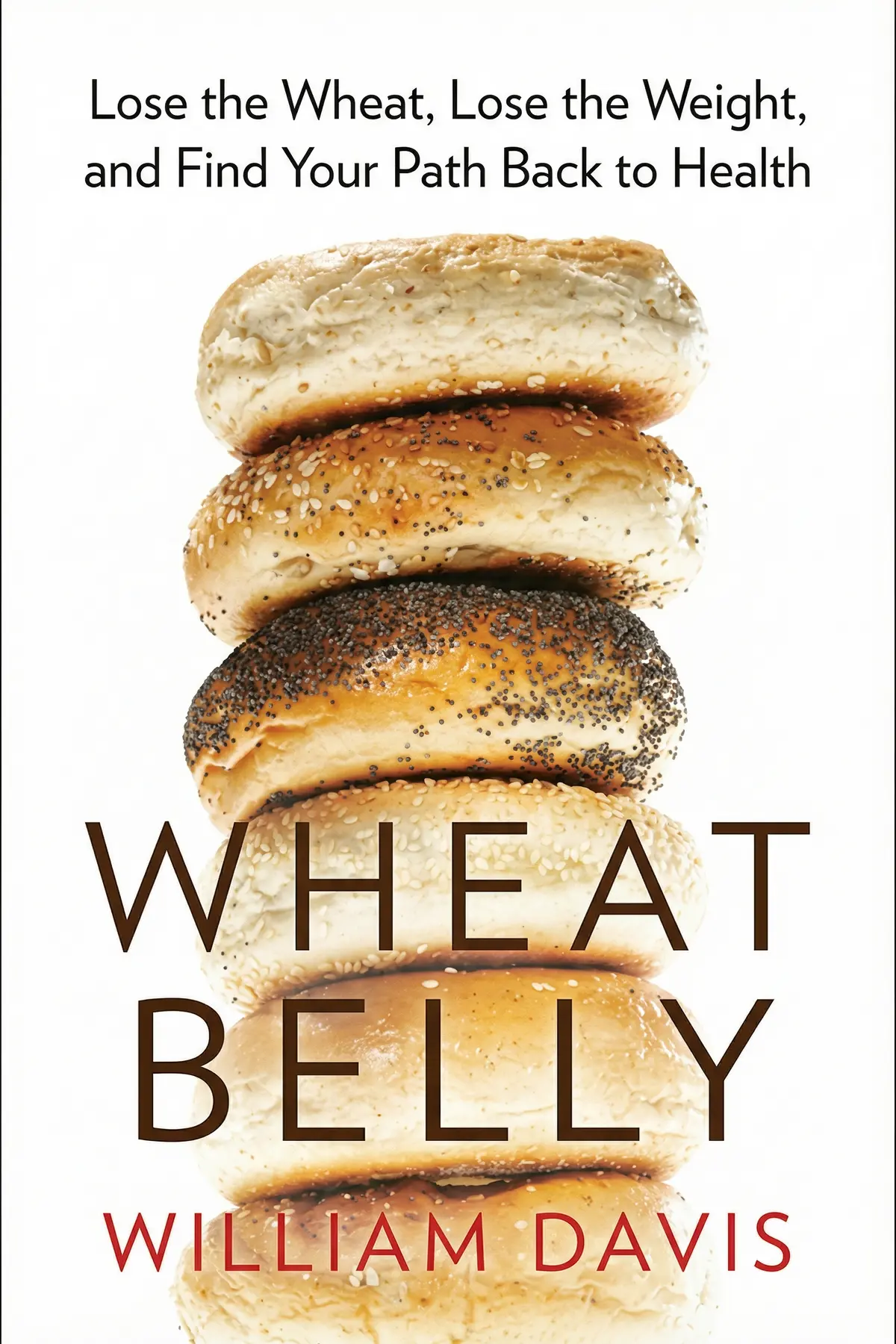
Table of Content
1. Introduction
1 min 02 sec
Bread, pasta and breakfast cereal fill most plates from morning to night, and physician William Davis believes that habit sits behind a great many expanding waistlines. In Wheat Belly, he argues that the wheat sold today is not the grain our ancestors ate. Breeders reshaped it in the second half of the twentieth century, and its new proteins and fast-acting carbohydrate, he says, push the body toward fat, inflammation and early wear. His argument fits in one line: modern wheat is a changed food, and taking it off the plate lets the body recover.
His evidence runs from a personal experiment with an ancient grain to studies of people with celiac disease and a psychiatrist’s ward in 1960s Philadelphia. His findings have sparked debate, and some scientific literature questions them, so they are best heard as one doctor’s case. Followed through, that case gives you a new way to read your own meals and a practical plan for a first wheat-free week.
2. Spot the wheat hiding in every meal
1 min 40 sec
A childhood menu of cereal, sandwiches, cornbread and pie shows how easily one grain takes over a day. Davis links a single health recommendation from the mid-1980s to a sharp turn in the nation’s waistlines.
3. Learn how today's wheat differs from old bread
1 min 42 sec
The grain in ancient stories and the grain in today’s loaf share a name but not a full recipe. A loaf baked from an ancestral grain gave Davis a result he did not expect.
4. Trace stubborn belly fat back to blood sugar
1 min 51 sec
Whole wheat bread wears a healthy reputation, yet Davis ranks its carbohydrate alongside candy and ice cream. A group of adults who had to give up wheat entirely shows what that comparison may mean.
5. Slow the debris that ages your organs
1 min 52 sec
Some bodies wear out years before others, and Davis blames a sticky by-product that builds up in the kidneys, the brain and the skin. Its surprising source sits on breakfast tables everywhere.
6. Protect your gut from a modern wheat protein
1 min 58 sec
Celiac disease has climbed dramatically in five decades. Dutch researchers compared wheat from a century apart, and what they found points to a single protein and a chain reaction inside the intestines.
7. Keep the minerals your bones depend on
1 min 48 sec
Bread hardly seems like a threat to your skeleton. Davis describes a balancing act inside the body that puts acidity first, and a Toronto study that measured what that priority may cost.
8. Quit wheat without wrecking your week
1 min 52 sec
Roughly one in three people feel worse before they feel better after dropping wheat. A psychiatrist’s ward in 1960s Philadelphia suggests why, and Davis offers a simple way to time the change.
9. Conclusion
1 min 15 sec
Davis’s case rests on one reframing. The bread, pasta and cereal that health campaigns once praised as the safe choice come, in his account, from a grain that changed within living memory, and the body has not caught up. He follows that change through blood sugar and stored fat, debris that ages organs, a leaky gut, thinning bones and a brain that wants the next slice. Some scientific literature questions his findings, and the debate belongs in any honest retelling. What he offers in the end is a claim you can test on yourself.
The test begins with noticing. Over one ordinary day, mark every meal built on wheat flour, and you may find it at breakfast, lunch, dinner and dessert, just as Davis once did. If you decide to try going without, fill the plate with vegetables, fruits, meats, eggs and nuts instead. Then pick a quiet week to start, so that any fog or irritability arrives when little depends on you.
His einkorn loaf left him free of the cramps and sleepless nights that modern bread brought. The question he leaves you with is what your own body does when the modern grain is gone.
About this book
What is this book about?
Many people eat wheat at nearly every meal, often because they were told whole grains protect the heart. Physician William Davis argues that this advice backfired. In his account, the wheat sold today is a hybrid bred in the second half of the twentieth century to resist drought and fungi, and a share of its proteins are new to the human diet. Davis builds his case through the body. He links wheat's carbohydrate, amylopectin A, to sharp blood sugar spikes, fat storage and the buildup of AGEs, debris tied to aging organs. He connects its gluten protein gliadin to a leaky gut and the rise of celiac disease, its acid load to calcium loss from bone, and substances called exorphins, which reach the brain where opiates bind, to a possible worsening of schizophrenia symptoms. Along the way he draws on his own test with einkorn bread, a University of Iowa study of people with celiac disease and a psychiatrist's work with schizophrenia patients in the 1960s. His findings have drawn debate, and some scientific literature questions them. Readers get a clear account of his argument, a way to examine their own meals and practical advice on timing a wheat-free start.
Book Information
Who it's for
Heavier despite whole grains
People whose weight has crept up despite choosing whole grains and who want a different explanation.
Living with unexplained symptoms
Readers with unexplained stomach trouble, fatigue or poor sleep who are curious about the case against modern wheat.
Planning a wheat-free trial
People planning a wheat-free trial who want to know what withdrawal may feel like and when to start.
About the Author
William Davis
William Davis is a physician and the author of the Wheat Belly series, which holds that genetic changes aimed at bigger harvests have made today's wheat unlike the wheat of 1960. He also wrote the Wheat Belly Cookbook, published in 2012, Undoctored, from 2017, which encourages people to manage their own health, and Super Gut, about restoring the gut microbiome. He has appeared on national television, including CBS This Morning, and lives in Milwaukee, Wisconsin.
Ratings & Reviews
Ratings at a glance
What people think
Listeners appreciate the high-quality medical breakdowns and consider it a fantastic guide for enhancing physical wellness and shedding pounds. The included recipes are well-regarded, and listeners mention experiencing better overall health after adopting the suggestions. While some find it a simple read, others feel it is overly technical, and viewpoints regarding the wheat-related details are mixed.
Top reviews
Sombat
Wow, what a wake-up call for anyone struggling with their weight or constant fatigue. I picked this up hoping for a simple diet plan, but Davis delivers a deep dive into how modern wheat impacts our blood sugar and insulin levels. The medical explanations are incredibly detailed, though they might feel a bit heavy for some readers. Personally, I found the science fascinating rather than boring. Since cutting out the 'wheat belly' triggers, my energy has skyrocketed and I finally stopped that mid-afternoon grazing habit. The recipes in the back, especially the nut-based ones, are actually quite tasty. Frankly, it’s more than just a diet book; it’s an eye-opening look at how agriculture has changed what we eat. You might find the restriction tough at first, but the results in your waistline and mental clarity are worth every bit of effort. Truly a life-changing perspective on the grocery store aisles.
Show moreLook
Picking this up was the best thing I've done for my health this year. I was skeptical about the 'wheat is addictive' claim, but after going through the withdrawal symptoms Davis describes, I’m a believer. I had a week of headaches and cravings, then suddenly the 'mind fog' lifted and I felt amazing. The book explains the science of insulin and fat storage in a way that finally made sense to me. I love that he includes recipes because I would have been lost without the flaxseed wrap and almond flour alternatives. I’ve seen a huge difference in my blood sugar readings already. If you’re struggling with diabetes or just can’t lose that stubborn belly fat, you need to read this. It’s a fascinating, fast-paced read that challenges everything we’ve been told about 'healthy' whole grains. Don't listen to the skeptics; the results speak for themselves.
Show morePhichai
As someone who struggled with 'brain fog' for years, I found Davis’s arguments about gliadin and its opiate-like effects pretty compelling. The book is written with a sense of urgency that really pushes you to reconsider your morning toast. I appreciated the specific breakdown of how modern, hybridized wheat differs from what our ancestors ate. To be fair, it does get a bit repetitive after the first hundred pages, hammering home the same points about inflammation over and over. However, the section on joint pain was a revelation for me. I’ve noticed a significant decrease in my knee swelling since I stopped eating bagels and pasta. It is a bit technical in spots, and some might find the 'no fruit' rule a little extreme. But if you are looking for a way to lose weight without feeling hungry all the time, this is a solid resource with great medical backing.
Show morePita
Finally got around to reading this after hearing so much buzz about it at the gym. Davis clearly knows his cardiology, and his explanation of how wheat affects LDL cholesterol particles was a real 'aha' moment for me. I’ve been following the guidelines for three weeks now and the bloat is completely gone. It’s amazing how much of our 'normal' aging process is actually just inflammation from our diet. The book can be a bit dense in the middle chapters, but the practical advice on how to navigate a wheat-free kitchen is excellent. I do wish there were more vegetarian-friendly options, as he leans very heavily on meat and cheese. However, the improvement in my skin and sleep quality is undeniable. If you’re tired of the same old 'low-fat' advice that doesn’t work, give this a chance. Just be ready to give up your favorite sandwich shop for good.
Show moreWipada
It’s hard to argue with results, and after following the Wheat Belly protocol, I’ve lost twelve pounds in a month. This book does a great job of explaining why we get those mid-morning hunger pangs and how to break the cycle of carb addiction. I especially liked the history of how wheat became a staple and why the modern version is so different from what our grandparents ate. The writing is accessible, though it does get a little repetitive toward the end. My only real complaint is that it's quite difficult to eat out while following his rules, as wheat is hidden in almost everything. But for the health benefits alone—better digestion and no more joint pain—it’s a small price to pay. If you are serious about changing your relationship with food, this is a must-read, even if you don't agree with every single point.
Show moreOwen
Davis clearly knows his cardiology, but he could have said everything in half the pages. The book is undeniably repetitive, yet the core message is so important that I’m still giving it a high rating. I never realized how much my 'healthy' cereal habit was contributing to my sluggishness and skin issues. The technical breakdown of amylopectin A was particularly interesting and helped me understand why I always felt hungry an hour after breakfast. While I think some of his advice to lie about allergies is a bit odd, the nutritional guidance is generally sound if you’re looking to cut carbs. I’ve replaced my morning toast with eggs and greens, and I feel significantly more focused at work. It’s a great read for anyone interested in the intersection of agriculture and health, even if the author's tone gets a bit theatrical at times. Definitely worth a look for the health-conscious reader.
Show moreNatalie
Is wheat really the devil, or is this just another version of the Atkins diet with a new villain? I have mixed feelings after finishing the book. On one hand, Davis makes a very strong case against the high glycemic index of whole wheat, noting that it spikes blood sugar faster than a candy bar. That part is definitely worth knowing. On the other hand, the list of forbidden foods eventually grows so long that it feels impossible to maintain. No legumes, no rice, and almost no fruit? It feels like he’s just advocating for a standard low-carb lifestyle under a different name. I tried the flaxseed wrap recipe mentioned toward the end, and while it was okay, it didn’t exactly satisfy the bread craving. It’s an informative read, but you have to be prepared for a very restrictive lifestyle that might be hard to sustain if you enjoy a social life.
Show moreTun
The medical explanations are top-notch, but the tone can be a bit alarmist for my taste. Davis writes with a lot of passion—almost like he’s shouting in all caps at times—which can be exhausting to read for 300 pages. He makes some great points about how wheat has been modified over the last fifty years to increase yields, and the impact that has on our digestion is clear. But then he goes off the rails a bit by suggesting that we should barely eat any fruit. Only two strawberries? That seems a bit much. I enjoyed the recipes, particularly the different ways to use ground flaxseed, but I’m not sure I can follow the 'unlimited meat and cheese' advice without worrying about my heart health in other ways. It’s a good book to spark a conversation about nutrition, but I’d recommend taking some of his more extreme claims with a grain of salt.
Show moreAstrid
Look, I’m not entirely sold on the idea that wheat is the root of all evil, but this book definitely makes you think about what you’re putting in your body. The science regarding the glycemic index of whole wheat bread versus table sugar was shocking to me. I always thought I was being healthy by choosing the brown bread! To be fair, Davis is a cardiologist, so his focus on heart health and visceral fat feels authentic. However, the diet is so restrictive that it feels a lot like a rebranded Atkins or Paleo plan. It’s also quite repetitive; he could have easily cut 100 pages without losing any of the core message. I’d recommend it for the eye-opening information on GMO wheat, but maybe borrow it from the library before committing to the whole lifestyle. It’s a bit of a mixed bag of brilliant insights and extreme restrictions.
Show morePranee
This feels like a massive oversimplification of complex nutritional science. While I don't doubt that some people feel better without gluten, Davis relies far too much on anecdotal stories from his own patients rather than peer-reviewed studies. I noticed some sloppy errors too, like his confusion over which company makes certain cereals, which makes me question the rest of his data. The book is incredibly alarmist, almost as if he’s trying to scare you into submission. He suggests lying to hosts about having an allergy just to avoid a dinner roll, which seems a bit extreme and unnecessary. Plus, the claim that 'vegetarians are fat' is just factually incorrect based on plenty of other research. If you want to lose weight, sure, cutting out processed junk will work, but you don’t need this level of pseudo-science to tell you that. It’s a very repetitive read that could have been a blog post.
Show moreQuestions about this book
What is the main idea of Wheat Belly?
Davis argues that the wheat most people eat today is a hybrid bred in the twentieth century, with about 5 percent new proteins, and that it harms health. He links its carbohydrate to blood sugar spikes, fat storage and aging debris called AGEs, its gluten to gut damage and celiac disease, and its acid load to weaker bones. His remedy is to remove wheat entirely. His findings are debated, and some scientific literature questions them.
Why does William Davis say wheat makes you gain weight?
He points to amylopectin A, wheat’s main carbohydrate, which he says raises blood sugar more than almost any other, including white sugar and candy bars. The body answers with a surge of insulin that pushes the excess sugar into cells to be stored as fat. To back this up he points to a 2004 University of Iowa study of obese adults who had just received a celiac disease diagnosis; once they dropped wheat, they shed 27.5 pounds on average over six months.
How is modern wheat different from ancient wheat?
In Davis’s account, scientists bred modern hybrid wheat in the second half of the twentieth century to resist drought and fungi. It shares about 95 percent of its proteins with older crops, while 5 percent are new. A 2010 Dutch study found that modern varieties carried more of the gluten proteins linked to celiac disease. Davis himself felt none of his usual symptoms after eating bread made from einkorn, an ancient ancestor of wheat.
What happens when you stop eating wheat?
Davis reports that many people feel better within days, with improved mood, steadier emotions, sharper concentration and better sleep. He estimates that about 30 percent go through withdrawal first, with fatigue, irritability, brain fog or brief depression. He links this to exorphins, substances in wheat that can reach the brain and bind where opiates do. His advice is to start during a quiet stretch, such as a week off work.
What does Wheat Belly suggest eating instead of wheat?
Davis recommends meals built around vegetables, fruits, meats, eggs and nuts. In his view this pattern supports a healthier weight, better digestion and greater well-being, and it avoids what he describes as wheat’s acid load, which he says draws calcium from bone. He cites a 2003 University of Toronto study linking higher gluten intake to greater calcium loss from bones, the kind of weakening that leads to osteoporosis.
Readers also enjoyed








AUDIO SUMMARY AVAILABLE
Listen to Wheat Belly in 15 minutes
Get the key ideas from Wheat Belly by William Davis, plus 5,000+ more nonfiction titles.
- 5,000+ titles
- Listen as much as you want
- 7-day free trial
- Cancel anytime









