

13 min 15 sec
Available in: English
We’re Pregnant!: The First-time Dad's Pregnancy Handbook
By Adrian Kulp
A practical guide that shows a first-time father what to do at each stage of pregnancy and in the weeks after birth, so his partner feels supported and the baby comes home to a prepared family.
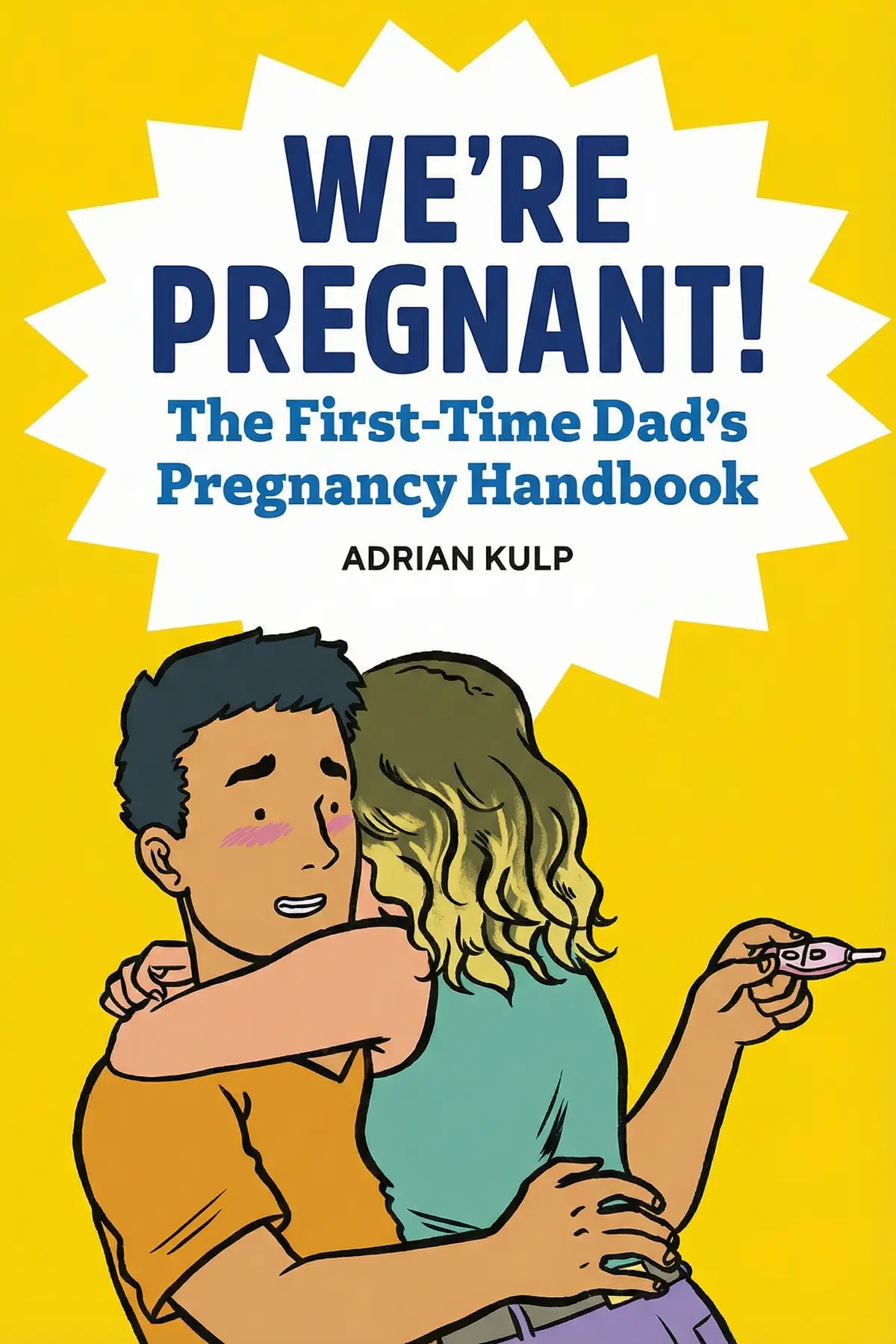
Table of Content
1. Introduction
58 sec
Many first-time fathers watch a pregnancy from the sidelines, unsure what their part is beyond driving to the hospital. In We’re Pregnant!, blogger and father of four Adrian Kulp gives a plain answer: the father has a great deal to do, starting the day the test comes back positive. Kulp points out that most women feel lonely while pregnant, even with a partner close by.
His case is that a dad who learns what each stage does to her body, and answers it with food, housework, planning and advocacy, closes that distance and builds a healthier home for the baby.
The book walks through pregnancy week by week and on into the months after birth. What follows pulls out the jobs that matter most: what to cook, what to take off her plate, what to ask the doctor, what to pack and how to carry the family through the first weeks at home. The vague wish to help becomes things you can start doing tonight.
2. Turn a positive test into a plan
1 min 36 sec
The first weeks feel like waiting, yet Kulp argues they are when a father’s most useful work begins. A walk through your own home may show problems you would not notice until month eight.
3. Cook for her changing appetite
1 min 34 sec
A pregnant woman’s hunger rises, falls and returns over nine months, and each phase calls for a different approach to meals. Kulp hands the father the apron and explains what to put on the plate.
4. Take the housework off her shoulders
1 min 21 sec
A faint smell from the kitchen bin can become a real problem during pregnancy. Kulp explains which changes in her body make the housework matter more than most fathers expect.
5. Learn what her body does each month
1 min 41 sec
A waiting room seems like the least important place in a pregnancy. Kulp sees it as where a father earns his place, as long as he understands the timeline the doctors are tracking.
6. Speak for her when labor comes
1 min 39 sec
In the delivery room, the person who knows her wishes may have to say them out loud. Kulp explains which questions to settle in advance, and why the due date is a poor guide.
7. Get the news, money and gear sorted
1 min 35 sec
Telling everyone at once feels natural, and buying everything new feels responsible. Kulp suggests a different order for both, plus a reminder that items like car seats come with expiration dates.
8. Carry the family through the fourth trimester
1 min 41 sec
The birth feels like the finish line, but Kulp names a whole new stage that follows it. Its demands on the father are heavier, and one of its risks is easy to miss.
9. Conclusion
1 min 10 sec
Kulp’s handbook redraws an old picture: the father pacing in a hallway while everything important happens somewhere else. In his version, the dad is in the kitchen, at the appointments, behind the birth plan and awake at night with a bottle. The reason is the one he closes on: many women feel lonely through pregnancy even with a partner close by. Learning how her body changes, and answering each change with something practical, is how that loneliness eases and how the baby comes home to a calmer, healthier family.
The book supports a few moves you can make now. Take one chore off her list for good, and cook from the folic acid foods while she needs them most. Go to the next appointment with her questions written down. In the second trimester, start charting the birth plan together, so that if she cannot speak up during labor, you already know what she wants. After the birth, keep an eye on her mood, because the blues are common and help exists if they last.
The title says we for a reason. She carries the baby, and the two of you carry everything else together.
About this book
What is this book about?
Many expectant fathers want to help but have no clear idea what helping looks like between a positive test and the first night home with a newborn. Adrian Kulp, a father of four and a parenting blogger, answers with a week-by-week handbook written for the dad. His starting point is that many women feel lonely through pregnancy, even with a partner beside them. Kulp's remedy is knowledge turned into action. He explains what is happening to the mother's body and the baby at each stage, from implantation and morning sickness to practice contractions, and pairs each change with something the father can do: cook foods rich in folic acid, take over the laundry, go to appointments with her questions ready, plan the birth, pack the bag and learn to handle night feeds. The book continues into what Kulp calls the fourth trimester, the weeks of recovery after birth, covering healing, skin-to-skin bonding, postpartum blues and the father's own rest. Readers get a concrete picture of their role and a steady way to turn worry into useful work.
Book Information
Who it's for
First-time expectant fathers
Men expecting their first child who want to know what to do at each stage.
Partners feeling left out
Partners who feel left out of appointments and planning and want a real role.
New fathers planning ahead
New fathers preparing for the weeks of recovery, night feeds and visitors after birth.
About the Author
Adrian Kulp
Adrian Kulp founded Dad or Alive, a parenting blog that tells humorous stories from a father's point of view, and he has written six books. He has also worked in radio and television, producing the radio show Backstage Country, serving as vice president of TV development at Happy Madison and Borderline Amazing Productions, and working on the reality series Modern Dads. He lives in Nashville with his wife and their four children.
Ratings & Reviews
Ratings at a glance
What people think
Listeners describe this pregnancy guide as educational and ideal for new fathers, with one listener emphasizing the way it organizes vital information and appointments week by week. The content is accessible, enjoyable, and witty, with one listener remarking that it’s penned with a humorous touch by a fellow first-time father. They value how the book supports them throughout the gestation process, as one listener points out that it guides them through each individual week of the pregnancy. Although listeners consider it brief and manageable, some feel the material is a bit too simplified.
Top reviews
Somporn
Finally got around to finishing this after my wife surprised me with the news, and it’s exactly the kind of handbook I needed. While some pregnancy guides feel like medical textbooks that go on for way too long, Kulp keeps things moving with a snappy, week-by-week format. I’ll be honest, the checklists for each trimester were a total lifesaver for someone like me who needs a clear "to-do" list to feel useful. It covers the baby’s growth from a tiny seed to a full-sized human without overwhelming you with jargon. Sure, the humor is a little "bro-ish" at times, but it made the scary parts of first-time fatherhood feel much more manageable. Truth is, I actually looked forward to checking the new chapter every Sunday night. It’s not a substitute for medical advice, but as a roadmap for what to expect from your partner's moods and the nursery setup, it hits the mark perfectly.
Show moreDek
As someone who was completely clueless about what happens during those nine months, this book was a total game-changer for my anxiety levels. The weekly breakdowns make the whole process feel like a series of small, winnable levels instead of one giant, terrifying mountain. I loved that Kulp focuses on the "Fourth Trimester" too, because most books seem to stop right when the baby actually arrives. Not gonna lie, I was worried about being the stereotypical "useless dad," but this gave me specific tasks to handle so I could actually contribute. It’s written with a lot of heart and humor that feels authentic to the modern guy’s experience. The size is also a huge plus; I could read a few pages on my commute without looking like I was carrying an encyclopedia. If you're looking for a gift for a new dad-to-be, this is definitely the one to get.
Show moreLillian
Wow, this was exactly the tone I needed during a pretty stressful first trimester for us. The truth is, most pregnancy books are terrifying and filled with worst-case scenarios, but Adrian Kulp keeps it light and encouraging. I found the "What Mom is Feeling" sections particularly insightful because it gave me a heads-up on why certain things were happening before they even started. It’s an easy read that doesn't feel like homework, which is a blessing when you're already exhausted from nesting. The advice on being the "rock" and taking over the household chores was a good reminder to step up and be proactive. I’ve already recommended this to two other friends who just found out they’re expecting. It’s funny, practical, and focuses on the bond between the couple, which I really appreciated. A must-read for any guy who wants to be involved but doesn't know where to start.
Show moreRay
The chapter on the first trimester really set the tone for the rest of the book by focusing on practical ways to support my partner. To be fair, this isn't the deepest dive into fetal development you'll ever find on a shelf. If you want a clinical breakdown of every hormone shift, you should probably look elsewhere or stick to the Mayo Clinic guide. However, for a guy who just wants to know why his wife is suddenly obsessed with smelling lavender or why the dishes are now his full-time job, it’s great. The writing style is very conversational and light, which helps when you're already stressed about finances and car seats. I did find the constant jokes about farts and "man-caves" a bit dated, but the core advice is solid. It basically tells you how to be a "rock" for your partner during a time when everything is changing. Decent read for any first-timer.
Show moreChamp
Ever wonder how you're supposed to help when you aren't the one actually carrying the baby? Kulp’s book answers that by giving you a clear role in the pregnancy process through actionable advice. It is definitely written for the "tl;dr" generation, using lots of bullet points and short paragraphs to keep things simple. Look, it’s not going to win any literary awards, but it does a great job of explaining baby sizes using food analogies and telling you which gear is actually worth buying. I appreciated the sections on postpartum depression because it’s a serious topic that often gets ignored in "fun" dad books. My only real gripe is that it feels a bit redundant if you're already reading other pregnancy apps or websites. Still, having everything in one physical spot that I can thumb through is worth the price of admission. It’s a solid 4-star resource for any guy entering the "dad zone" for the first time.
Show moreSophia
This book acts as a great primer for guys who want the "need to know" info without the fluff. It covers everything from the initial blood tests to the six-week postpartum checkup in a way that’s very easy to digest. Gotta say, the humor is a hit-or-miss—some jokes landed, others felt a bit like a 90s sitcom—but the intention is clearly to make the reader feel at ease. I liked the focus on the baby’s development, like when they start hearing sounds or growing hair, because it made the whole thing feel more real. It's shorter and less detailed than the Mayo Clinic book, but that’s actually a strength if you're just looking for a quick weekly update. It’s not perfect, and I wish there was more info on the actual labor and delivery process, but as a general guide, it’s very helpful. It definitely helped me feel more prepared for the big day.
Show moreNong
Direct and to the point, this is the manual I wish I had for my first kid. It breaks down the nine-month journey into manageable chunks that don't feel like a chore to read through. In my view, the best part is how it focuses on how to actually support your partner instead of just listing baby facts. The layout is great with lots of lists and headers, making it easy to find info quickly when you're in a rush. I did think some of the humor was a little forced, particularly the bits about "wife-speak," but I can look past that for the practical advice. It even includes the "Fourth Trimester," which is a period most people don't talk about enough. If you’re a first-time dad who wants to stay informed without reading a 500-page medical tome, this is a solid choice. It’s helped me feel much more confident about the upcoming changes in our lives.
Show morePraepimon
After hearing good things from a buddy, I picked this up hoping for a comprehensive guide, but it felt a little too "lite" for my taste. Don't get me wrong, the checklists for the hospital bag and the baby registry are incredibly helpful for getting organized. But I found the actual information about the medical side of pregnancy to be pretty thin. It breezes through major topics like morning sickness in a couple of paragraphs while spending way too much time on frat-boy style humor. Do we really need multiple pages dedicated to gas? Personally, I felt like the author assumed I wouldn't be interested in the science because I'm a man, which is a bit of an annoying stereotype. It’s a quick read and physically small enough to toss in a bag, but it’s more of a primer than a survival guide. It’s okay for a starting point, just don't expect it to be the only book you'll need.
Show moreRafael
Picked this up at a thrift store on a whim after finding out the news, and it’s a bit of a mixed bag. On one hand, I really like that it gives you actionable things to do each week so you don't just feel like a spectator. On the other hand, the writing assumes you're a bit of a "dude-bro" who only cares about football and beer, which isn't really my vibe. In my experience, the most useful parts were the checklists for things like babyproofing and packing the hospital bag. The actual "science" part is very surface-level and you could probably find better info on a five-minute Google search. It’s a fast read, though, and it might be good for a guy who hasn't ever spent time around babies. It just felt a little too oversimplified at times, almost like it was talking down to the reader. It’s fine as a supplementary book, but don't make it your only source.
Show morePat
Not what I expected based on the high ratings, to be honest. It felt like the author was writing for a version of men that doesn't really exist anymore—the kind of guy who can't cook a meal or understands nothing about basic biology. The humor leans heavily on tired tropes about "moody wives" and "manly chores," which got old after about three chapters. While the checklists are somewhat useful, you could easily find better ones for free on any parenting blog or YouTube channel. I was looking for depth and actual guidance on how to navigate the medical appointments, but this book just glides over the surface. It’s very short and the bullet points make it feel more like a PowerPoint presentation than a helpful book. If you've ever spent five minutes on Google, you probably already know 90% of what's in here. Save your money and buy a more substantial guide like "What to Expect."
Show moreQuestions about this book
What is We're Pregnant! by Adrian Kulp about?
It is a handbook for first-time fathers that follows pregnancy week by week and continues into the weeks after birth. Kulp explains what is happening to the mother’s body and the baby at each stage, then pairs each change with practical tasks for the dad, from cooking and chores to appointments, the birth plan and night feeds. His aim is to ease the loneliness many women feel during pregnancy.
What can a dad do during the first trimester?
Kulp suggests confirming the pregnancy with a home test about a week after a missed period, showing clear excitement, and starting to save money. He recommends cooking foods rich in folic acid, offering smaller meals if her appetite drops, taking over cleaning and laundry, and going with her to prenatal appointments with her questions prepared. Above all, he asks fathers to be patient with fatigue, nausea and mood swings.
What is the fourth trimester in We're Pregnant!?
Kulp uses the term for the weeks after birth, when the baby is adjusting to the world and the mother is recovering. Healing can take 40 days or more, longer after a C-section. The father’s role includes iron-rich cooking, chores, bills, night feeds with a bottle, skin-to-skin bonding and watching for postpartum blues, which Kulp says affect 80 percent of mothers, seeking professional help if they persist.
When should you announce a pregnancy, according to Adrian Kulp?
Kulp suggests waiting until the second trimester before telling the wider world, because miscarriages are normal and can happen. He still recommends letting a few trusted people know earlier so they can help in an emergency. The second trimester is also when he advises telling your employer, so they can plan for your leave, and he encourages a fun, creative announcement.
Who should read We're Pregnant!?
It suits first-time fathers who want a concrete role during pregnancy rather than a spectator’s seat. It is especially useful for dads who want week-by-week tasks, such as what to cook, what to pack in the daddy bag, what to ask on a hospital visit and how to help during postpartum recovery. Partners who want to share the work evenly will also find it practical.
Readers also enjoyed
AUDIO SUMMARY AVAILABLE
Listen to We’re Pregnant! in 15 minutes
Get the key ideas from We’re Pregnant! by Adrian Kulp, plus 5,000+ more nonfiction titles.
- 5,000+ titles
- Listen as much as you want
- 7-day free trial
- Cancel anytime









