

14 min 03 sec
Available in: English
Weird Parenting Wins: Bathtub Dining, Family Screams, and Other Hacks from the Parenting Trenches
Shows tired parents how odd, playful tricks can calm whining, mealtime fights, bedtime fears and sibling cruelty when reasoning fails. It also makes the case for looking after yourself, from a good cry to a better doctor.
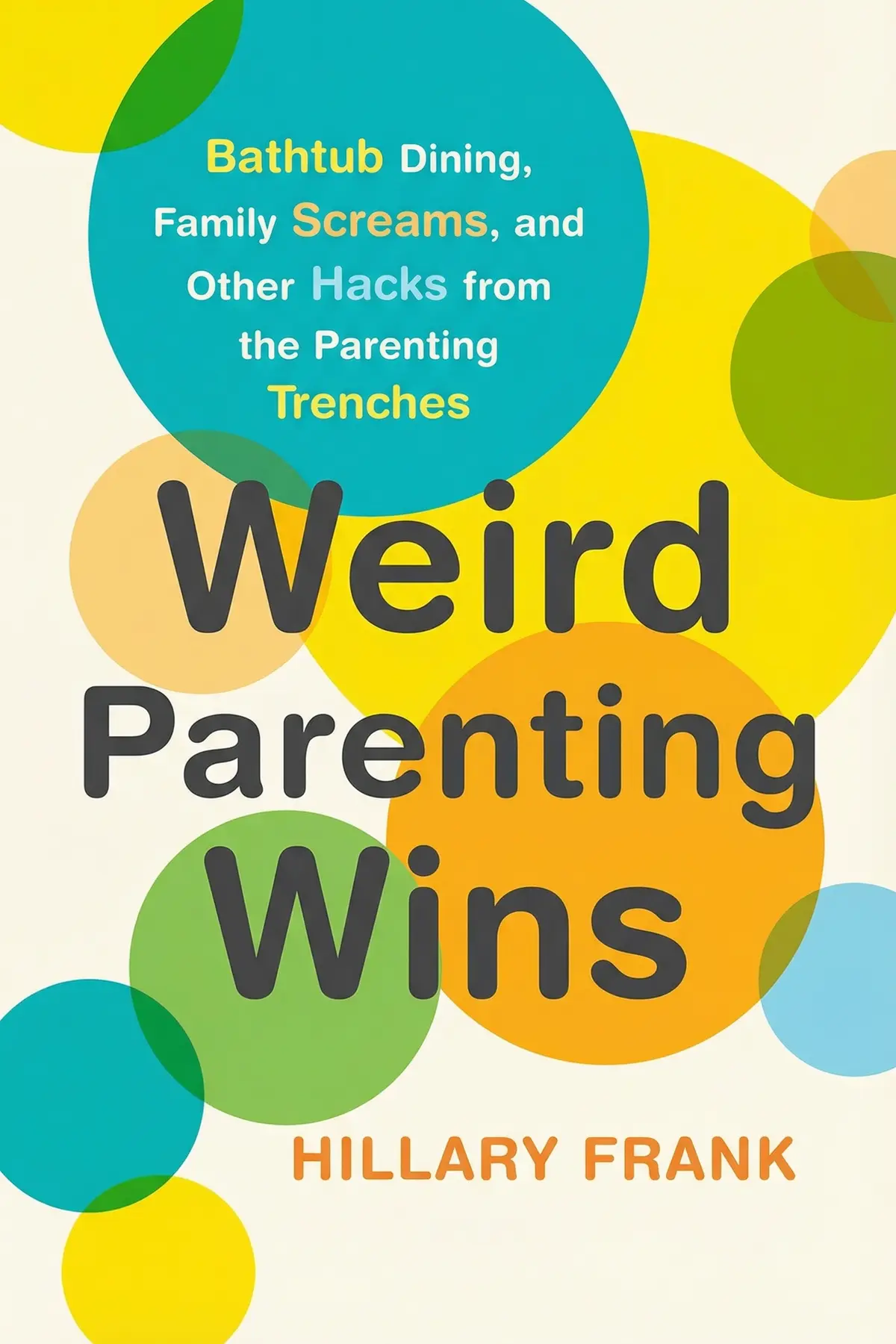
Table of Content
1. Introduction
1 min 02 sec
Most parents reach for reasons when a child melts down, and reasons rarely work. In Weird Parenting Wins, radio producer and podcast creator Hillary Frank argues that the better tool is the odd idea tried on the spot: a silly song, a sign on the wall, an electric toothbrush buzzing over a crib. Children do not see the world the way adults do, so logic loses where novelty and humor win.
Frank builds that case from raising her daughter Sasha and from stories other parents and caregivers shared with her. The ideas run from small daily battles over whining, meals and bedtime fears to harder ground: sibling cruelty, feelings a child cannot name, a parent at breaking point and a body slow to heal after birth. Expect tactics to try tonight, and a steadier faith that when one trick fails, a stranger one might work.
2. Turn a whining child into a laughing one
1 min 35 sec
A six-year-old, a freezing line at a ski resort and hours still to wait. Asking her to cheer up failed completely. What worked instead came from one lucky word and a willingness to look ridiculous.
3. Change the setting and the meal gets eaten
1 min 18 sec
The food never changed, yet a sulky child happily ate it. The author’s mother’s snack-meal trick and a baby who refused every standard feeding hold show how a change of approach can get a child to eat.
4. Calm bedtime fears, then build real bravery
1 min 23 sec
A lion under the bed will not leave because a parent explains that lions do not live in houses. One mother found a better answer, and it kept growing until the writing barely fit.
5. Read sibling meanness as a call for love
1 min 34 sec
Pried-open eyelids, a baby hidden under the sink and a forged note from the Tooth Fairy. Frank was a ruthless older sister, and her story points to what cruelty between siblings is often really asking for.
6. Draw out feelings with role-play and silence
1 min 32 sec
A screaming preschooler finally revealed a playground drama she had no words for, and a moody teenager opened up on long walks. The two methods look like opposites, yet both ask the same thing of the parent.
7. Release the pressure, then redirect the moment
1 min 28 sec
A 13-year-old refuses to leave the pool, and his overwhelmed caregiver cannot pull him out. Her answer involved a turtle, some bad acting and a lesson about what to do when anyone is close to tears.
8. Teach kids to keep themselves busy
1 min 25 sec
A pile of unused takeout sauce packets bought one mother hours of calm. Lucky finds run out, though, and her fix for a child who followed her even into the bathroom produced an unexpected song.
9. Get another opinion when pain after birth lingers
1 min 35 sec
For three years after giving birth, Frank lived with pain her doctors waved away, and one of them proposed a startling cure. The real cause turned out to be common, and it should have been found far sooner.
10. Conclusion
1 min 11 sec
Weird Parenting Wins adds up to permission. Children do not reason the way adults do, so a clever argument loses to a blues song, a sign on the bedroom wall or cold chicken on toothpicks. Frank’s stories teach a habit of mind: when the usual approach fails, try something odd, notice what the child loves, and keep going until something lands.
That habit covers the parent too. A cry in front of a film, a scream into a pillow and one more medical opinion belong in the same kit as the toothbrush in the crib, because an exhausted parent has no ideas left to invent.
This week, pick the moment that goes wrong most often, a whiny queue, a dinner standoff or a fear at lights out, and answer it with play. When a child lashes out, look for the feeling underneath, and say the reassuring thing out loud. And hand a small child one task to finish alone while you take ten minutes back.
Somewhere in River Forest, a baby slept every night to the hum of a toothbrush, because a tired father was willing to try it.
About this book
What is this book about?
Every parent knows the moment when reasoning stops working. The child whines in a freezing line, refuses dinner, insists a lion lives under the bed or turns cruel to a younger sibling. Hillary Frank argues that logic is the wrong tool here, because children do not see the world the way adults do. Novelty and humor work where argument fails. Drawing on her years raising her daughter Sasha and on stories other parents and caregivers shared with her, Frank collects the strange fixes that actually worked: a whining session turned into a blues song, a toothbrush buzzing in a crib, a sign banning wild animals from a bedroom, a pool standoff ended by a pretend turtle. She also looks underneath behavior, showing how sibling meanness can signal a need for love and how role-play or silent listening can draw out feelings a child cannot name. The book does not stop at the children. Frank makes room for the parent too, from permission to scream into a pillow to her own three-year search for a doctor who could explain her pain after childbirth. Readers get tactics to try tonight and the confidence to keep experimenting.
Book Information
Who it's for
Worn-out parents of under-fives
Exhausted parents of babies and young children whose reasoning keeps losing to whining and tantrums.
Childcare workers and teachers
Caregivers, nannies and teachers who need quick, playful ways to defuse standoffs.
Postpartum mothers still struggling
New mothers still struggling with feeding or with pain after birth that doctors dismiss.
About the Author
Hillary Frank
Hillary Frank is an independent radio producer whose stories have aired on This American Life and Morning Edition, and whose work has won awards including one from the Third Coast International Audio Festival. She created The Longest Shortest Time, an award-winning podcast about parenting and family life. She has also written and illustrated novels for teens and young adults, among them Better Than Running at Night, named a Booklist Top Ten First Youth Novel, and has taught courses and workshops, including at Loyola University.
Ratings & Reviews
Ratings at a glance

What people think
Listeners find this title both amusing and lighthearted, and one listener notes that it encourages them to be more playful with their children when things get difficult. They also value the guidance offered, as one listener highlights the diverse range of viewpoints shared by various parents and caregivers. Furthermore, the practical suggestions are highly regarded, and one listener mentions it is their top choice for a gift to give new parents.
Top reviews
Zoey
As a long-time listener of The Longest Shortest Time, I knew I needed this on my shelf. Hillary Frank has curated a collection that is equal parts hilarious and deeply moving for any caregiver. The chapter where she discusses her own birth trauma and the botched episiotomy was some of the most raw, honest writing I’ve ever encountered. It’s refreshing to see someone acknowledge the physical toll of motherhood without sugarcoating the painful reality. The tips from other parents are the cherry on top of a very entertaining sundae. Whether it’s getting a kid to eat vegetables or navigating the teenage years, this book offers a wealth of helpful perspectives.
Show moreWan
Hillary Frank has a way of making the absolute worst parts of motherhood feel hilariously universal to her readers. This book is a treasure trove of whatever works strategies that skip the judgment found in traditional parenting manuals. I loved the section on intimacy and how to maintain a connection with your partner while hiding from children. It is incredibly honest, very creative, and much-needed for the modern parent trying to survive. The stories range from the absurd to the genuinely clever, and I found myself highlighting several ideas. It is a relief to read something that prioritizes sanity over correctness. If you are tired of being told how you should parent, read this instead.
Show moreEarn
Picked this up on a whim after hearing about it on NPR, and I’m so glad I did. It’s less of a manual and more of a support group for those of us in the trenches. Some of the tips, like the Pez dispenser filled with frozen peas, are absolutely brilliant in their simplicity. It really encourages you to be more playful when you’re on the verge of a breakdown over a refusal to wear socks. While not every story hit the mark for me, the overall vibe is incredibly encouraging and humorous. I’ve already started gifting this to my friends who are expecting their first child. It’s the perfect antidote to those overly clinical parenting guides that make you feel like a failure.
Show moreRatthapong
Ever wonder if you're the only one lying to your kids just to get through the day? This book confirms that we are all dirty liars, and it is absolutely wonderful to feel seen. I listened to the audiobook version and the variety of narrators made the stories feel like a conversation with friends. The hot ice cream trick for mashed potatoes is something I’ve already implemented with my three-year-old. It actually worked! It’s lighthearted and reminds you that parenting doesn't always have to be so serious or rigid. My only gripe is that some of the stories about older kids felt a little less relatable than the toddler chaos.
Show moreJun
Finally, a parenting book that doesn't stop once the kid hits kindergarten or starts sleeping through the night. Most of these guides focus so heavily on the baby years that they forget parents still need wins later on. The second half of the book, which covers navigating high school and growing independence, was surprisingly insightful. I appreciated the specific examples of how different families handle sibling rivalry and teenage communication styles. It is organized in a way that is easy to navigate, so you can jump to your current struggle. It is not a perfect book, but it is a very useful resource for long-term parenting.
Show moreSuvannee
Look, I'm a firm believer in doing whatever it takes to survive the toddler years, and this book is validation. It is packed with hundreds of perspectives from caregivers who have been through the ringer and kept their humor. The lettuce story had me howling, and putting frozen peas in a Pez dispenser is a stroke of total genius. While I didn't agree with every parenting choice mentioned, the variety is exactly what makes the book work. It helps you become more playful and less rigid during those high-stress moments with your children. I would definitely recommend this to anyone who feels like they are losing their mind lately.
Show moreLook
To be fair, this is a quick and entertaining read, but it didn't feel like there was much new information here. The weirdness is basically just the art of distraction, which most of us figure out by month six of sleep deprivation. I also noticed a distinct lack of fatherly perspectives throughout the chapters, which was disappointing. It’s 2019; surely there are more dads with weird tricks than the few represented in these pages? The book leans heavily on the mother's experience, which makes the collection feel a bit one-sided. It is a decent coffee table book to flip through, but do not expect a revolutionary philosophy on child-rearing.
Show moreWararat
Some of these anecdotes are pure gold, but others feel a bit smug and out of touch with reality. The idea of using a Happy Meal box to trick a kid into eating leftovers is great for picky eaters. Then you hit stories that feel borderline problematic, like the section involving the gay teenager and the conservative camp. It was a tough pill to swallow in a book that is supposed to be funny and light. The writing style is engaging and Hillary's introductions are definitely the highlight of the entire experience. However, the quality of the crowd-sourced tips is hit or miss depending on your own personal values. It’s a decent enough read for a flight or a long car ride.
Show moreMaja
I really wanted to love this because I adore the podcast, but I found myself cringing more than laughing. There’s a specific story about a mother bribing her gay son to attend a conservative camp at BYU that felt completely out of place. It was presented as a parenting win because he got a good test score, but it ignored the emotional toll involved. That inclusion really soured the rest of the book for me because it felt quite cruel and outdated. There are some funny bits about hot ice cream mashed potatoes, but the lack of vetting on these anecdotes makes it hard to recommend. Frankly, some of these wins are actually just questionable parenting disguised as cleverness.
Show moreHassan
The tonal shifts in this compilation are bizarre and a bit jarring for a book marketed as lighthearted. One minute you’re laughing about a kid eating lettuce because of an SNL sketch, and the next you’re reading about stillborn babies. It felt like the editing was a bit loose, trying to cram too many disparate emotions into one volume. Some of the wins felt more like parents bragging about having easy kids who happen to eat sushi. That is not really a tip so much as it is luck of the draw. I found myself flipping past several sections that felt repetitive or just plain confusing. It has its moments, but it wasn't a cohesive experience.
Show moreQuestions about this book
What is the main idea of Weird Parenting Wins?
Hillary Frank argues that children do not think like adults, so rational argument rarely changes their behavior. Novelty, humor and odd improvised tricks work better: turning whining into a blues song, banning lions from a bedroom with a sign, or calming a baby with a buzzing electric toothbrush. Her broader message is to stay creative, keep trying when something fails and look after yourself along the way.
How does Weird Parenting Wins suggest stopping a child from whining?
Frank recommends making the whining playful instead of forbidding it. At a ski resort, she told her six-year-old daughter Sasha that any whining had to be sung as the blues. Once Frank slipped in a word Sasha found hilarious, her daughter joined in and both ended up laughing. The point is to redirect a child’s attention toward something that delights them.
What does Hillary Frank say about sibling rivalry?
Frank, who played elaborate tricks on her younger brother Josh, argues that sibling meanness often reflects a need to feel loved. She describes Danielle, a mother whose older son kept bothering his baby brother and calling himself bad. After Danielle told him he was her favorite, he stopped pestering the baby and his mood improved. Look for the hurt behind the behavior.
How can parents get children to talk about their feelings?
For young children, Frank suggests role-play. Her daughter Sasha, too young to explain a friendship problem, acted it out by casting her mother as herself and playing a controlling preschool friend. For teenagers, silent listening works better: a therapist friend walked with her moody son and simply listened as he vented, because any comment made him withdraw.
Who should read Weird Parenting Wins?
It suits tired parents and caregivers of babies through teenagers who want practical, unusual ideas for everyday struggles such as whining, meals, bedtime fears and sibling fights. It also speaks to new mothers dealing with feeding problems or lasting pain after childbirth, through Frank’s own three-year search for a correct diagnosis and her advice to keep seeking opinions.
Readers also enjoyed

AUDIO SUMMARY AVAILABLE
Listen to Weird Parenting Wins in 15 minutes
Get the key ideas from Weird Parenting Wins by Hillary Frank, plus 5,000+ more nonfiction titles.
- 5,000+ titles
- Listen as much as you want
- 7-day free trial
- Cancel anytime









