

14 min 05 sec
Available in: English
Wean in 15: Up-to-date Advice and 100 Quick Recipes
By Joe Wicks
A practical guide to moving a baby from milk to family meals: when to start, why vegetables should come before sweet foods, how to offer them safely, and how to let appetite set the pace.
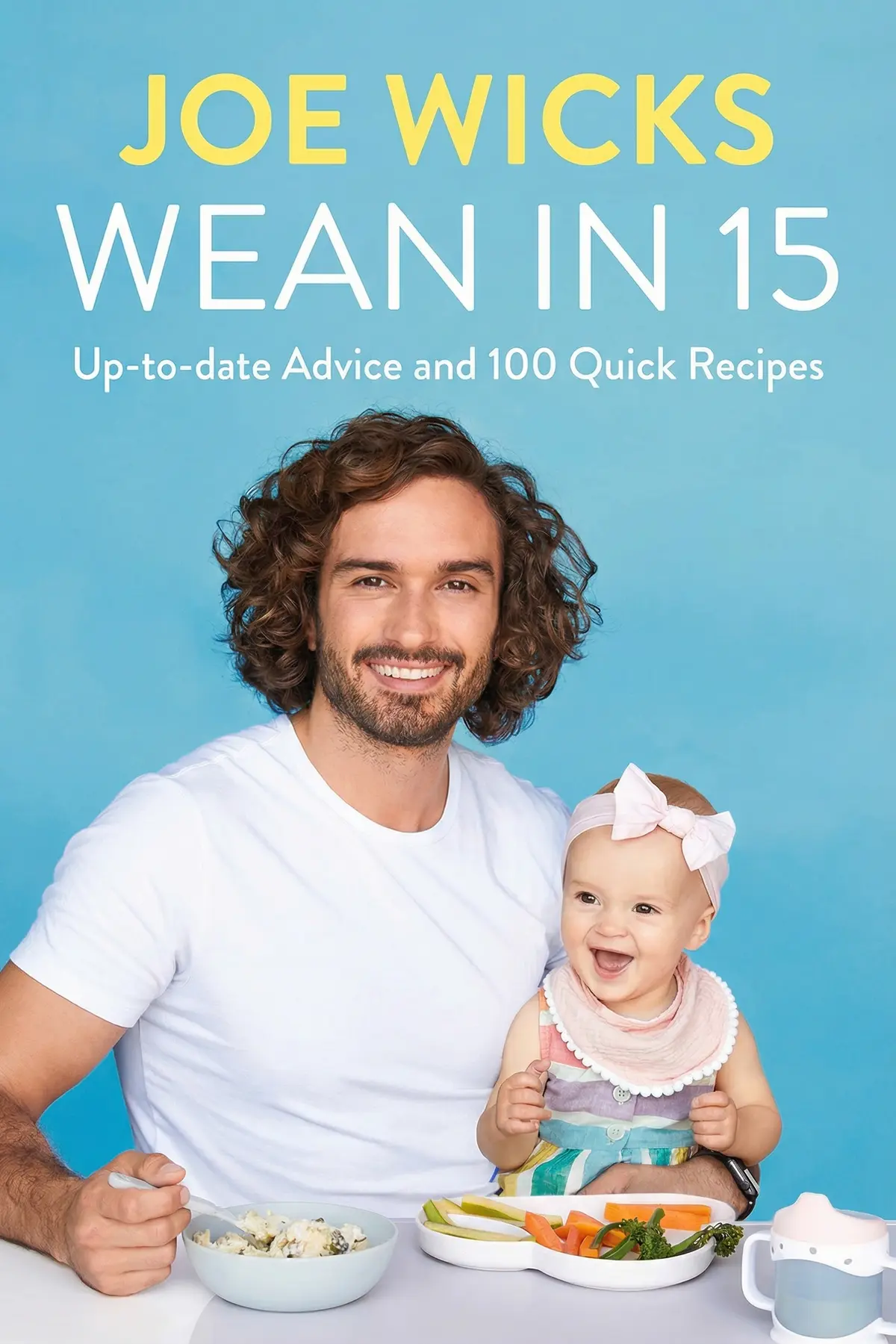
Table of Content
1. Introduction
59 sec
If you are about to give your baby a first taste of solid food, the instinct is to choose something sweet that goes down easily. In Wean in 15, fitness coach and cookbook author Joe Wicks argues for broccoli, kale and asparagus instead, because a baby’s palate is at its most open in those first weeks and early tastes can stay with a child for life.
That advice rests on a larger idea. Wicks treats weaning as a gradual journey of teaching a child to enjoy a wide range of food, and he says the baby, read through her own signals, should set the pace. Every stage he describes follows from that: when to begin, what to serve, how to offer it and how much.
Ahead are the three signs that a baby is ready, a two-week vegetable plan, a safe way to offer finger food, a month-by-month path toward curries, and a feeding rhythm that keeps milk and meals from competing.
2. See weaning as teaching your baby to eat
1 min 39 sec
The everyday word for this stage makes it sound like breaking a bad habit. Wicks thinks that picture leads parents to measure the wrong thing, and he offers a goal that changes what a good week looks like.
3. Spot the three signs your baby is ready
1 min 37 sec
A hungrier baby who chews her fists and stares at your plate seems to be asking for solid food. Wicks says those clues fool many parents, and he points to a short test that tells you far more.
4. Start with bitter vegetables to build a lifelong eater
1 min 58 sec
Apple puree and baby rice disappear fast, so they look like the obvious place to begin. Wicks argues that this easy start can cost you years of battles at the table, and his alternative takes minutes to cook.
5. Pick spoon, finger food or both with confidence
1 min 38 sec
Some parents swear by the spoon, others by letting the baby grab food from day one, and fear of choking hangs over the choice. Wicks weighs both camps and describes what he did at his own table.
6. Add flavor and texture one notch at a time
1 min 50 sec
Two weeks of watery single-vegetable purees is only the warm-up. Wicks maps how a baby can move toward real family dishes within months, and the pace depends on one thing parents often overlook.
7. Let your baby's appetite set the portion
1 min 37 sec
Parents want a number of spoonfuls or grams, and the book refuses to give one. What it offers instead is a way to read hunger and a simple timing trick that stops milk from spoiling meals.
8. Build a balanced plate as milk fades out
1 min 38 sec
Early meals are mostly tasting practice, but that changes as the first birthday approaches. Wicks explains what a baby’s diet must cover by then, where cow’s milk fits, and what plant-based families need to watch.
9. Conclusion
1 min 09 sec
Wicks’s book turns weaning from a countdown to the last bottle into something more patient: a year of teaching a small person to enjoy food. The parent’s job is to offer widely and then read the baby, because the baby sets the pace. Indie’s curries at nine months grew out of that patience, and her journey with solid food had begun when she was six months old.
The most useful habit may be the one Wicks saves for last. A first refusal says little about whether a baby can learn to like a food. If a new vegetable gets spat out, stay relaxed, pause, and offer it again a little later. If it still fails, bring it back another day, perhaps blended into a dish your baby already enjoys.
So check the three readiness signs before the first meal, open with vegetables in place of sweet apple puree, and nurse at least an hour before meals or right after them. Then trust what your baby shows you over any chart or comparison with other children.
A palate grows the way a baby does: slowly, unevenly, and mostly while someone is paying attention.
About this book
What is this book about?
Every parent reaches the moment when milk alone is no longer enough, and the advice on what comes next can feel endless and contradictory. Joe Wicks offers one clear way to think about it. Weaning, in his view, is less about ending breast milk or formula and more about teaching a child to eat, chew, handle food and enjoy many tastes. His method rests on responsive feeding: watching a baby's signals and answering them. Wicks explains the three signs that a baby is ready, notes the UK National Health Service rule of thumb of around six months, and makes the case for vegetable-led weaning, offering non-sweet flavors such as broccoli and kale while the palate is most receptive. He compares spoon-feeding, baby-led weaning and the hybrid he used himself, and sets out simple safety rules for finger food. Readers get a two-week vegetable puree plan, a path from mashes to mild curries, guidance on timing milk around meals, the four food groups a baby needs, and a reminder to keep a doctor involved in every major decision.
Book Information
Who it's for
Unsure about first solids
New parents approaching six months who feel unsure when and how to start solid food.
Busy parents wanting simplicity
Busy parents who want quick vegetable purees and a simple weekly plan instead of piles of conflicting advice.
Parents with feeding worries
Parents worried about raising a fussy eater or about choking with finger food.
About the Author
Joe Wicks
Joe Wicks built his following with 15-second recipe videos on social media, and his Instagram and YouTube accounts became some of the most followed in fitness. His workouts are based on high intensity interval training. His first cookbook, Lean in 15: 15-minute meals, was a best-seller in 2015, and in March 2020 he set a Guinness World Record when more than 950,000 people watched one of his workouts live on YouTube.
Ratings & Reviews
Ratings at a glance
What people think
Listeners describe this book as a down-to-earth and functional manual that makes the typically stressful weaning phase easier with lucid tips and nutritious meal concepts. They value the emphasis on batch cooking and dishes suitable for the whole family, with one listener highlighting that the mashed banana with tahini and cinnamon has turned into a household staple. Furthermore, the opening chapters are seen as motivating and simple to navigate for people beginning the process. Even though some disagree regarding how precise certain recipe measurements are, they still feel the work is a supportive and uplifting tool for first-time parents.
Top reviews
Maksim
As a first-time parent navigating the minefield of solid foods, I found this guide incredibly reassuring. The introductory chapters are genuinely inspiring and managed to lower my anxiety levels significantly before we even touched a spoon. To be fair, some of the "prep like a pro" advice requires a bit of freezer space that not everyone has. However, the focus on healthy, whole ingredients is exactly what I was looking for. We’ve already started making the family-friendly meals so we can all eat together, which is a massive time-saver. It’s a straightforward and encouraging resource for anyone feeling a bit lost in the weaning process.
Show moreLillian
The chapter on the basics of nutrition is incredibly clear and helpful for any parent about to start weaning. Joe Wicks has a very relaxed and practical style that makes the whole process feel much less daunting than it first appears. We’ve tried the Butternut & Kidney Bean Quesadillas, and they were a huge success with both the baby and my partner. Not gonna lie, some of the prep takes a bit of effort, but the "prep like a pro" sections are gold. It’s an inspiring resource that encourages you to get creative in the kitchen while keeping health at the forefront. This is definitely a standout in the crowded market of baby food books.
Show moreMay
Finally got around to trying the Butternut & Kidney Bean Quesadillas yesterday, and they were surprisingly delicious. This book is packed with healthy recipe ideas that don't feel like "baby food," which is a huge plus for us. The overall approach is very practical, emphasizing how to stay ahead of the game with smart meal prepping and freezing. I found the introductory section to be a great refresher on the basics of weaning without being overly academic or dry. Even though some recipes are a bit more time-consuming than others, the clear advice makes the journey feel achievable. It’s a fantastic, family-friendly guide that we keep coming back to.
Show moreOmar
Wow, this book really takes the guesswork out of the first few months of introducing solids. The advice is outstanding, offering a relaxed perspective on what can often be a very overwhelming and high-pressure time. I love that it encourages eating together as a family, which helps the baby learn by watching us enjoy our meals. The recipes are healthy and inventive, though I do agree that some quantities need a little bit of tweaking here and there. In my experience, it’s one of the more inspiring books on the shelf, even if you just use it for the tips. Definitely a must-have for parents who want to keep things simple and healthy.
Show moreDiego
Picked this up from the local library to get some fresh meal inspiration for my seven-month-old. Truth is, the mashed banana with tahini and cinnamon has already become a breakfast staple in our household because it's so quick. I appreciate how Joe labels the recipes, making it easy to skip the "longer meals" when we are short on time. Some of the suggestions, like putting sweet potato slices in the toaster, are definitely a bit odd and not worth the hassle. Still, the book serves as a helpful bridge between baby food and proper family dinners. It’s a solid, practical choice for those starting their journey.
Show moreLuckana
Ever wonder if weaning can actually be stress-free and manageable for a working family? This book definitely makes a strong case for it by focusing on meal prepping and simple freezer wins. The advice is clear and helpful, stripping away a lot of the overwhelming noise found in online parenting forums. Personally, I love that the recipes incorporate really healthy ingredients without being too "preachy" about the science behind it all. While some recipes take longer than the promised fifteen minutes, the end results are usually tasty enough for adults too. It has certainly simplified our evening routine and helped us feel more organized.
Show moreSin
After hearing so much about Joe Wicks, I decided to give this a go for my daughter’s first foods. The book offers a really straightforward and simple guide that avoids the usual jargon associated with infant nutrition. I especially appreciated the summaries at the top of each page which help you decide if a recipe fits your schedule. There are definitely a handful of recipes that look good enough for the whole family to enjoy together on a Sunday. Some ingredients are a bit "Waitrose-centric," but most things can be swapped out with a bit of common sense. It’s a very encouraging book for those of us just starting out.
Show morePakinee
This guide is a bit of a mixed bag for me, especially regarding the intended audience. While the layout is beautiful, I found the tone occasionally pretentious with ingredients that aren't exactly cupboard staples. Honestly, suggesting a specific spice blend that you can seemingly only find at Waitrose feels a bit out of touch for most families. The advice leans heavily toward spoon-feeding rather than baby-led weaning, which didn't quite suit our approach at home. That said, the Very Green Curry was a hit and offered a nice way to introduce bolder flavors. It’s worth a look for the recipes, but you might need to adapt the quantities.
Show moreLeah
To be fair, the ideas in here are quite creative and the photography is absolutely stunning. I really wanted to love every recipe, but I’ve found that I often have to adapt them to get the right consistency. Sometimes the liquid ratios are slightly out, which can be frustrating when you’re trying to follow the instructions to the letter. Frankly, it feels more like a collection of ideas rather than a foolproof manual for cooking for infants. I still use it for inspiration, but I’ve learned to trust my instincts over the printed measurements. It’s a useful secondary resource but perhaps not the only weaning book you’ll ever need.
Show moreKanokwan
Not what I expected at all, and I struggled to get past the tone of the writing. Look, I wanted simple recipes, but some of these feel unnecessarily fussy or just plain bizarre for a busy parent. Why would I use a fish slice to flip pancakes when a standard spatula works perfectly fine? I followed a few recipes faithfully, but the quantities felt completely off, resulting in dishes that didn't look like the photos. The claim that these are "quick and easy" feels like a stretch when you’re prepping a dozen different ingredients. It might work for some, but it felt more like a lifestyle brand than a practical kitchen tool.
Show moreQuestions about this book
What is the main idea of Wean in 15 by Joe Wicks?
Wicks argues that weaning is about teaching a baby to eat and enjoy many foods, not only about stopping breast milk or formula. He recommends responsive feeding, which means watching a baby’s signals and answering them, and vegetable-led weaning, which starts with bitter vegetables like broccoli and kale. Flavors, textures and portions then grow step by step at the baby’s own pace.
How do I know when my baby is ready for solid food?
Wicks cites NHS guidance that most babies are ready at around six months, then gives three signs to check. The baby can sit up with a steady head and neck, can pick up food and bring it to her mouth on purpose, and can swallow it without the tongue pushing it out. Never start before 17 weeks, and ask a doctor if signs appear before six months.
What is vegetable-led weaning?
It means starting solids with non-sweet vegetables while a baby is most open to new flavors. Wicks suggests one single-vegetable puree a day, such as broccoli, potato, green beans, asparagus, rutabaga, kale and avocado in the first week. He says the approach is supported by research and recommended by the NHS, and that starting with sweet foods like apple puree risks raising a fussy eater.
Should I spoon-feed or try baby-led weaning?
Wicks treats both as valid. Spoon-feeding builds comfort with cutlery and makes new flavors easy to introduce, while baby-led weaning, where the baby feeds himself soft finger food, builds independence. He used a mix, offering a soft broccoli floret beside spooned puree. To keep choking risk low, serve small, soft pieces, avoid raw carrots and whole nuts, and slice grapes and cherry tomatoes thinly.
What if my baby refuses a new food?
Wicks says one rejection does not mean a baby cannot learn to like a food. Stay calm and avoid making a fuss. Pause briefly and offer it again, and if that fails, try on another day. You can also be creative, for example by blending the refused food into a dish your baby already likes.
Readers also enjoyed



Battle Hymn of the Tiger Mother
Amy Chua
An American Sickness: How Health Became Big Business and How You Can Take
Elisabeth Rosenthal


AUDIO SUMMARY AVAILABLE
Listen to Wean in 15 in 15 minutes
Get the key ideas from Wean in 15 by Joe Wicks, plus 5,000+ more nonfiction titles.
- 5,000+ titles
- Listen as much as you want
- 7-day free trial
- Cancel anytime









