

14 min 36 sec
Available in: English
We Should All Be Millionaires: A Woman’s Guide to Earning More, Building Wealth, and Gaining Economic Power
Rachel Rodgers explains why so few women become millionaires and how to change it: rewrite limiting money stories, guard your time with firm boundaries, build a circle of ambitious women and price your work by its value.
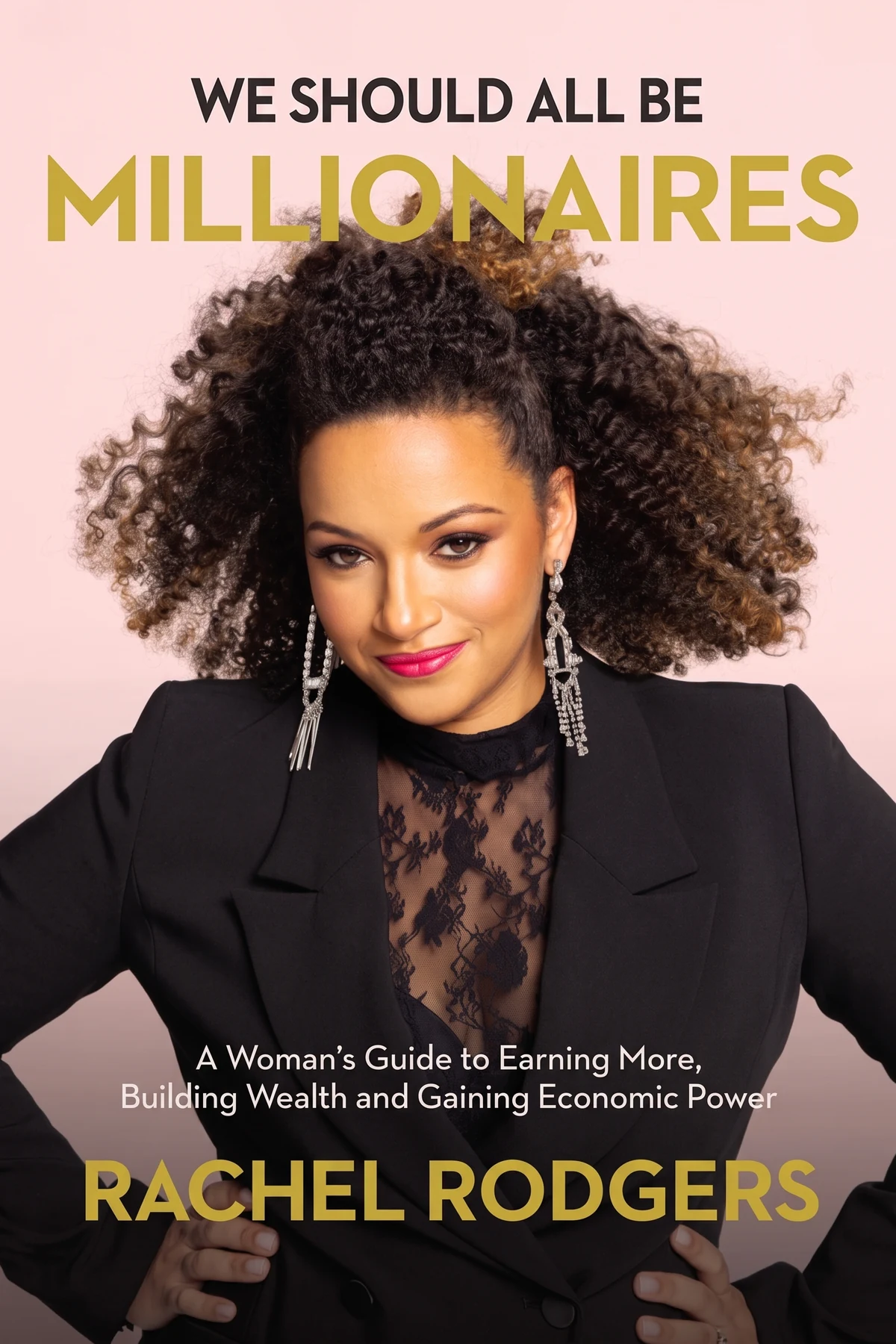
Table of Content
1. Introduction
1 min 01 sec
If talking about money makes you wince, or wealth feels like something meant for other people, start with the fact Rachel Rodgers offers: women make up just 10 percent of millionaires worldwide. In We Should All Be Millionaires, Rodgers, founder of the business training company Hello Seven, argues that this gap has nothing to do with ability. Money brings influence, and while so little of it sits with women, real equality stays out of reach.
Her case is that three things hold women back: inherited stories, unequal workloads and the habit of underpricing. All three grew out of centuries of exclusion, and all three can be changed. Catch the script that says you are bad with money. Divide the load at home. Make your limits at work stick. Find a circle of ambitious women, and price your work by what it earns other people. Along the way she makes the case that one woman’s wealth spreads to everyone around her.
2. Rewrite the three money stories in your head
1 min 41 sec
Many women feel dread before they ever look at a bank statement. Rodgers traces that feeling to three familiar beliefs, and a 2017 study of investors turns one of them upside down.
3. Go easy on yourself: equal access is barely fifty
1 min 43 sec
Feeling behind with money can seem like a personal failing. A short list of dates from recent history suggests a very different explanation, and a reason for hope.
4. Two women, same life, very different bank balance
1 min 46 sec
Picture two women with the same job, partner, children and home. One is always broke and one is rich, and the difference has nothing to do with salary or luck.
5. Say no at work and make it stick
1 min 46 sec
An unanswered email at 11 p.m. can cost more than an evening. Rodgers explains why a limit you fail to enforce does more harm than having no limit at all.
6. Climb with a team of women on the rise
1 min 38 sec
No one attempts Everest alone, however well trained. Rodgers argues that wealth works the same way, and she is blunt about which allies you can do without.
7. Set your price by what your work earns others
1 min 47 sec
Two lawyers did the same trademark work. One billed thirty times more than the other. What changed when the lower-priced lawyer finally raised her rates is the most useful part of the story.
8. A richer woman lifts the people around her
1 min 57 sec
Wealth buys time, a home and healthcare. Rodgers goes further, citing international research on where women’s money ends up, and why a march can only do so much for a cause.
9. Conclusion
1 min 17 sec
Rodgers turns a private worry into a public story. The dread many women feel about money, the reflex of saying yes to every request, a $500 bill for work another lawyer billed at $15,000: in her account, all of these are what remains of a system that kept women away from bank accounts and credit until about fifty years ago. If those habits were learned, they can be unlearned. And every woman who builds wealth also gains influence that her family and community can feel.
Her final piece of advice about spending may surprise you. Rodgers rejects the familiar tip to give up the daily caramel latte or nice clothes, calling it a scarcity mindset that gets you used to going without. Keep the latte, she says, and put your effort into raising what you earn.
That points to a practical start. Before your next invoice or raise request, work out what your work produced and set your price from that figure. When the old voice says you are bad with money, answer it straight away. And when an email arrives after hours, leave it for the morning. Today, women make up one in ten of the world’s millionaires, and Rodgers sees no reason the number should stay there.
About this book
What is this book about?
Of all the millionaires in the world, only 10 percent are women. Rachel Rodgers argues this has nothing to do with women's ability. In her view it is the result of centuries in which women were shut out of earning, saving and borrowing, and of the doubts that history left behind. Because money brings influence, that gap keeps real equality out of reach. Rodgers, a lawyer turned business coach, names the specific things that keep women broke. There are the stories women tell themselves about money, a household load that eats their time, workplaces that expect endless favors and a habit of charging far too little. She sets each problem against a fix: catch and answer the negative script, share or outsource the chores, enforce limits at work, join a network of women on the rise, and set prices by the results your work produces. Readers get a clear account of why the old money rules were stacked against women, plus practical moves for the next invoice, the next raise and the next after-hours email. Rodgers also argues that a wealthier woman strengthens her family, her community and the causes she cares about.
Book Information
Who it's for
Women underpricing their work
Women who undercharge clients or hesitate to ask for a raise.
Overloaded working mothers
Working mothers who carry most of the household load and have no time left for their own financial goals.
Freelancers, new business owners
Freelancers and new business owners who want a clear way to price their work by results.
About the Author
Rachel Rodgers
Rachel Rodgers is the founder and CEO of Hello Seven, a company that trains people in finance, business, marketing and law, with the goal of helping them build seven-figure businesses and generational wealth. She started out in law, working for state and federal judges and for nonprofits. We Should All Be Millionaires has sold more than 200,000 copies and made the Wall Street Journal and USA Today bestseller lists. She is also the author of Future Millionaire and Million Dollar Habits.
Ratings & Reviews
Ratings at a glance
What people think
Listeners consider this work essential for women, packed with individual anecdotes and thoroughly vetted information. The book offers a comprehensive roadmap and particular techniques for wealth creation, with one listener observing that it instructs on how to make million-dollar decisions. Listeners value its inspiring quality, with one mentioning they felt empowered after finishing it, and its genuine nature, as one review pointed out its evidence-based perspective.
Top reviews
Viroj
Finally got around to reading this, and it’s a total game-changer for my business mindset. Instead of the typical "cut back on lattes" advice, Rodgers pushes you to think about income generation and making what she calls "million-dollar decisions." I love that she addresses the systemic barriers women and people of color face rather than just ignoring them like most finance gurus do. While the first half feels like a memoir, her personal stories actually highlight the mindset shifts needed to jump from "broke ass" thinking to true wealth. Some might find it braggy, but I found her transparency about her own success incredibly refreshing and motivating. It’s about time we had a book that tells women it’s okay to want—and have—a lot of money to change the world.
Show moreKob
As a Black woman navigating the corporate world, this book felt like a deep breath of fresh air. Rachel Rodgers doesn't just talk about money; she talks about power, legacy, and dismantling the historical oppression that kept us from building wealth for generations. Her conversational tone makes complex socio-economic issues feel accessible and urgent. I’ve already started implementing her advice on delegation to stop doing "ten-dollar tasks" that drain my energy. It’s empowering to see a successful woman look back and provide a roadmap that includes our specific struggles. This isn't just about brand-name purses; it’s about having the resources to take care of our communities and families. Truly a must-read for any woman who has ever felt guilty about wanting more for herself.
Show moreSirinat
Wow. This is the first business book that didn't make me feel like I had to change my personality to be successful. Rodgers writes with an authenticity that is rare in the personal finance space, blending her own rags-to-riches story with hard facts about the gender pay gap. I particularly enjoyed the section on building a "millionaire squad" because it emphasizes that no one reaches the top alone. The writing style is punchy and direct, which kept me engaged through the more research-heavy sections. It’s less about spreadsheets and more about the psychological warfare we have to win against our own self-doubt. By the time I finished, I felt ready to double my rates and stop apologizing for my ambition.
Show moreApichat
After hearing so many people rave about this, I finally picked up a copy to see if the hype was real. To be fair, Rodgers is a great storyteller, and her narration on the audiobook version is full of personality and wit. She makes a compelling case for why wealth in the hands of women is a net positive for the entire world. I did find some of the social justice terminology a bit heavy-handed for a finance book, but I understand why she included it to provide historical context. The practical advice on identifying your "million-dollar skill" was worth the price of the book alone. It’s a stellar read that offers a much-needed perspective shift, even if some of the examples feel a bit extravagant.
Show morePatchara
Ever wonder why we're taught to feel guilty about wanting to be rich? This book deconstructs those feelings with surgical precision. Rachel Rodgers provides a detailed plan for women to claim their financial power, backed by both personal experience and cultural research. I love that she doesn't preach extreme frugality; instead, she focuses on expanding your earning potential through creative thinking and boundaries. The "million-dollar mindset" isn't just a buzzword here—it's a series of actionable steps to reclaim your time and energy. It’s empowering, factual, and incredibly motivating for anyone starting a small business. I’ve already recommended it to every woman in my professional network because we all need this level of unapologetic encouragement.
Show moreGai
I had high expectations for this audiobook and for the most part, Rodgers delivered a punchy, energetic performance. The framework centered on "Million Dollar Decisions" is solid and really makes you audit how you spend your time versus your potential earnings. On the other hand, there is a lot of personal anecdote that felt a bit repetitive or self-indulgent during the middle chapters. I was hoping for more technical investing strategies, but this is definitely more of a motivational manifesto than a financial textbook. Truth be told, the Appendix was my favorite part because it listed 100 concrete reasons why women should be wealthy. If you need a kick in the pants to value your time, get it, but don't expect a deep dive into the stock market.
Show moreMaja
The chapter on "Broke Ass Decisions" was the wake-up call I didn't know I needed. We are socialized to save every penny and play small, but Rodgers argues that this scarcity mindset is exactly what keeps us stuck. I appreciated how she cited specific research regarding how women use wealth to influence positive social change in their neighborhoods. My only gripe is that the actual "how-to" of wealth building doesn't really kick in until the final 20% of the book. Before that, it's mostly mindset work and personal history. Still, the energy of the writing is infectious and it definitely changed how I approach my quarterly goals. If you're tired of the "Dave Ramsey" style of deprivation, this is the perfect alternative for your bookshelf.
Show moreRin
This book isn't your typical investment guide, so don't go in expecting charts on index funds or 401k allocations. It’s a manifesto on why women need to stop settling for "just enough" and start aiming for true abundance. I really liked the distinction between BAD (Broke Ass Decisions) and million-dollar ones; it's a simple framework that I've already started applying to my daily schedule. The writing is conversational and easy to digest, though I'll admit the middle sections dragged a bit with too many case studies. However, the overall message of financial empowerment and systemic change is so important that I can overlook the occasional pacing issue. It’s a great kick-off for anyone looking to overhaul their relationship with money this year.
Show moreRyan
Frankly, I’m torn on how to rate this because the message is vital but the execution felt a bit uneven. Rachel Rodgers is clearly brilliant and her success is undeniable, but the book spends so much time on her personal backstory that the actual financial advice gets squeezed into the end. I loved the "Million Dollar Decisions" concept and found the Appendix with the 100 reasons to be a millionaire very clever and inspiring. However, if you are looking for a technical manual on stocks or real estate, you might be disappointed by the focus on mindset and "hustle culture" alternatives. It’s an excellent motivational tool for women of color, yet it occasionally lacks the concrete, step-by-step depth I was anticipating.
Show moreKavya
Look, I wanted to love this, but the level of privilege radiating from these pages is hard to ignore for a working-class reader. The advice to just "hire a personal assistant" or "start a law firm" assumes a level of baseline capital that many women simply do not have access to in the real world. Frankly, it felt more like a long-form sales pitch for her coaching programs than a realistic financial guide for the average person. I found her tone a bit immature at times, especially when she dismisses traditional economic principles in favor of "manifestation" and "mindset." While the social justice lens is appreciated, the book lacks the technical depth needed to actually help someone who isn't already a business owner.
Show moreQuestions about this book
What is the main idea of We Should All Be Millionaires?
Rachel Rodgers argues that women are not worse with money. They are held back by a history of exclusion and the habits it left behind: stories about not being good with money, a heavy share of unpaid work at home, weak boundaries at work and chronic underpricing. Because women make up only 10 percent of millionaires worldwide, she treats building wealth as a route to personal freedom and to wider equality.
How does Rachel Rodgers say women should price their work?
Rodgers says to price by the result your work produces, not by the hours it takes. Her example is a copywriter who quoted $1,000 for newsletters that brought a client $300,000 in new business. She argues a fair fee is 10 percent of that result, or $30,000. Employees can use the same logic when asking for a raise, and she advises finding a better-paid job instead of settling.
Why does the book focus on boundaries?
Rodgers sees time as the raw material of wealth, and women often give it away by taking on most of the housework, listening to the boss at the end of the day or answering late emails. She advises stating limits plainly and enforcing them, since a limit you don’t enforce teaches people to ignore you. She cites research finding that agreeable women earn less than women who are not.
Does We Should All Be Millionaires tell you to cut spending?
No. Rodgers rejects the common advice to give up small pleasures such as a daily caramel latte or nice clothes, calling it a scarcity mindset that gets you used to going without. She would rather you keep the things you enjoy and focus on raising your income, through better pricing, raises, side projects and investing in stocks, index funds and real estate.
Who should read We Should All Be Millionaires?
It is written for women who feel anxious or out of their depth with money, who carry most of the load at home or who suspect they charge too little. Freelancers and business owners will get the most from its pricing advice. Employees can use its guidance on boundaries and raises, and anyone who wants allies on the way up will benefit from its case for networks of women.
Readers also enjoyed




Cashing Out: Win the Wealth Game by Walking Away
Julien Saunders
Charlie Munger: The Complete Investor
Tren Griffin
Big Mistakes: The Best Investors and Their Worst Investments
Michael Batnick
AUDIO SUMMARY AVAILABLE
Listen to We Should All Be Millionaires in 15 minutes
Get the key ideas from We Should All Be Millionaires by Rachel Rodgers, plus 5,000+ more nonfiction titles.
- 5,000+ titles
- Listen as much as you want
- 7-day free trial
- Cancel anytime









