
All About Love: New Visions
bell hooks
 English
Shows couples why small arguments turn into bitter wars, and how to stop scoring points by calming old childhood reflexes, dropping the villain version of a partner and working toward shared goals.
1 min 09 sec
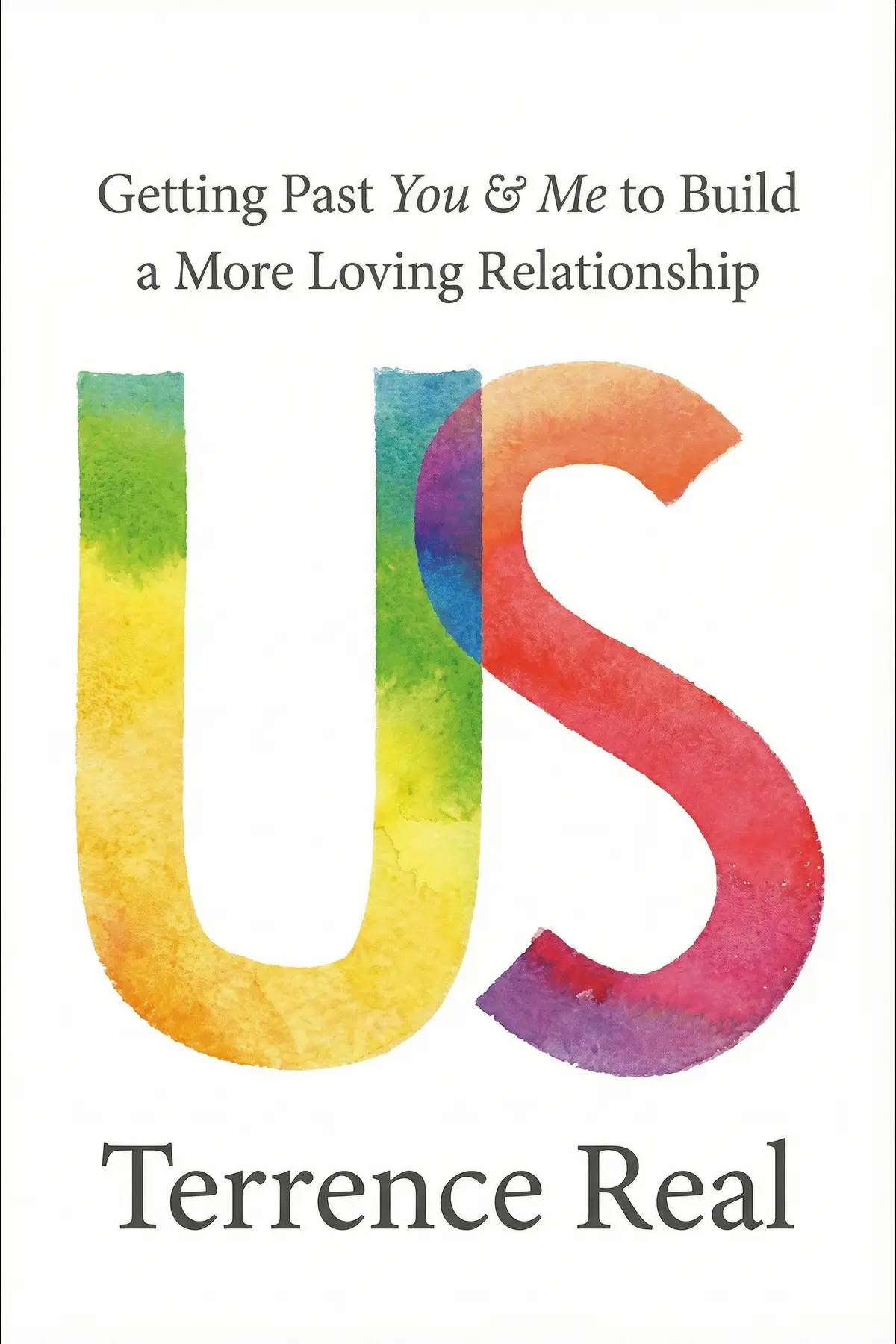
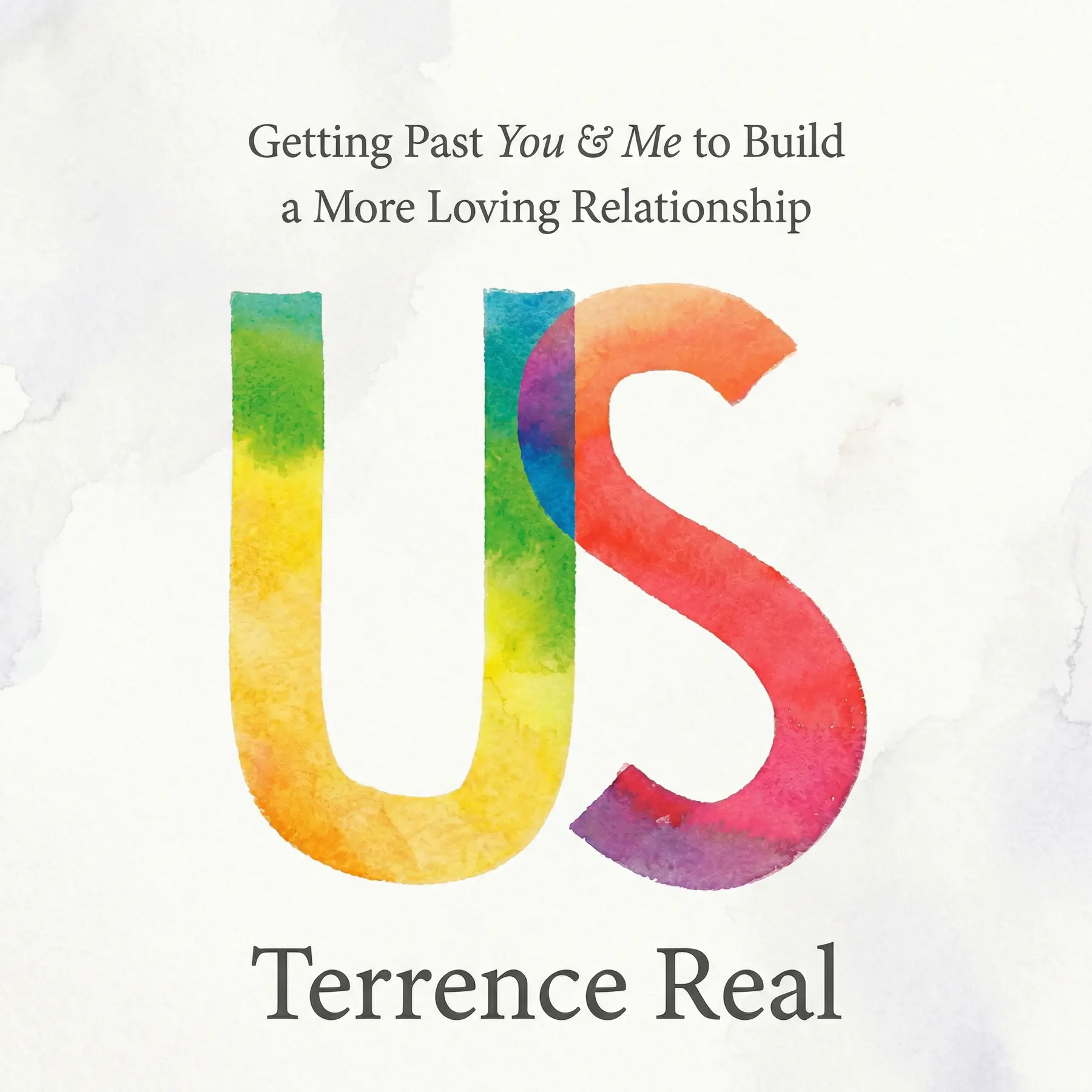
If your arguments with a partner keep spiraling from a dirty dish into shouting or icy silence, the real problem may be less who is right than who is doing the fighting. In Us, family therapist Terrence Real argues that under stress, each partner hands control to a younger self who learned to cope in childhood by yelling, lying or going quiet. Two of those younger selves can damage a good relationship in minutes.
Real, a pioneer of Relational Life Therapy, says the cure is to stop acting as two separate people keeping score and start acting as one shared us. His claim is simple: when one partner wins a fight, the relationship loses, and the habits behind those fights can change. He makes the case through three couples: a husband who lied about being late, a pair stuck in a fight about sex, and a marriage hit by a two-year affair. His approach is meant for couples who are not in an abusive relationship. What it offers is a clear map of your own worst moments in a fight, and practical tools for the next one.
2 min 08 sec
One partner asks a simple question about the sink, and suddenly old disagreements resurface. The speed of that collapse is not bad luck, and it points to who is really arguing.
1 min 51 sec
A kind husband could not stop inventing stories, even about being five minutes late, and his wife was ready to leave. The habit made perfect sense once you saw the house he grew up in.
2 min 00 sec
Insight into your childhood rarely changes what you do at seven in the evening. Dan needed a daily practice, and the moment it paid off came from a reaction he never expected.
2 min 02 sec
In a bad stretch, many people feel they share a bed with someone they barely recognize. One couple’s fight about sex shows how that stranger is built, and why it makes fair problems unsolvable.
1 min 57 sec
Two short words can end a conversation before it begins, and the fault you hate most in your partner may be closer to home than you think. Real’s way out starts by changing a single question.
1 min 56 sec
An affair can make the ground itself feel unreliable. One couple used that collapse to fix far more than the betrayal, with a four-part conversation and a husband willing to change his own story.
1 min 18 sec
Real’s book comes down to a change in who is present during a fight. Most couples argue as two scared children facing two imaginary villains: four figures in the room and not one adult. His tools bring the grown-ups back. A breath before the old reflex, the respect test, the shared goal and the feedback wheel all move the question away from who wins and toward what the relationship needs.
His final advice is the simplest. If an argument is underway and you realize your partner’s adaptive child has taken the wheel, give up on winning. Children build their defensive strategies when they feel unsafe, so become somewhere safe for them. Once your partner is calm and their wise adult has returned, you can pick the conversation up again. When Dan told the truth, Julia was thrilled, and that corrective emotional experience showed him that the habit of lying he learned as a boy was no longer needed.
Before your next argument, choose one thing to practice: a breath when your own reflex rises, a shared goal in place of always or never, or calm when your partner loses theirs. Each time one of you wins, the relationship pays. Each time you both put us first, it grows.
Most couples know the pattern. A small irritation, such as a dish left in the sink, turns into shouting, old grievances or a stony silent treatment, and both partners lose sight of who they are really fighting with. Family therapist Terrence Real argues that the trouble lies in how we think about the relationship itself. Raised to see ourselves as separate individuals, we treat a partnership as a contest between you and me, and every win for one partner is a loss for both. Drawing on relational therapy and on findings about how stress moves between partners, Real explains how fights hand control to an adaptive child, the set of defensive habits each of us learned in our families. He shows how we pair that child with a cartoon villain version of our partner, and why that combination keeps couples stuck. Through the stories of three couples, the book offers concrete tools: a respect test for harsh thoughts, ways to turn blame into a shared goal, a four-part conversation for repairing broken trust, and a way to calm a partner in the middle of a fight. The aim is a relationship both people can live in, built around us.
Couples whose small disagreements keep turning into shouting matches or long silences.
Partners who notice they react like their parents did and want to change the pattern.
Couples rebuilding after an affair or a slow loss of trust who are both willing to do the work.
Terrence Real, who also writes as Terry Real, is a family therapist and speaker known as a pioneer of Relational Life Therapy, an approach that helps couples build trust, intimacy and better communication. His books include How Can I Get Through to You?, on reconnecting men and women, and I Don't Want to Talk About It, on hidden depression in men. His work has appeared on Good Morning America and Oprah and in The New York Times.
Listeners view this title as an essential resource for relationships, providing actionable tips and observations that are relevant across different types of partnerships. Additionally, they value its transformative nature; for instance, one listener shared that it completely altered their outlook on marriage. The narrative is praised for its accessible style and flow, with one listener specifically mentioning the inclusion of relatable stories. On the other hand, opinions on the political elements are divided, as several listeners felt the content became too political.
This book completely shifted how I view my marriage and myself. I found the distinction between the 'Adaptive Child' and the 'Wise Adult' to be incredibly illuminating for our daily interactions. Instead of reacting out of old childhood wounds, Real teaches you how to pause and stay in your rational brain. To be fair, some of the social commentary felt a bit shoehorned in at times, but the core message remains powerful. If you are tired of the constant power struggles and point-scoring, this offers a genuine path forward. It's not just about compromise; it’s about a total ecological shift in how you inhabit your relationship. I wish I had read this ten years ago before certain patterns became so deeply ingrained.
Show moreWow, I didn't expect a therapy book to feel this urgent and necessary. Most relationship advice focuses on communication techniques, but Real goes deeper into the neurobiology of why we snap at each other. He explains how our stress hormones spike in tandem, leading to those awful cycles where the 'us' gets lost. Truth is, I had to put the book down several times to sit with how much I saw myself in the 'grandiose' descriptions. It’s a bit of a reality check that asks you to take accountability rather than just blaming your spouse. While the prose can be a little clunky in the middle chapters, the ending sections on rebuilding trust are superb. This is definitely a must-read for anyone feeling stuck in a 'you versus me' mindset.
Show morePicked this up on a whim because of the Bruce Springsteen foreword and stayed for the actual psychology. Real’s approach to 'us-consciousness' is a radical departure from the 'what’s in it for me' attitude that dominates our culture. He argues that when one person in a relationship wins an argument, the relationship itself loses. That perspective shift alone has saved us from at least three major blowouts this month. I particularly valued the sections on redistribution of flaws and owning your part in the toxic ecology. Not gonna lie, some of the phrasing is a bit 'therapist-speak,' but the underlying heart of the book is genuine. It’s a brave look at how we can rebuild intimacy after the reality of a relationship has shattered.
Show moreFinally got around to finishing this and I'm genuinely impressed by the practical skills provided for navigating conflict. Unlike many self-help books that offer vague platitudes, Real gives you a literal script for how to speak to your partner. The 'respect test' and the focus on 'relational mindfulness' are tools you can use immediately. I actually used some of the concepts to help navigate a difficult dynamic with my brother, so it’s not just for spouses. Look, the prose can be a bit awkward and the pacing is definitely uneven in the second half. However, the insight into how we 'coregulate' our stress levels is worth the cover price alone. If you want to stop the point-scoring and start healing, get this book.
Show moreDirect and unapologetic, Terrence Real has written a guide that doesn't shy away from the hard truths of marriage. He understands that we are all works-in-progress who bring a lot of childhood baggage into our adult lives. By identifying our 'adaptive child' responses, we can finally stop the self-sabotage that destroys intimacy. The focus on 'ecology'—the idea that you live in the environment you create—is a powerful deterrent to acting like a jerk. I appreciated his acknowledgement of how systemic oppression affects our private lives, even if some of those sections felt a bit brief. It’s a refreshing change from therapists who pretend we live in a vacuum. Truly a transformative read for those ready to move past 'you and me' to build something better.
Show moreAfter hearing Terrence Real on several podcasts, I was eager to see if his written work held the same punch. While it does feel a bit like an infomercial for Relational Life Therapy at times, the case studies are undeniably fascinating. He doesn't hold back when calling out entitled behavior, which might rub some readers the wrong way. Frankly, his willingness to address how larger cultural trends like sexism impact our living rooms is what sets this apart from fluffier self-help titles. Some sections felt a bit repetitive, yet the 'respect test' is a tool I’ve already started using with my partner. It is a dense read but worth the effort for anyone serious about long-term repair.
Show moreThe chapter on the 'grandiose' partner felt like a personal attack, but maybe that's the point of good therapy. Real has a very specific, direct style that avoids the typical hand-holding you find in the psychology aisle. I appreciated the focus on 'relational mindfulness' and how to parent your inner child during a conflict. However, the author’s habit of positioning himself as the hero in every clinical anecdote started to grate on me after a while. To be fair, the tools are practical enough that I can overlook the occasional ego-tripping in the writing. Some of the political diversions felt a bit distracting from the actual therapeutic advice. Still, the core concept of moving past toxic individualism is something every modern couple needs to hear.
Show moreEver wonder why a single unwashed dish can lead to a weekend-long cold war? This book breaks down that exact cycle using interpersonal neurobiology in a way that actually makes sense. I loved the idea of the 'core negative image'—that cartoon villain version of our partner we create in our heads. It’s terrifyingly accurate. Real shows how we stop fighting the person we love and start fighting a ghost of our own making. My only real gripe is that the book leans heavily on heteronormative dynamics, even when it tries to be inclusive. Regardless, the advice on 'corrective emotional experiences' is life-changing for those willing to do the work. It’s a solid 4 stars for the sheer utility of the exercises provided.
Show moreAs someone who has struggled with low self-esteem, seeing it framed as the flip side of grandiosity was a huge 'aha' moment. Real explains that both states are forms of disconnection from our equal worth as human beings. The book is filled with these kinds of insights that make you stop and re-evaluate your entire personality. While I found the specific case studies about infidelity to be a bit intense, the lessons on repair were universal. My partner and I have started using the 'wise adult' check-in during dinner, and it's noticeably lowered the tension. I do wish there was less focus on the author’s personal life, but the clinical results speak for themselves. This is essential reading for anyone who wants a more functional relationship.
Show moreTo be fair, there are some decent kernels of wisdom here, but the delivery is exhausting. It often feels like a first draft that desperately needed a more aggressive editor to trim the fat. Real spends an inordinate amount of time talking about himself and his own 'maladaptive strategies' instead of the reader's needs. The constant name-dropping and self-congratulatory tone made it hard for me to connect with the actual psychology being presented. I also found the 'adaptive child' concept to be a bit reductive compared to other trauma-informed works I've explored. While I’m sure RLT works for many, this felt more like a long-form brochure than a cohesive guide. Not a total waste of time, but certainly not the masterpiece the blurb suggests.
Show moreReal argues that couples get into trouble when they treat the relationship as a contest between two individuals. Under stress, each partner falls back on an adaptive child, the defensive habits learned in their family, and fights a cartoon villain version of the other. When one partner wins, the relationship loses. His remedy is an us-consciousness, where both partners protect the relationship they share.
Under stress, when the amygdala sets off fight or flight, the adaptive child is the piece of you that assumes control. It repeats the coping habits you learned early, often from your parents, such as yelling, lying or going silent. Real says it is not bad and should not be fought. Instead it needs parenting: notice it, listen to its fear and keep it from making the decision.
It is the villain version of your partner that you build in your mind from their worst and most annoying traits. It does not really exist, but during conflict it feels real, and your partner has one of you too. Real shows how these images lock couples in place, as with Alex and Tracey, who each turned a solvable problem about sex into a judgment of the other’s character.
Real describes Dina and Juan, who used the feedback wheel developed by therapist Janet Hurley. The hurt partner states what happened, the story they are telling themselves, how they felt and what would help them heal. Juan also changed his habit of silence, learned from a violent father, and began speaking up for his needs. Real sees a rock-bottom moment as a chance to rebuild as a true couple.
It suits couples whose minor disputes escalate quickly, partners who recognize their parents’ reactions in their own, and couples recovering from betrayal. Real is clear that the approach does not apply to toxic or abusive relationships. Its tools are practical, from taking a breath before an old reflex to asking how the two of you can reach a goal you share.
AUDIO SUMMARY AVAILABLE
Get the key ideas from Us by Terrence Real, plus 5,000+ more nonfiction titles.