

A River in Darkness: One Man’s Escape from North Korea
Masaji Ishikawa
 English
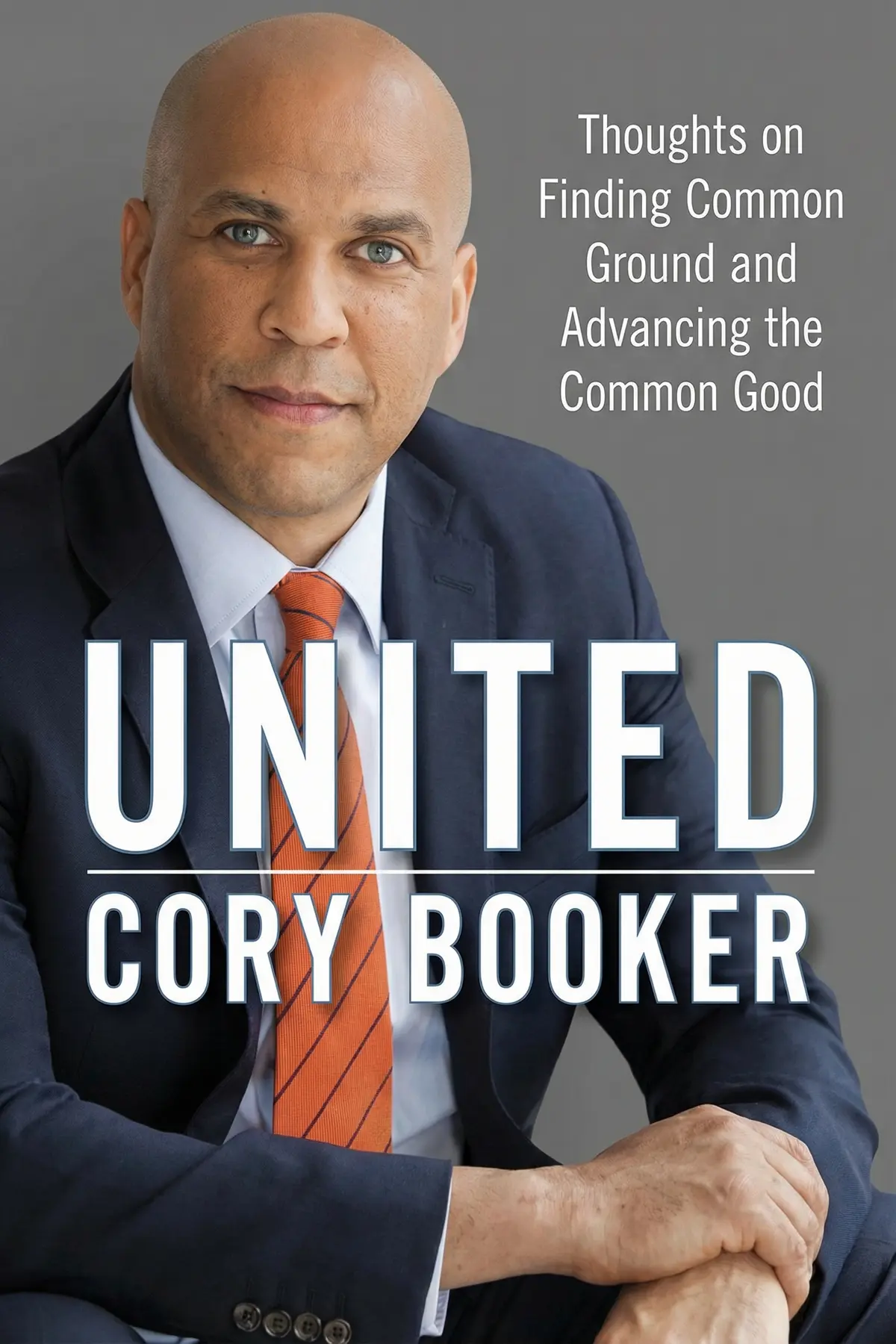
Cory Booker draws on his years in Newark to show why crime, low wages, prisons and segregated housing cost everyone. He argues that real change grows from seeing our shared stakes and acting small, locally and together.
1 min 04 sec
If the news leaves you feeling that your country is breaking into angry camps and that nothing you do can matter, Cory Booker offers a place to start. In United, the former Newark mayor and US senator argues that common ground has to come first. Once people see how tightly their lives are linked, working for the common good becomes possible. A DNA test made the point for him. Booker had always identified as a black American man, and the test connected him to a white stranger who shared his great-grandfather.
From that discovery he builds a case drawn from his years in local and state politics. Crime, low wages, prisons and segregated housing, he argues, end up costing everyone. The fixes he saw work in Newark were rarely grand. They were small acts repeated by many hands. The stories here, from a tent in an apartment courtyard to a lawnmower bought with a stimulus check, show what one person can start on their own street.
1 min 51 sec
A man who had always known exactly who he was learned that his ancestors had fought on opposite sides. Then a handshake with a stranger gave new meaning to something his parents had told him as a boy.
1 min 34 sec
A Yale law graduate could have walked into almost any well-paid firm. He moved into one of Newark’s roughest neighborhoods instead, because of a phrase from his father and a single question from his mother.
1 min 56 sec
A late-night shooting outside a pancake restaurant had victims who were nowhere near the gunfire. Following the damage outward shows why one person’s misfortune ends up as everyone’s bill.
1 min 37 sec
The United States locks up a startling share of the world’s prisoners, and most of them never committed a violent crime. Booker traces where that money came from and what quietly fell apart while it was spent.
1 min 58 sec
Newark’s old nickname hides a deliberate plan to keep poverty in one place. Undoing that plan led Booker to a wider idea of human rights, and to a man with a lawnmower.
1 min 43 sec
A city councilman with no power to fix a dangerous apartment complex tried something unusual. Within ten days the mayor came to him, and the method later helped bring down a city’s murder rate.
1 min 29 sec
A frustrated new councilman got two words of advice from a mentor, and a tenant advocate taught him something no policy could. Both lessons cost nothing and can be used on any ordinary day.
1 min 07 sec
United adds up to a simple claim, backed by evidence from one city: division is expensive. A shooting outside a pancake restaurant empties a waitress’s tip jar. A new prison every ten days drains money from roads and schools. A wage of $2.13 an hour comes back later as a food stamp bill. Booker’s answer is to start from connection, like the great-grandfather he shared with a stranger or the lawyer who ran a sting so a black family could buy a house. He also asks us to see everything we have as part of a long conspiracy of love that we are now expected to continue.
That conspiracy runs on ordinary acts. Booker advises taking local issues as seriously as national ones, so learn what is happening on your own street. Pick up litter, help a neighbor with child care, show up at a city council meeting. When someone brings you a problem, listen all the way through before you reach for a fix.
Leroy Edwards did not wait for a program or a policy. He bought a lawnmower, crossed the street and started cutting the grass.
Many people feel their country is splitting into hostile camps and that nothing they do can change it. In United, Cory Booker, a former Newark mayor and now a US senator, argues that the way forward starts with common ground. Once people see how closely their lives are tied together, working for the common good becomes possible. Booker builds his case from his own story and from his years in local government. He covers a DNA test that linked him to a white stranger, a fair housing sting that got his parents their home, and a waitress whose tips disappeared after a shooting. He also shows prisons pulling money away from roads and schools, and a lawnmower that turned a trash-filled lot into a park. Every time, the harm done to one group ends up costing everyone. What readers get is a clear picture of how injustice spreads and a practical method from Newark: bring people together, listen fully, and start with one small act close to home.
Citizens worn out by political division who want a practical, local way to help.
Managers and community organizers looking for ways to get groups working across departments and differences.
Readers interested in criminal justice, housing policy and how city government actually works.
Cory Booker was born in Washington, D.C., in 1969 and grew up in Harrington Park, New Jersey. He studied at Stanford, went to Queen's College, Oxford, as a Rhodes Scholar and earned a law degree at Yale. He served on Newark's Municipal Council from 1998 to 2002 and was the city's mayor from 2006 to 2013. He was elected to the US Senate as a Democrat in 2013 and ran for his party's 2020 presidential nomination. In 2025 he gave the longest speech in the Senate's history, lasting 25 hours and five minutes.
Listeners find the material both compelling and easy to digest, valuing the personal glimpses into Cory Booker's experiences. They appreciate the book’s uplifting message, as one listener points out how it embodies a sense of community, while another emphasizes its attention to the interconnectedness of humankind. Listeners commend the caliber of writing, the narrative style, and the way it encourages deep thought, with one review mentioning that it expertly interweaves stories with policy.
Wow. This book hit me much harder than I expected from a standard political memoir. Cory Booker doesn't just list achievements; he weaves together these incredibly moving stories about the people who shaped his worldview in Newark. The central message about our shared humanity and the "interconnectedness" of our struggles really resonated with me during a time when everything feels so polarized. I loved the advice from his mother to "do something" when you're feeling lost. It’s a call to action that feels both humble and urgent. While it's true he quotes a lot of other thinkers, it felt like he was building a bridge between his experiences and a broader philosophical tradition. This is exactly the kind of hopeful storytelling we need more of in leadership today.
Show moreFinally got around to this and I'm so glad I chose the audiobook narrated by Booker himself. His passion is infectious! He has this way of making you feel like your "corner of the world" actually matters. The stories about his early days in public housing are vivid and remind us that leadership is about showing up and listening, not just giving speeches. It’s a very readable, engaging look at how we are all linked together. I can see why people call him a real-life hero. Truly one of the good guys in politics.
Show moreEver wonder what happens when an Ivy League grad decides to actually live in the community he wants to serve? This book provides a beautiful, albeit sometimes painful, answer. I was particularly moved by the stories of the mentors he found in the apartment buildings of Newark. Booker captures the spirit of community in a way that makes you want to go out and meet your neighbors immediately. The central theme of our "interconnectedness" isn't just a theory here; it’s a lived experience. It’s expertly written, interweaving his personal growth with broader social lessons. Look, he might be a politician, but his heart for the poor and the incarcerated feels incredibly authentic in these pages. It’s the kind of book that leaves you feeling empowered rather than just depressed about the state of the country.
Show moreDirect opinion: This is more than just a political memoir; it’s a philosophical guide to finding common ground. Booker’s storytelling is top-notch, and he makes complex issues like the judicial system feel very personal and accessible. I appreciated his willingness to admit his own "course corrections" along the way. While there were a few times I felt like he was "preaching at me," the overall message of empathy and collective action is hard to argue with. It’s a thought-provoking read that expertly interweaves policy with the lived reality of the people Booker serves. Even if you don't agree with all his politics, his commitment to his "corner of the world" is truly inspiring.
Show moreUnited is essentially a generous, heart-felt thank you letter to everyone who ever influenced Booker’s journey. His story is humble and filled with the kind of hope that feels necessary when the news is consistently bleak. I loved how he highlighted the wisdom of his elders and the strength of the Newark community. The book is incredibly readable and does a great job of showing how we are all linked together regardless of our background. He addresses the "war on drugs" and systemic racism with a clarity that is both devastating and motivating. It captures the spirit of community perfectly. I came away feeling that if we could all just "do something" in our own neighborhoods, we might actually find the common ground he talks about. Truly an amazing read.
Show moreThe chapter on Newark's East Ward really stands out as the heart of this book. Booker manages to interweave complex policy discussions regarding criminal justice reform with raw, humanizing anecdotes about his neighbors. You get a sense of his "young naivete" early on, and it’s refreshing to see a politician admit where they were wrong or where they failed to listen. To be fair, the structure can feel a bit repetitive at times, almost like a collection of essays that haven't been fully smoothed out into a single narrative arc. Some sections feel like they are "preaching to the choir," and the frequent quoting can occasionally bog down the flow of his own voice. However, his dedication to finding common ground is undeniable and deeply inspiring. It’s a solid read for anyone curious about his trajectory from Stanford to the Senate.
Show moreAs someone who follows criminal justice reform closely, I found Booker’s insights into the "war on people" to be particularly poignant. He does an excellent job explaining how mandatory minimums and a lack of second chances trap people in a cycle of recidivism. The way he ties these large-scale systemic issues to the individual faces he met in Newark is quite powerful. I wish he had spent more time addressing the failed education experiments or the corporate contributions that critics often point to, as that would have added more balance. Still, his call for "common ground" feels genuine and not just like a political talking point. It’s an accessible read that doesn't shy away from the harsh realities of urban poverty while remaining stubbornly optimistic. Definitely a worthwhile look at the man behind the Twitter handle.
Show moreNot what I expected given the hype surrounding Booker’s public persona. I really wanted to like this more because I respect his work on housing and food justice, but the execution felt a bit clunky. Truth be told, the editing is noticeably rough in places—there are repeated phrases and some punctuation choices that pulled me out of the narrative. It feels like he’s holding back on the really personal stuff, like his own background or the specific political battles he faced as mayor. Instead, we get a lot of quotes from other people and a repetitive loop of "I was wrong, then I learned." It started to feel less like a cohesive book and more like a series of disjointed speeches. I appreciate the sentiment of unity, but I found myself wishing for more of his unique, personally developed views on the "Booker hype machine."
Show morePicked this up because I’ve always been curious about Booker’s rise, but the organization of the book was a bit strange to me. It jumps from his early foundation in Newark straight to the Senate, leaving out a lot of the meaty details of his time as mayor. I felt like I was reading "Audacity of Hope" when I really wanted "Dreams from My Father." He reflects on his "young naivete" well enough, but I wanted him to look just as critically at his later policies and campaigns. To be fair, the writing is engaging and moves at a good clip, but the repetitive recapping of events across chapters made it feel less like a cohesive book. It's a decent introduction to his philosophy of unity, but it leaves some of the most interesting parts of his political journey on the cutting room floor.
Show moreAfter hearing him speak so eloquently on TV, I was disappointed by the actual depth of this book. It’s far too heavy on the "preachy" tone and light on actual policy substance. Each chapter seems to cycle through the same frustrations without offering new solutions or reflecting on his own controversial moves as mayor. Frankly, it felt like an extended campaign brochure rather than an authentic memoir. He mentions his Rhodes Scholarship and Yale Law degree, but then spends the whole time talking about how little he knew, which starts to feel like a calculated humble-brag after the tenth time. The constant quoting of civil rights leaders felt like it was filling space because he didn't want to dive into the messy details of the "Booker hype machine." It’s okay if you want a feel-good read, but I wanted something more rigorous.
Show moreBooker argues that a divided country can only move forward once people see how connected they are. Common ground has to come before the common good. Drawing on his years as a Newark councilman and mayor, he shows that problems such as crime, low wages, mass incarceration and segregated housing cost everyone. He also argues that lasting change grows out of many small actions by many people.
It is a phrase from Booker’s father. It describes the billions of good acts by countless people over time that made our current opportunities possible. Booker uses it to explain that he was responsible for working hard and also for recognizing how much others had done for him, including the volunteers who helped his family buy a home. That debt obliges him to leave a better world to the next generation.
The tenant advocate Frank Hutchins convinced him that human rights include freedom from fear, dignity and security, and that all of them depend on fair access to housing. Booker also points out that where you live shapes your job prospects and your children’s schools. As mayor of Newark, he doubled the production of affordable housing and reformed the city’s housing authority.
Booker’s advice is to take local issues seriously. Learn what is happening in your city and your neighborhood, attend city council meetings, pick up litter and help neighbors, for example with child care. When someone brings you a problem, listen fully before trying to solve it, as Frank Hutchins taught him. Then take one small step soon instead of waiting for a perfect plan.
It suits readers frustrated by political polarization who want concrete examples of people working across their differences. It also suits people interested in criminal justice reform, fair housing, urban green space and local government. Team leads and organizers can borrow its methods too: gather people from different groups, ask each for one small contribution, and keep the first step modest.
Masaji Ishikawa

John Rawls



Miles Taylor



Fay Bound Alberti


Daniel Goleman
AUDIO SUMMARY AVAILABLE
Get the key ideas from United by Cory Booker, plus 5,000+ more nonfiction titles.









