

14 min 14 sec
Available in: English
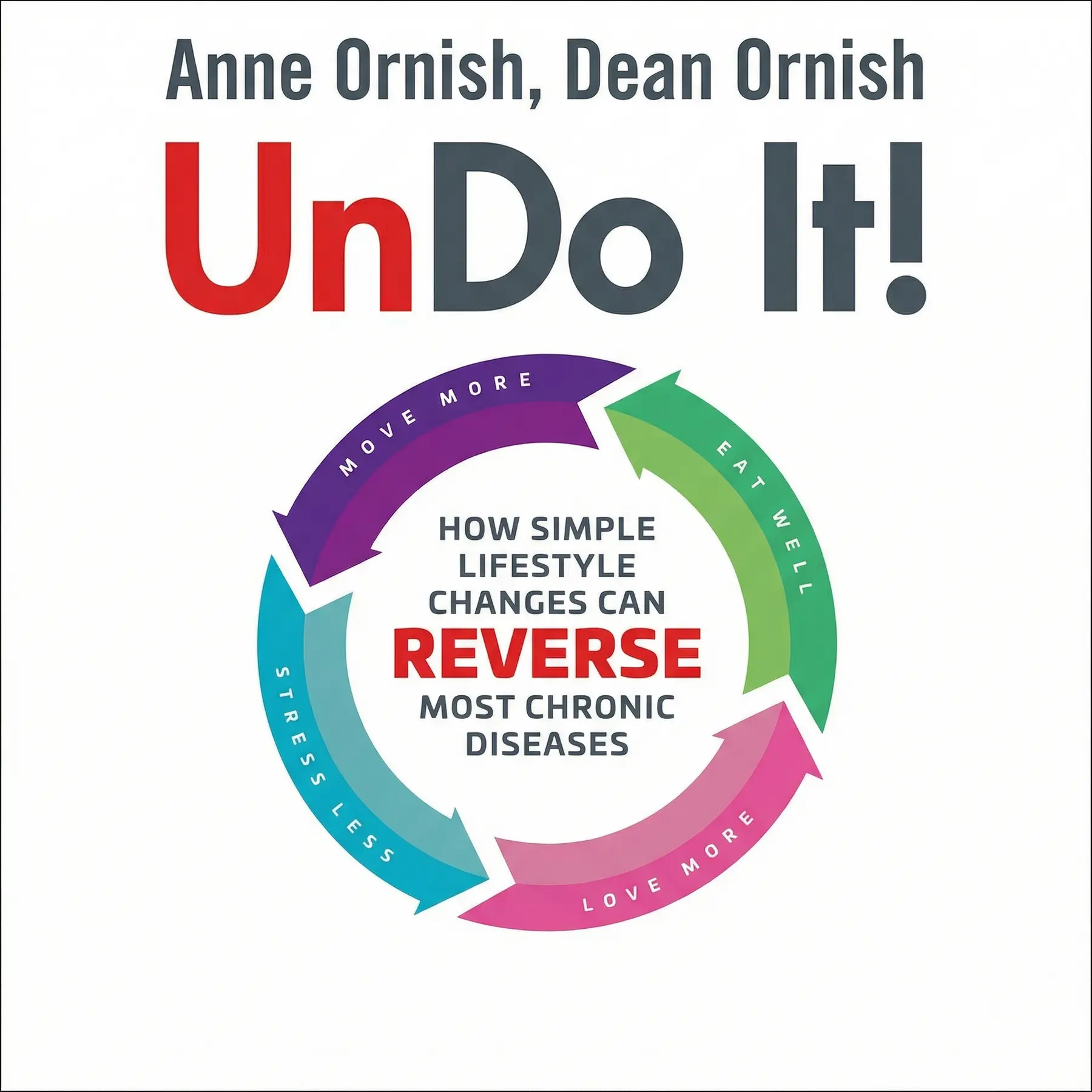
Undo It!: How Simple Lifestyle Changes Can Reverse Most Chronic Diseases
Shows how heart disease, type 2 diabetes, depression and other chronic illnesses share the same few biological roots, and how four lifestyle changes, made together, can prevent and often reverse them.
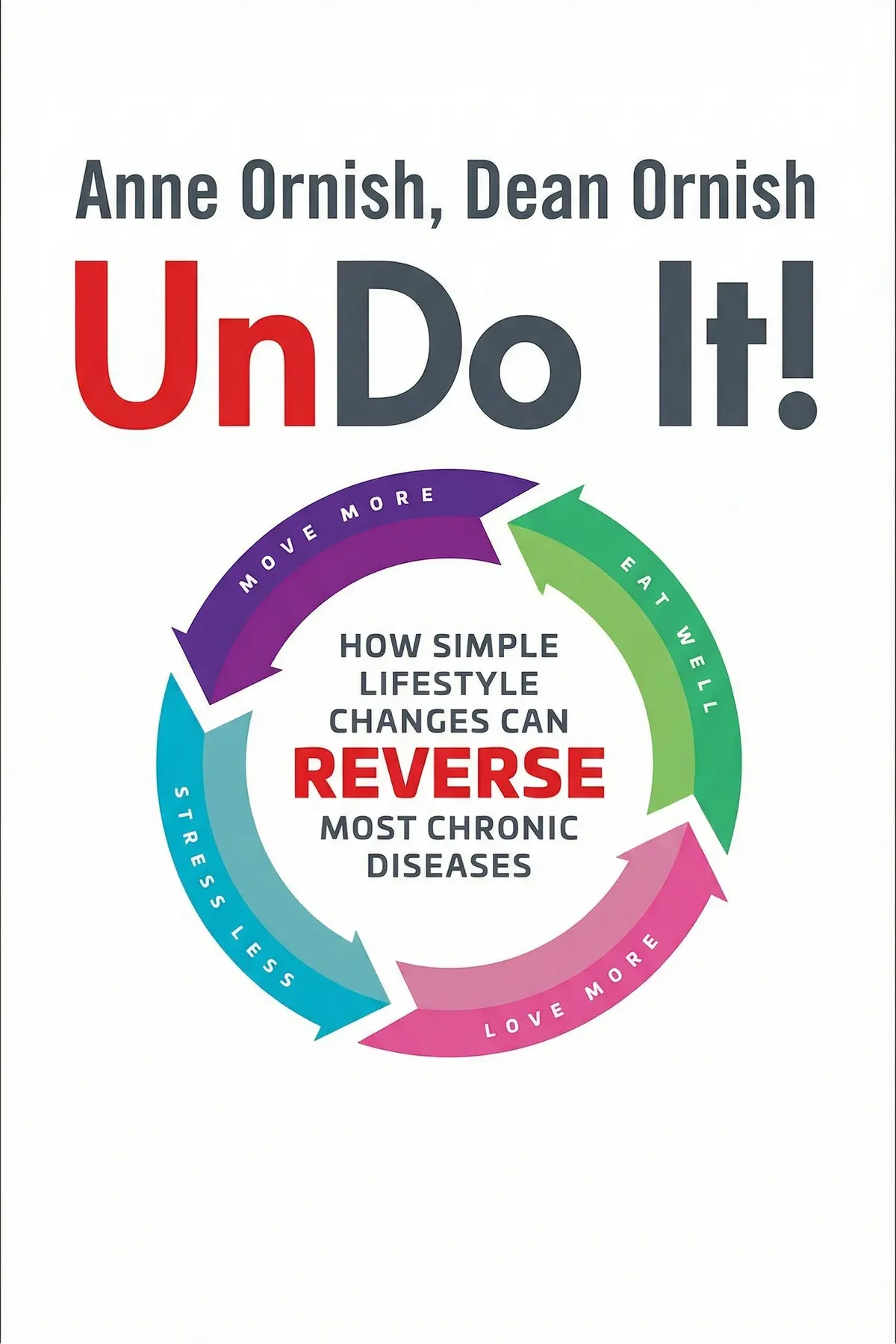
Table of Content
1. Introduction
1 min 06 sec
If you live with high blood pressure, creeping weight or a family history of heart trouble, you may assume the damage is permanent and pills are the only answer. In Undo It!, physician Dean Ornish and Anne Ornish argue that much of it can be reversed, because heart disease, type 2 diabetes, depression and many other chronic illnesses grow from the same few roots. Pull those roots and many diseases retreat together.
The Ornishes base that claim on research that has appeared in peer-reviewed outlets, the Journal of the American Medical Association among them, and on outcome data from tens of thousands of patients of different ages, incomes and ethnic backgrounds. Their program has four parts: eat mostly whole plants, move more, manage stress and strengthen your ties to other people. Done together and done boldly, they say, these changes make you feel better within days or weeks, and that feeling is what keeps you going. What follows explains why the same habits help so many organs, and gives you a way to begin the whole shift this week.
2. See the shared roots behind most chronic disease
2 min 08 sec
Heart disease, diabetes and depression usually get separate doctors and separate prescriptions. The Ornishes see one hidden pattern beneath all of them, and it explains why a single program could help with conditions that look unrelated.
3. Change everything at once so it sticks
1 min 53 sec
Easing into healthier habits sounds sensible, and even a heart attack rarely keeps people on track for long. The authors explain why both approaches tend to collapse, and what kind of motivation actually lasts.
4. Eat whole plants to protect your cells
2 min 12 sec
Two burgers cooked the same way in the same pan can differ more than two hundredfold in one harmful molecule. That gap helps explain why the authors ask meat and cheese lovers to give up so much.
5. Small doses of exercise buy years and happiness
2 min 08 sec
Most people know exercise is good for them, but few guess how little it takes. A handful of minutes, the authors report, reaches the ends of your chromosomes, the bacteria in your gut and the cells of your brain.
6. Calm the stress that feeds every other illness
1 min 59 sec
Stress is usually treated as a feeling to push through. The authors place it above every other cause of chronic disease, and describe a daily practice that can physically change the part of the brain that produces fear.
7. Help others and protect your own health
1 min 41 sec
Loneliness reaches every organ in the body, the authors warn. A study of people under stress found that one ordinary habit separated those whose risk of death rose from those whose risk did not.
8. Conclusion
1 min 07 sec
The idea running through Undo It! is that the body has a short list of defenses, and modern life has left them switched on. Heart disease, diabetes, depression and early dementia look like separate enemies, yet in the Ornishes’ account they draw on the same overworked mechanisms. That is why four changes in daily life can reach so many diagnoses, and why making them together beats easing in slowly.
If you start, start big enough to feel it. Fill most of the plate with whole plants and trade the turkey burger for a soy one. Add a daily walk, even a short one. Give meditation a fixed half hour, and turn to slow breathing when stress spikes. Then do something useful for someone close to you. The authors add one small habit to carry through the day: laugh and smile. Laughing increases blood flow, and smiling releases endorphins, serotonin and dopamine, the body’s own painkillers and mood lifters.
Fear might get you through the first month. Feeling better is what carries you through the years after it.
About this book
What is this book about?
Many people see chronic illness as a one-way street. Once you have heart disease, type 2 diabetes or high blood pressure, you manage it with drugs for life. Dean Ornish and Anne Ornish argue that much of this damage can be undone. Their reasoning is that most chronic diseases run on the same handful of biological processes, such as inflammation, oxidative stress and changes in gene expression, and that modern habits keep those processes switched on. Their program has four parts: a whole-food, plant-based diet, regular exercise, stress management through practices like meditation, and stronger social connections. The authors draw on research in peer-reviewed medical journals and on outcome data from tens of thousands of patients. According to them, the program is able to halt, slow down or even reverse illnesses as varied as coronary heart disease, early-stage prostate cancer and depression. Readers learn why small, gradual changes tend to fail, why feeling better motivates more than fear does, what to eat and avoid, how little exercise it takes to make a difference, how to calm stress, and why helping other people protects your own health.
Book Information
Who it's for
Looking beyond medication
People living with heart disease, type 2 diabetes or high blood pressure who want options beyond medication.
Busy professionals wanting prevention
Busy professionals with a family history of chronic illness who want to act before a diagnosis.
Tried small changes before
Anyone who has tried small health changes and gave up before seeing results.
About the Author
Anne Ornish
Dean Ornish is an American physician who teaches at the University of California, San Francisco as a clinical professor of medicine. He started the Preventive Medicine Research Institute, based in Sausalito, California, as a nonprofit. He trained at Harvard Medical School, Baylor College of Medicine and Massachusetts General Hospital. His research tested whether a full overhaul of lifestyle could reverse severe heart disease with no drugs or surgery, and Medicare created a benefit category to cover his program. Anne Ornish is the institute's vice president of program development, built its digital lifestyle medicine platform and has trained in yoga and meditation for more than 25 years.
Ratings & Reviews
Ratings at a glance
What people think
Listeners appreciate the scientific foundation and research-driven perspective of this work, finding it accessible and a vital resource for physicians. The health guidance is viewed as practical, with one listener noting it outlines simple applications for profound health changes, while others point to its established track record in reversing heart disease. Listeners are enthusiastic about the included recipes, particularly the vegan choices, and find the instructions uncomplicated to follow. The book is well-regarded for its diverse exercise routines and general wellness perks, though viewpoints regarding its overall value for money are inconsistent.
Top reviews
Pacharapol
This book provides a much-needed sense of hope for anyone struggling with chronic health issues. 'Undo It!' is more than just a diet book; it's a comprehensive blueprint for living a longer, more vibrant life. I love that the authors didn't just stop at food and exercise. By including the 'Love More' pillar, they acknowledge the massive impact that community and intimacy have on our physical well-being. The recipes included at the back are surprisingly flavorful and don't feel like 'diet food' at all. Personally, I've already seen improvements in my energy levels just by incorporating the walking and meditation routines. It’s a must-read for anyone looking to take control of their health destiny. Truly life-changing stuff that I've already recommended to my entire family.
Show moreGoy
Wow, I wish I had discovered this years ago. After my husband's heart scare last year, we were desperate for a way to improve his health without relying solely on a cocktail of medications. This book was a godsend. It breaks everything down into four manageable quadrants that feel doable even when life gets hectic. The emphasis on 'Love More' really resonated with us, as it reminded us to slow down and cherish our connection. Not gonna lie, the dietary changes were a hurdle at first, but the recipes are fantastic and we don't even miss the meat anymore. It feels like we've been given a second chance. Every household should have a copy of this on their shelf, especially those dealing with diabetes or high blood pressure.
Show moreCarlos
Direct, evidence-based, and incredibly effective. If you want to know how to actually reverse chronic disease, read this book. It doesn't sugarcoat the reality that you have to make big changes, but it provides the support and science to make those changes stick. The recipes are great, the logic is sound, and the results speak for themselves. This isn't a fad; it's medicine. I've been a vegetarian for a while, but moving toward the 'Undo' program's stricter guidelines has made a noticeable difference in my inflammatory markers. Bravo, Ornish!
Show moreSara
After hearing about the Ornish program on the Rich Roll podcast, I knew I had to get the book. It did not disappoint. The way Anne and Dean collaborate gives the book a more personal, holistic feel than your average clinical health guide. It covers everything from the cellular level of our telomeres to the emotional level of our relationships. I’ve tried many different diets, but this is the first one that feels like a sustainable lifestyle rather than a temporary fix. The recipes are a highlight, particularly the vegan options that don't sacrifice flavor. Not everyone will find it easy to switch to this way of living, but the health benefits are too significant to ignore. It’s a profound call to action for anyone who wants to age with grace and vitality.
Show moreGabriel
Finally got around to reading this after my doctor mentioned lifestyle medicine during my last checkup. It is refreshing to see a program that focuses on the root causes of chronic illness rather than just throwing more pills at the problem. The four pillars are simple. Yet, the application can be quite profound if you actually commit to the work. I particularly liked the section on stress management; the yoga and meditation tips aren't overly complicated for a beginner like me. My only real gripe is that it leans very heavily into the vegan lifestyle without much middle ground for those who aren't ready to go 100% plant-based immediately. Still, the evidence for reversing cardiovascular issues is hard to ignore. It’s an empowering read that gives you the tools to change your own trajectory.
Show moreSudarat
Picked this up on a whim and was pleasantly surprised by how practical it is. I've read a lot of health books that are basically just 300 pages of 'don't eat this,' but this one is different because it gives you a clear path forward with the four pillars. The exercise suggestions aren't intimidating—it's mostly about moving more in ways that feel natural, like walking. Truth is, the 'Stress Less' chapter was what I needed most. The breathing techniques are easy to do at my desk during work. I do think the book repeats itself quite a bit, but maybe that’s necessary to get the point across to a general audience. It’s a solid, well-researched resource for anyone wanting to clean up their lifestyle without feeling like they need a PhD to understand why.
Show moreAkosua
As someone who appreciates a data-driven approach, I was impressed by the sheer volume of research cited here. Dr. Ornish has been a pioneer in this field for decades, and this book serves as a culmination of that work. The science sections are definitely the highlight, though the authors actually suggest readers can skip them—which I think is a mistake! You need that 'why' to stay motivated. The plan is rigorous. I’ll admit that transitioning to a whole-foods, plant-based diet isn't always easy in a world full of fast food. However, the results are undeniable. The writing is accessible, though occasionally a bit dry. If you are serious about reversing a diagnosis, this is your manual. It’s a 4-star book that offers 5-star results if you actually follow it.
Show moreWoravit
The science here is genuinely fascinating, even if the delivery is a bit hit-or-miss for my personal taste. I appreciate how the Ornish team breaks down complex biological processes—like telomere lengthening—into something digestible for the average reader. However, the writing style didn't quite click with me. It felt a bit repetitive, and I found the back-and-forth between Dean and Anne to be slightly distracting in the audio version. It’s a solid primer for those just starting their journey into lifestyle medicine, but if you’ve been following this space for a while, there isn't much new information here. Look, the recipes are a nice touch and the focus on social connection is vital, but I wish the book didn't feel so much like it was 'preaching to the choir.' It’s a decent middle-of-the-road read that could have been much more concise.
Show moreKamol
Ever wonder if these authors live in the same world as the rest of us? While I don't doubt the science behind the Ornish diet, the 'Love More' and 'Stress Less' pillars feel incredibly out of touch with modern reality. The world is full of people facing systemic stresses that a simple breathing exercise won't fix. Suggesting that intimacy is a 'simple decision' ignores the growing epidemic of loneliness and the fact that many people don't have a supportive community to lean on. To be fair, the section on heart disease reversal is well-researched, but the overall presentation is repetitive and leans heavily on privilege. If you’ve read any of Ornish’s previous work, like 'The Spectrum,' you can skip this one. It's essentially a recycled version of his older material with a bit more fluff added in.
Show moreKenji
Not what I expected from a book titled 'Undo It!' It's essentially a stealth vegan manifesto that waits until you're halfway through to admit its true colors. The authors use fear tactics and vague health claims to scare people into a diet that is biologically incomplete. We evolved as omnivores, and suggesting that meat is the primary cause of all modern ailments is, frankly, laughable. You absolutely have to take B12 supplements to survive on this plan, yet they gloss over that reality. The tone is incredibly self-centered, assuming everyone has the money and time to source these specific foods and attend yoga retreats. If you aren't already part of the plant-based choir, this book will likely just frustrate you with its lack of nuance and its 'one size fits all' arrogance. Total waste of time for anyone looking for balanced medical advice.
Show moreQuestions about this book
What is the main idea of Undo It! by Dean Ornish and Anne Ornish?
The authors argue that most chronic diseases, from heart disease and type 2 diabetes to depression, share the same underlying mechanisms, such as inflammation, oxidative stress and changes in gene expression. Modern habits keep those defenses switched on. Changing four areas of life together, diet, exercise, stress and social connection, can therefore prevent, slow or even reverse many conditions at once.
What diet does Undo It! recommend?
A whole-food, plant-based vegan diet: vegetables, fruit, whole grains, legumes, soy and a small amount of nuts and seeds, ideally unprocessed and organic, plus three grams a day of omega-3 fatty acids. Meat, sugar, white flour, white rice and most fats are avoided. The authors cite a 2016 study of 130,000 adults linking animal protein to higher death rates and plant protein to lower ones.
Why do the Ornishes say you should change everything at once?
Small changes take away pleasures without producing results you can feel, so people give up. Fear after a heart attack fades too, usually within about a month. The authors argue that feeling good is the motivator that lasts, and a big, combined shift brings noticeable improvements within days or weeks, which makes people want to continue.
Does Undo It! say you can stop taking medication?
No. The authors say drugs and surgery are often necessary and can save lives, especially in emergencies such as heart attacks. They argue that, for many chronic conditions, changes to lifestyle can work better than medication by itself. The book presents its program as a way to treat the shared causes of disease, not as a reason to drop medical care.
How can I start applying Undo It! this week?
Choose a start date and change several areas together. Shift most meals to whole plants, add a daily walk or even five minutes of running, meditate at a fixed time and use slow breathing when stress rises. Then help someone close to you with an ordinary task, since a 2013 study the authors cite found that people who helped others were protected from stress’s effect on their risk of death.
Readers also enjoyed


AUDIO SUMMARY AVAILABLE
Listen to Undo It! in 15 minutes
Get the key ideas from Undo It! by Anne Ornish, plus 5,000+ more nonfiction titles.
- 5,000+ titles
- Listen as much as you want
- 7-day free trial
- Cancel anytime









