

A Theory of Justice
John Rawls
 English
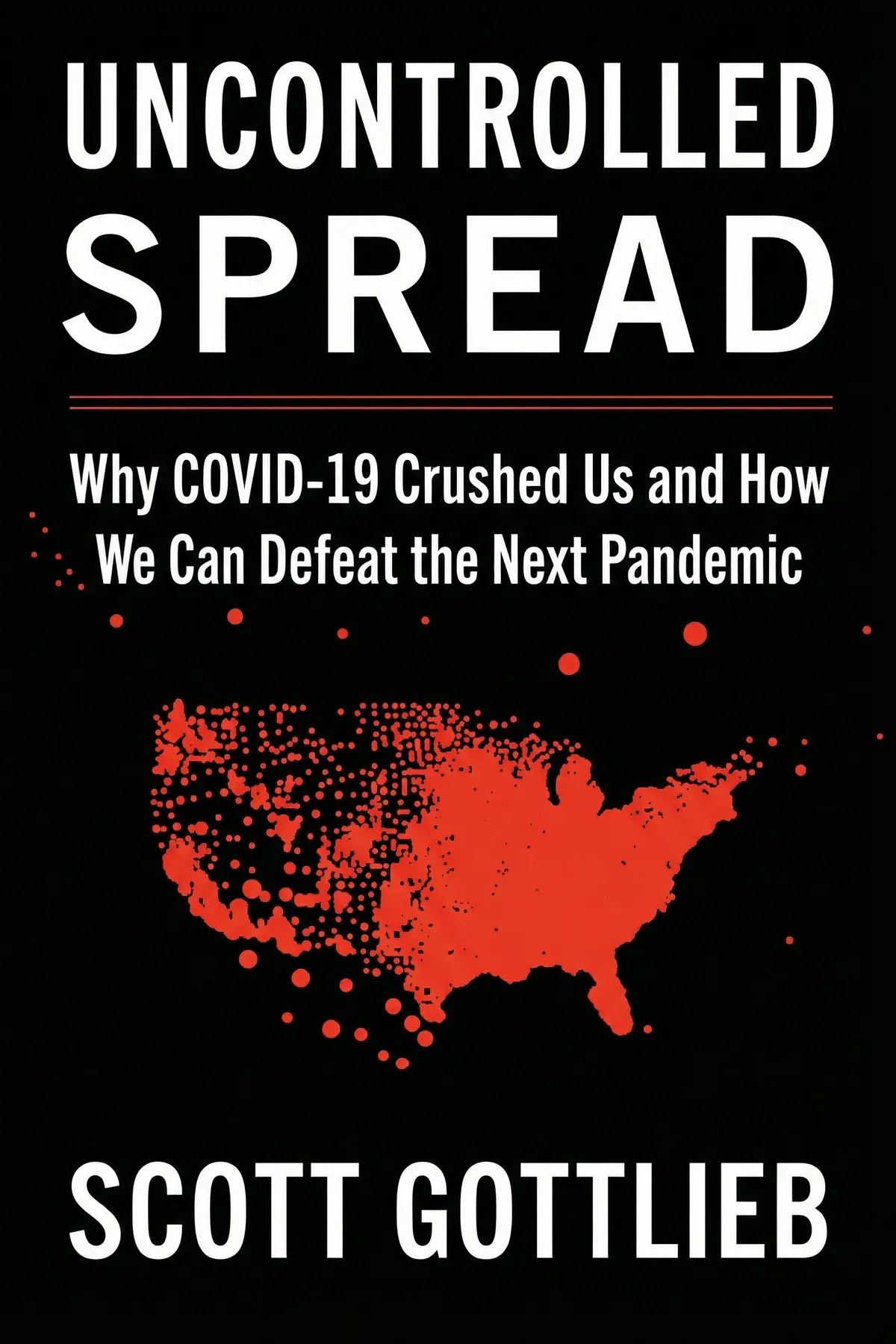
Explains why COVID-19 spread through the United States largely unchecked, from China's secrecy to a testing bottleneck at the CDC. It also shows what South Korea's preparation teaches about defeating the next pandemic.
1 min 03 sec
When the next crisis hits your country, your company or your family, the damage will depend less on the threat itself than on what was ready before it arrived. In Uncontrolled Spread, former FDA commissioner Scott Gottlieb makes that case about COVID-19 in the United States. A highly contagious coronavirus was always going to be hard to manage, he argues, but it did not have to be a disaster.
Zika, avian flu, SARS and Ebola had all served as warnings, and some nations used them to prepare. The US did not. Gottlieb shows how secrecy abroad, a plan written for influenza and an agency built for slow research combined to let the virus spread for months almost unchecked. South Korea, which found its first cases in the same month, shows the other path. Follow his account and you will understand what failed, why it failed, and what a country, or any organization facing an emergency, needs in place before the next one starts.
1 min 51 sec
In January 2020, the official word from China and the WHO sounded calm and confident. A former FDA chief saw signs it did not match the facts, and his reasons apply to any crisis.
1 min 36 sec
By the time the world officially named the crisis, the virus had already crossed oceans. Inside the US, one rule about who could run a test turned a scare into a backlog.
1 min 38 sec
America had a pandemic strategy, inspired by a president’s reading and refined over many years. The trouble was the kind of enemy it imagined, and the advice it produced in 2020.
1 min 53 sec
The agency the US trusted to lead its response had a long record and real expertise. So why did its effort to produce a quick test end, in Gottlieb’s word, as a fiasco?
1 min 51 sec
The government eventually spent hundreds of millions of dollars on fast tests. Many of them sat unused, and the reason says a lot about the difference between buying supplies and having a plan.
1 min 55 sec
Two countries found their first COVID cases within days of each other. One reached 20,000 tests a day in weeks; the other took months. The difference began with an outbreak years earlier.
1 min 48 sec
Vaccines arrived faster than ever before, a real scientific triumph. Yet spies, smear campaigns and hidden samples followed them, and Gottlieb draws a hard conclusion about how nations must watch for the next virus.
1 min 10 sec
Gottlieb’s story is, finally, about time. The virus did not win because it was unstoppable. It won the weeks between Wuhan’s first sequencing result and the March declaration, the months when every test had to pass through one agency, and the year it took to admit the virus traveled through the air. South Korea, with its 82 MERS cases still fresh in memory, simply had less time to lose. Its testing sites, stockpiled equipment and fast-track approval process were already in place.
His remedy for the United States is a strong federal agency that keeps a stockpile, watches the world for new threats and runs a coordinated response built on testing and tracing. The same thinking works in smaller settings. When an official account conflicts with what people on the ground report, act on what they see. Look at your emergency plans and ask whether they were written for the last crisis instead of the next one. Put a team built for speed in charge, and make sure supplies arrive with a plan for who gets what.
Preparation looks wasteful in quiet years. COVID showed the cost of skipping it.
A fast, contagious coronavirus was always going to be hard to contain. Scott Gottlieb, a former commissioner of the US Food and Drug Administration, argues that it did not have to become a disaster. Zika, avian flu, SARS and Ebola had all given warning. Some countries prepared. The United States did not. Gottlieb traces the failure step by step. China hid what its doctors knew, and the World Health Organization went along with it. America's pandemic plan had been written for influenza and bioterrorism. The Centers for Disease Control and Prevention, an agency built for careful research, was asked to run a rapid national response it was never designed for. Tests were scarce, slow and often sent to the wrong places, and leaders sent mixed signals about masks and distancing. The contrast is South Korea, which found its first cases in the same month as the US. It had learned from a 2015 MERS outbreak and kept testing sites, stockpiles and fast approvals ready. Readers come away understanding what went wrong and why Gottlieb believes public health must be treated as a matter of national security.
Readers who lived through COVID-19 and want a clear account of why the US response faltered.
Managers and planners responsible for crisis plans, supply stockpiles or emergency teams.
Students of public health, policy or national security looking at how outbreaks are detected and contained.
Scott Gottlieb is a physician and investor who served as the 23rd commissioner of the US Food and Drug Administration from 2017 to 2019, after an earlier stint there as deputy commissioner for medical and scientific affairs. He also held a senior post at the Centers for Medicare and Medicaid Services and taught at New York University Grossman School of Medicine. He is a partner at the venture firm New Enterprise Associates, a CNBC contributor, a former Pfizer board member and an elected member of the National Academy of Medicine.

Listeners consider the writing to be thoroughly researched and expertly crafted, noting that its direct and brief style allows for effortless comprehension. Additionally, they value the sincere way it tackles the pandemic, with one listener specifically praising its nonpartisan viewpoint. The work also draws acclaim for its strategic depth, with one listener labeling it a guide for managing future health crises. Nevertheless, the book's storytelling elements garner a divided response among listeners.
This book is effectively a post-mortem manual for a society that wasn't ready for the fire. Gottlieb writes with the precision of a surgeon, dissecting why the CDC failed to act as an operational entity when we needed it most. Truth is, his insights into the manufacturing base and our lack of excess capacity are chillingly accurate. While some might find the prose a bit dry in the middle, the strategic value of the "playbook" he outlines for future pandemics is undeniable. It’s meticulously researched and manages to keep a level head even when discussing the most frustrating bureaucratic failures. If you want to understand the logistics of why the world stopped, start here. The focus on genomic surveillance is particularly forward-thinking.
Show moreAfter hearing Gottlieb on various news programs, I expected a balanced take, and he mostly delivered on that front. The chapters regarding China’s early secrecy and the WHO’s inability to demand transparency were genuinely eye-opening for me. He frames the pandemic not just as a health crisis, but as a national security failure that requires a complete overhaul of our domestic manufacturing. The writing is clear and concise, making complex molecular medicine concepts accessible to people like me who aren't in the medical field. I’m not gonna lie, the realization that we are still unprepared for the next one is terrifying. This should be required reading for every lawmaker in Washington. It is honest, brutal, and necessary.
Show morePersonally, I picked this up hoping for a non-partisan deep dive and was pleasantly surprised by the level of technical detail. Gottlieb’s background as a former FDA commissioner gives him a unique lens, allowing him to bridge the gap between high-level policy and boots-on-the-ground logistics. In my experience, most books on the pandemic are either too emotional or too political, but this feels like a genuine strategic playbook. He highlights the absolute necessity of a domestic manufacturing base so we aren't reliant on bad actors during a crisis. While the prose is a bit dry at times, the clarity of his vision for the future is exactly what we need right now. Five stars for the honesty and strategic depth.
Show moreScott Gottlieb has produced what is arguably the definitive post-mortem on the American COVID-19 response. This isn't just a retelling of events; it's a meticulous autopsy of a system that was designed for the wrong war. He compares our lack of preparedness to the pre-9/11 intelligence community, which is a haunting but accurate analogy. The writing style is professional and authoritative, yet it remains accessible to a general audience without dumbing down the science. Although he might be too soft on certain political figures, his analysis of the CDC's operational failures is masterly. It is an essential, meticulously researched work that provides a roadmap for avoiding the next catastrophe. It should be on every policy-maker's desk.
Show moreWow, what an eye-opening look at the internal friction between our health agencies. Gottlieb doesn’t hold back on the CDC’s academic nature, arguing they were too slow to provide actionable data in real-time. I found his defense of the FDA a little convenient considering his history there, but the technical breakdown of the testing fiasco is worth the price of admission alone. The narrative flows well for a policy-heavy book, though it can feel like he's settling some old scores with specific bureaucrats. Personally, I appreciated the focus on how we need a JSOC-style coordination for health threats. It’s a dense read but incredibly vital for anyone interested in public policy and emergency management.
Show moreFinally got around to finishing this, and the depth of research is truly impressive. Gottlieb manages to explain the "testing fiasco" in a way that highlights organizational rot rather than just blaming individuals. His prose is straightforward and avoids the sensationalism found in other COVID-era books, which I found refreshing. To be fair, he does repeat himself occasionally, especially when hammering home the need for better genomic surveillance and more aggressive data collection. However, the strategic content regarding how we can leverage private sector technology for public health is brilliant. It’s a sophisticated look at a mess that we are still trying to clean up years later, though it demands a lot of the reader's attention.
Show moreThe chapter on the CDC’s initial refusal to use private labs for testing is the most frustrating thing I’ve read all year. Gottlieb captures the "academic" mindset that prioritized a perfect test over a fast one, effectively blinding us during the crucial early weeks. I think he has some blind spots regarding the FDA's own regulatory hurdles, but his critique of the broader system is hard to argue with. The book is quite readable despite the heavy subject matter, and the sentence structure keeps things moving at a decent pace. It’s a bit scary to think about how much of our response was based on outdated influenza models. A very solid, informative read for the curious citizen wanting to understand the logistics.
Show moreGottlieb’s take on the pandemic is probably the most sober and analytical one I’ve encountered so far. He doesn't go for the "gotcha" moments that sell newspapers, instead focusing on the structural reasons why our response was so sluggish. It’s fascinating to see an AEI fellow advocate so strongly for public investment in manufacturing capacity. I gotta say, the technical sections on how the virus spreads via aerosols vs. droplets were a bit long, but they provide necessary context for his policy critiques. It’s an important book that refuses to simplify a complex disaster into easy soundbites. Definitely worth a look if you want to move past the headlines and into the actual machinery of government.
Show moreEver wonder why a country with so much resources struggled so much with the initial rollout of tests? This book answers that question in excruciating detail, perhaps sometimes too much detail for the casual reader. While Gottlieb is clearly an expert, the narrative quality is hit-or-miss; some chapters feel like urgent thrillers while others read like a dry government white paper. Look, he tries to stay apolitical, but his omissions regarding the executive branch's leadership failures are noticeable to anyone who lived through 2020. It's a solid 3-star read for the research alone, but it definitely needed a more ruthless editor to trim the repetitious science sections and self-congratulatory tone.
Show moreNot what I expected from someone who had a front-row seat to the initial response. Gottlieb spends an enormous amount of time trashing the CDC while almost entirely absolving the Trump administration of any meaningful responsibility for the chaos. Frankly, it feels like a strategic attempt to protect his own reputation and those of his colleagues at conservative think tanks. The book is well-written in a technical sense, but the "objective" tone feels like a thin veneer for a very specific political agenda. If you're looking for an honest accounting of how leadership failed the American people, you won't find the full picture in these pages. It’s too self-congratulatory and narrow-minded for my taste, ignoring the human element of the crisis.
Show moreIt explains why COVID-19 spread through the United States largely unchecked for months. Gottlieb, a former FDA commissioner, points to China withholding information, a national plan built for flu and bioterrorism, and a CDC that controlled all testing but could not deliver fast tests. He contrasts this with South Korea’s preparation and argues that public health should be treated as national security.
South Korea learned from a 2015 MERS outbreak with 82 cases. It built hundreds of testing sites, stockpiled equipment and created a fast-track approval process for test kits. With only four confirmed COVID cases, two companies were already producing tests, and the country reached 20,000 tests a day within weeks. The US took four months to reach that number.
At first only the CDC held virus samples to test against, so every sample had to go through it, creating a huge backlog. The CDC was asked to build a rapid test it had no experience making, and its antigen kits proved contaminated. Later, many antigen tests went to nursing homes that needed PCR tests instead, and 30 percent of 13,000 receiving facilities did not use them.
He calls for a strong federal agency that manages a stockpile of supplies and coordinates a response built on testing and contact tracing. He also wants the US to collect intelligence on dangerous viruses abroad as seriously as it tracks other threats, because countries may hide outbreaks, as China did, and rivals may spy on or attack vaccine efforts.
Several ideas carry over to any organization. Trust what your own people observe when it conflicts with official reports. Check whether your emergency plan assumes the wrong kind of threat, as America’s flu-based plan did. Avoid making one slow team the only gatekeeper, and pair supplies with a plan for who receives which tool.
John Rawls



Miles Taylor



Tracy Rosenthal

Jessica Valenti

Yanis Varoufakis

Yuval Noah Harari
AUDIO SUMMARY AVAILABLE
Get the key ideas from Uncontrolled Spread by Scott Gottlieb, plus 5,000+ more nonfiction titles.









