

14 min 12 sec
Available in: English
Tribal: How the Cultural Instincts That Divide Us Can Help Bring Us Together
Shows how the group instincts that split people into camps, copying peers, following shared stories and honoring traditions, can be redirected to change habits, hold teams together and ease polarization.
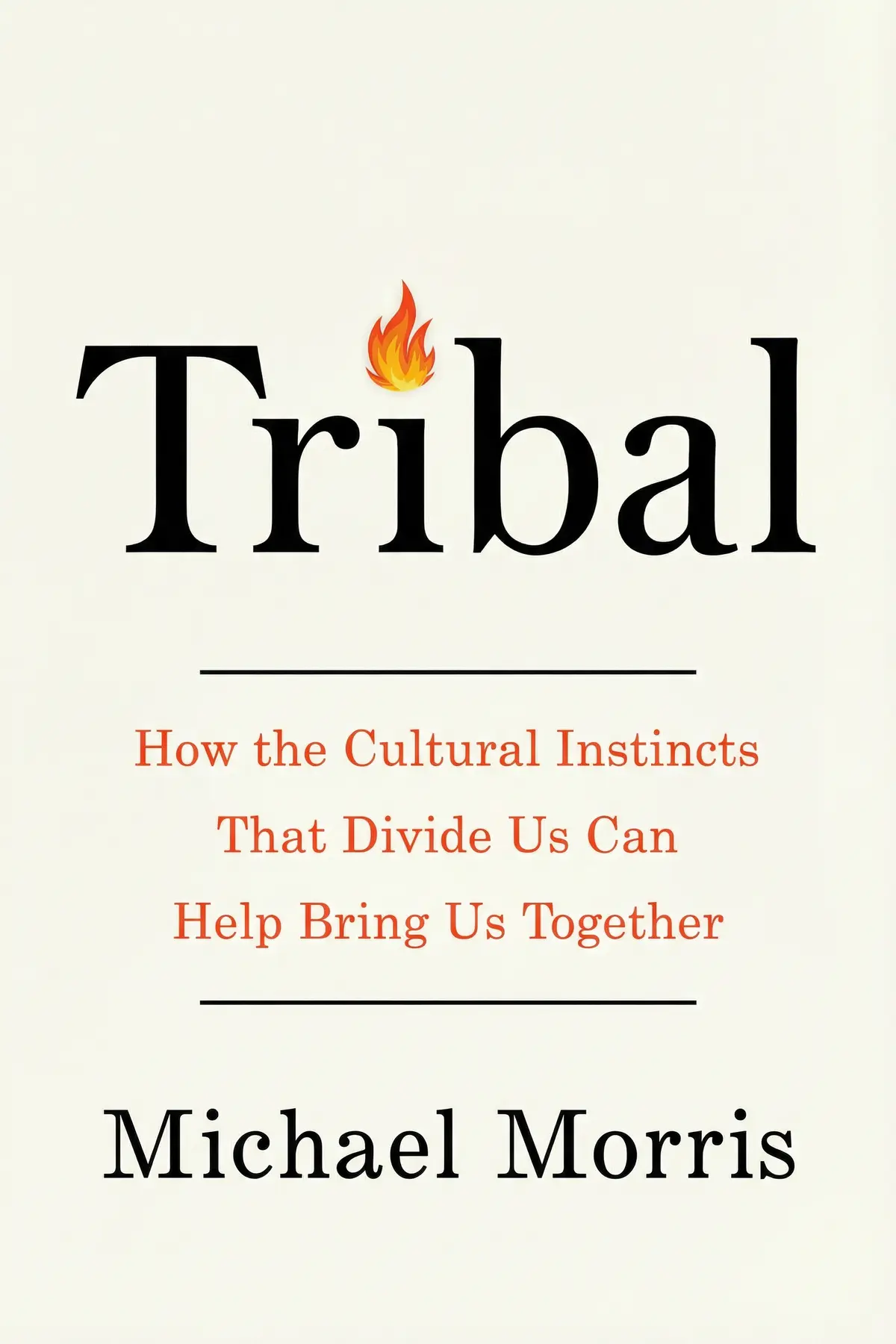
Table of Content
1. Introduction
1 min 10 sec
Most of us have watched a team, an office or a whole country stay stuck in its habits long after those habits stopped working. In Tribal, Columbia cultural psychologist Michael Morris argues that our pull toward the group is not the obstacle it seems, because the same instincts that lock traditions in place can be used to change them. Consider South Korea before the 2002 World Cup. A culture of deference to authority and rigid hierarchy limited chances for younger players and made the team predictable on the field. The Dutch coach Guus Hiddink overhauled how players were picked and trained, drew sharp criticism, and uncovered talent the old order had hidden. The squad found a new unity and a new flexibility.
Morris returns to one central idea: the tribal impulses that split people apart can be redirected so that they draw us together. Follow his cases, from Prohibition to Brazilian soap operas, and you get a practical sense of how to move a group, whether it is a team of eight or a nation.
2. Understand the instincts every group runs on
1 min 55 sec
Chimpanzees are strong, clever and social, yet they never built a temple or organized a long hunt. Morris finds the difference in a handful of instincts, and they still run every team you have ever joined.
3. Spot the difference between loud norms and real ones
1 min 46 sec
For years, Americans believed their country stood firmly behind a ban on alcohol. A single magazine poll suggested otherwise, and what followed shows how fragile a norm can be when it rests on appearances.
4. Shift behavior with characters people want to copy
1 min 46 sec
Women in Brazil began naming their babies after soap opera characters, and that was only the visible part of a much larger change. Morris shows why a good story can move people that statistics never reach.
5. Pick the right starting point for lasting change
2 min 12 sec
A spinning wheel helped free a country, and a government order changed which side of the road an entire nation drove on. Both worked. Morris explains what each needed, and why similar efforts elsewhere fell apart.
6. Build loyalty with a shared story worth retelling
2 min 01 sec
A motorcycle maker, a national holiday with a disputed history and a reconciliation commission all lean on the same device. Used well, it binds people together. Used badly, it destroys the trust it was meant to build.
7. Find common ground with people on the other side
2 min 09 sec
In some places, even the grocery store you choose signals your politics. Morris shows how that split grows, and how mixed soccer teams, festival menus and a change of wording have begun to pull people back together.
8. Conclusion
1 min 13 sec
Morris’s book ends up as a reassurance with a method attached. The urge to stick with our group is not a flaw to be educated away. It is the same instinct that let early humans run down prey together, that led Brazilian women to name their children after soap opera characters, and that kept the Polish public behind painful reforms. Division and unity grow from one root, and which one you get depends on what the group is shown, told and asked to do.
That turns the instincts into tools. Before trusting a show of agreement, check what people say when no one is watching, as the magazine poll did for Prohibition. When you want behavior to shift, give people a character or a true shared story to live up to, and begin with a small habit they can see working, the way Ambato began with its buses. When a divide opens, meet on neutral ground first and speak in the other side’s values.
Hiddink did not tear down Korean football’s sense of team. He gave it a new shape, and the players came out more united for it.
About this book
What is this book about?
People cling to their group. Teams hold on to old ways of working, companies resist new strategies, and whole countries split into camps that no longer trust each other. Most advice treats this tribal pull as the problem to overcome. Cultural psychologist Michael Morris treats it as the tool. Morris traces our group instincts back to early humans who hunted, gathered and cooked together, learned by copying their peers and bound themselves with rituals. He then follows those instincts into modern life: the public pledges that propped up American Prohibition, the Brazilian soap operas that changed family size, Gandhi's spinning wheel, Sweden's switch to driving on the right, and the stories companies and leaders tell to rally people. Readers get a working model of how culture moves. They learn why apparent agreement can gradually come apart, why a relatable character can change behavior faster than a campaign of facts, when change should start with small habits and when it should come from the top, and how to bring people on opposite sides of a divide back to common ground.
Book Information
Who it's for
Team leads and managers
Team leads and managers trying to change how a group works without breaking its spirit.
Founders and organizers
Founders and organizers who need people to rally around a shared story or a new habit.
Tired of us-versus-them fights
Anyone tired of us-versus-them arguments at work, online or at the family table.
About the Author
Michael Morris
Michael Morris is a cultural psychologist at Columbia University, with posts in both the Graduate School of Business and the Psychology Department, after ten years teaching at Stanford. He holds a doctorate in psychology from the University of Michigan. His research examines how culture shapes the way people think, communicate and collaborate, and what situations bring those styles out or change them. He has advised corporations, government agencies, non-governmental organizations and political campaigns on cultural questions, and has written for Time and the New York Times.
Ratings & Reviews
Ratings at a glance
What people think
Listeners find the material captivating and extensively documented, with one listener emphasizing the way it examines decades of research on tribal instincts. They value the author’s professional background in leadership and cultural psychology, and one listener mentions the deep comprehension of various cultures the book provides. Overall, the work is praised for being a timely and stimulating read.
Top reviews
Sook
Michael Morris has a way of turning social science into a gripping narrative. He reframes tribalism not as a defect, but as a misunderstood superpower that allowed early humans to thrive through cooperation. I was particularly fascinated by the section on Brazilian telenovelas and how storytelling can shift national birth rates more effectively than any law. To be fair, the book leans heavily on anecdotes, which might bother some hardcore data lovers. However, his expertise in cultural psychology shines through in every chapter. It’s a timely reminder that our instincts can either tear us apart or build something beautiful.
Show moreAmelia
Wow, this really changed how I view human cooperation. We often think of ourselves as these rugged individuals, but Morris proves we only survived because of our tribal ability to plan and share knowledge. The description of persistence hunting was intense and really drove home the point about team endurance. I love how the book moves from ancient history to modern-day issues like climate change denial. It's a hopeful look at how we can use our innate instincts to bridge gaps instead of widening them. A truly thought-provoking dive into what makes us human.
Show moreManop
Ever wonder why political conversations feel like a battlefield lately? Morris opens with a really vulnerable story about a cab ride on election night in 2016 that perfectly captures our collective blindness. It made me realize how my own Democrat tribalism is often just as irrational as the people I disagree with. The book does a great job explaining the peer instinct and why we value belonging over being right. My only gripe is that the solutions offered for toxic tribalism felt a little light on the ground. I wanted more practical steps for daily life, but the theory itself is solid and well-explained.
Show moreNarumon
The chapter on South Korea's soccer team was worth the price of admission alone. Seeing how Guus Hiddink broke down traditional hierarchies to build a more flexible team was a brilliant case study in cultural change. Look, Morris is clearly an expert on how groups function, and he makes a compelling case for why we need rituals even in the modern workplace. The book manages to be both academic and accessible, which is a hard balance to strike. I finished it feeling like I had a better toolkit for understanding the weird group dynamics at my own job.
Show moreAstrid
Finally got around to reading this after seeing it on the FT business book shortlist. It’s a fascinating crossover between leadership strategy and cultural history. The distinction between grassroots movements like Gandhi’s and top-down institutional shifts like Sweden's traffic changes was particularly insightful. Personally, I think this should be required reading for anyone managing a diverse team. It helps you see that conflict isn't just about personality, but about deep-seated cultural signals. It’s well-researched and engaging, even if some of the tribal branding feels a little trendy at times.
Show moreIsabelle
In a world that feels increasingly polarized, Morris offers a glimmer of hope. He doesn't just diagnose the problem of us versus them; he explains the evolutionary mechanics behind it. The way he discusses social media echo chambers really resonated with my recent experiences online. It's scary to think we are living in separate realities, but understanding the hero instinct helps explain why we cling to certain leaders. My only complaint is that the middle sections on business traditions dragged a bit. Overall, it’s a very timely and important piece of work for our current era.
Show moreSam
After hearing about Morris's work in cultural psychology, I was eager to see his take on leadership. His approach to moving from an anti-them to a pro-us mindset is a subtle but powerful shift in perspective. The book is packed with decades of research, yet it never feels like a dry textbook. I especially liked the examples of how symbols, like Harley-Davidson's rallies, create intense brand loyalty. It’s a deep dive into the invisible forces that shape our choices and our communities. Whether you’re a CEO or just curious about human behavior, there’s a lot to gain from this.
Show moreCherry
As a fan of popular science, I went into this with high expectations, but came away feeling conflicted. Morris writes beautifully, and the business book pacing makes it a very quick read. However, he completely ignores the replication crisis currently shaking the field of psychology. Not gonna lie, seeing him reference studies from the early 2000s that have since been debunked made me question the rest of his data. It’s more of a big idea book than a rigorous scientific text. If you can take the academic side with a grain of salt, there are some great nuggets about tradition and rituals.
Show moreAkira
Let’s just say I have some mixed feelings about the accuracy here. While the writing is undeniably engaging, there were several moments where the author’s spin on historical facts made me pause. I caught a couple of instances where he framed an event to perfectly suit his tribal narrative, even though the reality was much more nuanced. It makes me wonder how much of the other research is being presented through a specific lens. To be fair, it is a very entertaining read and the central hypothesis is compelling. Just don't take every single anecdote as absolute gospel.
Show moreLandon
Maybe it’s just me, but I found this incredibly frustrating. Most of the examples are either about American politics or sports, which feels narrow for a book claiming to cover cultural instincts. Frankly, the only new thing I learned was the morbid origin of the phrase drinking the Kool-Aid. Truth is, the author takes real-world events and puts a very specific spin on them to fit his narrative. Sometimes that spin felt like a massive stretch that ignored more obvious explanations. If you aren't a die-hard sports fan or obsessed with the US election cycle, you might find this a bit of a slog.
Show moreQuestions about this book
What is the main idea of Tribal by Michael Morris?
Morris argues that the instincts that make people loyal to their group, copying peers, following shared signals and stories, and honoring traditions, are not only a source of division. The same instincts can be rechanneled to change behavior and build unity. He illustrates this with cases ranging from early human hunting to Prohibition, Brazilian soap operas, Gandhi’s movement and corporate storytelling.
Is it more effective for change to start at the bottom and rise, or to be imposed from above?
Morris says either can work, depending on context and sequencing. Grassroots efforts, like Gandhi’s spinning and salt-making or the punctuality campaign in Ambato, Ecuador, succeed by starting with small, visible habits. Top-down efforts, like Sweden’s switch to driving on the right or Poland’s shock therapy, succeed when people trust their leaders. Occupy Wall Street and Russia’s post-Soviet reforms show how each route can fail.
How can stories change behavior, according to Tribal?
Morris argues stories persuade through emotion and redefine what feels normal. Brazilian telenovelas of the 1970s and 1980s showed independent women with small families, and birth rates fell as the shows spread. A Tanzanian radio drama about safe sex sparked group conversations that spread its message better than top-down campaigns. Organizations use authentic stories and traditions in a similar way to build loyalty.
How does Tribal suggest reducing polarization?
Morris points to several approaches. Frame ideas through values the other side already holds, as activists did by describing the Earth as God’s creation, and choose familiar wording, such as carbon offset instead of tax. Meet on neutral ground, like the mixed-ethnicity soccer teams in Iraq. Use inclusive leadership and symbols, such as mentoring pairs at Coca-Cola or blended festival traditions in Catalonia.
Who should read Tribal?
It suits managers and team leads planning a change, founders and organizers who want people to rally around a shared purpose, and anyone puzzled or worn down by political and online polarization. Its value lies in concrete cases that show how group instincts work, from a World Cup squad in South Korea to Harley-Davidson rallies, and how to use them rather than fight them.
Readers also enjoyed



A Year with Peter Drucker: 52 Weeks of Coaching for Leadership Effectiveness
Joseph A. Maciariello




Acting with Power: Why We Are More Powerful Than We Believe
Deborah Gruenfeld

59 Seconds: Change Your Life in Under a Minute
Richard Wiseman

All In: How Great Leaders Build Unstoppable Teams
Mike Michalowicz
AUDIO SUMMARY AVAILABLE
Listen to Tribal in 15 minutes
Get the key ideas from Tribal by Michael Morris, plus 5,000+ more nonfiction titles.
- 5,000+ titles
- Listen as much as you want
- 7-day free trial
- Cancel anytime









