

14 min 48 sec
Available in: English
To Pixar and Beyond: My Unlikely Journey with Steve Jobs to Make Entertainment History
How a studio losing millions of dollars became an animation powerhouse. The answer was one focused bet, four clear business conditions, well-timed fundraising and firm bargaining, with the artists kept firmly in charge of the films.
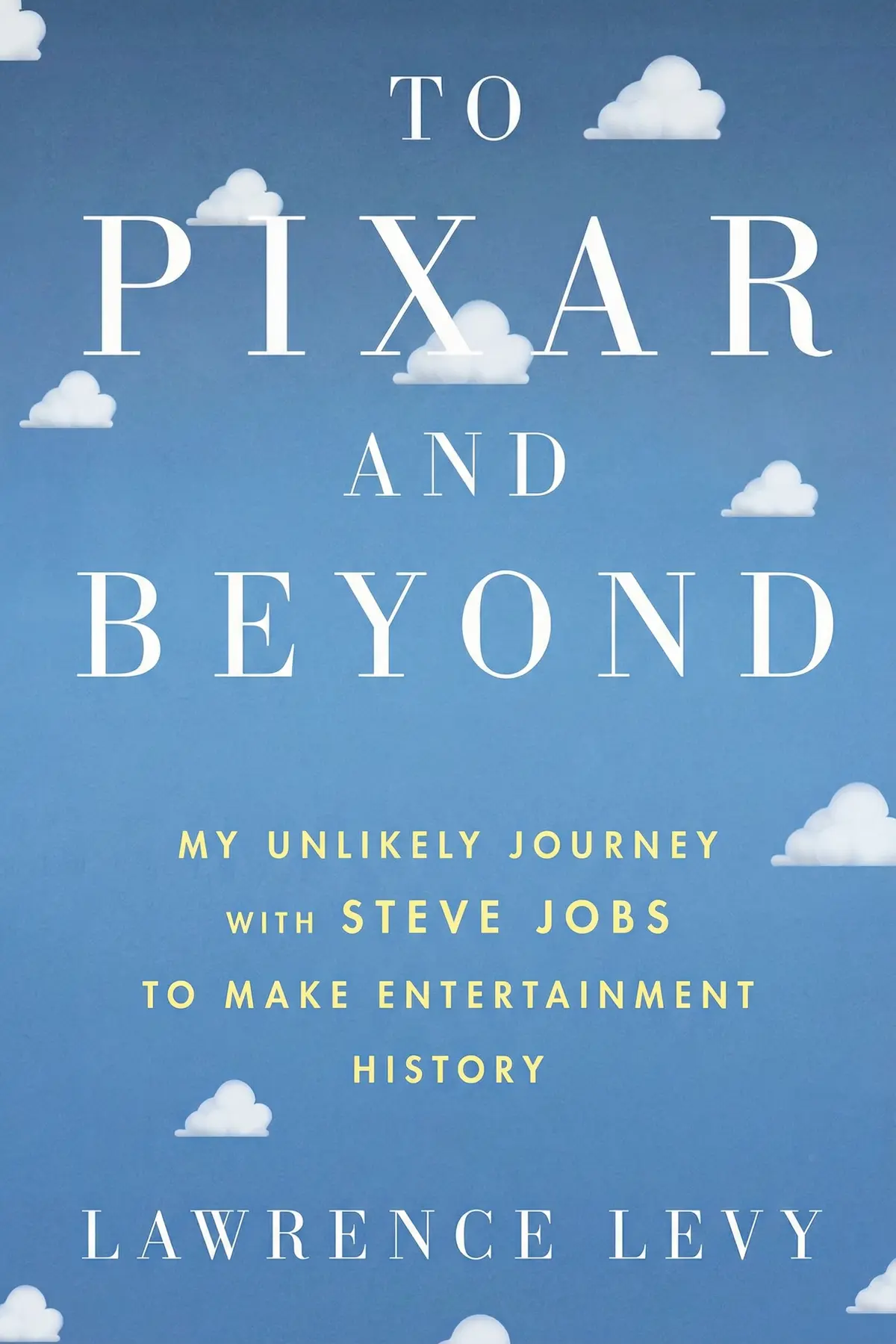
Table of Content
1. Introduction
58 sec
If you have ever had brilliant work in front of you and no idea how it would pay for itself, Pixar in 1994 was that problem at its most extreme. The studio’s films would later earn $14 billion worldwide, but at that time it had already cost Steve Jobs $50 million and was kept alive by checks he wrote each month. In To Pixar and Beyond, Lawrence Levy, the chief financial officer Jobs hired to fix this, tells how the turnaround happened.
His argument is that talent alone did not save Pixar. What saved it was a tough, numbered business plan built to protect that talent, with the artists and the money people each given their place. Levy’s story runs from his doubtful first tour of the studio to the contract that put Pixar’s name on its own films. Along the way it shows how to pick the one bet that can work, raise money at the right moment and bargain for what the work deserves.
2. Judge a risky offer by the work inside it
1 min 49 sec
The company was burning through its owner’s money and nobody could explain how it stayed open. One short scene on a screen persuaded a careful finance executive to bet his career on it anyway.
3. Find the one bet that could actually pay
2 min 10 sec
Software, commercials, short films and a contract with the biggest name in animation, and none of it could keep the lights on. The way out turned up in a place most studio executives overlooked.
4. Four conditions that turned art into a business
1 min 48 sec
Pixar was getting less than a tenth of the profit from its own films, and asking politely for more would get it nowhere. The plan that changed this fits on one page.
5. Raise money when your proof is freshest
1 min 53 sec
The two most famous banks on Wall Street said no. Pixar’s fate then rested on one film’s opening weekend, and on a target three times what animated features usually earned.
6. Give the final word to the people who create
1 min 42 sec
With $140 million in the bank, the executives were tempted to approve every storyboard and casting choice themselves. One plea from the creative lead changed their minds, and it shaped the studio.
7. Bargain from strength and mean your walk-away
1 min 46 sec
Pixar asked Disney for four things and promised to leave if it got only three. Six months into the talks, it kept that promise, and then something unexpected happened.
8. Balance the artist and the bureaucrat in you
1 min 41 sec
The deal that ended in a multibillion-dollar sale left Levy with a lesson he only understood years later. It came from an old Buddhist teaching about two sides of one person.
9. Conclusion
1 min 01 sec
It would be easy to tell Levy’s story as genius rewarded, and he tells it differently. A scene from Toy Story moved him deeply, yet the studio behind it had already cost Jobs $50 million and still depended on his monthly checks. What turned it into a studio was a set of plain conditions with numbers attached: a fair share of the profits, enough cash, a faster pace and a name on the poster. Each was won by someone willing to do the unglamorous work around the art, and to step back from the art when Lasseter asked.
The method works well beyond animation. When something you care about is not paying its way, audit it honestly, find the one bet that could work and write down the few conditions it needs. When you finally have something to bargain with, settle your walk-away terms before you sit down, as Levy and Jobs did over one line on a poster.
In the end, Pixar’s films carried its name because the bureaucrat fought for what the artist had made.
About this book
What is this book about?
In 1994 Pixar had a brilliant team, a film in progress called Toy Story and no way to pay its bills. Steve Jobs had already put $50 million into it. Lawrence Levy, the lawyer and finance executive Jobs hired as chief financial officer, tells how that company became one of the most successful studios in entertainment. Levy's account is a business story told from inside the room. He audits every project, finds that animated feature films are the only bet worth making, and writes down exactly how that bet could fail. With Jobs and Ed Catmull he builds a plan on four pillars: a bigger share of film profits, cash from a stock market listing, faster output and Pixar's own name on its films. Then he works through each one. He wins over reluctant banks, times the offering around Toy Story's opening and walks away from Disney rather than give up the studio's name. Readers get a working model for any venture where the product is wonderful and the economics are not. There is also a closing reflection, drawn from Buddhist thought, on keeping the artist and the bureaucrat in balance.
Book Information
Who it's for
Founders and operators
Founders and operators with a talented team and a business model that does not yet add up.
Finance and strategy staff
Finance and strategy people who work alongside creative staff and want to support them without taking control.
Curious about Pixar's business
Anyone curious about how Steve Jobs, Pixar and Toy Story actually became a business.
About the Author
Lawrence Levy
Lawrence Levy grew up in London and studied at Indiana University and Harvard Law School. He began as a lawyer at the Silicon Valley firm Wilson Sonsini Goodrich and Rosati and became an executive at Electronics for Imaging. In 1994 Steve Jobs hired him as Pixar's chief financial officer. There he led business strategy and the public offering, and he later joined the board. He then left corporate life to study meditation and Eastern philosophy, cofounded Juniper Foundation in 2003, and now writes and teaches on those subjects.
Ratings & Reviews
Ratings at a glance
What people think
Listeners find this to be a captivating chronicle of Pixar’s evolution, noting the superb narrative quality and writing style. The account is filled with emotion, with one listener highlighting how it showcases love persevering, and listeners agree that it remains engaging until the final page. They value the deep dive into the studio’s accomplishments, with one review characterizing it as an informative look into a truly groundbreaking company. The storytelling speed is also praised, with one listener specifically pointing out its masterful management approach.
Top reviews
Aroon
If you want to understand why Pixar is a multibillion-dollar powerhouse today, you have to read Levy’s account. Most people focus on the animation, but this book dives into the 'head' side of the business—the IPO, the high-stakes Disney negotiations, and the sheer financial grit required to keep the lights on. I found the relationship between Levy and Steve Jobs fascinating; it’s a more grounded, vulnerable version of Jobs than we usually see. The pacing is masterful, making venture capital and contract law feel as high-stakes as a thriller. It’s a compelling look at the crossroads of art and commerce. To be fair, if you are only looking for sketches and storyboards, you might find the balance leaning too far toward the boardroom, but for business buffs, it is gold.
Show morePenelope
What a masterful look at how love and perseverance can build a billion-dollar brand. This isn't just a dry business manual; it’s the story of a group of people who believed in an impossible dream. Levy does a fantastic job of explaining the sheer absurdity of the bets they were making. I particularly enjoyed the insights into the Steve Jobs of the mid-90s—not the invincible titan of the iPhone era, but a man struggling to find a win. The book is full of heart and provides an informative look into a truly groundbreaking company. It kept me interested until the very last page. For anyone who grew up on Pixar movies, seeing the 'business' side of the magic only makes the final results more impressive.
Show moreWachira
Most books about Steve Jobs focus on his time at Apple, but 'To Pixar and Beyond' fills in the crucial gaps of his ‘wilderness years.’ Lawrence Levy gives us a front-row seat to the transformation of both a company and a man. The storytelling is excellent—Levy managed to turn a series of board meetings and legal negotiations into a page-turner. I was wowed by the technological output they were aiming for back in 1995 and the guts it took to go public before Toy Story even hit theaters. It’s an authentic account that doesn’t shy away from the friction and the failures. If you're a fan of Silicon Valley history, this belongs on your shelf. A truly excellent piece of non-fiction.
Show moreMoo
While Ed Catmull gave us the heart of Pixar’s culture in 'Creativity Inc', Lawrence Levy provides the essential skeleton in 'To Pixar and Beyond'. I was hooked by the way he describes the early days of Toy Story, where the company was essentially a money pit kept afloat by Steve Jobs’ personal checks. The tension during the Disney renegotiation was palpable, even though we all know how it ends. It’s quite a feat to make an IPO feel like an action sequence. My only gripe is the final section where it drifts into Levy’s later interest in philosophy; it felt a bit disconnected from the tight narrative of the preceding chapters. Still, it’s a vital read for anyone interested in the Silicon Valley legend and the actual mechanics of success.
Show moreLucas
The level of risk described here is absolutely staggering. It’s easy to look back at Pixar as an inevitable success, but Levy reminds us that they were frequently one bad month away from total collapse. I loved the chapters detailing the ‘four pillars’ of their business strategy and the way they navigated the restrictive Disney contract. It’s a fascinating case study in management and persistence. Levy writes with a surprising amount of heart, showing how much he grew to care for the creative team despite being the 'suit' in the room. The pacing is brisk and keeps you engaged even during the legal jargon. A must-read for any aspiring entrepreneur who thinks the path to success is a straight line.
Show moreAna
Finally got around to reading this and I’m so glad I did. It’s a fascinating read about the choices and risks that made Pixar possible. I’ve read a lot of business books that feel like they’re lecturing you, but Levy’s style is much more conversational and narrative-driven. He captures the tension between creative integrity and real-world necessities perfectly. It’s eye-opening to see how much of a struggle it was to get Disney to treat them as equals. The book is informative without being dense, and it provides a unique perspective that you don’t get from the creative leads. It’s a great companion piece to the Pixar movies themselves. Definitely worth your time if you want to see behind the curtain.
Show morePrapaiwan
As someone who loves the movies, I was initially worried this would be too 'corporate' for me. To a degree, it is—there’s a lot more talk about stock options than storyboards. Look, it’s written by a CFO, so that’s to be expected! But even for a non-business person, the stakes are so high that it stays compelling. Seeing how Pixar transitioned from a graphical losses-leader to an industry leader was incredibly informative. I did find some of the financial explanations a bit repetitive, and I wish there was more about the actual animators. However, the insight into the Disney deal alone makes this worth the price of admission. It’s a solid look at the machinery behind the magic.
Show moreMaya
Ever wonder how close Pixar came to never existing at all? This book provides the answer, and it’s terrifyingly close. Levy’s writing is polished and the pacing is perfect, moving quickly through the early hurdles to the massive success of their later films. It’s a story about what it means to put the creative impulse first, even when the numbers don't seem to add up. I appreciated the specific details about the Toy Story production and the technical hurdles they faced. My only minor complaint is that the tone can be a bit self-congratulatory at times, but considering what they achieved, I suppose it’s earned. A fascinating, heart-filled journey into one of the most important companies of our time.
Show moreIsaiah
I walked into this expecting more behind-the-scenes stories about the making of Buzz and Woody, but what I got was a crash course in corporate finance. Frankly, it was a bit of a letdown at first. Levy is a CFO, and it shows in his writing—he focuses heavily on the deal-making and the numbers. However, once I adjusted my expectations, I began to appreciate the 'David vs. Goliath' narrative of Pixar standing up to the Disney machine. The book is well-written and the prose is clear, but I found myself skimming the technical financial parts. If you want the 'how' of the movies, look elsewhere, but if you want the 'how' of the money, this is your book. It’s a decent read, but not for everyone.
Show moreBird
The first three quarters of this book are a gripping, fast-paced account of how a struggling graphics company became a cinematic giant. I was completely invested in the IPO drama and the Disney power plays. But I’m not gonna lie, the last section about Levy’s post-Pixar transition into Eastern philosophy felt like it belonged in a different book entirely. It killed the momentum for me. Up until that point, the writing was sharp and the story of Toy Story's release was thrilling. I appreciate the honesty about his personal journey, but as a reader looking for the Pixar story, it felt tacked on. I’d still recommend it for the business insights, but maybe just stop after the Disney acquisition chapters.
Show moreQuestions about this book
What is To Pixar and Beyond about?
It is Lawrence Levy’s account of joining Pixar as chief financial officer in 1994, when the company had lost Steve Jobs $50 million. He describes how Pixar committed to animated feature films and built a four-part business plan. He also covers going public on the strength of Toy Story and renegotiating its Disney contract. Over the following years Pixar grew into a studio that Disney bought for $7.4 billion.
What were Pixar's four pillars?
Levy, Jobs and Catmull set four conditions. Pixar had to raise its share of film profits from under 10 percent to at least half. It had to raise about $75 million by going public so it could co-fund films. It had to grow enough to release films more often than once every four or five years. And it had to put its own name on its films instead of Disney’s alone.
How did Toy Story affect Pixar's IPO?
Pixar timed its stock market listing to the film’s release at the end of 1995. Levy and Jobs needed the film to earn at least $15 million on its opening weekend, triple the usual figure for an animated feature. Toy Story took almost $30 million that weekend and more than $190 million in total. Pixar was valued at $1.5 billion on the day of the offering, well above the banks’ $700 million estimate.
What lessons from the book can I apply at work?
Audit every project honestly and look for hidden assets, the way Levy found a valuable patent inside Pixar’s software. Choose the one bet that could work and list exactly how it might fail. Raise money when your proof is freshest. Leave creative decisions with the people who create. In negotiations, fix your walk-away terms in advance and be ready to use them.
What does Pixar have to do with Buddhism?
After leaving corporate life, Levy studied meditation and Eastern philosophy and found the Buddhist idea of the Middle Way, a balance between structure and flow. He describes it as two sides of a person, an artist and a bureaucrat, who must work in harmony. He sees Pixar the same way: animation gave it direction, the four pillars gave it the means, and creative freedom completed the balance.
Readers also enjoyed


A Promised Land
Barack Obama


A River in Darkness: One Man’s Escape from North Korea
Masaji Ishikawa

A Spy Among Friends: Philby and the Great Betrayal
Ben Macintyre


A Year in the Life of William Shakespeare: 1599
James Shapiro


AUDIO SUMMARY AVAILABLE
Listen to To Pixar and Beyond in 15 minutes
Get the key ideas from To Pixar and Beyond by Lawrence Levy, plus 5,000+ more nonfiction titles.
- 5,000+ titles
- Listen as much as you want
- 7-day free trial
- Cancel anytime









