

A Return to Love: Reflections on the Principles of a Course in Miracles
Marianne Williamson
 English
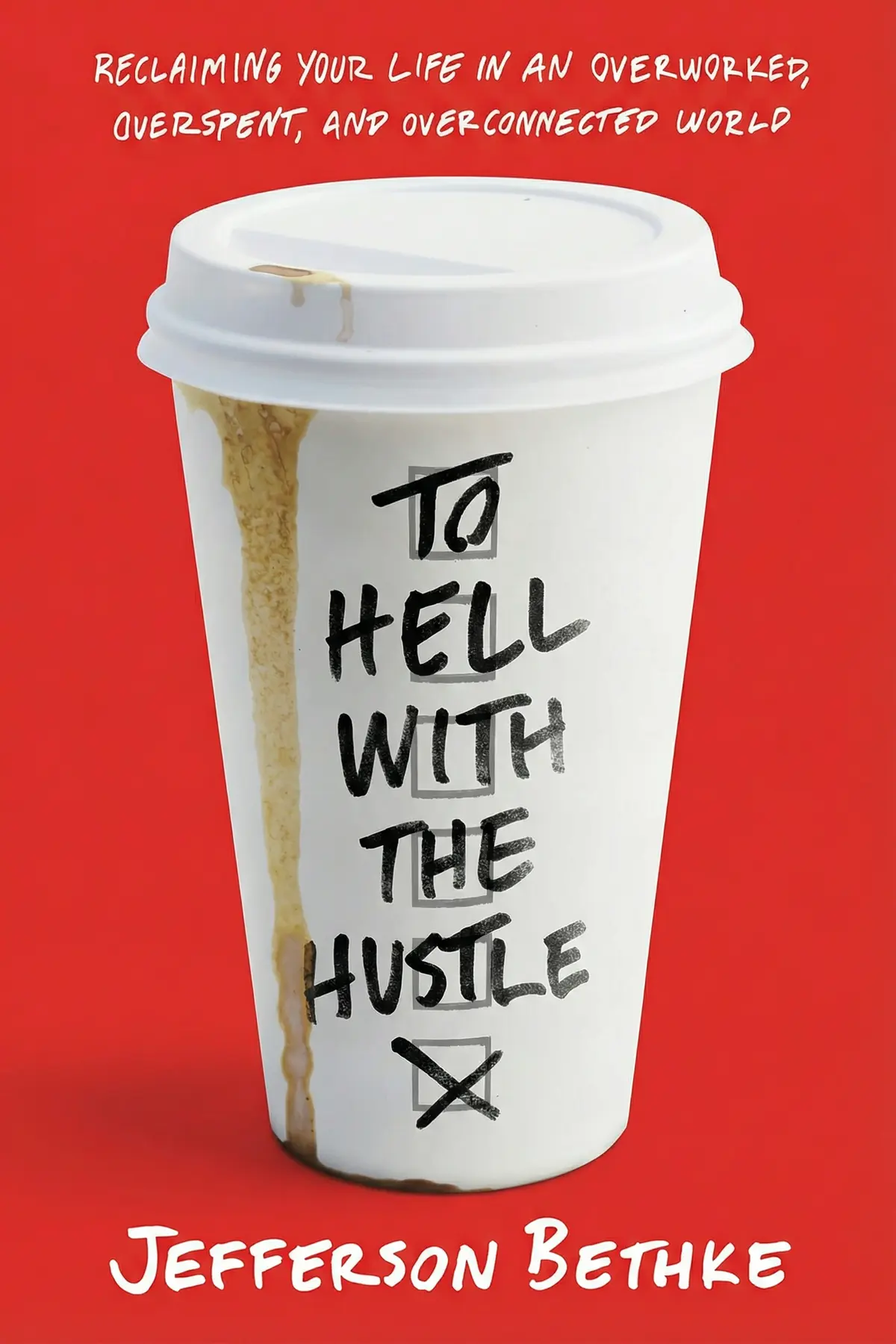
Jefferson Bethke shows how hustle culture became a substitute religion. He offers five practices drawn from the life of Jesus, silence, refusal, obscurity, rest and empathy, to help you slow down and become more fully human.
1 min 05 sec
You can have the degree, the job and a polished online profile and still feel like a machine running on batteries. In To Hell with the Hustle, Christian writer and podcaster Jefferson Bethke argues that this is no accident: reaching the milestones our culture prizes often brings anxiety and loneliness with it. He notes that more than half of millennials say they feel lonely, and that anxiety and depression weigh on large numbers of millennials and Gen Z alike.
His diagnosis is that hustle culture has become a kind of religion. It makes work the measure of your worth, then asks you to sacrifice health, relationships and rest to it. Bethke’s throughline is that the way out lies in a few slow, repeated practices, drawn from the life of Jesus, that reshape who you are over time. He names five: silence, refusal, obscurity, rest and empathy. Each has a first step small enough to try this week, and together they redraw what a good life looks like.
1 min 51 sec
Life hacks, optimized mornings and color-coded lists promise a better self. Bethke sees something older and stranger behind them, a belief system born in the age of factories that still decides what counts as a good day.
1 min 51 sec
Your favorite café may be louder than you think, and your brain pays for it all day. Bethke argues that the reason we fill every gap with sound has less to do with the world than with ourselves.
1 min 53 sec
A full calendar looks like proof of a meaningful life. Bethke argues it can hide the very people your life is meant for, and even churches have learned to applaud the habit that causes it.
1 min 51 sec
Live your best life, the slogans say, and be extraordinary. Bethke looks at the long, forgotten years in the lives of famous biblical figures and finds a very different case for the seasons nobody notices.
1 min 57 sec
A day off spent on the couch with snacks and a screen is not what Bethke has in mind. His model for real rest comes from a holiday most families already know how to throw.
1 min 50 sec
One musician changed the minds of more than 200 members of a hate group without winning a single debate. His method, and the way social media works against it, point to a slower kind of strength.
1 min 20 sec
Bethke’s five practices share one quality: each asks you to slow down and leave room. Silence makes room in your mind, refusal in your calendar, obscurity in your ambition, rest in your week and empathy in your opinions. Hustle culture fills every one of those spaces and calls the result success. Bethke, writing as a Christian, calls it a false religion and offers the rhythms of Jesus in its place.
He admits the path can sound dull or too simple. His claim is that this simplicity is exactly where your humanity comes back. The goal is to become more fully a person, at a pace that leaves room for God and for others.
The practices start small. Claim two quiet minutes in a corner tomorrow and guard them. Answer the next request with no unless it truly deserves a yes. Plan one Sabbath the way you would plan a holiday, with a meal and people you love. And when someone says something that makes you angry, ask what they mean before you answer.
Picture walking fast enough to get somewhere, yet slow enough to stop for the person beside you. That is the speed of grace, and it begins wherever you stop hurrying.
Many young professionals have reached every milestone they were told to aim for: the degree, the job, the polished online profile. Yet they feel drained, anxious and alone. Jefferson Bethke argues that this is no accident. Hustle culture, in his view, has become a religion of efficiency that turns work into the measure of a person's worth and asks for health, relationships and rest in return. Bethke traces this way of thinking back to the Industrial Revolution. He then proposes a Christian alternative. Instead of setting ever bigger goals, he recommends formations: small rituals repeated in rhythm that shape your identity over time, the way Jesus lived. He names five. Silence clears away noise and false identities. Refusal makes no the default and builds margin for people. Obscurity finds meaning in ordinary, unseen seasons, as Moses, Abraham and Paul did. Rest means a planned weekly Sabbath that feels like a celebration. Empathy, shown in musician Daryl Davis's meals with Klan members, means asking before reacting. Most of the practices come with a simple first step.
Young professionals who have hit every milestone and still feel drained, anxious or lonely.
Christians who sense that busyness has crept into their faith and want practical ways to slow down.
Overcommitted parents and team members who struggle to say no or to take a real day of rest.
Jefferson Bethke writes about Christian life and culture today. He first became widely known through his best-selling book Jesus > Religion, and he also hosts a podcast and makes videos for YouTube. Bethke and his wife, Alyssa, have three children, Kinsley, Kannon and Lucy. Through familyteams.com he works with families, helping them see themselves as teams with a mission across generations.
Listeners regard this work as one of the most important reads of our generation, commending its ideal blend of personal stories and research. The prose is sophisticated, and listeners find it stimulating and transformative, with one review noting it offers practical ways to overcome the hustle. Listeners value the unhurried tempo and its help in matching the cadence of Jesus, while one listener mentions it provides a deep sense of satisfaction and joy. The book earns praise for its grace, with one review noting it is overflowing with the goodness of God.
Finally got around to reading this, and I’m kicking myself for waiting so long to start. Bethke captures the exhaustion of our current "grind" culture with such precision that I felt seen on every single page. The way he contrasts our frantic need for productivity with the rhythmic, unhurried pace of Jesus is revolutionary for a tired millennial like me. It isn’t just a "stop being busy" book; it’s a deep dive into how our souls are being deformed by the very technology that was supposed to save us time. While some might find the lack of a rigorous academic bibliography a bit light, the anecdotal evidence and the spiritual truth hit harder than any data point could. I’m already trying to implement the silence practices he suggests, and the difference in my anxiety levels is noticeable. This feels less like a self-help book and more like a recovery manual for the modern human soul.
Show moreWow. This book was a massive reality check for me. I’ve been living in a state of chronic hurry for years, thinking that my value was tied to my output. Bethke’s message that "humans aren't made, we are formed" really stuck with me. It’s a quick read but it packs a punch. The insights into how we’ve turned work into an idol were especially convicting. If you're feeling burned out and lonely, do yourself a favor and pick this up. It’s full of grace and goodness. Truly one of the most important books I’ve picked up this year. Highly recommend for anyone needing permission to slow down and walk at a different pace.
Show moreEver wonder why you're always tired even when you aren't doing "that much"? That was me before I read this. Jefferson Bethke has a way of putting words to the underlying soul-sickness that comes with our digital age. I loved his distinction between "hard work" and the toxic "hustle" culture that demands we never sleep. The book is overflowing with the goodness of God and offers a beautiful vision of what life looks like when we actually follow the cadence of Jesus. My favorite part was the discussion on how we use work for "identity production" instead of just material production. It’s a life-changing perspective shift. I’ve started implementing a digital Sabbath because of this book, and the sense of satisfaction and joy I’m finding is something I haven't felt in a long time. It’s not just a book; it’s an invitation to be human again.
Show moreIn my experience, few books actually change the way you live your daily life, but this is one of them. Bethke perfectly mixes personal stories with enough research to make his point clear: the hustle is killing us. He speaks with such grace and wisdom about the "soul sickness" of our era. The way he describes Jesus as the prototype for humanity—the one who resisted all cultural pressures to be "busy"—is just beautiful. This book gave me a deep sense of peace and a practical roadmap to reclaim my time. It’s an essential read for our generation. If you find yourself scrolling through your phone until 1 AM or feeling like you're never doing enough, you need this. It’s a refreshing, life-giving book that points you directly toward the heart of God.
Show moreThe chapter on noise pollution alone is worth the price of admission. Bethke does an excellent job of articulating why we feel so constantly frazzled despite having more "freedom" than any generation before us. He argues that we’ve traded our identity for productivity, and frankly, he’s right. The writing is eloquent and flows well, though I’ll admit the middle section drags a little as he repeats some of his core points about formation versus goals. I appreciated the practical steps he included to help readers regain a sense of solitude, even if some of the advice feels a bit tailored toward a specific middle-class demographic. It’s a solid, thought-provoking read that challenges you to look at your phone less and your Creator more. It might not be a Malcolm Gladwell book in terms of research, but it’s a necessary spiritual tonic for anyone feeling the weight of the rat race.
Show moreThis book offers a timely critique of the North American obsession with being "busy." Bethke effectively dismantles the lie that our value is found in our achievements. I particularly enjoyed how he brought in insights from cultural critics to bolster his spiritual points. While the tone is a bit preachy at times—which is expected given the author’s background—the message is undeniable. We are a generation of lonely, anxious "grinders" who have forgotten how to sit still. My only real critique is that he focuses heavily on the individual and the nuclear family, sometimes ignoring the broader community or church's role in this formation. Still, it’s an eloquent and much-needed call to resist the cultural pressures of our time. It’s a fast read, but the implications will stay with you long after you finish the last chapter.
Show morePicked this up because I was feeling completely burnt out, and it was exactly what I needed. Bethke’s writing style is very conversational and easy to digest, which is great when your brain is already fried from work. The core message—that we need to follow Jesus’ way, not just his teachings—really resonated with me. I appreciated the specific focus on silence and solitude as acts of resistance. Not gonna lie, it’s a bit repetitive in spots, but the reminders are necessary. It’s a beautiful call to stop producing and start being. If you want a practical way to overcome the hustle and find some actual joy in your life again, give this a read. It’s a great mixture of encouragement and challenge.
Show moreAs someone who grew up in the church, I found the message very familiar, maybe even a little too familiar. Bethke is a gifted communicator, and I love his heart for helping people find rest in Jesus, but I didn't find many "new" teachings here that I haven't heard in sermons for years. The focus on the "hustle" as a cultural idol is a great hook, but the content is essentially basic Christian spiritual disciplines. To be fair, the writing is accessible and he uses some great quotes from thinkers like Augustine and James K.A. Smith. I just wish there was a bit more depth or a more unique angle on the topic. It's a good reminder for the weary, but it feels like it’s mostly targeted at a younger, religious audience who might not have read the classic texts on this subject yet.
Show morePersonally, I have mixed feelings about this one. On one hand, the premise is fantastic. We are definitely overworked and overstimulated. On the other hand, the book feels a bit like a collection of "brainstorms" rather than a deeply researched text. There were some solid nuggets about how Jesus never seemed to be in a hurry, which was a great perspective to consider. However, the author’s perspective as a successful YouTuber makes some of his advice feel a little disconnected from the reality of people working multiple jobs just to survive. It’s a very "millennial" book, for better or worse. I enjoyed the light-bulb history and the bits about technological innovation, but I wanted more data to ground the anecdotes. It’s a decent read for a weekend, but don't expect a deep theological or sociological treatise.
Show moreLook, I appreciate the sentiment behind this book because we definitely need to talk about burnout. However, I found the execution incredibly lacking in substance. The author basically presents a 180-page opinion piece that feels more like a collection of blog posts or a cleaned-up personal journal than a cohesive argument. He makes big claims about the "hustle" being from hell but barely backs it up with anything beyond his own thoughts and some Bible verses. If you’re looking for a book supported by research, data, or deep sociopolitical analysis, you should probably look elsewhere. It’s also very heavily marketed as a general "life advice" book, but it’s actually deeply religious, which wasn't clear from the blurb. It felt like he was just rambling about his own lifestyle as a YouTuber, which isn’t really relatable for those of us working 9-to-5 jobs in the real world.
Show moreJefferson Bethke argues that hustle culture has become a substitute religion that measures your worth by productivity, a mindset he traces to the Industrial Revolution. Instead of chasing bigger goals, he recommends formations: small rituals repeated in rhythm that shape your identity over time. He draws them from the life of Jesus and names five: silence, refusal, obscurity, rest and empathy.
Silence means seeking out quiet to shed false identities and draw near to God. Refusal means making no your default so you have margin for people. Obscurity means valuing ordinary, unseen seasons, as Moses, Abraham and Paul did. Rest means a planned weekly Sabbath that feels like a celebration. Empathy means slowing down to understand others before reacting, as Daryl Davis did with Klan members.
Bethke says the Sabbath is not a lazy day of television and snacks, and it should not feel like a duty either. He compares it to a small weekly Christmas: a time for family, food, joy and a sense of God’s presence. Like Christmas, it needs planning ahead. He accepts that early attempts will be imperfect and that the urge to check devices must be resisted week after week.
Start by auditing your daily micro-rituals and asking whether each builds you up or wears you down. Then try a minute or two of guarded silence in a quiet spot. Make no your default answer to new requests to create margin. Plan one Sabbath day with shared meals and no devices. And when someone upsets you, ask what they mean before you respond.
It suits readers, especially millennials and Gen Z, who have reached the milestones they were promised would bring fulfillment and instead feel tired, anxious or isolated. It is written from a Christian perspective, so it will speak most directly to people of faith who want to bring their work habits, calendars and online lives in line with the way Jesus lived.
Marianne Williamson

Deepak Chopra

Pico Iyer

Alcoholics Anonymous World Services


Daniel Goleman


Eckhart Tolle

Beth Moore
Paramahansa Yogananda
AUDIO SUMMARY AVAILABLE
Get the key ideas from To Hell with the Hustle by Jefferson Bethke, plus 5,000+ more nonfiction titles.









