
All About Love: New Visions
bell hooks
 English
Shows couples why a solid relationship can sour after a new job, a move or a baby, and gives them therapy tools to spot stress, calm each other and reconnect.
57 sec
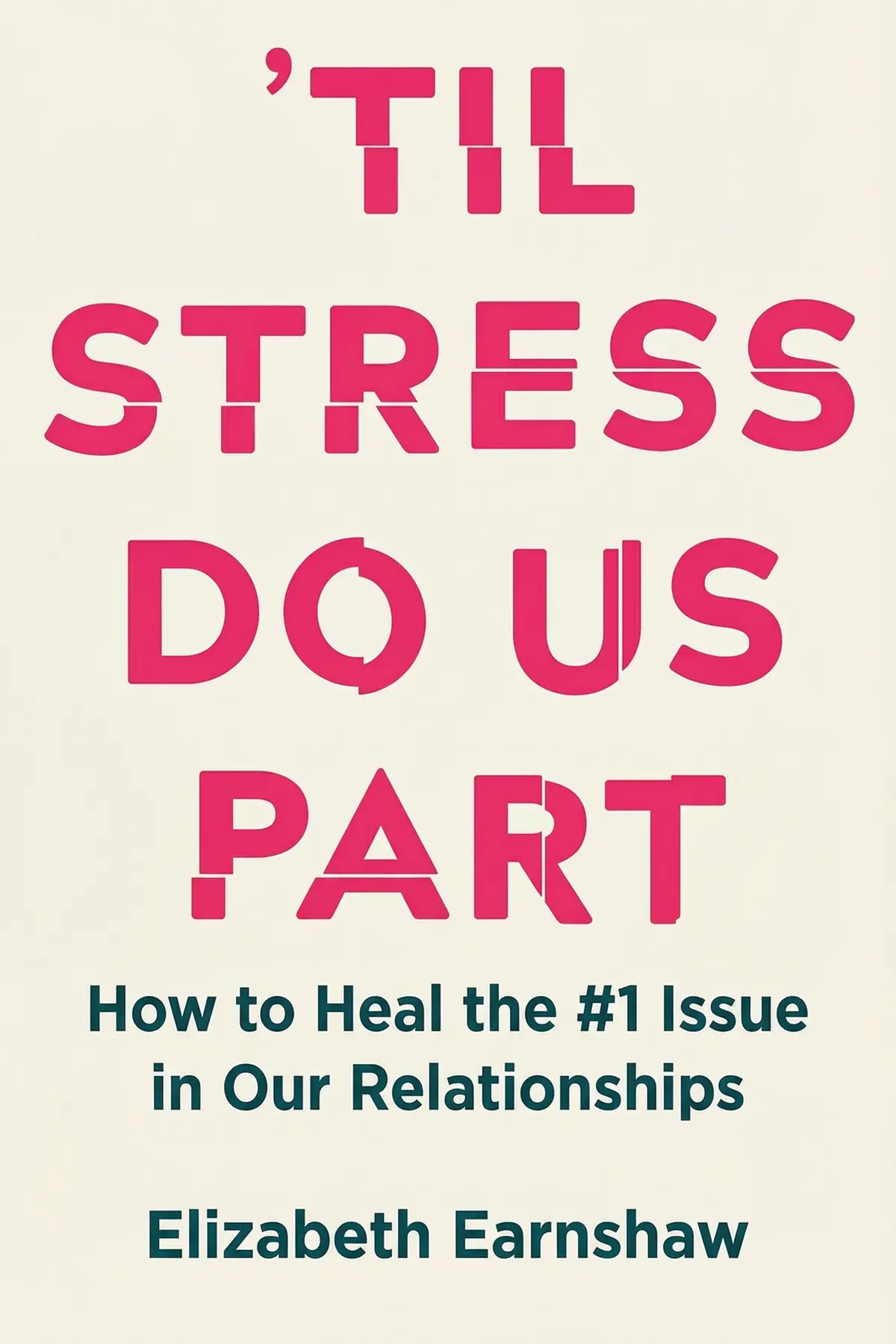
If your relationship felt solid until a new job, a move or a baby arrived, and now ordinary talks turn into fights, the problem may not be your partner at all. In ‘Til Stress Do Us Part, couples therapist Elizabeth Earnshaw argues that the usual culprit is stress itself, which changes how the brain and body behave long before anyone says a harsh word. She points to a survey in which 70 percent of American parents described extreme stress about their children’s well-being, and notes that stress levels climbed sharply after the pandemic.
Her throughline is simple: when couples stop blaming each other and start treating stress as the shared opponent, the old skills of listening and connecting return. What follows is a set of therapeutic strategies, from reading your own heartbeat during an argument to calming a partner with your voice and touch, plus a way to spot the pressures you never needed to take on.
1 min 48 sec
A couple who handled everything well for years suddenly cannot get through a simple talk about the kids. Their love did not change overnight, so something else did, and it starts inside the body.
1 min 53 sec
An argument about a vacation budget can secretly be about a fear from childhood. Earnshaw explains how the body replays old alarms, and offers simple ways to catch the replay before it takes over the evening.
2 min 09 sec
One partner offers help with a single friendly sentence and makes things worse. The reason lies in a kind of work that never shows up on any list, and in pressures that come from well outside the couple.
1 min 59 sec
Most stress advice tells you to soothe yourself alone. Earnshaw points to a second tool that only a relationship provides, one that can even make physical pain feel smaller, and it starts with your own breathing.
1 min 54 sec
After a new baby, one partner wants sex more than ever while the other cannot think about it. Both assume the worst about what that means, and Earnshaw explains why each of them is reading the signal wrong.
1 min 42 sec
A couple facing job loss decides the answer is to do more, not less. It feels like control right up to the day it collapses, and Earnshaw shows how to tell good pressure from the kind that breaks you.
1 min 07 sec
Earnshaw’s book adds up to a change of suspect. When a good couple turns sharp, the usual instinct is to question the love. She asks couples to question the load instead: the cortisol behind Rami’s defensiveness, the school deadline in Sarah’s head, the new baby behind Nina’s exhaustion, the extra course Maya never needed. Each time, the fight between two people turns out to be a fight with something outside them, and that something can be named, shared and made smaller.
The practical starting point is small. Spend five minutes writing down every stressor you carry, then trade lists with your partner over dinner. Agree on a break ritual before the next argument, so that whoever feels flooded can step away without it feeling like rejection. And when your partner is the one spiraling, try what Cameron did for Alex: a soft voice, a hand on the back, your own slow breathing to show that the danger has passed.
None of this asks you to love harder. It asks you to notice that stress was in the room all along, and to face it standing on the same side.
Many couples who once talked easily find themselves snapping, shutting down or drifting apart after a major life change. It is tempting to decide the relationship itself is broken. Couples therapist Elizabeth Earnshaw argues that the real culprit is usually stress, which pushes the body into survival mode and makes ordinary listening and problem solving much harder. Through illustrative couples, Earnshaw shows how stress loops form, how old fears stored in the body hijack present arguments, and how the invisible mental load of running a home breeds resentment. She explains co-regulation, where one partner's calm steadies the other, why stress can shut down one person's sexual desire while raising the other's, and how chasing productive stress can tip a couple into overload. Readers get concrete tools they can use the same week: a five-minute stressor list to share, a break ritual for heated moments, Gottman's Four Horsemen and their antidotes, questions that open up talk about sex, and a North Star test for deciding which challenges are worth taking on.
Couples whose easy communication fell apart after a new job, a move or a new baby.
Partners who feel resentful about who carries the mental load at home.
Anyone under heavy work stress who notices it spilling into fights, silence or a stalled sex life.
Elizabeth Earnshaw is a couples therapist who founded A Better Life Therapy in Philadelphia. Over more than 15 years she has worked with couples and helped thousands of them through hard seasons. National outlets such as The New York Times, The Washington Post and USA Today have featured her work. Her other books include I Want This to Work and The Couples Therapy Flipchart. She lives with her family in West Chester, Pennsylvania.
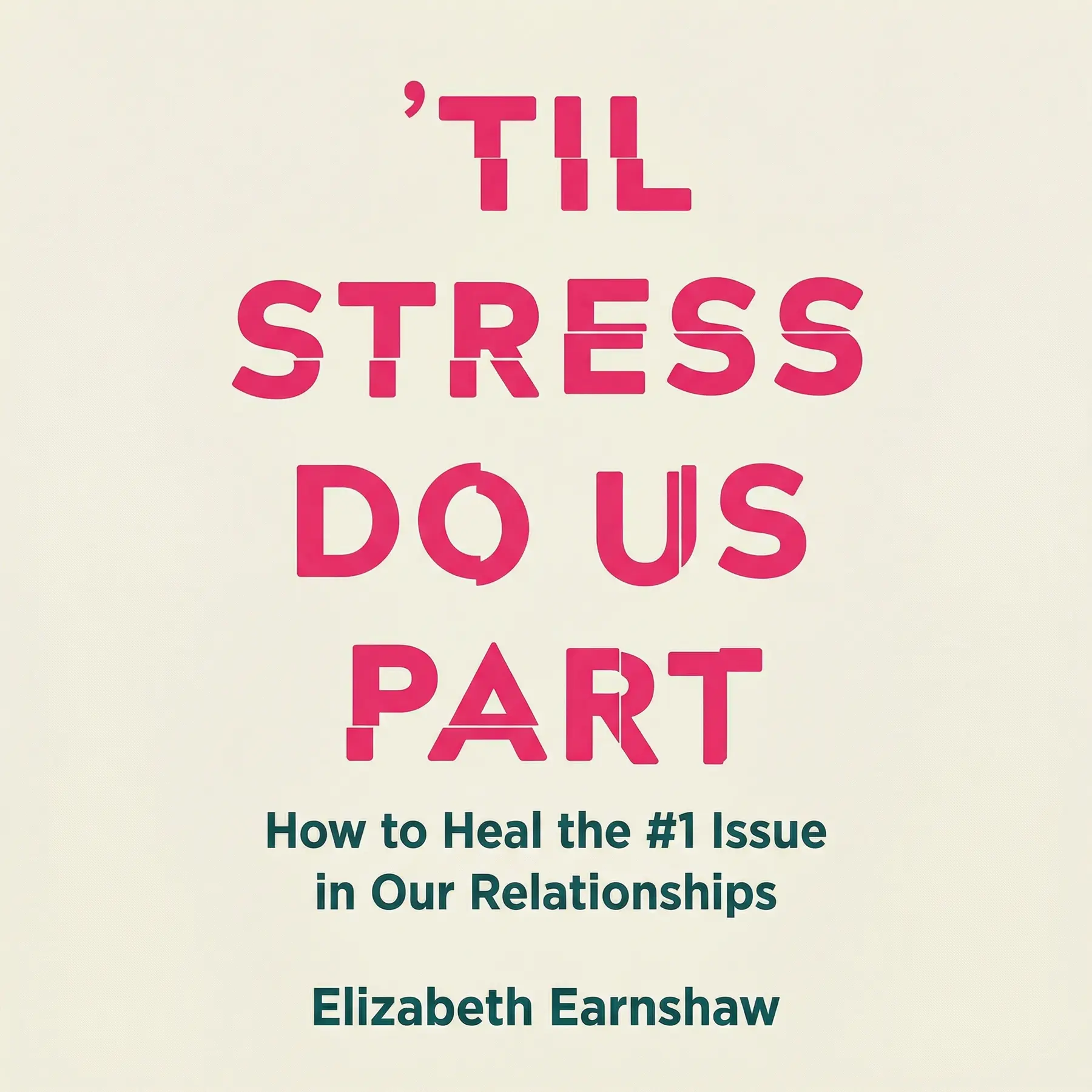
Listeners appreciate the book's deep wisdom and actionable tips, noting how it aids in focusing on what truly matters in life. Many find the content highly relatable, with one listener highlighting its raw and insightful approach to the struggles couples face.
I’ve read a lot of relationship books, but Earnshaw’s voice feels different—more human, less like a clinical lecture. She really nails the concept of the 'mental load' and how resentment builds when one person is doing all the researching and worrying behind the scenes. Honestly, that section on the 'four horsemen' was a huge wake-up call for how I handle my own anxiety-driven criticisms. It's not just theory; it’s like she’s sitting there with you, admitting she also struggles to spot her own patterns sometimes. Totally recommend if you feel like stress is drowning your connection.
Show moreIf you liked Lori Gottlieb’s 'Maybe You Should Talk to Someone,' you will probably love this. Elizabeth Earnshaw manages to be both the expert and the student in her own life, which makes the advice feel much more attainable. The way she describes 'roles' in a relationship—how we wear so many hats today—really hit home for me. We aren't just partners; we’re co-managers, roommates, and caregivers all at once. It’s a raw look at how stress is basically the silent killer of intimacy. Truly an insightful manual for modern love.
Show moreWow. This sentence hit home: 'In order to avoid dealing with arguments... one partner takes it over.' I felt so seen! This book perfectly captures that cycle of quiet resentment when one person tries to shield the other from stress, only for it to blow up later. It’s relatable, easy to digest, and actually gives you words to use during those tense moments. It’s the kind of book you want to leave on your partner’s nightstand (with some highlighted passages, obviously). Best thing I've read on the subject in a long time.
Show moreHonestly, just read it. Even if you think your relationship is 'fine,' the way Earnshaw explains how stress leaks into our communication is eye-opening. The 'name it to tame it' strategy has already saved us from at least three pointless bickers this week. It's simple, it's practical, and it prioritizes what actually matters in the long run. A must-read for anyone feeling burnt out by their schedule and their various roles.
Show moreThis was a solid read with some really practical takeaways for navigating the chaos of daily life. I particularly liked the client stories because they made the concepts feel less abstract. However, I’ll be honest—some of the advice felt a bit like common sense packaged as new insights. Like, obviously external stress impacts your mood? But the way she breaks down the 'name it to tame it' method helped me rethink how I approach arguments. It's a 4-star for me because while it’s very helpful, some chapters felt slightly repetitive.
Show moreVery practical, though it might not be for everyone. I felt like the book was at its strongest when discussing the 'invisible' work we do—the planning, the delegating, the constant mental tab-keeping. It’s not strictly a couples therapy book, but it gives you the tools to stop blaming your partner for things that are actually just symptoms of being overwhelmed by life. I did find myself skimming some of the intro bits that felt a bit 'surface level,' but the feedback notes at the end of each session were pure gold.
Show moreThis is a really helpful guide for anyone feeling the 'physical, emotional, and mental load' of a fast-paced world. Earnshaw is a very 'human' therapist; she admits when she's wrong and uses her own relationship blunders to teach us. I loved the 'good enough mother' section because I struggle so much with perfectionism. My only gripe is that it sometimes ignores how external systemic stresses can't always be 'solved' with a mindset shift. Still, it's a great tool for your relational toolbox if you’re willing to do the work.
Show moreSolid 4 stars. It’s a quick read and very accessible. I appreciated that it wasn't overly academic, though she clearly has the research to back up her points. The 'scathing but likable' tone she mentions is exactly how the book feels—she’s blunt about where we mess up, but she’s on your side. I would have liked a bit more focus on long-term financial stress, as that felt a little rushed, but overall, it’s a great resource for managing the daily grind without taking it out on your spouse.
Show moreI’m really torn on this one. On one hand, the patient stories are deeply moving and provide a lot of context for how stress manifests in a marriage. On the other hand, the 'solutions' provided often felt inadequate for the weight of the problems described. She’ll describe a traumatic event like a terminal illness or job loss, and then follow it up with tips that felt a little too simple for that level of grief. I listened to the audiobook, and the narrator’s tone was so consistent it almost became monotonous, which didn’t help. It’s okay, but maybe didn't meet my high expectations.
Show moreI don't know, I just felt like this didn't tell me anything I hadn't already heard on a basic wellness podcast. It’s a lot of 'duh' moments for me. If you’re already aware of your stress triggers, you might find the substance lacking. The patient stories were the only thing that kept me reading, but even those felt a bit glossed over in favor of quick fixes. I was looking for something deeper, and this just felt like a collection of generic relationship tropes. Just didn't land for me personally.
Show moreElizabeth Earnshaw argues that when a healthy couple starts fighting after a big life change, the relationship is often not the real problem. Stress pushes the body into fight, flight or freeze, releasing adrenaline and cortisol and making calm listening hard. Old stress stored in the body can also hijack present arguments. When partners name the stress and face it together, they can break the loop and reconnect.
Co-regulation is when one partner’s calm helps the other manage stress, much like a parent rocking a crying baby. Earnshaw describes it through Cameron soothing Alex with a soft voice and a back rub, and cites research where holding a partner’s hand eased pain. It prevents co-escalation, but it depends on self-regulation first, through tools like deep breathing or counting to ten.
According to Earnshaw, stress can work as a brake for one partner and an accelerator for the other. After a baby or a new job, one person’s desire may shut down while the other wants sex as release. Each then misreads the gap as rejection or failure. She suggests asking open questions about desire and building other forms of intimacy, like sharing feelings or going on a hike.
Earnshaw offers concrete tools. Spend five minutes listing every source of stress that comes to mind, then share that list with your partner. Agree on a break ritual for when either of you feels flooded. Replace Gottman’s Four Horsemen, criticism, defensiveness, stonewalling and contempt, with their antidotes. And before taking on a new challenge, check whether it serves your North Star or just adds to the load.
AUDIO SUMMARY AVAILABLE
Get the key ideas from ‘Til Stress Do Us Part by Elizabeth Earnshaw, plus 5,000+ more nonfiction titles.