


15 min 49 sec
Available in: English
Thrivers: The Surprising Reasons Why Some Kids Struggle and Others Shine
Explains why high-achieving kids so often feel anxious and empty, and how parents can teach seven character strengths, from confidence and empathy to optimism, that protect children and help them do well beyond grades.
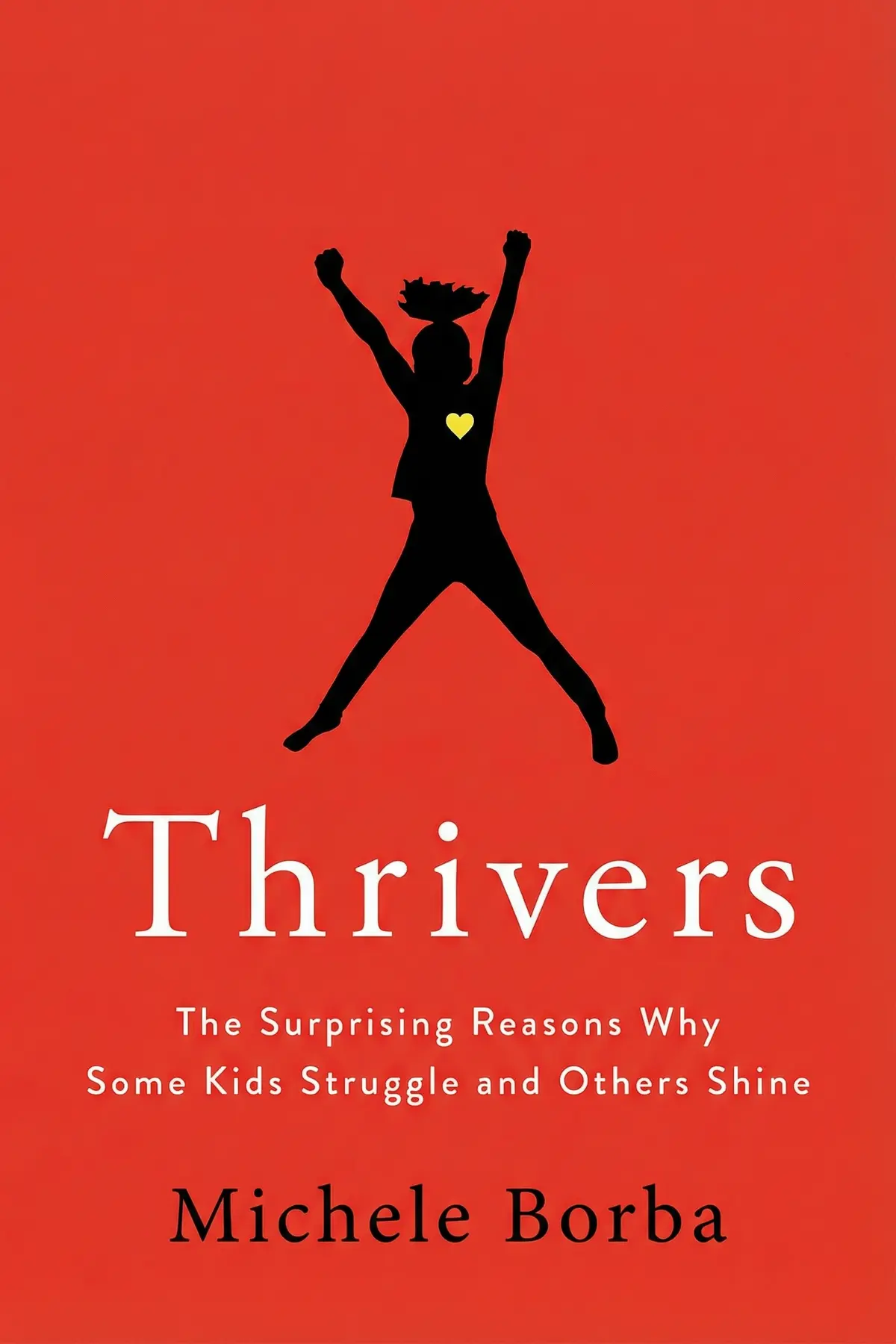
Table of Content
1. Introduction
1 min 06 sec
Many parents raise children who collect top grades and still feel empty, and educational psychologist Michele Borba thinks she knows why. In Thrivers, she argues that whether a child struggles or shines depends less on test scores than on seven character strengths: confidence, empathy, self-control, integrity, curiosity, perseverance and optimism. Her most hopeful claim is that none of them is fixed at birth. Thriving children, she writes, are made, and the strengths can be taught at any age.
Borba built the case from resilience research, conversations with dozens of experts and interviews with more than a hundred young people. What she heard was a generation pushed to compete with its own friends and left short of the inner resources that carry people through setbacks. The chapters ahead take the strengths in turn, each with a story from the book and something a parent can say or do at home this week, from a way of praising to a breathing exercise to a single family phrase.
2. See what constant grade-chasing costs your child
2 min 16 sec
A Boston schoolboy pointed at a half-finished puzzle and said it described his whole generation. The gaps he saw explain why busy, loved, high-achieving kids can still feel like something inside them is missing.
3. Build confidence on strengths your child already has
2 min 20 sec
Trophies for simply showing up were supposed to make children feel good about themselves. Borba explains what they did instead, and how to find the strength that gives a child real, lasting belief in themselves.
4. Grow empathy the way you train a muscle
2 min 33 sec
Teenagers today score far lower on empathy than young people did a generation ago. Borba argues the cause is closer to home than most parents think, and that the cure is mostly practice, not genes.
5. Teach a calm-down routine that lasts for life
1 min 48 sec
Grades and IQ get the attention, yet another quality predicts adult health, wealth and happiness better than either. A three-step routine and a simple breath can start building it, if parents can resist one urge.
6. Keep the curiosity your toddler was born with
2 min 28 sec
Almost every five-year-old in one long study scored as a creative genius. By adulthood, nearly all of them had lost it. Borba explains what drains curiosity away and what a home can do to protect it.
7. Pair integrity, grit and hope for greater effect
2 min 10 sec
The last three strengths sound like old-fashioned virtues, yet Borba treats them as protection against anxiety in a frightening news cycle. Her biggest idea is what happens when strengths are combined instead of taught alone.
8. Conclusion
1 min 08 sec
Thrivers asks parents to change what they count. The striver model keeps score in grades, trophies and likes, and Borba’s interviews show children winning on that scoreboard while running dry inside. Her seven strengths make a different scoreboard. The encouraging part of her research is that every item on it can be practiced, at any age, by an ordinary family with at least one caring adult.
Start small. This week, watch for the activity your child returns to without being asked, name it as part of who they are and protect time for it, even if something else has to go. Practice the 1-2 breath together on a calm evening so it is there on a bad one. Answer the next curious question with a question of your own. And choose a family phrase worth hearing a thousand times, because Borba believes the words a child hears at home become the voice they hear in their own head.
Aiden looked at his puzzle and assumed the empty spaces were permanent. Borba’s answer is that the missing pieces are skills, and children can learn them from the adults beside them.
About this book
What is this book about?
Many children today collect strong grades, full schedules and online approval, yet feel stressed, lonely and empty. Educational psychologist Michele Borba calls them strivers: kids pushed to win against their peers who run out of inner reserves when a goal slips away. Talking with young people in focus groups and interviews, she heard the same complaint again and again. They were being trained to pass tests, not to be people. Thrivers argues that what separates children who struggle from children who shine is seven teachable character strengths: confidence, empathy, self-control, integrity, curiosity, perseverance and optimism. Borba draws on resilience research, including a 40-year study of children facing severe adversity, and on interviews with more than a hundred young people. Her conclusion is that thriving children are made, with the help of caring adults. Readers get a clear way to spot a child's real strengths, plus specific tools: praise that builds identity, exercises that grow empathy, a three-step calm-down routine, home setups that keep curiosity alive and family phrases that train hope. Borba also shows how the strengths multiply when they are paired.
Book Information
Who it's for
Parents of high achievers
Parents of busy, high-achieving kids who seem stressed, lonely or empty despite good grades.
Teachers and counselors
Teachers and school counselors looking for concrete ways to build empathy, self-control and curiosity.
Caregivers wanting resilient kids
Caregivers who want to raise resilient children without adding more pressure to full schedules.
About the Author
Michele Borba
Michele Borba, Ed. D., is an educational psychologist with more than 40 years of experience helping parents and children. She has written 28 books, translated into 20 languages, on parenting, bullying, empathy, resilience and character development, including UnSelfie and Building Moral Intelligence. She is a regular NBC contributor, has appeared on Today, Dateline and The View, has spoken on five continents and gave the TEDx talk Empathy Is a Verb. She has three grown sons.
Ratings & Reviews
Ratings at a glance
What people think
Listeners regard this parenting title as one of the best they have come across, commending its practical advice and evidence-based material. The book offers valuable perspectives, with one listener noting how it breaks down the 7 teachable skills beautifully. Listeners value the quality of the prose, and one review points to the author's dual background as both a mother and educator.
Top reviews
Champ
After hearing so much buzz about Borba, I finally dove into Thrivers. It’s a refreshing shift from the typical grade-obsessed parenting manuals. The way she breaks down the seven character strengths like integrity and perseverance makes the daunting task of raising kids feel manageable. Look, we all know our children are stressed, but this provides a tangible roadmap. I particularly loved the focus on building a thriver mindset rather than just a high-achieving striver. Each chapter is packed with actionable advice that I’ve already started implementing with my middle-schooler. It’s well-researched, yet the author’s voice as both a mother and educator keeps it grounded and relatable. This is the guidance our generation needs.
Show moreMonthon
As a parent of three, I’ve read my fair share of self-help books, but this one actually stuck. Borba uses a beautiful metaphor about kids being beautifully wrapped packages that are missing the gifts inside. That really hit home for me because I realized I was focusing too much on the wrapping—the grades and activities. The seven teachable skills are laid out with such clarity that I felt empowered rather than overwhelmed. Truthfully, the section on building confidence has already changed how I talk to my kids about failure. It’s a thick book with a lot of data, but the heart of it is pure gold. This is essential reading for anyone raising kids in this high-stakes world.
Show moreSukit
This book should be required reading for every parent entering the school system today. Borba identifies exactly why our kids are so anxious: we've traded their character for their GPA. Frankly, it’s a wake-up call that I didn't know I needed until I was halfway through the first chapter. The way she breaks down thriving into teachable, actionable skills makes the concept feel very attainable for busy families. I loved the emphasis on unplugging and letting kids just be kids for a change. It’s a well-researched, heart-centered guide that provides actual solutions instead of just pointing out the problems. I’ve already bought copies for three of my friends who are struggling with stressed-out teens.
Show moreSaranya
Borba really delivers here by combining her years of experience as an educator with a mother’s intuition. Most parenting books just tell you what’s wrong, but Thrivers actually gives you the tools to fix it. I was particularly impressed by the integrity section, which is a trait that often gets overlooked in favor of more marketable skills. Honestly, parenting is hard and there are no guarantees, but these seven skills provide the best foundation I've seen in print. The writing is clear and the author’s passion for helping children shines through on every single page. It’s a bulky read, but the practical advice at the end of each chapter makes it worth every minute of your time.
Show moreHiroshi
The chapter on curiosity alone made this book worth the purchase for our household. Truth is, I’ve been so worried about my son’s test scores that I forgot to foster his love for learning. Borba reminds us that character—not just a resume—is what determines long-term success. The research is incredibly thorough, with footnotes that prove she’s done her homework. Sometimes the prose gets a bit wordy and repetitive, which can be tough to power through after a long day of work. Still, the practical 'maybe' trick for fighting negative bias was a total game-changer for my daughter. It’s not perfect, but it’s definitely one of the more useful parenting books on my shelf right now.
Show moreTariq
Picked this up on a whim after seeing it recommended for parents of middle schoolers. The book is definitely comprehensive, perhaps a bit too much so, as the index and footnotes take up nearly half the pages. I appreciate the deep dive into the recipe for resilience, even if the tone occasionally veers into catastrophizing about modern mental health. Some of the end-of-chapter lists felt a bit like helicopter parenting, which is ironic considering the book’s message about letting go. But if you can filter through the book club fluff, there are genuine gems about letting kids struggle. It's a solid four stars for the practical activities and the clear focus on empathy over individual achievement.
Show moreMaria
Finally got around to reading Borba's latest, and it’s a powerhouse of research and clinical insight. As someone who works in education, I see the burnout she describes every single day in my classroom. The strength of this book lies in its categorization of the seven traits necessary for kids to truly thrive. However, I’ll admit the writing style isn't always gripping; it feels like a heavy academic text at times. You really have to commit to sitting down and digesting the information. In my experience, the sections on optimism and integrity are the most relevant for today’s social media-driven culture. It’s a bit wordy, but the core message is too important to ignore.
Show moreSai
Ever wonder why kids today are so burnt out despite having every opportunity? Borba answers that question by looking at the internal tools they are missing. Not gonna lie, the book is a bit of a slog in certain sections because it tries to cover everything from Pre-K to high school. It might have been more effective as a series of shorter, age-specific guides. That said, the optimism chapter provided some fantastic strategies for reframing negative thoughts that I’ve even started using myself. It feels like a very safe book-club pick, but the substance is there if you’re willing to look past the occasional cliché. It's a helpful resource for navigating the modern parenting minefield.
Show moreVilaiporn
I have mixed feelings about this one because while the message is vital, the execution feels a bit disconnected. To be fair, the seven traits she highlights—especially empathy and self-control—are exactly what our society needs more of right now. However, I found myself rolling my eyes at some of the quotes from children; they just didn't sound like any real kids I've ever met. Is a ten-year-old really that self-aware? There’s also a heavy focus on kids from very affluent, high-pressure backgrounds. I wish there had been more representation for families who aren't in that prestige bubble. It's a decent academic exercise, but it feels a bit polished for the messy reality of the world.
Show moreRatree
Not what I expected based on the glowing summaries I saw on social media. While I agree that kids are under too much pressure, some of the advice here feels deeply contradictory and even a bit ableist. At one point, she argues against rewards for curiosity, but then pivots to suggesting rewards for perseverance in the very next section. It left me feeling confused about her actual stance on motivation. Also, the focus on 'self-control' and eye contact ignores the reality of neurodivergent children who might struggle with those specific markers. It feels like a book written for a very specific type of child in a very specific type of wealthy neighborhood. I’m quite disappointed.
Show moreQuestions about this book
What is the main idea of Thrivers by Michele Borba?
Borba argues that the difference between kids who struggle and kids who succeed lies not in grades or test scores but in seven character strengths: confidence, empathy, self-control, integrity, curiosity, perseverance and optimism. Today’s strivers chase achievement and feel empty when they fall short. Thrivers have these strengths, and Borba insists they are made rather than born, so parents can teach them at any age.
What are the seven character strengths in Thrivers?
The seven are confidence, empathy, self-control, integrity, curiosity, perseverance and optimism. Borba treats confidence as the foundation the others build on. She describes each strength as a kind of superpower against depression and anxiety, and says they grow stronger in pairs, which she calls the Multiplier Effect: confidence with perseverance, curiosity with self-control, and integrity with empathy and optimism.
How can parents build self-confidence in their child, according to Borba?
Find the child’s core assets using signs Borba sums up as TALENT: tenacity, attention, learning, eagerness, need and tone. Praise those strengths specifically, let the child overhear you praising them, and describe the strength with a noun, such as calling them an artist. Give them time for it, and stop rescuing them, since real confidence comes from solving problems and recovering on their own.
Can empathy really be taught to children?
Borba says yes. A 2018 paper in Translational Psychiatry found only about 10 percent of differences in empathy are hardwired, and social psychologist Sara Konrath compares empathy to a muscle that strengthens with use. Parents can name feelings aloud, ask children to rate their emotions, retell stories from other characters’ views and teach Borba’s four listening steps: look, lean in, learn something shared, label the feeling.
How do I help my child calm down when upset, using Thrivers?
Borba’s ACT routine has three steps: assess the stress, calm down with slow breaths and use positive self-talk. Her 1-2 breath makes it simple: breathe in slowly and deeply, then breathe out for twice as long. Practice it when things are calm. She also warns parents against habits that block a child’s independence: enabling, impatience, coddling, competing and rescuing.
Featured in
Readers also enjoyed



AUDIO SUMMARY AVAILABLE
Listen to Thrivers in 15 minutes
Get the key ideas from Thrivers by Michele Borba, plus 5,000+ more nonfiction titles.
- 5,000+ titles
- Listen as much as you want
- 7-day free trial
- Cancel anytime









