

12 min 44 sec
Available in: English
This Is Your Brain on Sports: The Science of Underdogs, the Value of Rivalry, and What We Can Learn From the T-Shirt Cannon
Shows how the mental habits on display in stadiums, from cheering underdogs to firing coaches after a losing streak, shape everyday choices about whom we trust, promote and praise, and how to catch them at work.
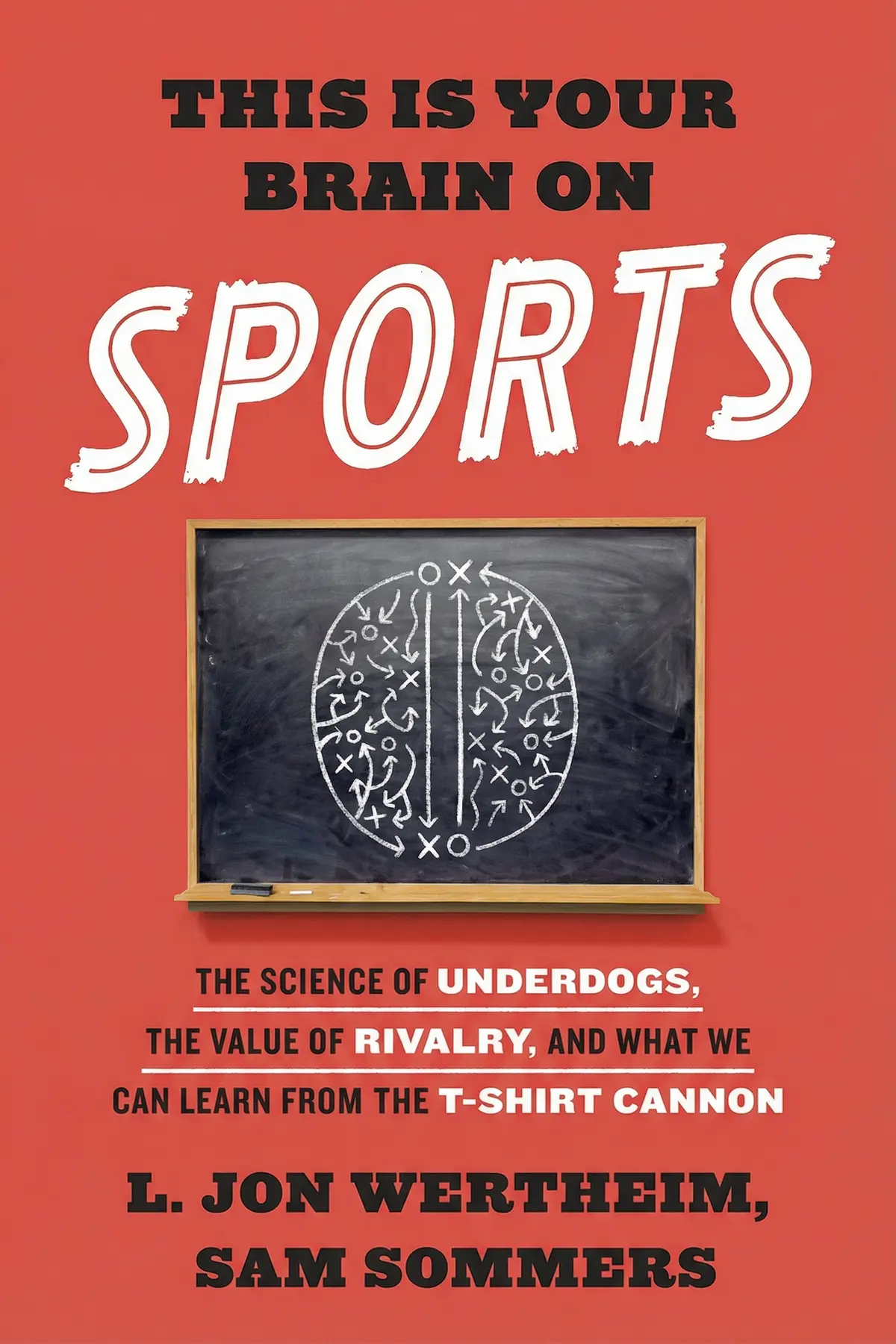
Table of Content
1. Introduction
57 sec
Every day you make calls about people: who to trust, who to promote, which project to keep funding. Many of those calls are bent by the same mental quirks that make a fan cheer for a losing team or a coach fall for a player’s broad shoulders. In This Is Your Brain on Sports, Sports Illustrated writer L. Jon Wertheim and Tufts social psychologist Sam Sommers use the stadium as a lab for ordinary human behavior.
Their case is that athletes and fans run on the same brains as the rest of us, so sports shows our biases in bright light. From a student experiment about rooting for Israel or Palestine to Michael Jordan’s flu-ridden night in the 1997 Finals, each story exposes a habit of mind you can catch in your own office. Along the way you’ll learn why picking the best performer as boss can backfire, when to trust a hot impulse and how to set a goal your body will actually chase.
2. Spot the underdog story that makes you pick sides
1 min 49 sec
Students handed different maps of the same region mostly cheered for whichever nation their own map cast as the underdog. What shifted their loyalty says a lot about how you choose sides in arguments far from any stadium.
3. Stop letting looks and sunk effort pick your winners
1 min 47 sec
A pair of broad shoulders can decide how much training a young athlete gets, and a struggling player can outlast a better one. Two quiet biases are at work, and both follow you into hiring decisions.
4. Your best performer may make a poor boss
1 min 50 sec
One of the greatest basketball players who ever lived took charge of a team and it went badly wrong. The reason has little to do with talent, and it threatens every promotion built on top numbers.
5. Know when to trust your hot impulses
1 min 54 sec
The same split-second impulse that lets a player react to a speeding tennis ball drove a World Cup star to head-butt an opponent in the 2006 final. Brain scans show what changes inside us in those moments.
6. Reward improvement before you fire the coach
1 min 41 sec
When results turn bad, someone at the top usually pays with their job. The urge behind that move feels decisive, and the authors explain why it often leaves a team no better off than before.
7. Give yourself a finish line you can see
1 min 40 sec
A seriously ill basketball star played one of the defining games of his career, then collapsed when the clock ran out. His body was holding something back until that night, and so is yours.
8. Conclusion
1 min 06 sec
Wertheim and Sommers treat the stadium as a mirror. The fan who flips loyalty when a map changes, the coach charmed by broad shoulders, the legend who cannot teach and the owner who fires a coach just to act are all running the same brain you bring to the office. Sports simply makes the patterns loud enough to hear.
That is useful, because a bias you can name is a bias you can question. When you pick a side, check who the framing made look weak. When you weigh a colleague, set aside both their looks and how much effort you have sunk into them. When a star is up for promotion, ask whether they can explain their craft to a beginner. And when a decision arrives in a moment of heat, give it time unless the ball is already flying toward you.
The same brain that tricks us can also surprise us. Jordan, sick, found 38 points because he could see the end of the game. Favre found his best football in grief. Give your effort a finish line that clear, and you may find, as they did, more in reserve than you thought.
About this book
What is this book about?
Why do fans adore a team that keeps losing? Why do coaches fall for a young player's broad shoulders, and why do sports legends so often fail as managers? L. Jon Wertheim, a longtime Sports Illustrated writer, and Sam Sommers, a social psychologist at Tufts University, argue that the answers reveal how all of us think. The authors treat sports as a bright window onto ordinary psychology. They draw on a University of South Florida experiment about rooting for Israel or Palestine, a study of University of Pennsylvania students and brain scans of hot and cool mental states. They pair that research with famous moments: Zinedine Zidane's head-butt, Michael Jordan's troubled stint running the Washington Wizards and his Flu Game in the 1997 Finals, and Brett Favre's performance the day after his father died. Readers learn to spot the halo effect, effort justification, the curse of the expert, action bias and the pull of borrowed glory. They also get practical lessons on promoting people, praising effort, timing decisions made in the heat of the moment and setting goals clear enough to draw out their full strength.
Book Information
Who it's for
Managers questioning their judgment
Managers deciding whom to promote, keep or praise who suspect their judgment is being bent.
Curious sports fans
Sports fans curious about the psychology behind the rivalries, meltdowns and comebacks they love.
Professionals deciding under pressure
Professionals who make hasty calls under pressure and want to know when instinct helps and when it hurts.
About the Author
L. Jon Wertheim
L. Jon Wertheim joined the full-time writing staff of Sports Illustrated in 1996, has reported for 60 Minutes on CBS and commentates on tennis, mostly for Tennis Channel. He co-wrote the New York Times bestseller Scorecasting. Sam Sommers teaches and researches social psychology at Tufts University, studying how people think, communicate and act, including in the US legal system. He has won several teaching awards and has given expert testimony in criminal trials in six states.
Ratings & Reviews
Ratings at a glance
What people think
Listeners find the book both captivating and skillfully composed, laced with sharp wit throughout. They value its perceptive information, and one listener specifically points out the way it merges famous psychological experiments with more niche studies. However, the connections presented throughout the work spark a range of conflicting responses among listeners.
Top reviews
Jin
Ever wonder why we get so worked up over a free, oversized T-shirt fired from a plastic gun? This book answers that question with a perfect blend of scientific rigor and laugh-out-loud humor. Wertheim and Sommers are a fantastic duo, blending the street cred of Sports Illustrated with legitimate academic research. The chapter on the aesthetic appeal of quarterbacks—questioning if they are actually good-looking or if we just project success onto their faces—was worth the price of admission alone. It reminds me of Freakonomics in the way it challenges your basic assumptions about things you see every day. Even if you aren't a stat-head or a die-hard fan, the insights into human behavior and rivalry are universally applicable. It's a home run.
Show moreLars
Wertheim and Sommers have created a brilliant bridge between the bleachers and the lab. I’ve read a lot of sports books, but few take the time to analyze the actual cognitive processes behind why we scream at our televisions. The section on why hockey goons are more likely to fight at home was absolutely fascinating and backed by actual data. It’s rare to find a book that is this well-researched yet remains so accessible and genuinely funny. They treat the subject matter with respect while acknowledging the inherent absurdity of adult men crying over a lost game. If you like David Epstein or Malcolm Gladwell, you will find this to be a satisfying addition to your shelf. Truly insightful stuff.
Show moreThanakorn
The world of sports provides such a unique window into our collective psyche, and this book captures that perfectly. Whether it’s the science of underdogs or the value of rivalry, Wertheim and Sommers offer a compelling look at why we care so much about these games. The research is solid, the anecdotes are memorable, and the humor is consistently on point. I especially liked the exploration of why we want to have a beer with guys like Gronk—it’s about more than just his personality. This book manages to be both a great 'bathroom reader' and a serious piece of social commentary. It’s a must-read for anyone who wants to understand the deeper meaning behind the t-shirt cannons and the chiseled jawlines of the NFL.
Show moreSupaporn
Picked this up because I’m a sucker for those 'pop-science' books that explain human nature through a specific lens. This is Your Brain on Sports follows that Gladwell-esque formula, breaking down familiar tropes into digestible, research-backed chapters. I particularly enjoyed the section on the ‘T-Shirt Cannon’ and why perfectly rational adults turn into savages for a low-quality piece of cotton. It’s witty and quick, making it the perfect companion for a commute or a quiet weekend. My only real gripe is that the connections to business and daily life sometimes feel a bit forced to broaden the appeal. Still, for anyone who has ever wondered why we obsess over underdogs, this is a solid, entertaining read that provides plenty of trivia for your next trip to the bar.
Show moreSven
As a massive sports fan who also enjoys a bit of psychology, this was right up my alley. The authors do a great job of explaining the irrationality of fandom, like why we feel a physical connection to a team of strangers wearing a specific color. I found the 'Underdog Theory' chapter particularly enlightening; it explains that hardwired impulse to root for the little guy in a way that makes total sense. The writing is snappy and the pacing is excellent, though some chapters definitely land harder than others. Not gonna lie, the hockey goons section felt a bit like filler compared to the more robust sections on rivalry. Overall, it’s a smart book that doesn't take itself too seriously while still teaching you something new.
Show moreFilm
Finally got around to finishing this, and I have to say, the chapter on why the best players often make the worst coaches was a total eye-opener. The book is structured in 20 distinct chapters, which makes it incredibly easy to pick up and put down without losing the thread. Look, it’s not meant to be a dense textbook; it’s an entertaining look at the 'why' behind our sporting rituals. The authors manage to take complex sociological studies and translate them into stories about Gronk and Tom Brady. Some of the research feels a little cherry-picked to fit the narrative, but the overall observations about human nature are hard to argue with. It’s a great gift for that friend who thinks sports are just meaningless games.
Show morePla
Not what I expected from a typical sports book, which is exactly why I ended up liking it so much. Instead of focusing on scores or history, it looks at the mental framework of the players and the people watching them. The discussion on Little League trophies and the psychology of participation was especially relevant to me as a parent. It’s written with a breezy, conversational tone that makes the science go down easy. Gotta say, I appreciated how they used sports as a window into larger topics like politics and business. It’s not a perfect book—some of the chapters feel a little like 'lite' versions of better research—but the wit and the pacing keep you hooked until the final page.
Show morePraepimon
While the premise is fascinating, the execution felt a bit disjointed at times. The book functions more like a collection of standalone magazine articles rather than a cohesive narrative journey through sports psychology. I really appreciated the chapter on why the greatest players often fail as coaches—it’s a perspective I hadn’t fully considered with actual data behind it. However, the heavy focus on American football and basketball might alienate fans of more global sports like cricket or rugby. Truth is, if you’ve taken an intro-level psychology course, some of these ‘revelations’ will feel like common sense dressed up in fancy prose. It’s an easy, breezy read, but don’t expect a deep, transformative dive into the human brain.
Show moreOwen
This is a fun read, but definitely a book meant for the bedside table rather than one you devour in a single afternoon. Each chapter is essentially its own self-contained essay, so the order doesn't really matter much. I enjoyed the bits about the 'hot-hand' fallacy and the psychology of rivalries, though I felt the authors stretched some of the analogies a bit thin. To be fair, the writing style is very engaging—almost like a long-form podcast in print. My main complaint is that it skews very heavily toward the NFL and NBA, which gets a bit repetitive if those aren't your primary interests. It’s an interesting look at the psychology of sports, but it lacks the 'aha!' moments of something like Thinking, Fast and Slow.
Show moreWissanu
Frankly, I expected a deep dive into neurology, but what I got was 'Intro to Psych' level fluff with a sports logo slapped on it. This book is sloppily written and organized in a way that feels like a series of blog posts mashed together. If you already know about basic concepts like the halo effect or tribalism, you aren't going to find much new information here. There were a few moments of intrigue, but they were buried under mountains of what-the-heck-is-happening digressions. It’s a mess of words that tries to be clever but often misses the mark. I found the tone to be slightly patronizing to sports fans, as if we need a PhD to explain why we like winning. Avoid this one if you want actual science.
Show moreQuestions about this book
What is the main idea of This Is Your Brain on Sports?
L. Jon Wertheim and Sam Sommers argue that athletes and fans have the same brains as everyone else, so sports reveals ordinary human psychology in vivid form. Stories like Zidane’s head-butt and Michael Jordan’s time running the Washington Wizards illustrate biases such as the halo effect, effort justification, the curse of the expert and action bias, which shape how people decide at work and at home.
What is the curse of the expert in This Is Your Brain on Sports?
It is the trouble a highly skilled person has understanding why others don’t see what seems obvious to them. The authors point to Michael Jordan, who in 2001 was both player and president of basketball operations at the Washington Wizards, lacked mentoring skills and blamed teammates. Many baseball Hall of Fame players also became poor managers, while some modest players became great ones.
Why do people love underdogs, according to the book?
The authors say underdogs appeal to our sympathy for the weak and our wish to see an unlikely outcome. In a University of South Florida experiment, students cheered for Israel or Palestine depending on which map made that side look outnumbered. We also see our own lives as uphill battles, which makes the underdog’s struggle feel personal.
How can managers apply This Is Your Brain on Sports?
The book suggests praising effort as well as achievement, for example by honoring the most improved player alongside the most valuable one. It warns against firing a leader just to be seen acting, since a new coach needs time to find the real problems. It also advises judging people on current performance rather than on how much effort you invested in them.
Readers also enjoyed


A Liberated Mind: How to Pivot Toward What Matters
Steven C. Hayes


Acting with Power: Why We Are More Powerful Than We Believe
Deborah Gruenfeld


Age of Propaganda: The Everyday Use and Abuse of Persuasion
Anthony Pratkanis


Ali: A Life
Jonathan Eig
AUDIO SUMMARY AVAILABLE
Listen to This Is Your Brain on Sports in 15 minutes
Get the key ideas from This Is Your Brain on Sports by L. Jon Wertheim, plus 5,000+ more nonfiction titles.
- 5,000+ titles
- Listen as much as you want
- 7-day free trial
- Cancel anytime









