

13 min 56 sec
Available in: English
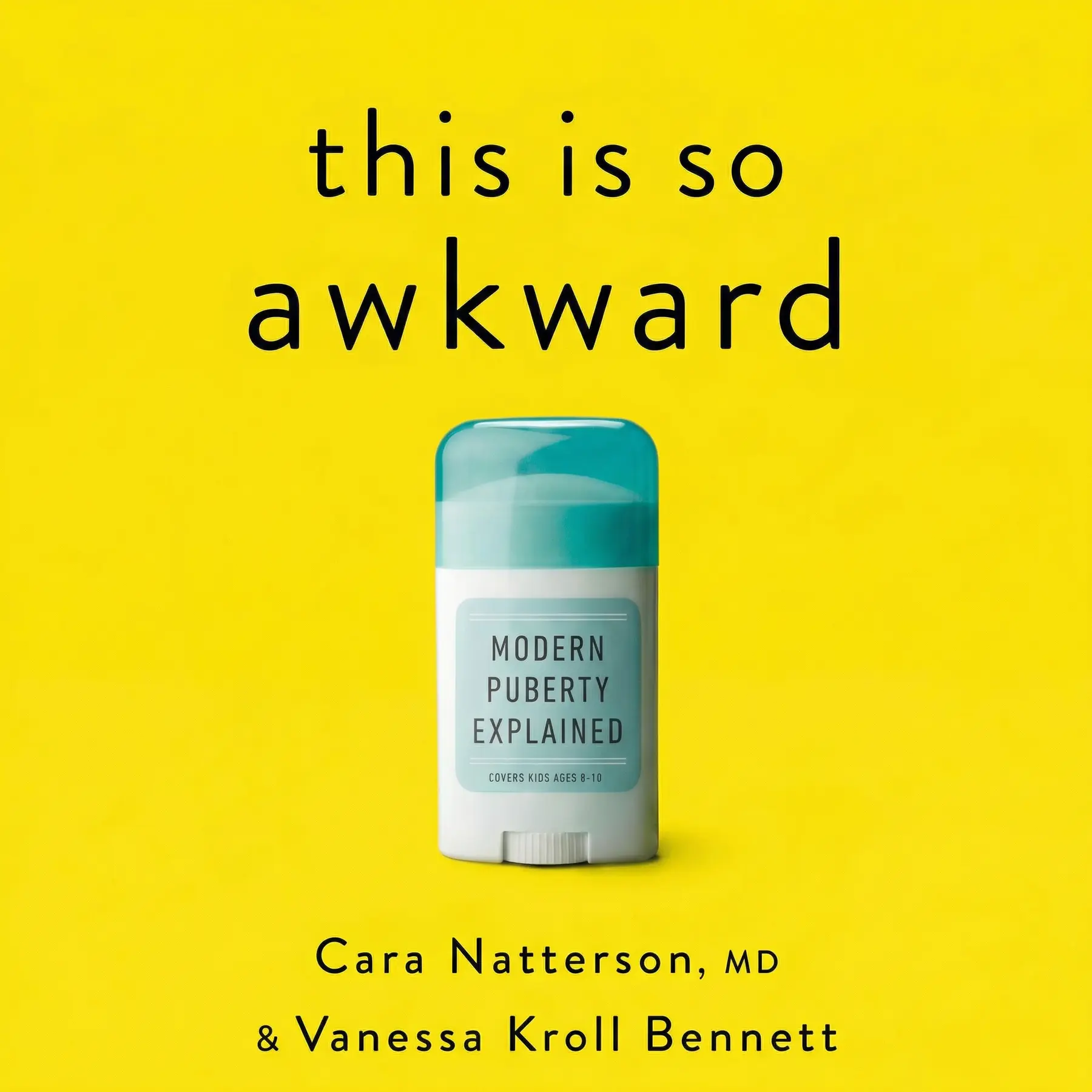
This Is So Awkward: Modern Puberty Explained
A pediatrician and a puberty educator explain why puberty now starts earlier and lasts longer. They show parents how to talk calmly and honestly with their kids about changing bodies, moods, mental health and sex.

Table of Content
1. Introduction
1 min 03 sec
If your child’s body is changing years earlier than you expected, the puberty you remember is no longer a reliable guide. In This Is So Awkward, pediatrician Cara Natterson and Vanessa Kroll Bennett, who earlier founded a program teaching puberty through sports, report that the age puberty begins has fallen by more than a year each decade since the 1950s. First periods, though, still come at roughly the same age they always did.
That gap is the heart of their argument. Today’s kids can look like teenagers at 8 or 9 while their judgment stays young for many years, and they grow up with social media in their pockets. The authors’ answer is to treat a child by the age of their mind, not their body, and to keep talking: listening more than lecturing, staying calm and honest, and covering bodies, moods and sex across many small conversations. Expect plain words for the hardest talks, a way to tell ordinary teenage moods from real trouble, and permission to get things wrong and try again.
2. Update the puberty timeline you remember
2 min 02 sec
Most parents carry a mental picture of when puberty starts and how long it lasts. That picture is now years out of date, and one part of the process has stayed where it was while the rest has shifted.
3. Turn awkward talks into trust by listening first
1 min 57 sec
When a child asks something that makes you blush, the natural move is to share your own embarrassing memory. The authors explain why that instinct often backfires, and what to do with the first few seconds instead.
4. Meet early body changes with calm and facts
2 min 00 sec
Seeing an 8-year-old begin to develop can leave a parent shocked or even guilty. The authors argue that what your face shows in that moment can teach your child something far more lasting than any fact you share.
5. Guide a teen whose body outpaces their judgment
1 min 49 sec
A teenager can discuss the risks of drugs with real insight one day and do something reckless the next. The explanation sits in a part of the brain that finishes growing much later than most parents assume.
6. Tell normal teenage moods from real trouble
1 min 46 sec
Big emotions are part of being a teenager, yet nearly half of teens have already faced something more serious. The authors offer a way to respond to outbursts and a simple signal that it is time to call a professional.
7. Make sex education a talk that lasts years
2 min 07 sec
Many parents dread one big conversation about sex and hope to get it over with. The authors suggest a very different approach, one that starts long before sex is mentioned and treats pornography as a subject to face head on.
8. Conclusion
1 min 12 sec
What the authors give parents is a new map for an old passage. Puberty now begins earlier, stretches across a decade and unfolds alongside social media, easy access to porn and changing ideas about gender and sex. The bodies run ahead. The brains catch up slowly, into the mid-20s. In the long gap between, a parent’s job is to stay the steady adult in the room.
Much of that comes down to your own reactions. Keep alarm, embarrassment and old memories out of the way, so your child hears that their body is normal and their questions are welcome. Treat them by the age of their mind, whatever their body suggests.
In practice, start with one open question this week and listen longer than feels comfortable. When you get something wrong, go back and fix it, even years later, since the authors set no deadline on a better answer. And when a hard topic appears, from a first period to a violent video, speak plainly and keep the conversation going.
Puberty will stay awkward. A child who knows they can bring anything to you will still find their way through it, and will not have to do it alone.
About this book
What is this book about?
Most parents went through puberty starting around age 11, and it was over in three or four years. Their children's puberty looks very different. It can begin at 8 or 9, it stretches across nearly a decade, and it plays out on social media, out of sight of parents. Bodies change early. The brain keeps maturing into the mid-20s. Cara Natterson, a pediatrician, and Vanessa Kroll Bennett, who earlier founded a program that built children's self-esteem through sports and puberty education, write for parents who feel unready for this. Their central advice is to treat a child according to the age of their mind, whatever their body suggests, and to keep talking. The book covers early breast growth, first periods, wet dreams and late bloomers. It explains how hormones and an unfinished frontal lobe lead to mood swings and risky choices, and how to tell normal teenage emotion from a mental health problem that needs a professional. It also shows how to turn sex education into years of small, honest conversations, including frank talk about pornography. Readers get plain words for hard topics and permission to admit mistakes and try again.
Book Information
Who it's for
Families facing early puberty
Parents whose 8, 9 or 10-year-old is showing signs of puberty sooner than expected.
Families dreading teen talks
Parents of teens who dread talking about periods, moods, sex or pornography.
Educators and caregivers
Teachers and caregivers who want plain, honest language for questions about growing up.
About the Author
Cara Natterson
Cara Natterson is a pediatrician, speaker and author of ten books, including The Care and Keeping of You series, which reached the New York Times bestseller list. She studied at Harvard College and Johns Hopkins Medical School. Vanessa Kroll Bennett earlier founded Dynamo Girl, which used sports and puberty education to build children's self-esteem. She graduated from Wellesley College and is a parent of four. The two co-host the This Is So Awkward podcast and co-founded Less Awkward, a company that aims to make growing up easier.
Ratings & Reviews
Ratings at a glance
What people think
Listeners find the work informative and practical, with one review noting its eye-opening scientific data. Furthermore, they view it as a helpful resource for those with preteens, as one listener characterizes the book as game-changing. It also earns praise for being highly readable.
Top reviews
Pla
What a relief to find a guide that doesn't just talk down to you or get lost in impossible medical jargon. I found the scientific explanations behind why my middle-schooler is suddenly acting like a total stranger to be incredibly eye-opening and grounded in actual research. Instead of dry lectures, Natterson and Bennett deliver insights with a warmth that makes the "awkward" stuff feel totally manageable. The truth is, I felt like I was finally getting a manual for a car I’ve been trying to drive without instructions for years. It bridges the gap between biological shifts and the chaotic social landscape our kids navigate daily, from social media pressures to body image. I’m already telling all the parents on the soccer sidelines to grab a copy because it truly is a game-changer for modern families.
Show moreMilk
Finally got around to reading this, and it is a total game-changer for my household. The way the authors explain that puberty is a brain-first event completely changed how I view my daughter’s mood swings and sudden need for privacy. It’s not just a basic guide for "the talk"; it’s a comprehensive look at the digital world and the science of growing up today. Look, parenting in the 2020s is fundamentally different than when we were kids, and this book acknowledges that reality without being alarmist or judgey. I loved the practical tips on handling social media pressure and changing eating behaviors. Every parent of a fourth-grader should have this on their nightstand to prepare for the road ahead. It turned a very stiff topic into something actually readable and even a little bit fun.
Show moreVipawan
Wow. I picked this up on a recommendation from a friend, and I can say it is easily the most comprehensive guidebook I’ve seen on the subject. Natterson and Bennett take the mystery out of those awkward physical changes and replace it with clear, research-based data. Not gonna lie, the chapter on mood swings saved my relationship with my daughter this week because I finally understood the chemistry behind her outbursts. It’s written with so much warmth and zero judgment. This is a necessary tool for anyone raising kids in the 2020s who feels a bit overwhelmed by the speed of change.
Show moreDiego
The chapter on eating disorders and body image alone makes this book worth the purchase price. As a coach, I see so many young people struggling with their relationship with food and exercise, and Natterson and Bennett provide such a compassionate framework for intervention. They translate complex data into actionable steps that don't feel like a lecture. It’s refreshing to see a book that treats tweens with respect while giving adults the tools to stay connected to them. This isn't just a book about bodies; it’s a book about maintaining the parent-child relationship through a period of massive transition. It is essential reading for anyone who works with kids, whether you are a teacher, a coach, or a doctor.
Show moreAna
This is exactly the kind of resource I wish I had when my own children were growing up. As a grandmother now, I found this book to be a vital primer for understanding what my grandchildren are facing in an era of social media and rapid cultural shifts. Personally, I appreciated how the authors blended medical expertise with a very human, motherly perspective that emphasizes safety and health. It takes the mystery out of why teenagers act the way they do and replaces fear with scientific understanding. I’ve already bought copies for my grown children to help them prepare for the journey ahead. It’s a beautiful, necessary resource for the whole family to ensure we’re all staying connected and healthy.
Show moreElena
Ever wonder why your sweet child suddenly smells like an old gym bag and snaps at the slightest question? Picked this up after seeing a segment on TV, and frankly, it was the reality check I desperately needed as we enter the tween years. The authors do a fantastic job breaking down the hormonal shifts that happen way before you see a single physical sign of puberty. I appreciated the sections on practical advice, although I wish the "how to talk about it" scripts were just a bit longer and more varied for different personality types. Some of the youth perspectives at the end of the chapters felt a little brief, but they still added a nice touch of authenticity to the book. It’s a solid resource that makes growing up in the 2020s feel less like a minefield.
Show morePranee
After hearing so much buzz about this title, I decided to see if it lived up to the hype for my public library's selection list. The book is remarkably easy to digest, which is a huge plus for busy parents who only have ten minutes to read before bed. I found the specific details about the timing of hormonal shifts to be the most fascinating part of the entire narrative—it explains so much! In my experience, these issues require a delicate touch, and the authors mostly deliver that. My only real gripe is that it occasionally skims over complex topics like clinical mental health a bit too quickly. However, as an introductory resource for parents of preteens, it is excellent. It serves as a great conversation starter for families who aren't sure how to break the ice.
Show moreSook
Not what I expected in terms of depth, but still a very valuable addition to my parenting toolkit. I initially thought it would just be about biological changes, but it covers everything from social media’s impact to how puberty affects youth sports performance. The tone is casual and incredibly readable, which I think is essential for a topic that can often feel so medicalized or embarrassing. Truth be told, I felt some of the "scripts" for talking to your kids were a little bit idealistic and might not work for a kid who is naturally more introverted. However, the scientific explanation of why my son’s brain seems to have "re-wired" overnight was eye-opening. It’s a solid, practical resource for any parent navigating these messy years.
Show moreBird
Picked this up on a whim and was pleasantly surprised by how much of the science was actually new to me. I had no idea that certain behavioral changes were linked to specific hormonal surges occurring years before physical puberty hits! The writing style is conversational and light, which helps when you’re reading about things that are, well, awkward. To be fair, some of the advice for talking to your kids felt a little rehearsed and might not fit every family dynamic perfectly. But the general principles are solid and offer a great roadmap for navigating the current cultural climate. It’s a very practical and informative addition to any parenting bookshelf that you'll find yourself referencing more than once.
Show moreLars
As someone who works daily with adolescents, I had high hopes for this guide, but it ultimately felt like it was trying to be too many things at once. While the anatomical science is sound, the sections regarding gender identity and sexual orientation are disappointingly thin for a book published in 2023. It mentions higher mental health risks for LGBTQIA+ teens but fails to address the external factors like bullying or the current political climate that actually drive those statistics. To be fair, the physical advice on body odor and acne is helpful, but the inclusion of youth voices felt performative since there was zero pronoun diversity. I found the focus on detransitioning narratives to be disproportionate compared to the power of gender-affirming support. For a book that positions itself as a modern manual, it feels somewhat out of touch with the actual lived experiences of today's Queer youth.
Show moreQuestions about this book
What is the main idea of This Is So Awkward?
Cara Natterson and Vanessa Kroll Bennett argue that modern puberty starts earlier, lasts nearly a decade instead of about four years, and unfolds alongside social media. Because the body changes long before the brain matures in the mid-20s, parents should treat children according to their mental age and keep up open, honest, calm conversations about bodies, moods and sex.
At what age does puberty start today?
According to the book, breast development in kids with ovaries now commonly begins at 8 or 9, while kids with male biology usually start around 9 or 10. First periods still arrive around 12 or 12 and a half, as they have for decades. Some late bloomers begin only at 14 or 15, and the authors stress that every timeline is normal.
How do you talk to a child about puberty without making it awkward?
The authors suggest listening first, asking open questions and resisting the urge to lecture or share your own embarrassing stories. When a hard question comes up, slow down by asking what the child wants to know, then give a few clear facts. Admit when you don’t know something, apologize if a talk goes badly, and never lie.
How can parents tell normal teenage moods from a mental health problem?
Mood swings are common during puberty because of hormonal surges. The authors say that intense mood swings, apathy or isolation lasting for weeks can signal a deeper problem that calls for professional help. They also note that almost half of teens have had a diagnosable mental health struggle, and that social media can lead teens to diagnose themselves.
How should parents talk to kids about sex and pornography?
The book recommends many small conversations over years instead of one big talk, starting with consent and body ownership in early childhood. Later talks cover pleasure as well as risks, contraception and orientation, without assumptions. On pornography, which kids first see at about 12 on average, parents should explain that it shows an exaggerated, unrealistic version of sex.
Readers also enjoyed

Bad Therapy: Why the Kids Aren't Growing Up
Abigail Shrier

Battle Hymn of the Tiger Mother
Amy Chua

Dear Ijeawele, or A Feminist Manifesto in Fifteen Suggestions
Chimamanda Ngozi Adichie
AUDIO SUMMARY AVAILABLE
Listen to This Is So Awkward in 15 minutes
Get the key ideas from This Is So Awkward by Cara Natterson, plus 5,000+ more nonfiction titles.
- 5,000+ titles
- Listen as much as you want
- 7-day free trial
- Cancel anytime









