

13 min 21 sec
Available in: English
 ไทย
EnglishไทยThe Womanly Art of Breastfeeding: Completely
A practical guide to breastfeeding that lets the baby lead. It shows how to fix a painful latch, tell whether milk supply is enough, feed after a hard birth and get real help from the people nearby.
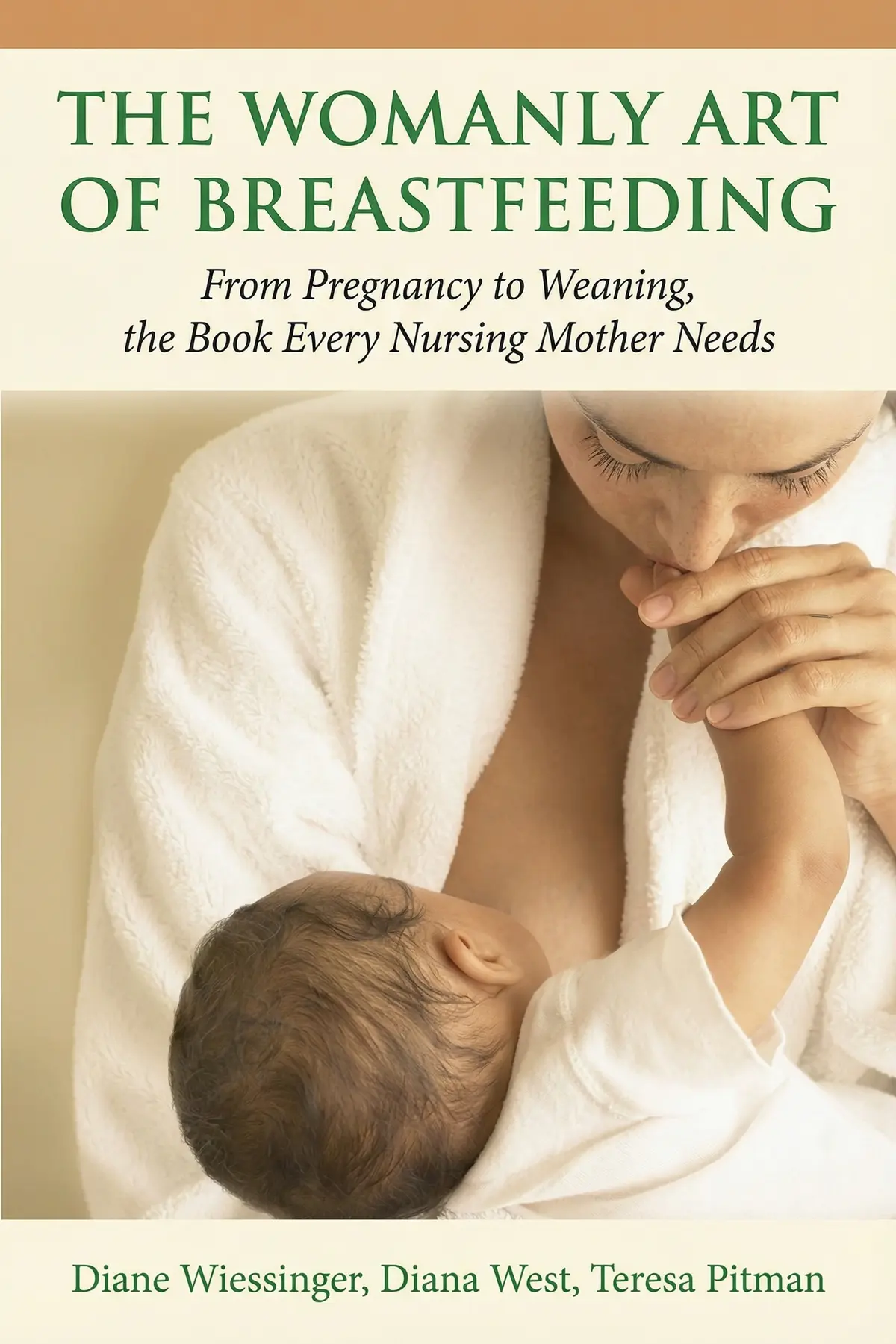
Table of Content
1. Introduction
1 min 03 sec
Many new mothers give up breastfeeding sooner than they hoped, not because their bodies fail but because pain, doubt and mixed advice wear them down. In The Womanly Art of Breastfeeding, Diane Wiessinger, Diana West and Teresa Pitman, all with deep roots in breastfeeding support, argue that nearly every one of those obstacles has a practical answer.
Their starting point is to let the baby lead. A baby who feeds when hungry and stops when full needs no clock. Breast size has nothing to do with how much milk a mother makes. Pain is a signal to fix the latch, not something to endure. And the worry about low supply is often a myth that friends and doctors repeat.
The case they build is that trust in the baby, a few simple checks and good support carry most mothers through. Expect to finish knowing how to correct a latch, tell whether your baby is getting enough, ignore the rules that do more harm than good, and give the people around you real jobs.
2. See what nursing gives baby and mother
1 min 37 sec
Breast milk carries more than calories, and some of its effects show up years later in places you would not expect. The mother’s body changes too, starting with the very first feed.
3. Let your baby decide when and how long
1 min 37 sec
Timers, schedules and ten-minute rules per side are still handed to new mothers as settled fact. One of the most repeated rules rests on something that only happens outside the body.
4. Feed your baby whatever your breast shape
1 min 32 sec
Small breasts, long breasts, large nipples, inverted nipples: each one leads some women to assume nursing is not for them. The authors take every worry in turn, and a kitchen image does a surprising amount of work.
5. Nursing should not hurt, and you can fix it
1 min 43 sec
Many mothers are told that pain simply comes with breastfeeding and must be endured. The authors disagree, and they point to small details of jaw, head and mouth that most people never check.
6. Know when your milk is truly enough
1 min 18 sec
A crying baby or a sleepless night often triggers the same worried diagnosis from family and even doctors. The authors offer a far simpler test, one any parent can run at home.
7. Keep milk flowing after a difficult birth
1 min 31 sec
Surgery, an early arrival or a baby in medical care can make nursing feel out of reach. The authors explain why a pump often struggles at first, and what makes the body respond.
8. Build the support a nursing mother needs
1 min 43 sec
Partners and relatives often want to help a new mother and end up offering opinions instead. The authors give them specific jobs, and the gear list turns out much shorter than shops suggest.
9. Conclusion
1 min 17 sec
What the authors offer, finally, is a shift in whom a new mother trusts. Less faith in the clock, the chart and the neighbor’s opinion. More faith in the baby’s cues, her own body and the people willing to show up.
That trust has limits they name plainly. If something hurts, fix it. If supply truly drops, act on it. If breastfeeding does not work at all, the baby still gets fed and the parent is still a good one. But most of the problems that end breastfeeding early can, in their view, be solved with knowledge and a little help.
A few habits carry this into the first weeks. Treat pain as a reason to redo the latch, with the jaw free and the head tipped back. Judge your supply by steady weight gain, six wet diapers a day and regular poops. Let feeds run as long and as often as the baby asks, sharing the two sides across the day. And give the people around you a job, such as cooking a meal, before they give you advice.
A mother who puts her baby first can easily forget herself. With support around her and trust in her body, the authors believe, these months can become one of the most beautiful seasons of her life.
About this book
What is this book about?
Many mothers want to breastfeed and stop sooner than they planned. Pain, doubt, conflicting advice and too little support wear them down in the first weeks. Diane Wiessinger, Diana West and Teresa Pitman, two of whom are longtime La Leche League Leaders, argue that almost every one of those obstacles can be overcome. Their approach starts with trust in the baby. A baby who feeds when hungry and stops when full needs no timer, no strict schedule and no ten-minute rule per side. From there the authors work through the common fears one by one: breasts that seem too small or the wrong shape, nipples that are large or inverted, pain at the breast, worries about low supply, cesarean and premature births, and tongue-tie. Readers get clear checks they can use right away, such as how to position a baby's jaw and head for a comfortable latch and which signs show the milk is enough. They also get a plain list of ways partners and family can pitch in, along with the comforting message that whatever method ends up feeding the baby, a parent who loves is a good parent.
Book Information
Who it's for
Moms-to-be hoping to breastfeed
Expecting mothers who want to breastfeed and worry about pain, breast shape or supply.
Struggling new moms
New mothers struggling with a sore latch, a fussy baby or a hard birth.
Family hoping to help
Partners and relatives who want to help a nursing mother in practical ways.
About the Author
Diane Wiessinger
Diana West is an international board certified lactation consultant in private practice in New Jersey and a retired La Leche League Leader. Diane Wiessinger is a US author, researcher and breastfeeding advocate known for arguing that breastfeeding is the normal baseline, not a superior choice. Teresa Pitman has written about birth, breastfeeding and parenting for over 25 years, has 14 published books and is a long-time La Leche League Leader. West and Pitman co-wrote the eighth edition of this book.
Ratings & Reviews
Ratings at a glance
What people think
Listeners find this breastfeeding manual to be deeply researched and all-encompassing, touching upon every element of the subject. This work functions as a crucial handbook for new mothers, instilling drive and self-assurance through its clear, accessible writing style. Listeners also value the sense of comfort and relief it brings to their anxieties. However, some listeners perceive the book’s overall tone as being preachy and judgmental.
Top reviews
Chai
Picked this up during the third trimester after a friend insisted it was the only resource I’d ever need for my nursing journey. This book is a goldmine of motivation and served as an essential guide during those blurry, exhausting first weeks with a newborn. The language is refreshingly simple and easy to understand, which is exactly what you need when you are operating on two hours of sleep. It helped calm my initial fears about whether my baby was getting enough milk or if my latch was correct. While I know some people find the LLL philosophy a bit intense, I found the focus on trusting your instincts to be incredibly empowering. It really gave me the confidence to ignore the unsolicited advice from relatives and just focus on my baby. If you want a comprehensive, thoroughly researched manual that covers everything from growth spurts to mastitis, this is the one to keep on your nightstand.
Show moreBrooklyn
There is no denying that this is the definitive bible for anyone planning to breastfeed, regardless of how long you intend to do it. The authors provide a wealth of practical troubleshooting advice that you simply won't find in the sterile pamphlets handed out at the hospital. I especially loved the sections on positioning; they made the mechanics of nursing feel much more intuitive and less like a clinical procedure. Every chapter seems designed to reassure the reader that their body is capable and that challenges are just temporary hurdles rather than failures. To be fair, you have to take some of the lifestyle advice with a grain of salt if you aren't planning on full-time attachment parenting. However, the core information regarding milk supply and baby behavior is absolutely peerless. It’s a thick book, but using it as a reference to look up specific issues makes it very manageable. I felt so much more prepared for motherhood after finishing this.
Show morePetch
The chapter on positioning saved my sanity when my son wouldn't latch properly and I was ready to give up entirely. This book is much more than just a how-to guide; it’s a source of deep motivation that reminded me why I chose this path in the first place. I love how it treats breastfeeding as a normal, womanly art rather than a complicated medical task to be managed. The advice is easy to digest and covers even the most obscure problems that other books tend to gloss over. Frankly, having this on my shelf felt like having a support group available twenty-four hours a day. It’s thoroughly researched and addresses the concerns of modern moms while staying true to the time-tested methods of La Leche League. Even if you don't agree with every single word about bed-sharing or sleep training, the nursing advice is the best you'll find anywhere. It truly turned my experience around from one of pain to one of joy.
Show moreJib
Finally got around to reading the most recent edition, and it is vastly more comprehensive than any pamphlet my doctor or hospital provided. This book doesn't just tell you what to do; it explains the biology of breastfeeding in a way that is easy to understand and deeply reassuring. It helped me build the confidence I needed to navigate the challenges of the first few months. The authors are clearly passionate, and that enthusiasm is contagious, making you feel like you're part of a grand tradition. I found the advice on 'nursing strikes' and growth spurts to be particularly calming when I was starting to panic. While it definitely leans toward a specific style of parenting, the core mission is to support the breastfeeding relationship, and it succeeds brilliantly at that. It’s a thick volume, but the layout makes it easy to find exactly what you need in a hurry. Every expectant mother should have this on her bookshelf!
Show moreSaengdao
In my experience, this is the only book you really need to successfully breastfeed for as long as you desire. It covers all aspects of the journey with such detail and care that it becomes an essential companion for any new mother. The simple language makes complex biological processes easy to grasp, which helped me feel more in control of my own body. It’s incredibly reassuring to read stories from other women who faced similar struggles and came out the other side successful. This guide provides the motivation needed to keep going on the hard days when you’re tired and sore. I loved the focus on the emotional bond between mother and child, which often gets lost in more clinical medical texts. It’s a comprehensive, life-changing resource that helped me trust my own maternal instincts above all else. I’ve gifted this to every pregnant friend I have because I believe it is truly the gold standard for nursing support.
Show moreChee
Look, if you can get past the somewhat judgmental tone regarding medicalized birth and working mothers, there is a wealth of wisdom here. The book is incredibly thorough, covering every possible scenario a nursing mother might encounter from day one through weaning. I found the sections on latching and milk storage to be particularly helpful when I was transitioning back to my job. While the authors clearly have a bias toward stay-at-home parenting, the actual technical advice on pumping and maintaining supply is quite solid. It’s written in a way that feels like a conversation with an experienced aunt rather than a lecture from a doctor. This style makes the vast amount of information much less intimidating for a beginner. I did find the lack of diverse images for some positions a bit frustrating, but the text descriptions are usually clear enough to follow. Overall, it’s a vital resource that just requires a bit of internal filtering to enjoy.
Show moreThanit
As a first-time mother, I felt incredibly overwhelmed by the conflicting advice from every corner of the internet until I found this book. It serves as a comprehensive anchor, providing a single, consistent philosophy that simplifies the entire process of feeding your child. The reassurance offered in these pages is palpable; it really helped settle my anxiety during the early days when everything felt like a crisis. I appreciated how it tackles the emotional side of breastfeeding alongside the physical aspects. Not gonna lie, some of the 'natural' birth rhetoric felt a bit shaming since I had an emergency C-section, but the breastfeeding tips themselves were life-saving. The authors do an excellent job of explaining the biological 'why' behind baby's behavior, which helped me stay patient during cluster feeding sessions. It’s not a perfect book, but it is a highly effective tool for building maternal confidence. I would recommend it to anyone, with the caveat to just ignore the preachy parts.
Show moreNuk
To be fair, the authors clearly have a specific agenda regarding attachment parenting that doesn't always mesh with the realities of modern corporate life. I found the section on working mothers to be a bit dated and occasionally guilt-inducing, which was disappointing. However, the technical information on breastfeeding is so high-quality that I still think every mother should own a copy. It covers everything from the very first hour after birth to nursing a toddler, making it a long-term investment. The writing is simple and accessible, avoiding the overly clinical jargon that makes other parenting books so dry. I particularly appreciated the troubleshooting guide for common issues like clogged ducts and slow weight gain. It’s a very comprehensive resource that helped me understand my baby's needs on a much deeper level. Just be prepared to skim past the parts that feel like an ideological manifesto. If you can do that, you'll find it immensely valuable.
Show moreDuangjai
Ever wonder why a book designed to support women can feel so incredibly shaming if you don't fit their narrow definition of a 'normal' mother? I struggled with the tone of this book, which often felt judgmental toward anyone who uses a bottle or returns to work early. There is a heavy reliance on anecdotes and sweeping generalizations that sometimes feel presented as absolute scientific facts without enough citations. That being said, I can't deny that the practical tips on getting a good latch were helpful for me. The book is definitely thorough and covers a vast range of topics that are essential for new parents to understand. It’s a bit of a mixed bag because the good information is buried under a lot of preachy, gender-essentialist rhetoric. If you are someone who can filter out the 'holier-than-thou' attitude, there is a lot of practical help to be found here. I just wish it was written with more compassion for diverse modern lifestyles.
Show moreManee
Wow, I was really disappointed by the lack of scientific citations for such bold, sweeping claims about formula and infant sleep. While I expected a pro-breastfeeding stance, I wasn't prepared for how much the book shames women who have medicated births or need to use a pump. The tone is incredibly judgmental, often suggesting that any difficulty you have is your own fault for not being 'natural' enough. I also found the lack of illustrations for several of the recommended positions to be a major oversight for a supposedly practical guide. It mostly uses 'he' to refer to babies throughout, which felt oddly dated and exclusionary. Instead of feeling empowered, I ended up feeling more anxious and guilty after reading several chapters. There are much better, more modern resources available now that provide breastfeeding support without the heavy dose of attachment parenting dogma. Honestly, this book made me feel like a failure before I even started.
Show moreQuestions about this book
What is the main idea of The Womanly Art of Breastfeeding?
The authors argue that breastfeeding works best when the baby leads, feeding when hungry and stopping when full, and that nearly every common obstacle has a practical fix. Breast size does not limit milk, pain signals a latch problem to correct, and low supply is often a myth. They also stress that feeding the baby comes first, and that whatever the feeding method, a parent who loves their child is a good parent.
How do I know if my baby is getting enough breast milk?
The book gives a simple test. If your baby is steadily gaining weight, wets six or more diapers daily and has regular bowel movements, your milk is enough. Fussing at the breast or waking at night are not reliable signs of low supply. If supply really is low, compressing the breast during feeds and caring for yourself with food, water and sleep can help.
Should breastfeeding hurt?
No, according to the authors. Some chafing or stinging in the first days can happen, but real pain means something should change. Try shifting position, or break the latch and start again. Make sure the baby takes in much of the area around the nipple, that his lower jaw moves freely and that his head tips slightly back. Tongue-tie can also cause latch trouble and a doctor can release it quickly.
Is hindmilk real, and should I time each breast?
The authors say there is no need to time each side. The idea of a richer hindmilk arriving after about ten minutes came from seeing pumped milk separate in a bottle, which does not happen inside the breast. The breast makes one kind of milk. Let each feed last as long as the baby needs, and just make sure both breasts get used about equally over the day.
How can a partner support a breastfeeding mother?
The book suggests three main jobs. Keep her fed, through shopping, stocking the freezer or bringing takeout home. Handle as much housework as possible, while agreeing on what can be left for later so she can rest. And give emotional support with patience, kindness and listening, since she is healing from birth and may face baby blues or postpartum depression. The authors add that it is fine for her to simply ask.
Readers also enjoyed

Bad Therapy: Why the Kids Aren't Growing Up
Abigail Shrier
Battle Hymn of the Tiger Mother
Amy Chua

Dear Ijeawele, or A Feminist Manifesto in Fifteen Suggestions
Chimamanda Ngozi Adichie
AUDIO SUMMARY AVAILABLE
Listen to The Womanly Art of Breastfeeding in 15 minutes
Get the key ideas from The Womanly Art of Breastfeeding by Diane Wiessinger, plus 5,000+ more nonfiction titles.
- 5,000+ titles
- Listen as much as you want
- 7-day free trial
- Cancel anytime









