

A River in Darkness: One Man’s Escape from North Korea
Masaji Ishikawa
 English
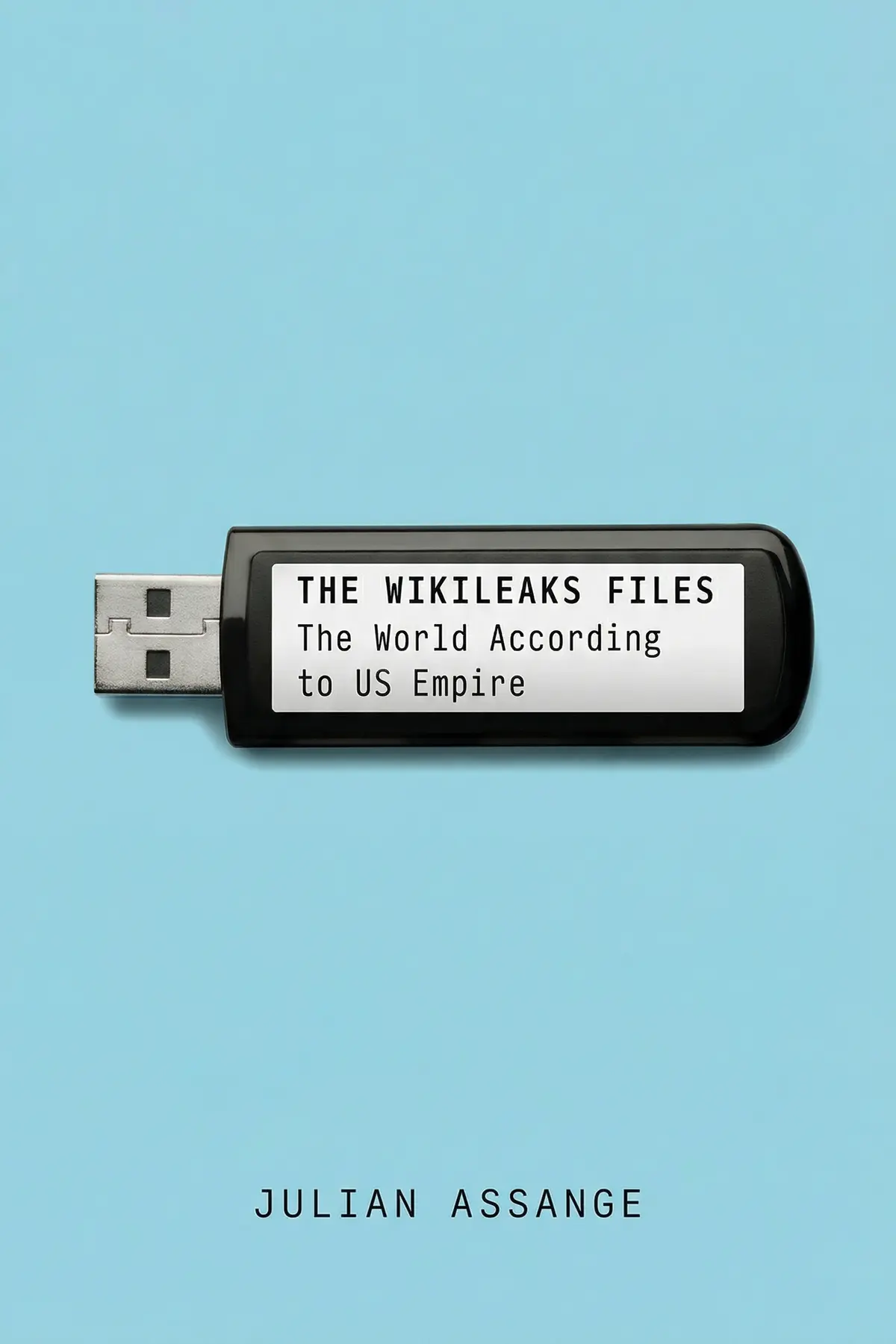
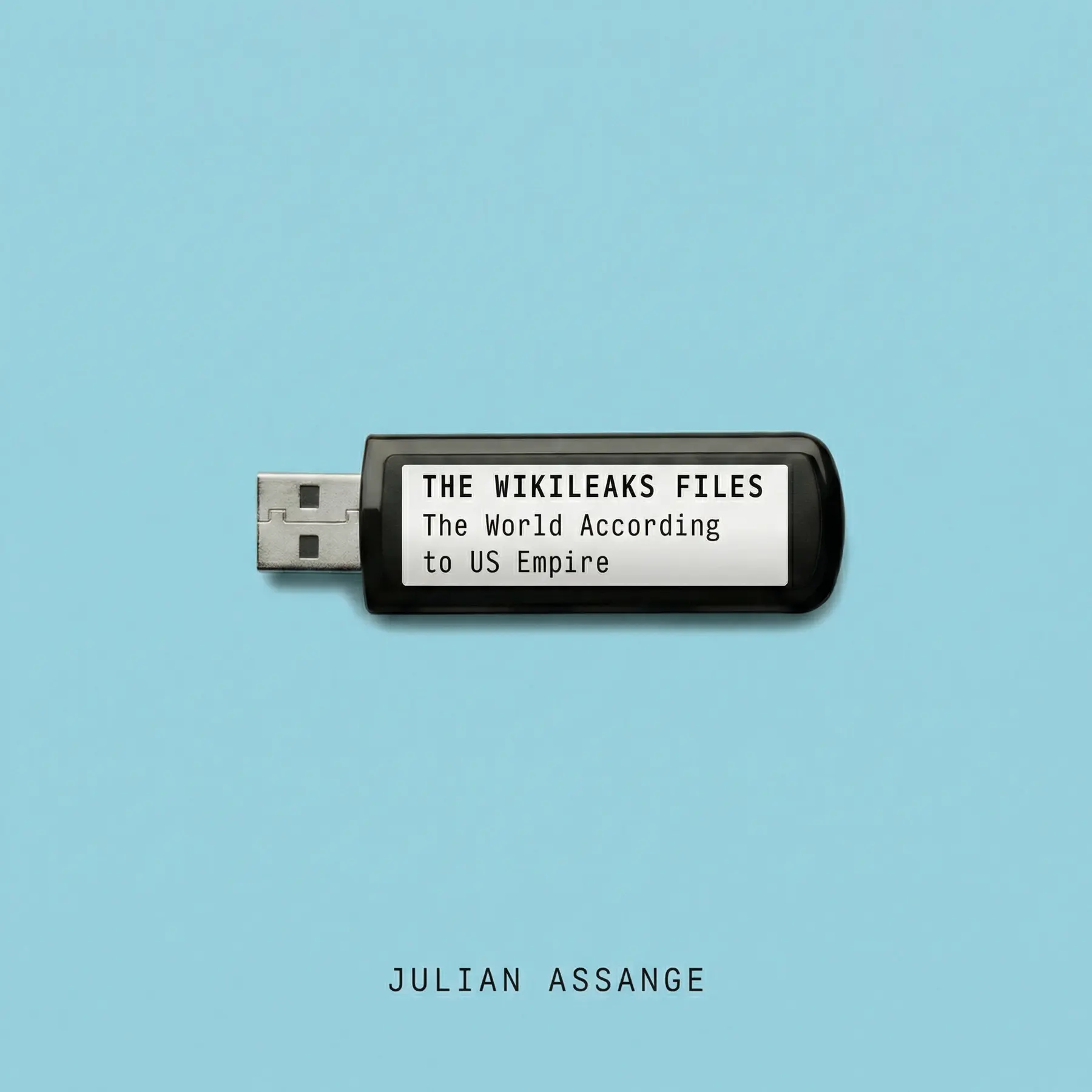
Essays built on leaked US cables, logs and trade drafts argue that America masks its use of power with language and rules, from Guantanamo and torture to the International Criminal Court and global finance.
1 min 02 sec
Most people learn about American wars and trade deals from official statements, then have no way to test them against what was written behind closed doors. The WikiLeaks Files, a set of essays from scholars, journalists and activists introduced by Julian Assange, does that testing. One early detail sets the tone: in 2012, the Pentagon set an automatic filter to stop any e-mail on its servers that mentioned the word WikiLeaks.
The book’s case is that the United States lives with a gap between the story it tells about its power and what its own records show, and that it keeps the gap open by bending language and rewriting rules. The contributors follow that pattern through battlefield logs, one CIA prisoner’s treatment, a weakened international court and secret trade drafts.
What stays with you is a way of reading the news: hearing phrases like just war, public diplomacy or free trade, and asking which document sits underneath.
2 min 18 sec
Libraries, archives and even a scholarly association with thousands of members put the same website off limits. The scale of what it held, and the effort spent keeping people from it, says something before a single document is opened.
2 min 03 sec
Every government says its wars are fought for good reasons and only as a last resort. One anthropologist’s definition gives a way to check, and the leaked logs from Iraq put it under heavy strain.
1 min 38 sec
Officials told the public exactly who was locked up at Guantanamo and why. The prisoners’ own files tell another story, and the gap between the two came down to a simple way of dividing the world.
2 min 09 sec
A prisoner celebrated as a major capture spent two weeks in a box and was never charged. The agency holding him insisted none of it was torture, and it built a paper trail to make that stick.
2 min 10 sec
A court was created to try the worst crimes anywhere on Earth, and most countries wanted it strong. By the time it opened, one country had made sure its own citizens were almost certainly out of reach.
2 min 09 sec
Two little-known trade treaties were being drafted out of public sight until their texts leaked. The numbers inside them, and the protections they left out, point to who really sets the rules of the global economy.
1 min 11 sec
The book’s portrait is of a country that rarely needs to hide what it does, because it has so much control over how its actions are described. Detention without charge becomes a fight against bad guys. Abuse becomes a program that Congress was briefed on. Staying out of reach of a war crimes court becomes following national values. A treaty that drops labor protections becomes free trade. The contributors’ closing point is that American dominance is no secret, but the leaked cables give it a sharper outline: language and regulation, shaped to serve economic goals, are how that dominance keeps growing.
That outline is useful far beyond Washington. When an institution blocks a source instead of answering it, treat the block as a clue. When a person or a group is known to you only through a label, ask for the evidence behind it. When a new rule is announced, find out who drew its limits and who stands outside them.
The Pentagon’s filter in 2012 could stop one word from reaching an inbox. It could not stop the two billion words behind it from being read.
Most people meet American foreign policy through press briefings and official statements, with no way of checking them against what was written in private. The WikiLeaks Files sets those public claims beside the leaked documents themselves: State Department cables, military logs, prisoner files and secret trade drafts. The essays, introduced by WikiLeaks founder Julian Assange, argue that the United States repeatedly says one thing and does another. In their account, wars described as just involved killings of civilians. Many prisoners described as dangerous terrorists posed no risk. Torture was recast as a program Congress had been briefed on. An international war crimes court was shaped so that it could not reach Americans. And trade deals were drafted to serve American service firms and a finance sector that has grown largely beyond democratic oversight. Readers get a sharp, document-based case about how a superpower manages the distance between its words and its actions. They also get a habit of reading that travels well beyond Washington: noticing when a source is blocked rather than answered, when a label replaces evidence, and when a rule is written to bind everyone except its author.
Readers who follow world news and want to check official accounts of war, torture and trade against leaked documents.
Students of politics, law or international relations working on Guantanamo, the International Criminal Court or American foreign policy.
Professionals curious how trade deals and Wall Street shape American power abroad.
Julian Assange was born in 1971 and grew up in several parts of Australia, settling in Melbourne in his mid-teens. Active in the hacking scene as a young man, he was convicted of hacking offences in 1996. He led the founding of WikiLeaks, which drew worldwide attention in 2010 with material from Chelsea Manning, including US war logs from Afghanistan and Iraq and diplomatic cables. In 2024 he pleaded guilty to an Espionage Act charge on Saipan and returned to Australia. He wrote the introduction to this essay collection.
Listeners consider the book a crucial read and value its educational depth, with one listener characterizing the text as a meticulously considered academic piece. Opinions are divided among listeners, however, when it comes to the style of the commentary.
This volume serves as a staggering testament to the power of primary source documents. It is a carefully thought-out scholarly work that peels back the layers of global diplomacy. While some might find the sheer density of leaked cables overwhelming, the analysis provided helps contextualize the motivations of the US Empire. This isn't just a collection of secrets; it's a fundamental shift in how we view history as it’s being written. To be fair, you have to be in the right mindset to tackle such a massive amount of data, but the rewards are worth the effort. It feels essential for anyone who values transparency over curated government narratives.
Show moreFinally got around to finishing this massive collection, and it’s truly a one-of-a-kind resource. The regional chapters—especially those covering the workings of US Empire in Syria, Russia, and East Asia—provide a clarity you just won't find in mainstream media. It’s fascinating to see how the inner workings of diplomacy actually function when the cameras are off. Frankly, the level of detail is astounding, though the editing can be a bit dense in parts. This is scientific journalism at its finest, offering a raw look at foreign policy objectives that rarely align with public rhetoric. It’s an eye-opening deep dive that demands your full attention.
Show morePicking this up feels like holding a forbidden textbook on modern geopolitics. The WikiLeaks Files is essential reading for anyone who wants to move beyond the talking points of the 24-hour news cycle. Each section provides a granular look at how the US tries to bring states into its sphere of influence. I found the chapter on Turkey and the Middle East to be particularly insightful given current events. This is a scholarly work that doesn't pull any punches. It proves that regardless of who is in the White House, the underlying machinery of empire remains remarkably consistent. It’s a heavy read, but undeniably important.
Show moreEver wonder what’s actually happening behind the closed doors of the State Department? This book offers an informative, if slightly dry, look into those very corridors. I appreciated how it uses actual diplomatic cables to ground its arguments, making the critique of the military-industrial complex feel much more substantial. Some sections are definitely difficult to read because of the heavy academic tone. It isn't a "fun" read by any means, but it is necessary for anyone trying to understand the reality of international relations. The chapter on Israel and Iran was particularly enlightening, even if I didn't agree with every single conclusion the guest authors reached.
Show moreAfter hearing so much about Assange, I wanted to see the actual material for myself. What I found was a meticulously researched volume that acts as a global sightseeing tour of U.S. foreign policy over the last several decades. The book is incredibly informative, though the commentary style receives mixed reactions from me depending on the author of the specific chapter. I found the section on Latin America and Venezuela to be particularly well-argued. It’s a bit of a shame that the editing is so uneven, as it makes the frameworks between chapters feel inconsistent. Still, the primary documents alone make this a purchase you won't regret if you care about truth.
Show moreGotta say, the sheer volume of information here is enough to make anyone’s head spin. I took a different approach and treated it like a reference book, jumping around using the index. This made the "info dump" much more manageable. The actual cables provide small but vital details about how diplomats really think about their host countries. While the book is loaded with facts, the prose can be quite stiff and academic. It’s a carefully thought-out work, but it lacks the populist energy of other political critiques. If you want the raw truth and have the patience to dig for it, this is the book for you.
Show moreLook, I appreciate the transparency WikiLeaks provides, but reading this was an absolute slog. It feels more like a textbook than a narrative, and the information overload is very real. I was hoping for something more accessible, similar to how Noam Chomsky manages to make complex topics feel punchy and urgent. Instead, the language here is often impartial to the point of being boring. Truth is, unless you are a die-hard policy wonk, you might find your eyes glazing over by the third chapter. It's a valuable reference work for sure, but it lacks the "juicy" quality I was anticipating from such a high-profile leak.
Show moreThe chapter on the ICC was phenomenal, yet I found the overall editing quite inconsistent across the different contributors. Some authors seem to take the assumptions of the global elite as a given, which felt counter-intuitive to the WikiLeaks mission. Personally, I was expecting a more unified voice throughout the book. Instead, it’s a collection of essays that vary wildly in tone and quality. While the cables themselves are fascinating, the surrounding analysis can feel a bit repetitive. It’s definitely not a book you read from cover to cover in one sitting. You’re better off using the exhaustive index to find the topics that interest you most.
Show moreAs someone who follows international news closely, I found the cables insightful but the commentary a bit hit-or-miss. The book attempts to summarize thousands of documents, which is a massive task, but the execution is somewhat flawed. Some chapters are brilliant, like the ones on Afghanistan and East Asia, while others feel like they are just retreading old ground. To be fair, the inclusion of the actual leaked material is what saves it from being just another political manifesto. It’s an important document of our time, but the dry writing style and poor editing make it a bit of a chore to get through.
Show moreNot what I expected at all. I was hoping for a detailed independent account of what's happening around the world, but instead, it felt like a series of far-left essays. It’s a shame because I think WikiLeaks works best when it acts as an unbiased watchdog. This book, however, spends a lot of time whining about how certain "rogue" nations are misunderstood. I wanted more focus on the actual shenanigans and less on the ideological spin of the guest writers. The writing is incredibly dry and academic, making it almost impossible to enjoy. If you aren't already an anti-imperialist, this probably won't change your mind.
Show moreThe essays argue that leaked US documents reveal a steady gap between what the American government says in public and what its own records show. Wars presented as just involved civilian killings, prisoners called terrorists posed no risk, and torture was presented as a legitimate program. The book’s closing claim is that the United States expands its global dominance by shaping language and regulations to serve its economic goals.
The book centers on Abu Zubaydah, a Saudi captured in Pakistan in 2002. The files describe two weeks in a coffin-shaped box with insects, sleep deprivation, stress positions, slapping and an untreated bullet wound. He denied links to al-Qaeda and appeared truthful, yet he was cut off from the Red Cross, never charged and, the book says, is still held. CIA director George Tenet claimed the program saved lives.
According to the book, US negotiators blocked universal jurisdiction, so the court can act only when a national of a ratifying state commits a crime, and only if it happens on member territory. Bill Clinton signed the treaty as a symbolic gesture, and George W. Bush withdrew the signature in 2002. The court also relies on Western funding and political support and has no officers of its own, and in its first 13 years it indicted only Africans.
The book trains a way of reading. When an institution bans a source rather than answering it, look closer at the source. When people are described only by a label, such as the bad guys at Guantanamo, ask for the evidence on each person. And when a treaty or rule appears, check who negotiated its limits, whose interests it serves and who has never been held to it.
Masaji Ishikawa

John Rawls



Miles Taylor



Tracy Rosenthal

Jessica Valenti

Yanis Varoufakis
AUDIO SUMMARY AVAILABLE
Get the key ideas from The WikiLeaks Files by Julian Assange, plus 5,000+ more nonfiction titles.









