

A Long Way Gone: Memoirs of a Boy Soldier
Ishmael Beah
 English
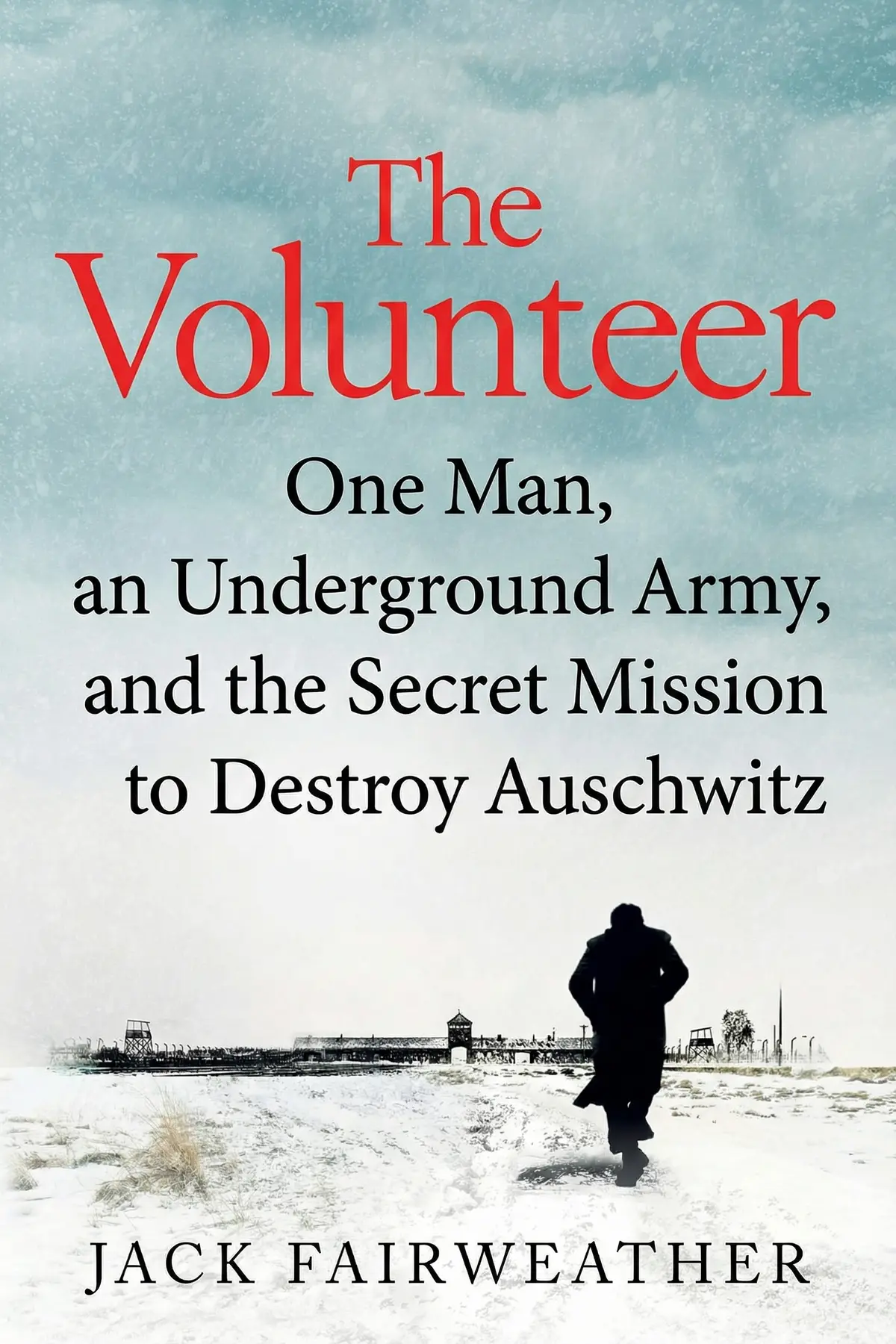
The true story of a Polish officer who let himself be sent to Auschwitz to expose it. It shows how evidence of genocide reached Allied leaders and why they still failed to act.
59 sec
Most of us know that terrible things are happening somewhere, and most of us find good reasons not to look. Witold Pilecki did the opposite. In September 1940 this Polish underground officer let the Nazis arrest him in Warsaw so that he would be sent to Auschwitz and could report from inside.
In The Volunteer, British war reporter Jack Fairweather tells how Pilecki spent more than two years in the camp. He built a secret resistance and smuggled out evidence while Auschwitz changed from a prison for Poles into the center of the Holocaust. The tragedy is that his evidence got out, and the people with power still chose to wait.
Fairweather’s story makes one hard argument: the truth needs more than a brave witness. It also needs people willing to act. By the end you will understand how a genocide could be reported and ignored at the same time.
1 min 34 sec
His unit was wiped out in one morning and his country fell within days. For most officers that would have ended the war. For Pilecki it was the moment his real mission began.
2 min 00 sec
Auschwitz was designed to turn prisoners against one another, and suspicion kept men alive. Pilecki still had to find people he could trust with his life, and the test he used was surprisingly simple.
2 min 00 sec
The first mass killing at Auschwitz was not planned as genocide. It began with overcrowding and a train supposedly bound for a spa. Pilecki recorded how each new horror made the next one easier.
2 min 09 sec
The reports were smuggled out at deadly risk and carried across Europe to London. A prime minister delivered them, and newspapers printed them. And still, at every step, someone found a reason to wait.
1 min 58 sec
A forged key, cyanide capsules and a guard who would not leave the door. Pilecki’s break from Auschwitz was a desperate gamble, and what waited for him outside was the last thing he expected.
2 min 00 sec
Pilecki survived Auschwitz, an uprising and a second camp, and the war in Europe ended. Then he went home to fight again, against an enemy that would erase him and his testimony for decades.
1 min 20 sec
Fairweather leaves an uncomfortable picture behind. The facts about Auschwitz were gathered at a terrible cost. Released prisoners memorized them, couriers carried them through Madrid, a prime minister delivered them and a newspaper printed them. At every step, someone with power found a reason to wait. Pilecki could have stayed safe, and he walked into the camp. Leaders far away, who risked very little, would not even send bombers. Bravery and knowledge sat in different people, and the killing went on in the gap between them. Fairweather admits that we cannot know why Pilecki stepped forward when so many others did not. He offers him as a model anyway.
That model is practical. When news of an injustice reaches you, watch for the excuses that make looking away feel reasonable: the names are hard to say, the numbers are hard to believe, it will be fixed later. When you need allies in a hard place, look for the people who share their bread. And when your warning is ignored, find another way to deliver it, even if that means carrying it yourself.
Pilecki kept one promise through invasion, Auschwitz, an uprising and months of torture. The least anyone can do is look.
In September 1940, a Polish underground officer named Witold Pilecki let the Nazis arrest him in Warsaw on purpose. He wanted to be sent to Auschwitz, a new camp for Polish resisters, so he could find out what was happening there and tell the world. Jack Fairweather follows Pilecki through more than two years inside the camp. Pilecki built a secret network by recruiting the prisoners who showed kindness, and he smuggled out reports while Auschwitz grew from a prison for Poles into the center of the Holocaust. His evidence reached Warsaw, Madrid and London. British leaders received it, even from the Polish prime minister-in-exile, and they still chose not to act. The book follows Pilecki's escape through a bakery door, his part in the Warsaw Uprising and his last fight, against Poland's new Soviet-backed rulers. It is a gripping account of courage. It is also a clear case study in how a society can know about a crime and still look away, and in what it takes to keep your word when nobody seems to be listening.
Readers of World War II history who want a resistance story beyond the familiar names.
Students and teachers exploring how the Holocaust was reported and why the Allies failed to act.
Anyone who has raised an alarm that went unheard and wants to understand moral courage.
Jack Fairweather is a British journalist and author, born in 1978. He served as the Daily Telegraph's bureau chief in Baghdad and has also reported for the Washington Post, including video reporting from Afghanistan. His war coverage won him a British Press Award. The Volunteer, his account of Witold Pilecki, became a bestseller, won the 2019 Costa Book Award for biography and has been published in 25 languages. A major exhibition in Berlin draws on it.
Listeners find this work both deeply memorable and extensively documented, offering thorough descriptions of the era's atrocities. The narrative presents an engrossing real-life account of the Polish resistance movement, and listeners highlight the quality of the writing and the protagonist's staggering bravery. While the book is highly regarded for its powerful emotional impact, some describe the experience as profoundly heartbreaking.
How have I never heard this story before? Witold Pilecki’s decision to volunteer for Auschwitz is the kind of heroism that feels like it belongs in a movie, but the reality was far more gruesome and taxing than any screen adaptation could convey. Jack Fairweather does a phenomenal job tracing the evolution of the camp from a brutal prison for Polish soldiers into the industrialized death machine we recognize today. The level of research here is staggering, drawing on reports that were buried for decades by the Soviets. It is deeply moving to read about the underground network Pilecki built within the camp, risking everything to smuggle out evidence of the Holocaust. Honestly, the book is a masterclass in narrative non-fiction. It’s a heavy read, obviously, but Pilecki’s resilience provides a flickering light in all that darkness. Everyone needs to know this man’s name.
Show moreThis isn't just another Holocaust history book; it's a testament to human resilience in the face of absolute depravity. I was floored by the sheer audacity of Pilecki's mission. Imagine walking into the lion's den on purpose just to see how the teeth work. Fairweather writes with a propulsive energy that makes the 400+ pages fly by, even when the subject matter makes you want to look away. The descriptions of the daily humiliations, the typhus outbreaks, and the casual murders are harrowing but necessary. What stayed with me most was the tragic ending—surviving the Nazis only to be executed by the Soviet-backed regime in his own country. It’s a gut-punch. The book is well-researched, deeply empathetic, and serves as a powerful reminder of what one individual can achieve against a tide of evil.
Show moreAbsolutely gut-wrenching from start to finish. Pilecki is a legend. The way he organized the resistance inside Auschwitz, right under the noses of the SS, is mind-blowing. Fairweather doesn't sugarcoat anything. You feel the hunger, the cold, and the constant fear. It’s a miracle he kept his sanity, let alone his courage. The betrayal by the Allies—the way they dismissed his reports as 'exaggerations'—made my blood boil. It’s a tragic, beautiful, and essential book. I couldn't put it down even when it was breaking my heart. This is the definition of a five-star read.
Show moreFinally got around to reading this biography of Witold Pilecki, and I’m genuinely stunned. The bravery required to do what he did is beyond my comprehension. Fairweather’s writing is crisp and evocative, making the complex web of the Polish resistance easy to follow. I was especially moved by the accounts of the 'secret army' he raised inside the camp. It wasn't just about survival; it was about maintaining dignity and a sense of purpose in a place designed to strip both away. The epilogue, detailing his post-war trial and execution, is one of the saddest things I’ve ever read. This book is a masterpiece of historical recovery.
Show moreWhat Pilecki endured is fundamentally beyond the pale, and Fairweather captures that horror without veering into sensationalism. The book is an incredible tribute to a man who was erased from history for nearly fifty years. The descriptions of his escape from the camp are as tense as any thriller novel I've ever read. More importantly, the book forces the reader to confront the moral failings of the West during the war. We like to think of the Allies as pure saviors, but this account shows they had the information and the means to act much sooner. It’s a challenging, necessary, and beautifully written book. I’ve been recommending it to everyone I know who has even a passing interest in history. A stunning achievement.
Show moreFairweather has managed to piece together a narrative that feels both academically rigorous and intensely personal. The central figure, Witold Pilecki, is fascinating—a man of immense traditional duty who found himself in the middle of a nightmare. I was particularly struck by the detailed account of the Polish underground’s frustration with the Allied powers. It’s infuriating to realize how much information reached London and Washington only to be met with skepticism or political foot-dragging. My only real gripe is that the author occasionally frames WWII politics through a very modern, almost American-centric lens of 'left vs right' which felt a bit anachronistic for 1940s Poland. Also, the transition into Pilecki's post-war life felt a bit rushed compared to the painstaking detail of the camp years. Still, this is a vital piece of history that finally gives a hero his due.
Show moreAfter hearing so much about the resistance in France, reading about the Polish underground's efforts was a revelation. Pilecki is a character who defies belief. The book does an excellent job of showing how Auschwitz changed over time; it wasn't a death camp on day one, and seeing that slow descent into hell through Pilecki’s eyes was chilling. I appreciated the focus on the technicalities of how they smuggled messages out using laundry details and hidden radio parts. My only criticism is that I wish the maps and photos were better quality in my edition, as they are essential for following the layout of the camp. Look, if you want to understand the complexities of the Polish experience during the war, this is the book to get. It’s a sober, detailed account of a man who deserved better from the world.
Show moreTruth is, I didn't expect to be so infuriated by the Allies' response—or lack thereof—to the intel Pilecki was literally dying to provide. Fairweather builds a compelling case against the 'total incompetence' or perhaps the cold indifference of the British and American leadership. The biography is meticulously researched, and you can tell the author spent years digging through the archives. It’s a bit of a slow burner at first as it sets the stage in Warsaw, but once Pilecki enters the camp, the tension is relentless. Some of the author's arguments about Pilecki’s relationship with his family felt a bit speculative and unnecessary, but that's a minor nitpick in an otherwise stellar work. It’s a haunting look at a man who put country above everything and paid the ultimate price.
Show moreWhile the subject matter is undeniably vital, the author’s tendency to use 'colour' and invented dialogue occasionally pulled me out of the experience. To be fair, Pilecki’s story is so incredible it doesn't really need the flourishes of a thriller novel. I found the sections detailing the Allied response to be the most enlightening, though they left me feeling incredibly cynical about the 'Great Men' of history who chose to look the other way for so long. There were also a few geographical errors regarding Italy that made me wonder about the precision of other details. It’s a decent introduction to a forgotten hero, but I think I would have preferred a more straightforward historical analysis without the speculative internal monologues. It’s a important read for the facts alone, but the prose style wasn't quite my cup of tea.
Show moreThe research on display here is undeniably top-notch, yet I found the pacing to be quite uneven during the later chapters. Personally, I felt the book spent a bit too much time on the international political maneuvering at the expense of exploring Pilecki’s internal state during his final years. Don't get me wrong, the facts are staggering and Pilecki is a true hero, but the narrative felt a bit dry in the middle sections. It’s a dense read that requires a lot of emotional energy. I think it’s an important contribution to Holocaust literature, especially for those who think they already know everything about Auschwitz, but it lacks the lyrical quality that makes for a truly immersive biography. 3.5 stars, rounded down for some repetitive phrasing.
Show moreIt tells the true story of Witold Pilecki, a Polish underground officer who let the Nazis arrest him in Warsaw in September 1940 so that he would be sent to Auschwitz. He spent more than two years there, built a secret resistance network and smuggled out reports while the camp became the center of the Holocaust. He later escaped, fought in the Warsaw Uprising and was executed by Poland’s communist government in 1948.
Auschwitz was the first Nazi camp built to target a nationality, Poles, and especially men from the resistance. Pilecki and the Warsaw underground wanted someone inside to gather intelligence, organize a cell and plan a breakout. He felt it was his duty under his oath to defend Poland. Once inside, he saw that a breakout was impossible, so he focused on solidarity among prisoners and getting the truth out.
According to Fairweather, they did. Pilecki’s reports reached London through Madrid, and the Polish prime minister-in-exile delivered them. By August 1941 Churchill understood that Jewish people were being killed on a vast scale, and in 1942 the New York Times called Auschwitz a death camp. Yet British leaders refused to bomb the camp and insisted that Europe’s Jews would be saved by the eventual liberation.
He and his comrade Jan Redzej, along with a third prisoner, took jobs at a bakery roughly a mile from the camp, where guards kept watch. They copied keys in the camp metal shop and hid clothes, money, sugar, tobacco and cyanide. On Easter Monday 1943 an SS guard lingered by their exit door for hours, and the key would not turn. The men forced the door and ran under gunfire until dawn.
Fairweather presents Pilecki as a model for facing injustice when others look away. The story shows that knowing about a crime is not the same as acting on it, and that powerful people can always find reasons to wait. On a smaller scale, Pilecki’s way of choosing allies, picking the prisoners who shared food or nursed the sick, is a lasting guide to trust under pressure.
Ishmael Beah

James Herriot


Pankaj Mishra

Barack Obama


Masaji Ishikawa
Charles C. Mann

Ben Macintyre
AUDIO SUMMARY AVAILABLE
Get the key ideas from The Volunteer by Jack Fairweather, plus 5,000+ more nonfiction titles.









