

15 min 22 sec
Available in: English
 ไทย
EnglishไทยThe Truths We Hold: An American Journey
Kamala Harris traces her path from Oakland to the US Senate and argues that the justice system, often used against marginalized people, can protect them when insiders use every bit of their power on their behalf.
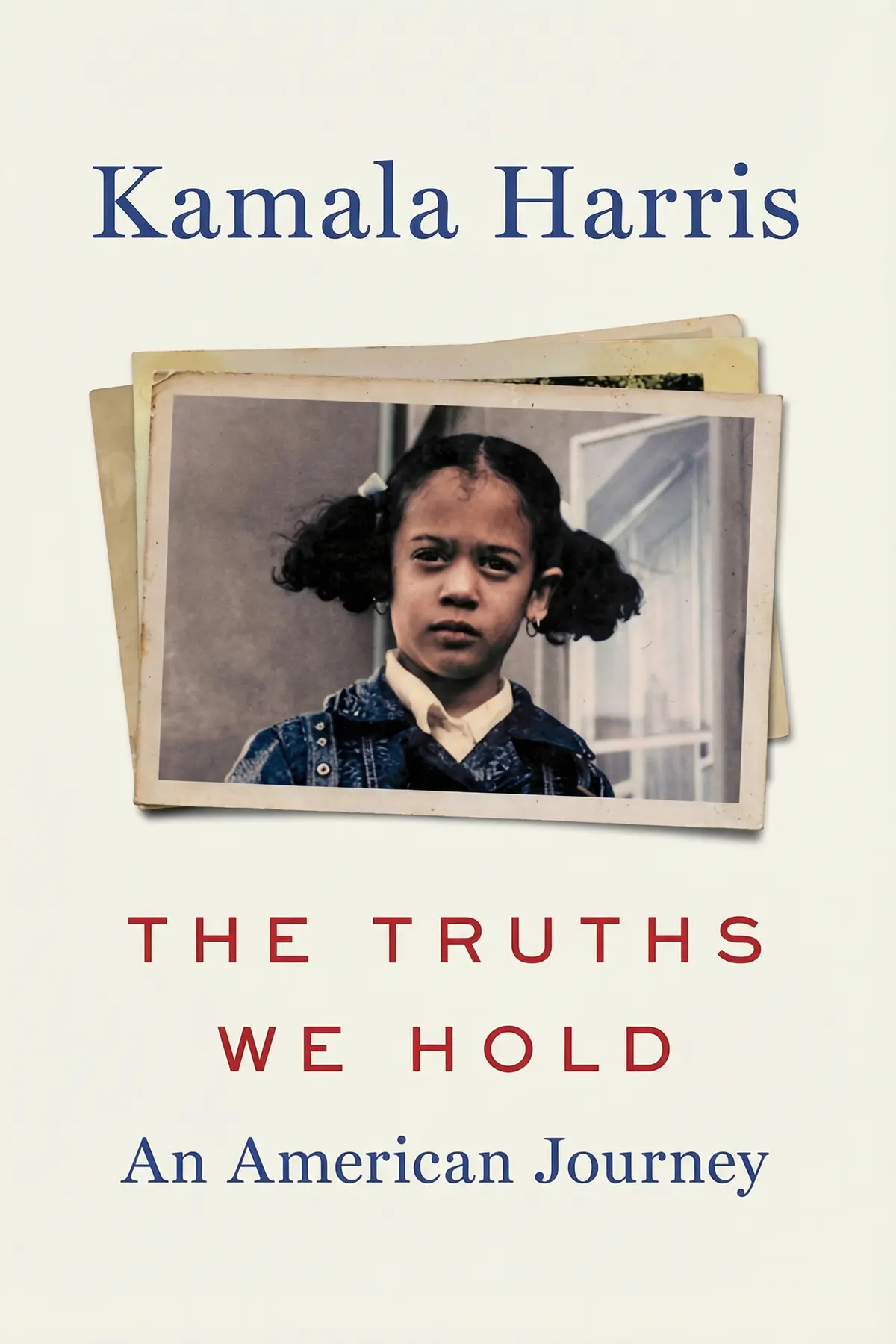
Table of Content
1. Introduction
58 sec
Many people see the justice system as a machine that rarely notices who gets caught in it. In The Truths We Hold, Kamala Harris makes the opposite case from inside: the laws that have harmed marginalized Americans can protect them, if the person holding the pen sees the human being behind the file. She learned this as a law school intern, when a few minutes of pleading kept an innocent mother from spending a weekend in jail.
Born to an Indian mother and a Jamaican father, Harris went on to become a prosecutor, San Francisco’s district attorney and a US senator. Her memoir treats each step as a bigger lever on one question: whom the system actually serves. Along the way she shows how prosecutors, programs and policies shape ordinary lives, and offers a test for any institution: notice whose voice is missing, and use whatever power you hold to add it.
2. Insiders who care can fix a distrusted system
1 min 47 sec
Her family believed the law had too often been turned against black Americans. Harris chose to become a prosecutor anyway, and her answer to their doubts came from the civil rights movement itself.
3. See the person behind the case file
1 min 16 sec
An intern with no authority, a Friday afternoon and an innocent woman headed for a weekend in jail. What Harris did next decided whether a stranger’s children would see their mother that night.
4. Speak for the people, and accept your limits
1 min 22 sec
Before she ever argued a case, Harris failed the exam that would let her practice. The months that followed, and one case she could not win, taught her what a prosecutor’s power can and cannot do.
5. A small success can justify a bigger run
1 min 30 sec
San Francisco’s prosecutors were working in chaos, sharing computers and losing files. Harris found her way out through a side door, and the work she did there convinced her to aim for the top job.
6. Second chances that cost less and work better
1 min 55 sec
Almost nobody knew her name when she ran for district attorney. Once elected, Harris asked what would have happened to a gifted friend if her youthful mistake had involved drugs, and the answer reshaped her office.
7. Legal help that changes an asylum seeker's odds
2 min 19 sec
Children fleeing Central America arrived to blocked roads and angry signs, then faced a push to decide their fates within two weeks. Harris found that one missing ingredient made most of the difference, and went looking for it by phone.
8. Make health care stop ending in bankruptcy
1 min 31 sec
Her mother’s news at a family dinner made the health system personal. Harris argues that a country spending more than any other still lets illness push families into ruin, and she has a blunt fix.
9. Close the divisions that enemies use against you
1 min 37 sec
Other senators avoided an intelligence committee seat because nobody would see their work. Harris took it, and soon found herself watching how a foreign government turned the country’s oldest wounds into weapons.
10. Conclusion
1 min 07 sec
Harris’s memoir reads as a long reply to her family’s early doubt. They saw the law as a weapon used against people like them; she spent her career testing whether it could protect them instead, with each office giving her a firmer grip. Her evidence is concrete: a mother home for dinner, reoffending at 10 percent where 50 was the norm, asylum odds that change when a lawyer appears.
She keeps the failures in view too, from a girl who could not testify to a nation’s exploited divisions. Power, in her account, is always partial, which is exactly why she uses every piece of it.
The habit worth borrowing is small. Read the file and picture the family behind it. When a system fails someone, look for the single missing piece, a lawyer, a second chance, a five-minute hearing, and see whether you can supply it. On a Friday afternoon in 1988, an intern with no authority did exactly that, and a judge came back to his courtroom.
About this book
What is this book about?
Many Americans, Kamala Harris's own family among them, have seen the law as a tool used against black and marginalized communities. Harris decided to work inside it anyway. Her memoir follows that choice from a childhood in Oakland and Montreal as the daughter of two civil rights activists, through Howard University and the Alameda County district attorney's office, to the San Francisco district attorney's job and the US Senate. Along the way she builds her case from specific episodes: an intern persuading a judge to free an innocent mother before the weekend, a diversion program called Back on Track that saw just 10 percent of participants reoffend at a fraction of the cost of jail, and law firms recruited to represent asylum seekers for free. As a senator she sets out her positions on immigration, on health care as a right, and on Russian interference in the 2016 election, which she believes fed on the country's unresolved prejudice. Readers get a clear account of how prosecutors and lawmakers shape ordinary lives, and a working principle that travels well beyond politics: find the person the system is failing, and use whatever power you hold to help.
Book Information
Who it's for
Curious about Harris's record
Readers who want Kamala Harris's record as a prosecutor and senator explained in her own words.
Law students, young lawyers
Law students and young lawyers weighing whether to work inside a justice system they have doubts about.
Helping others within institutions
People in public service or large institutions looking for ways to use limited power on behalf of others.
About the Author
Kamala Harris
Kamala Harris was born in Oakland, California, and studied at Howard University and at the University of California, Hastings College of the Law. Her legal career began in the Alameda County district attorney's office, and in 2003 she was elected district attorney of San Francisco. She was California's attorney general from 2011 to 2017 and a US senator for California from 2017 to 2021. She then served as vice president under President Joe Biden and was the Democratic Party's nominee in the 2024 presidential election.
Ratings & Reviews
Ratings at a glance

What people think
Listeners find this autobiography both captivating and skillfully composed, offering extensive detail and a profound glimpse into Kamala Harris’s thought process. They characterize the work as a remarkable life narrative, with one listener pointing out the effective equilibrium between her private history and her career milestones. Listeners respect the author’s empathetic perspective and her steadfast commitment to her work in the public sector.
Top reviews
Owen
Wow. Kamala Harris really opens up about her mother, Shyamala, and the influence of the civil rights movement on her childhood in Oakland. I found the section on Mrs. Shelton’s lemon bars surprisingly moving because it showed how small moments of encouragement build a leader’s confidence. It’s an incredible life story that manages to be both deeply personal and intensely focused on the mechanics of justice. While some political memoirs feel ghostwritten and stale, this one hums with a genuine sense of compassion and dedication to public service. Her perspective on the duality of the immigrant experience—holding onto hope while facing systemic stereotyping—resonated with me more than I expected. It’s not just a campaign book; it’s a blueprint for empathy in leadership.
Show moreMalee
After hearing so much about her on the news, I decided to listen to the audiobook version, which she narrates herself. Her voice is incredibly clear and engaging, making the stories about her time as Attorney General of California feel like a personal conversation. I was particularly struck by the anecdotes regarding her grandmother in India and her mother's fierce independence. It’s rare to find a political figure who speaks so openly about the struggles of being a daughter and a mother while simultaneously tackling cybersecurity and immigration. The book serves as a powerful reminder that our leaders are human beings shaped by their families and their communities. If you’re looking for a boring, dry list of accomplishments, this isn’t it; instead, you get a vivid portrait of a woman driven by a sense of duty.
Show morePhu
The chapter on the mortgage crisis alone makes this book worth the price of admission. It’s fascinating to see how Harris took on JPMorgan Chase and won a better settlement for California homeowners. Most people see politicians as talking heads, but this book shows her as a strategist and a fighter. I was also pleasantly surprised by the humor she injected into her personal stories, like the lemon bar mistake or the jitters she felt during her first inaugural ceremony. The writing is engaging and moves at a brisk pace, balancing the heavy topics of immigration and criminal justice with lighter moments of family life. It left me feeling much more optimistic about the future of our leadership.
Show moreFon
Frankly, I didn't know much about her personal history before picking this up, but I came away with immense respect for her mother, Shyamala. The way Harris frames her career as a continuation of her mother’s legacy of service is really powerful. This memoir isn't just a list of jobs; it's a deep dive into her philosophy of "seeing what can be, unburdened by what has been." I found the sections on her time at Howard University particularly vibrant, showcasing her pride in the HBCU experience. The book is well-written and strikes a perfect balance between being an informative political document and a heartwarming personal story. It’s an essential read for anyone trying to understand the current political landscape and the people trying to change it.
Show moreOmar
Picked this up to get a better handle on her actual policy stances before the next election cycle. Harris spends a significant amount of time explaining her work as a "progressive prosecutor," which is a term that sparked some internal debate for me while reading. She dives deep into the nuances of criminal justice reform, the bail system, and the mortgage crisis, often getting into the weeds of legislative battles. To be fair, some of the policy sections can feel a bit dense, but they provide a comprehensive look at how her mind works when faced with complex socioeconomic problems. I appreciated the balance she struck between her career trajectory and her personal life, especially the sweet mentions of her stepchildren, Cole and Ella. It’s a well-written, professional account of a woman who clearly knows how to navigate the corridors of power without losing her core beliefs.
Show moreTak
Ever wonder how someone actually makes it from a local DA’s office to the Senate? This memoir lays it out clearly, focusing on the "truths" she holds regarding fairness and the rule of law. I enjoyed the behind-the-scenes look at her negotiations with big banks during the foreclosure crisis; it really showed her tenacity. The writing style is straightforward and accessible, avoiding the overly flowery language that bobs through most memoirs. However, I did feel that the middle section dragged a bit when it shifted heavily into campaign-style rhetoric about health care and the environment. Not gonna lie, I was more interested in the personal growth and the "Rainbow Sign" cultural center stories than the legislative bullet points. Overall, it’s a solid, informative read that helps you understand the woman behind the public persona.
Show moreRuangrat
As someone who grew up in the Bay Area, I loved reading her descriptions of Oakland and Berkeley in the 70s. She captures that specific energy of political activism perfectly, especially when she talks about meeting figures like Shirley Chisholm. The book does a great job of connecting her upbringing to her later work in the Senate, making it feel like one continuous journey of service. I do think the ending was a bit rushed, and she could have spent more time on her transition to the national stage. But the core of the book—her commitment to "the people"—comes through loud and clear. It’s a refreshing look at how a person’s roots can inform their sense of justice and their dedication to public service.
Show morePop
Finally got around to reading this, and I was impressed by how much policy detail she actually included. Many critics say she’s vague, but this book is essentially a 300-page manifesto on everything from the Affordable Care Act to DACA. I appreciated her analytical approach to "failing" and how she handled not passing the bar on her first try—it made her seem much more relatable. My only gripe is that it feels very much like a book written for an election, so some of the "truths" feel a bit polished for public consumption. Still, the underlying message of mentoring the next generation is genuinely inspiring. It’s a comprehensive look at her thinking and a great resource for anyone wanting to see her vision for the country.
Show moreVilaiporn
To be fair, I have a notoriously short attention span for non-fiction, and this book tested it at times. While her background is undeniably interesting and her mother sounds like an absolute legend, the sheer volume of policy proposals made my eyes glaze over. It feels like she’s trying to be everything to everyone, which makes the narrative lose its focus occasionally. I wanted more about her internal struggles and fewer paragraphs that sounded like they were pulled from a stump speech. Look, she’s clearly brilliant and her career achievements are massive, but as a "book," it lacks a certain narrative tension. It’s a good reference for her platform, but it didn't keep me turning pages late into the night. I’d recommend it if you’re a political junkie, but maybe skip it if you’re looking for a fast-paced autobiography.
Show moreErn
This book felt like another carefully curated product from an unscrupulous politician trying to secure a legacy. I went into it hoping for some raw honesty about the controversial decisions she made as a DA, but instead, I found that the unpleasant aspects of her record were pushed under the rug. The prose is polished, sure, but it lacks the grit you'd expect from someone who claims to be a "rebel" within the system. It’s business as usual: inflate the presumed positives and pivot away from the hard questions about mass incarceration. Frankly, the tone feels a bit too calculated for my taste, as if every sentence was vetted by a dozen consultants before it hit the page. If you want a feel-good story about the American Dream, you might like it, but I was looking for more accountability and less self-promotion.
Show moreQuestions about this book
What is The Truths We Hold about?
It is Kamala Harris’s account of her path from a childhood in Oakland and Montreal to the US Senate. She argues that the law, often used against marginalized Americans, can protect them when the people inside the system use their power on their behalf. The book covers her years as a prosecutor and San Francisco district attorney, and her positions on immigration, health care and Russian interference in the 2016 election.
Why did Kamala Harris become a prosecutor?
Her heroes were civil rights lawyers such as Thurgood Marshall and Constance Baker Motley. When she settled on prosecution after graduating from Howard University in 1986, her family doubted the choice, since the law had so often harmed black Americans. Harris pointed to prosecutors who confronted the Ku Klux Klan and to the federal protection of the Freedom Riders in 1961 as proof that the law could serve justice.
What was the Back on Track program?
Back on Track was the program Harris created as San Francisco district attorney for non-violent first-time offenders. Instead of entering the criminal justice system, participants went to boot camps with job training and classes ranging from money management to parenting. After two years, 10 percent had reoffended, compared with an average of 50 percent, and it cost $5,000 per person against $40,000 for a year in county jail.
What does Kamala Harris propose for health care?
Harris argues that the US spends more on health care than any other country while lagging other OECD nations on outcomes, and that medical bills are the leading cause of personal bankruptcy. She wants health care treated as a right, with coverage based on need, a single-payer system funded through taxes, and more funding for the National Institutes of Health to pursue research that drug companies neglect.
How can I apply the lessons of The Truths We Hold?
The book’s central habit is to look past the paperwork to the person affected, as Harris did as an intern when she asked a judge to return so an innocent mother could go home. In any institution, find the one missing resource that decides someone’s outcome, whether a lawyer, a second chance or a few minutes of attention, and use whatever power you have to supply it.
Readers also enjoyed

Age of Anger: A History of the Present
Pankaj Mishra

A Promised Land
Barack Obama

Age of Propaganda: The Everyday Use and Abuse of Persuasion
Anthony Pratkanis


A River in Darkness: One Man’s Escape from North Korea
Masaji Ishikawa

A Spy Among Friends: Philby and the Great Betrayal
Ben Macintyre

21 Lessons for the 21st Century
Yuval Noah Harari


AUDIO SUMMARY AVAILABLE
Listen to The Truths We Hold in 15 minutes
Get the key ideas from The Truths We Hold by Kamala Harris, plus 5,000+ more nonfiction titles.
- 5,000+ titles
- Listen as much as you want
- 7-day free trial
- Cancel anytime









