

60 Seconds & You’re Hired!
Robin Ryan
 English
A practical guide for learning professionals who are tired of building whatever training they are told to build. It shows how to diagnose real problems, earn stakeholder trust and become a partner in business decisions.
1 min 02 sec
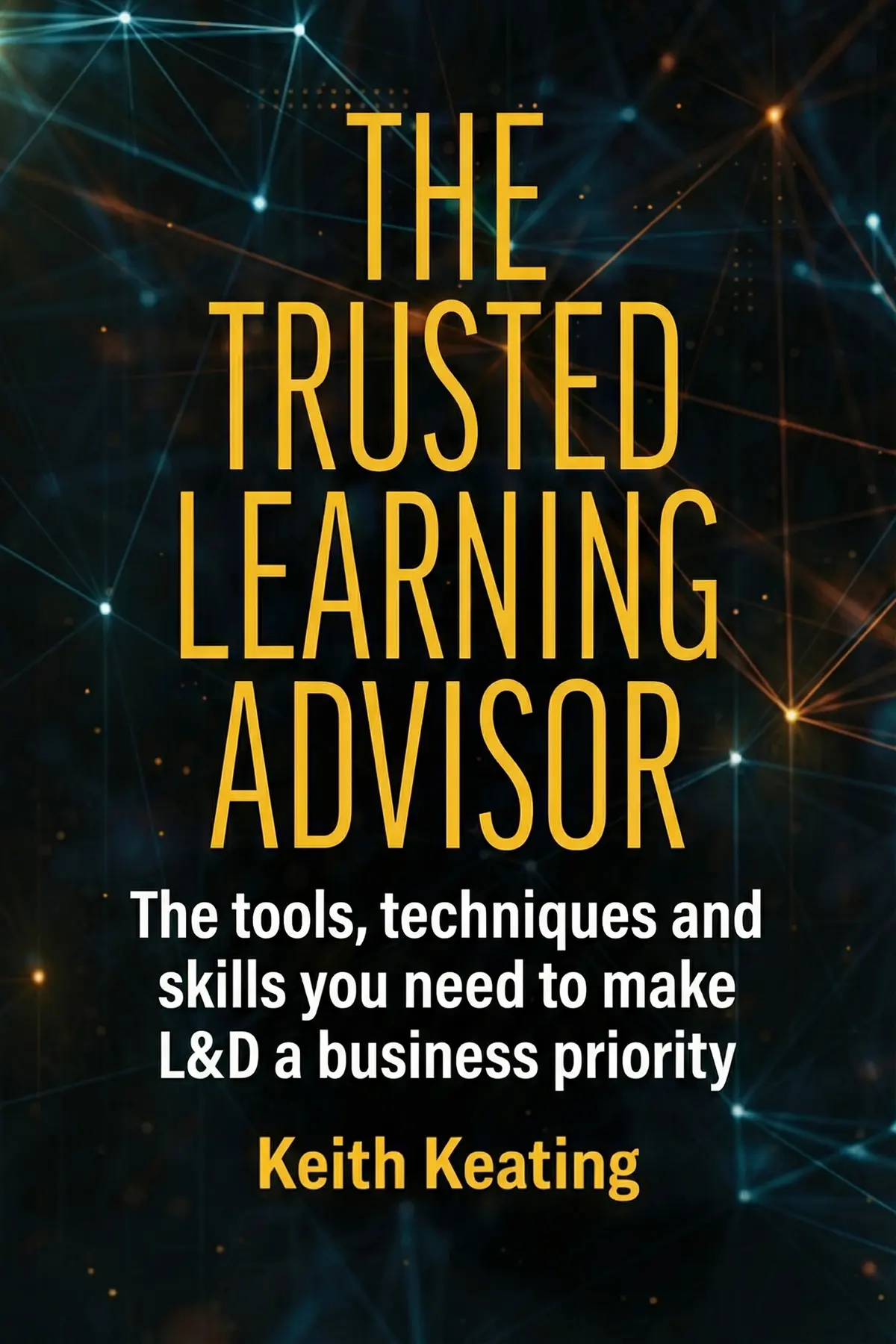
Many learning and development professionals spend their days building courses someone else has already designed in their head, then watching those courses change nothing. In The Trusted Learning Advisor, Keith Keating, who has led learning teams at companies such as McKinsey, General Motors and HSBC, argues that the way out starts with how you handle the request itself. A training order is the opening of a conversation, and the person who asks why before building anything stops being an order taker.
His case is that L&D earns a place in business decisions through trust, and that trust can be built on purpose. You build it by diagnosing the real problem, listening far more than you talk, keeping your word and steering stakeholders patiently when they push back.
Along the way come a four-step method for taking any request, five qualities stakeholders weigh before they trust you, a listening ratio for every meeting and three ways to handle a no without either fighting or folding.
1 min 48 sec
A new hire is promised that learning sits at the center of her company, then finds out within days what that promise really means. Her story names a pattern that many people in the field quietly accept.
1 min 20 sec
Two features of every workplace decide how the learning team gets treated long before anyone reads its proposals. They can even change how learning professionals see themselves, often without them noticing.
1 min 50 sec
A finance chief is sure his sales team needs a refresher course, and the request sounds perfectly reasonable. Following it exactly would waste everyone’s time, and the reason only shows up when someone asks.
1 min 41 sec
Most experts walk into a meeting ready to explain and propose. Keating offers a simple ratio for conversations that reverses that instinct, and it changes what stakeholders tell you.
1 min 46 sec
Deep expertise feels like it should be enough to earn a seat at the table. Keating argues it rarely is, and he names five separate things stakeholders look for before they rely on your advice.
2 min 11 sec
Saying no to a training request seems like the obvious way to stop being an order taker. Keating suggests the opposite move, then shows what to do between yes and delivery that changes the outcome.
1 min 45 sec
A rejected proposal tempts most people either to argue harder or to give up. Keating treats the refusal as information, and he offers three ways to keep the conversation alive without pushing.
1 min 09 sec
Keating’s book is finally about who you decide to be at work. What Julia lacked was colleagues who expected her judgment, and in Keating’s view that expectation only shifts when the learning professional starts behaving differently first. Order taking is the comfortable option, and the comfort is the problem, because it makes your work look smaller than it is.
The change he describes is gradual and practical. It happens in single conversations: the CFO’s request that gets a few questions before it gets a module, the meeting where you mostly listen, the promise kept on schedule, the refusal that becomes a pilot.
Start with the next request that reaches you. Accept it, then spend your first effort finding the real problem, talking to the people closest to it before you design anything. Notice how much of each stakeholder conversation you spend listening. And when learning is not the right answer, say so early, because that honesty earns the trust everything else rests on.
A seat at the decision-making table rarely comes with a job title. It is earned one well-handled order at a time.
Many learning and development teams spend their time producing courses that someone outside the team has already designed in their head. The requests arrive late, labeled urgent, and the experts are expected to deliver rather than advise. Keith Keating argues that this order-taking role is common, comfortable and costly, both for the business and for the careers of the people stuck in it. His answer is the trusted learning advisor, a proactive L&D professional who questions assumptions, looks for the real cause behind a request and guides the organization toward learning that actually changes results. Keating shows how culture and organizational placement shape the way learning teams are seen. He names the skills the role demands, from curiosity to empathy, and offers a listening ratio for every stakeholder conversation. Readers get five pillars that trust rests on and IDAD, a four-step method for taking any order without simply obeying it. They also get three ways to respond when a stakeholder says no. The result is a working plan for moving from the end of the conversation to the decision-making table.
L&D specialists who keep building courses that someone else has already designed.
Learning team leads who want their function seen as a business partner instead of a cost.
HR and training professionals moving into consultative roles who need a method for handling requests and pushback.
Keith Keating has spent more than 25 years building and leading learning teams in large organizations, among them McKinsey and Company, General Motors, HSBC and BDO Canada. He earned his Master of Education and Doctor of Education degrees at the University of Pennsylvania, where he now teaches on a doctoral program for chief learning officers. In this book he urges L&D professionals to stop taking orders and become essential partners to the business.
Listeners find this work to be a perceptive manual that merges conceptual ideas with real-world use, making it a precious asset for L&D specialists. Beyond that, the text is full of usable methods that spark constructive transformation through learning across any company, while prioritizing authentic bonds and establishing vital professional ties. Furthermore, listeners value its clear prose and impact, with one noting how it helps produce sustainable behavior change.
This book is essentially the manual I wish I had five years ago. Dr. Keating nails the shift from being a simple 'order-taker' to a high-value strategic partner. The IDAD model is the real star here; it gives you a concrete framework for intake and discovery that most L&D books skip over entirely. Personally, I found the section on building trust with stakeholders particularly relevant to my current corporate climate. The writing is punchy and moves fast, though some sections on data could have gone even deeper. Still, it’s a masterclass in professional evolution for anyone in the education space. Truth is, if you’re tired of just fulfilling requests and want to start driving business strategy, you need this on your desk.
Show morePicked this up on a recommendation and I was pleasantly surprised by how much it focuses on the human element of learning. Keating doesn't just talk about ROI; he talks about trust and genuine connection. The IDAD model—Intake, Discovery, Analysis, and Decision—is a game-changer for streamlining our internal processes. In my experience, the hardest part of L&D is getting a seat at the table, and this book provides the exact script you need to get there. It’s written with a mentor-like tone that feels very encouraging. Not gonna lie, the appendix with the Design Thinking overview was worth the price of admission alone. Truly inspiring stuff for those of us in the trenches.
Show moreThe chapter on the Learning Advisory Council changed my entire perspective on internal networking. Keating explains how to build a network of learning champions in a way that feels organic rather than forced. It’s not just about the 'how-to' but the 'why' behind building these relationships to ensure sustainable behavior change in your organization. To be honest, I’ve read a lot of L&D books that are too dry, but Keith’s personal anecdotes make this feel like a conversation. The transition from an order-taker to a partner is a difficult journey, but this book serves as a reliable roadmap. It’s a must-read for anyone serious about making a real impact in their company.
Show moreAfter hearing so much buzz about Dr. Keating’s work, I finally dove into this book. It is a fantastic guide that manages to be both strategic and tactical at the same time. The way he blends learning science with business strategy is seamless. In my view, the advice on overcoming stakeholder resistance to be the most valuable part of the text. It helps you build professional credibility while keeping the learner's needs at the center of the conversation. The Master Chef metaphor used in some other reviews is actually quite fitting—it’s about finding the right ingredients for success. This is an essential read for anyone looking to revolutionize their organization's learning culture.
Show moreFew books actually live up to the title of being a 'game-changer,' but this one definitely qualifies. Dr. Keith Keating has provided a blueprint for the future of our profession. The shift toward being a 'Trusted Learning Advisor' isn't just a nice-to-have; it’s a necessity in the modern landscape. I was particularly impressed by the 'Learning Champions' concept and the quarterly virtual meeting structure he suggests. It’s these kinds of specific, actionable tips that set this apart from generic leadership guides. Every L&D professional, whether a veteran or a newcomer, will find something transformative here. It’s a brilliant, research-backed guide that inspires you to take immediate action. Absolutely top-tier work.
Show moreEver wonder why L&D is often the first department to see budget cuts? Keith Keating answers that by showing us how to prove our worth beyond just 'checking the box.' He uses his own journey—from high school dropout to PhD—to illustrate that change is possible through intentionality. To be fair, some of the concepts around stakeholder management feel familiar, but the way he organizes them into actionable steps makes them feel new again. I especially appreciated the focus on creating a 'Learning Advisory Council' to keep things aligned with business needs. It’s a solid, practical guide that avoids the fluff usually found in leadership books. A great addition to any HR professional's library.
Show moreWow, Keating really hit the nail on the head with the distinction between a 'provider' and an 'advisor.' The book is packed with these little 'aha' moments that make you re-evaluate how you handle your daily intake calls. Frankly, the advice on leveraging technology not just for the sake of it, but for meaningful engagement, is exactly what the industry needs right now. I loved the inclusion of real-world case studies because they ground the academic research in something tangible. The tone is very accessible, which makes the complex concepts of learning science much easier to digest. It’s a quick read but one that you’ll find yourself returning to for specific questions.
Show moreGotta say, I didn't expect a book on learning strategy to be this engaging. Dr. Keating’s writing style is approachable and free of the usual corporate jargon that plagues this genre. I particularly liked the focus on 'Discovery' within the IDAD model—it’s an area where many of us fail by jumping straight to the solution. The book provides a list of great questions to ask stakeholders which I’ve already started using in my meetings. While I wish there was a bit more on the 'Analysis' phase, the overall framework is incredibly solid. It's a very practical manual that bridges the gap between theory and the messy reality of business.
Show moreFinally got around to reading this and I was struck by how much it emphasizes the art of the conversation. Look, we all know we should be strategic partners, but Keating actually tells you how to talk to executives to make that happen. The focus on data is there, but it’s the emphasis on trust that really sticks with you. I did feel like some of the case studies were a bit idealized, but the core principles are undeniably sound. It’s a very readable book that doesn’t demand a PhD to understand. If you're looking to enhance your professional standing and drive real change, this is a great place to start.
Show moreAs someone who has been in corporate training for over a decade, I had high hopes for this one. While the IDAD model is helpful and the focus on becoming an advisor is spot on, I found the first third of the book a bit repetitive. Look, the message is vital, but it takes a while to get to the real 'meat' of the strategies. That said, once you hit the chapters on stakeholder resistance and the Learning Advisory Council, it really picks up steam. It’s a decent resource, especially for those newer to the field or those struggling to move past the 'order-taker' phase. Just be prepared to skim some of the introductory theory to get to the gems.
Show moreKeith Keating argues that learning and development professionals are too often treated as order takers who build whatever training they are asked for. He wants them to become trusted learning advisors instead. These are proactive partners who question assumptions, diagnose the real cause behind a request and guide the business toward learning that changes results. Trust, built deliberately through listening, reliability and honest advice, is what earns them a place in decisions.
IDAD stands for Intake, Discovery, Analysis and Decision, Keating’s four steps for handling a training request. Intake produces a clear problem statement. Discovery uses interviews, surveys or data to find root causes. Analysis tests the evidence, refines the problem and builds recommendations. Decision brings stakeholders in to choose the way forward together. The process lets you accept an order while still steering it toward the right solution.
Keating names credibility, reliability, professional intimacy, intention and communication. Credibility means being a knowledgeable, honest source. Reliability means delivering on promises and deadlines. Professional intimacy means understanding stakeholders’ needs, fears and hopes. Intention means people believe your advice serves them, not you. Communication means keeping stakeholders informed clearly and on time. Together they matter more than expertise alone.
It is Keating’s ratio for stakeholder conversations. Spend about 70 percent of the time listening actively to understand the problem. Spend about 20 percent asking questions and the last 10 percent summarizing what you heard so the other person can confirm or correct it. The rule pushes experts away from explaining and proposing too early, which is how real causes, like a sales team’s missing motivation, come to light.
Keating suggests listening first to understand the stakeholder’s view. Then treat the no as a possible not yet by asking what would need to change for them to feel comfortable going ahead. Bring in other perspectives to show the issue from new angles. Start small where you can, for example with a prototype or minimum viable product that lets people react to a real version of the change at low risk.
Robin Ryan





Marianne Cantwell
William Vanderbloemen

AUDIO SUMMARY AVAILABLE
Get the key ideas from The Trusted Learning Advisor by Keith Keating, plus 5,000+ more nonfiction titles.









