

A Planet of Viruses
Carl Zimmer
 English
 ไทย
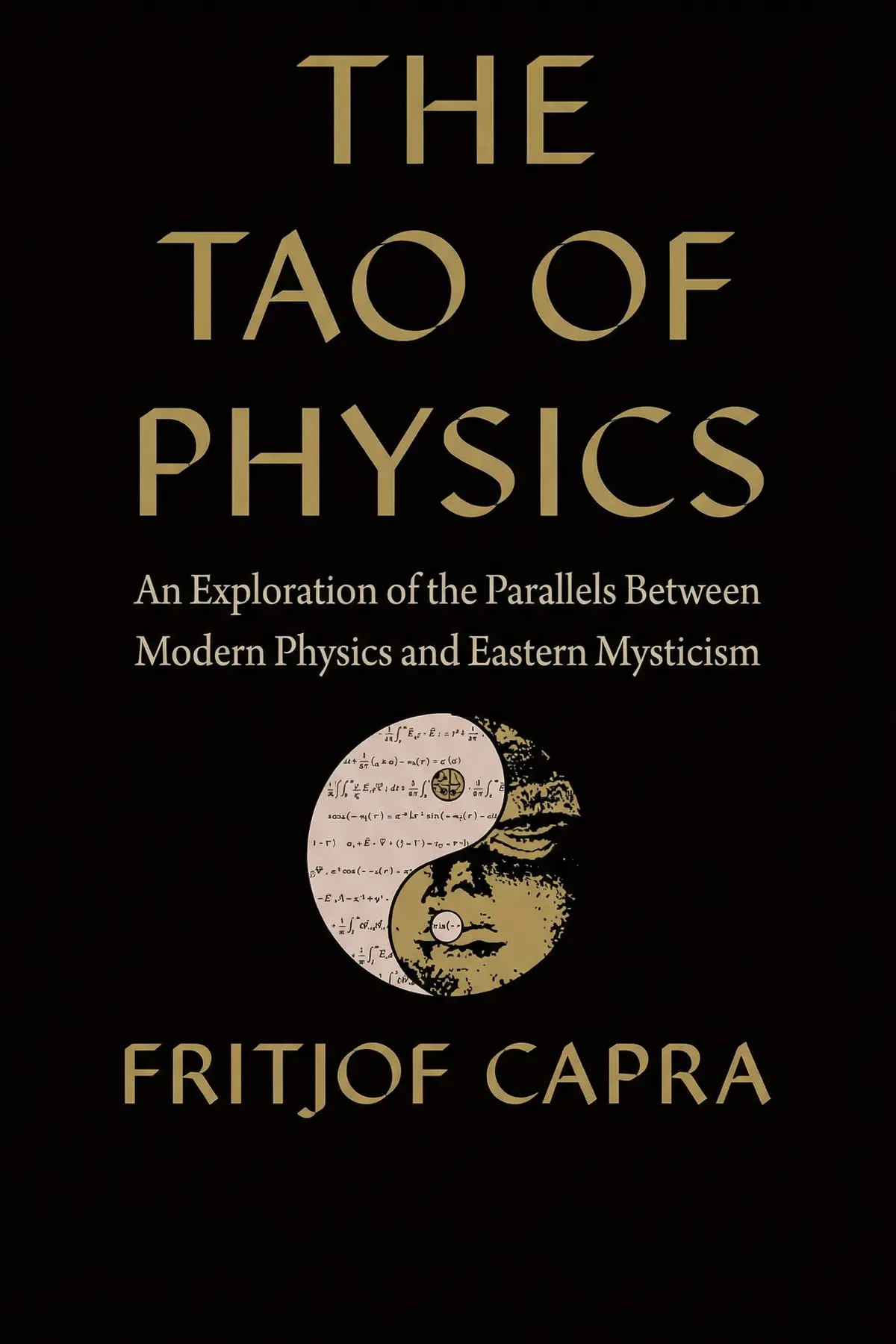
Shows how the strangest findings of modern physics, from wave-particle duality to space-time, echo what Hindu, Buddhist and Taoist teachers long held: that the world is one connected whole in constant change.
1 min 04 sec
Many people carry a tidy division in their heads: science deals in hard facts, and Eastern spirituality deals in feelings and faith. In The Tao of Physics, first published in 1975, physicist Fritjof Capra argues that this division breaks down at the deepest level, because the strangest findings of twentieth-century physics echo what Hindu, Buddhist and Taoist teachers had said for thousands of years. Matter that acts as both particle and wave, space and time fused into one, a universe in constant motion: each has a mirror in Eastern thought.
Capra’s throughline is simple to state. Look closely enough, with equations or with meditation, and the world turns out to be one connected whole that never stops changing. Following his parallels, you will be able to explain relativity and quantum theory in plain words, tell three Eastern traditions apart, and see why opposites like yin and yang may belong together.
1 min 46 sec
Physics looks like cold calculation and meditation looks like pure feeling. Capra finds each one borrowing the other’s method, and traces the real dividing line back to an ancient Greek idea about matter.
1 min 48 sec
Early twentieth-century physicists found that the atom refused to obey common sense. Zen teachers had been training students for exactly that kind of dead end, using questions that cannot be answered by thinking harder.
2 min 02 sec
Brahman, Dharmakaya, nirvana, the Tao: the vocabulary sounds like a fog of foreign terms. Underneath it, Capra finds three traditions telling remarkably similar stories, with one telling difference in how change moves.
2 min 03 sec
A wave spreads out and a particle sits in one spot, so nothing should be both. Light is both anyway, and what that means for the observer is even stranger than the duality itself.
1 min 43 sec
A tree looks small from far away, and nobody finds that strange. Einstein showed that time plays by a similar rule, and a Buddhist text had described the result as a mark of enlightenment.
1 min 47 sec
Squeeze a particle into a tiny box and it refuses to sit still. Scale up to the whole cosmos and the same restlessness appears, along with a burning log that shows matter and energy trading places.
1 min 41 sec
Physics once treated empty space as simply the place where things are not. Field theory changed that picture completely, and Hindu, Buddhist and Taoist teachers had described a void that does far more than sit empty.
1 min 18 sec
Capra’s book makes an unusual promise: that the physicist at the blackboard and the monk on the meditation cushion are describing the same world. They start from different methods, one leaning on reason and one on intuition, and they arrive at two shared conclusions. Everything is fundamentally one, and everything is always moving. The particle that is also a wave, the time that cannot be pulled away from space and the void that overflows with forms are windows onto that single picture.
The ideas offer more than a bridge between cultures. They suggest a way of looking. When you catch yourself sorting the world into firm categories, remember that the categories are tools made for getting through the day. When a problem refuses to resolve, treat the contradiction the way a Zen student treats a koan, as a sign to change the level of your thinking. And when things shift around you, recall the burning log, giving off heat and new matter in the same moment.
Lao Tzu taught that the farthest journey ends in a return. Physics traveled deep into the atom and out to the edge of the cosmos, and came home to one of humanity’s oldest ideas.
Science and spirituality are usually treated as opposites. Western physics speaks the precise language of mathematics, while Eastern mysticism relies on meditation and intuition. Physicist Fritjof Capra argues that at the deepest level the two are describing the same world. Capra traces how twentieth-century physics overturned Newton's picture of absolute space, solid particles and objective observation. Relativity fused space and time and showed that mass is a form of energy. Quantum theory found particles that behave as waves, change when observed and never stop moving. At each step, Capra sets the new physics beside the teachings of Hinduism, Buddhism and Taoism: Brahman, nirvana, the Tao, yin and yang, and the creative void. Readers get a plain-language tour of relativity and quantum theory, a clear map of three Eastern traditions, and two shared ideas that tie them together: the basic oneness of all things and the endlessly dynamic nature of the universe.
Curious readers who were told science and spirituality can never meet and want to test that claim.
Meditators and yoga students who want to understand relativity and quantum theory in plain words.
Science-minded professionals looking for a clear map of Hindu, Buddhist and Taoist thought.
Fritjof Capra, born in Vienna in 1939, is a physicist, systems theorist and deep ecologist with a doctorate in theoretical physics from the University of Vienna. He writes and lectures on the philosophy behind modern science. In 1995 he became a founding director of the Center for Ecoliteracy in Berkeley, California, and he has taught at Schumacher College. His other books include The Turning Point, The Web of Life and The Hidden Connections.
Listeners find this work both well-crafted and easy to read, noting that its sophisticated prose remains approachable for non-experts. Furthermore, they value the thorough examination of Eastern spiritual traditions and the author’s skill in explaining complex principles of contemporary physics, especially regarding quantum mechanics. The text is also praised for its profound nature, with one listener characterizing it as a timeless handbook for the new age.
Finally, a book that bridges the gap between the lab and the zendo without feeling forced or overly academic. Capra’s writing is remarkably elegant, managing to make the dizzying world of quantum mechanics feel almost intuitive to a lay reader like myself. I loved the deep dive into Eastern theology, particularly how he maps the Four Noble Truths onto the shifting landscape of modern science. To be fair, some of the specific physics feels a bit dated now, but the core message about the interconnectedness of all things remains powerful. It’s a mental adventure that challenges you to see the universe not as a collection of separate objects, but as a unified, dancing energy.
Show moreAs someone who struggled through high school physics, this book was an absolute revelation in how it articulated the nature of reality. Capra doesn't just explain E=mc^2; he explores the staggering philosophical implications of matter being fundamentally composed of energy. The way he integrates the Vedas and the concept of Maya—the idea that our world of separate objects is an illusion—completely changed how I view my own physical being. His language is accessible yet carries an incredible depth that demands you slow down and reflect on every page. Some critics call it 'woo,' but I found the connections to be deeply grounded in the writings of the physicists themselves. It’s more than just a science book; it’s a spiritual manual for the modern age.
Show moreThis feels like a timeless handbook for anyone trying to reconcile a rational mind with a spiritual heart in the modern world. Capra’s exploration of the 'Tao' isn't just about religion; it’s about a fundamental shift in how we perceive systems and flows. I found his explanation of hadrons and the way they behave as probabilities rather than objects to be one of the clearest I’ve ever read. The book is elegant, sophisticated, and deeply respectful of both the scientific and mystical traditions it examines. Frankly, we need more of this kind of holistic thinking in a world that is increasingly fragmented. While some of the particle theory shows its age, the philosophical weight is as heavy as ever. It’s a profound look at the oneness of all things.
Show moreGotta say, the way Capra articulates the dissolution of the 'self' through the lens of modern physics is absolutely masterful. He uses the Buddha’s teachings on suffering and enlightenment to provide a framework for understanding a universe where nothing is permanent. The technical concepts are presented with such clarity that I finally feel like I 'get' the implications of relativity and space-time. It’s not a deep dive into any one religion, but rather a fascinating mental adventure showing how different cultures hit upon the same universal truths. Some of the criticisms regarding 'woo' seem to miss the point entirely. Capra isn't trying to replace the laboratory with a meditation cushion, but rather showing how both can coexist. It’s a beautiful, well-written journey.
Show moreEver wonder why subatomic particles seem more like a rhythmic dance than solid bits of matter? This book tackles that head-on with surprising clarity. Capra has a gift for taking technical concepts that usually require a PhD and making them feel like common sense for the average person. Personally, I was most moved by the sections on the Tao and how 'non-action' mirrors the way nature actually functions at a fundamental level. It is readable, deep, and serves as a timeless handbook for anyone curious about the intersection of spirit and science. A few sections dragged toward the end, but overall, it’s a mind-expanding experience that I would recommend to any seeker.
Show moreThe chapter on Maya really opened my eyes to how much our Western worldview limits our understanding of the vast cosmos. Capra shows that what we perceive as solid 'things' are actually just temporary events in a vast, interconnected web of relationships. It’s a comprehensive review of Eastern thought that never feels dry or overly academic to a beginner. I did find some of the comparisons between ancient texts and mathematical diagrams to be a bit of a stretch. However, the overarching theme is undeniable and the writing style is fluid with a tone of genuine curiosity. It’s a fascinating mental adventure for anyone tired of the cold, mechanical view of the universe we were taught in school.
Show morePicked this up after hearing about the historical overlap between quantum pioneers and Eastern philosophy in a documentary. It’s amazing to realize that men like Robert Oppenheimer were looking at the Upanishads to make sense of the atom. Capra’s ability to bridge these two very different worlds is impressive and highly readable. He manages to keep the language accessible for lay readers while still diving into the complexities of wave-particle duality and the nature of time. To be fair, I think he sometimes forces the parallels a bit too hard for the sake of the narrative. Still, the general sentiment—that science and mysticism are two paths to the same truth—is beautifully argued. It really makes you question the reality we take for granted.
Show moreCapra’s prose is undeniably beautiful, but I found myself struggling with some of the specific scientific arguments he relies on throughout the text. Frankly, his heavy focus on the 'bootstrap theory' feels like a relic of the 1970s that hasn't aged particularly well given where particle physics has gone since then. However, the book is still a fascinating read for its historical context and philosophical ambition. Seeing how titans like Bohr and Heisenberg were influenced by Eastern thought—Niels Bohr even put the Yin-Yang on his coat-of-arms—is worth the price of admission alone. It’s a comprehensive review of theology that doesn't just skim the surface, even if the physics is a bit of a time capsule.
Show moreLook, I wanted to love this classic, but it felt incredibly repetitive after the first fifty pages of reading. The structure is basically: here is a quote from a famous physicist, here is a quote from a Zen master, and Capra saying they are the same. While I appreciate his ability to simplify technical concepts, the actual reasoning feels thin and often relies on poetic metaphors rather than substance. He spends so much time on the bootstrap philosophy, which most modern scientists have moved past, that the book starts to feel like a period piece. It’s a bit of a dull read if you already have a basic grasp of either subject. I struggled to stay awake during the later chapters.
Show moreNot what I expected, and frankly, quite disappointing in its lack of logical rigor or scientific discipline. I went in hoping for a disciplined discourse, but what I found felt more like 'quantum woo' designed to sell a specific New Age narrative. The truth is, you simply cannot scale the weirdness of the quantum scale up to the macro level of human existence and call it valid science. Capra frequently quotes Lao Tzu and the Buddha to 'prove' physics, but correlation is definitely not causation in these instances. It feels like he’s cherry-picking vague mystical phrases to fit complex mathematical realities that he doesn't fully explain. If you want actual particle physics, then you should definitely look elsewhere for a more disciplined discourse.
Show moreFritjof Capra argues that modern physics and Eastern mysticism, though they use very different methods, reach two shared conclusions. The first is that all things and events are fundamentally one. The second is that the universe is inherently dynamic and always changing. He supports this with parallels such as wave-particle duality and yin and yang, Einstein’s space-time and the Avatamsaka Sutra, and the quantum field and the creative void of Brahman, Sunyata and the Tao.
At the scale of the atom, matter behaves as both a particle with a definite location and a wave that vibrates across space. Light, for example, comes as photons yet travels as vibrating electric fields. Capra sees this as reality going beyond opposing concepts, much as Taoism treats yin and yang, such as light and dark or firm and yielding, as two opposing sides of one unified whole.
Classical physics treated space as three dimensions independent of time. Einstein’s relativity joined them into space-time, adding time as a fourth dimension tied to the other three, so neither can be described without the other. Capra links this to the Avatamsaka school of Buddhism, whose sutra describes enlightenment as awareness of space and time interpenetrating, and to D.T. Suzuki, who wrote that in enlightenment neither exists without the other.
It suits readers who want accessible explanations of relativity and quantum theory alongside a clear introduction to Hinduism, Buddhism and Taoism. People who practice meditation or yoga and wonder how their tradition relates to science will find direct comparisons. Science-minded readers who assume Eastern thought is vague will find Capra arguing that mystics, like physicists, learn by careful observation, only turned inward.
The book suggests a few habits of mind. Treat everyday categories as useful tools rather than fixed truths about nature. When a problem seems contradictory, take it as a sign that your current frame has reached its limit, the way a Zen koan is meant to stop ordinary thinking. And view change as the normal state of things, as both quantum physics and the Buddha’s teaching that all things arise and pass away suggest.
Carl Zimmer

Eckhart Tolle

Bill Bryson

Marianne Williamson

Jeff Hawkins

Deepak Chopra


Pico Iyer


Alcoholics Anonymous World Services
AUDIO SUMMARY AVAILABLE
Get the key ideas from The Tao of Physics by Fritjof Capra, plus 5,000+ more nonfiction titles.









